
Production Part Approval Process (PPAP) gives a buyer and supplier a structured way to show that a production-intent part can meet the released requirements under the proposed process. The exact submission level, forms and customer-specific rules depend on the applicable customer manual, contract and risk profile; PPAP is not a universal certification and a supplier's standard packet is not automatically sufficient. For injection molded plastic parts, the evidence should connect the part drawing and special characteristics to the resin grade, mold configuration, machine and process controls, inspection results, capability work and approved deviations.
Before requesting a quote, clarify the customer-specific PPAP requirements, timing, submission level, sample quantity, retention rules and approval authority. Use InjeForm's [capabilities](/capabilities), [process](/process) and [quality](/quality) routes to frame the engineering discussion, then make the request-for-quote package explicit about the required records rather than asking for a generic PPAP. The goal is a traceable decision: what was measured, on which production-intent samples, against which revision, using what method, and who accepted the result.
Do not treat PPAP approval as proof that every future shipment is automatically acceptable. Approval is tied to the released design, material, tool, process assumptions and customer requirements; changes, drift or nonconformance may require review, revalidation or a new submission.
01
1. Define the PPAP boundary before asking for documents
Start with the customer rulebook and the product risk, not with a predetermined checklist. Some programs use the AIAG PPAP framework; others add customer-specific forms, portal fields, run-at-rate expectations, capacity evidence, IMDS or regulatory records, labeling rules and approval signatures. Confirm whether the submission covers a new part, a design change, a new mold, a transferred tool, a new production location, a material change, a cavity change or a process change. Those triggers can change the evidence required.
For an injection molded part, define the part number and revision, mold identification, cavity count, resin manufacturer and grade, color or masterbatch, recycled-content position if applicable, intended machine family, annual volume, critical-to-quality characteristics, cosmetic zones, secondary operations and packaging assumptions. State whether the supplier is responsible for the mold, molding, trimming, assembly, inspection or only a defined operation. Link the final evidence package to the released drawing and purchase-order scope; use InjeForm's [request-a-quote](/request-a-quote) route when the requirement set is ready to share.
02
2. Build the evidence chain from design to molded sample
A useful PPAP package lets a reviewer follow a requirement through the process. The design record establishes the current drawing, CAD and specification revisions. Engineering change documents explain what changed and why. The process flow shows receiving, drying or conditioning where applicable, molding, inspection, trimming, assembly, packing and rework controls. The PFMEA identifies process failure modes, while the control plan translates important risks into checks, reaction plans, sampling and record ownership.
For plastic parts, pay particular attention to resin identity, lot traceability, drying or moisture controls where the grade requires them, mold cavities, gate and runner configuration, key temperature and pressure controls, cooling, ejection, flash and contamination controls. A material data sheet can support selection, but it does not prove that the finished part meets every drawing or performance requirement. Ask for the material certificate or lot record, agreed substitutions process and a clear link between the material used for samples and the material approved for production.
The package should also identify the submission samples: date, lot, cavity, machine, mold revision, resin lot, process condition and quantity. Without that context, dimensional reports and test results are difficult to interpret or reproduce.
03
3. Decide which measurements and studies matter most
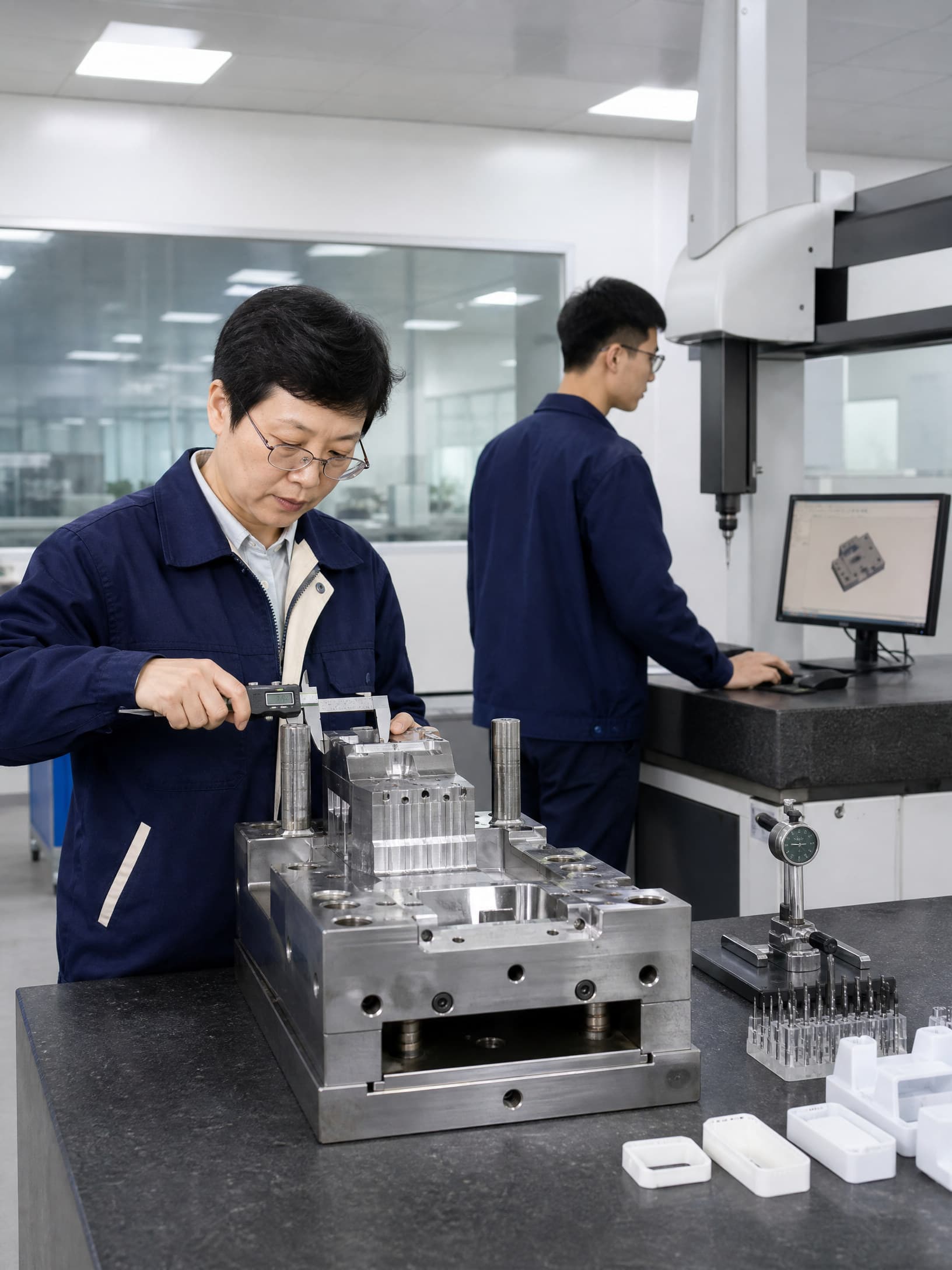
A dimensional results report should cover the characteristics identified by the drawing, customer specification and risk review. Define datums, measurement equipment, fixture or free-state condition, environmental conditioning, measurement force for flexible features and sampling by cavity or lot when variation could be significant. For multi-cavity tools, a single pooled average can hide cavity-to-cavity differences; retain the traceability needed to investigate a specific cavity if a trend appears.
Capability studies are useful when the characteristic, measurement system, sample size and process conditions are appropriate. Do not present a capability index without identifying the data source, subgrouping, stability assumptions, specification limits and measurement-system confidence. A short trial, unstable process or mixed cavity data may not support the same conclusion as a controlled production run. If capability is not yet demonstrated, document the gap, interim control and closure plan rather than relabeling a preliminary result as approval.
For function-critical parts, add the tests that reflect actual use: assembly fit, leak or pressure testing, pull or insertion force, torque, impact, dimensional stability, environmental conditioning, electrical performance or cosmetic evaluation as applicable. State the method, fixtures, conditioning, sample count, acceptance limit and failure disposition. Use [faq](/faq) for general scoping questions, but place product-specific limits in the controlled drawing, specification or quality agreement.
| Buyer question | Evidence to request | Release posture |
|---|---|---|
| Is the released requirement understood? | Current drawing/CAD, specifications, special-characteristic mapping and approved engineering changes | Do not release if revision or requirement ownership is ambiguous |
| Can the proposed process make conforming parts? | Process flow, PFMEA, control plan, trial or production-run records, parameter window and reaction plan | Release only with risks controlled and open actions assigned |
| Do the samples meet dimensional requirements? | Cavity- and lot-traceable dimensional report with method, equipment and conditions | Approve only against defined limits; investigate mixed or missing traceability |
| Will the part perform in the product? | Material records plus functional, assembly, environmental or durability test results as applicable | Hold function-critical approval until representative tests pass |
| What happens when evidence is incomplete? | Deviation or concession, containment, owner, due date, risk rationale and customer disposition | Use conditional approval only when the customer permits it and the risk is controlled |
04
4. Review the mold and process-specific risks
Injection molding adds sources of variation that a generic PPAP checklist can understate. Confirm the mold identification, cavity count, cavity balancing approach, gate and vent strategy, cooling controls, ejection, tool maintenance status and any hot-runner or side-action features that affect the part. Check that the samples represent the tool and configuration intended for production, not a different prototype tool, cavity or hand-finished condition unless the customer has explicitly approved that basis.
Resin processing history can affect shrinkage, warpage, weld-line strength, appearance and dimensional stability. The PPAP should make clear which process parameters are controlled, which are merely machine settings, what alarms or reaction limits apply and how changes are authorized. A nominal recipe is not the same as a validated operating window. Ask how the supplier will react to resin-lot variation, machine substitution, cavity imbalance, tooling repair, color change, regrind change or a drift in cycle and part weight.
If secondary operations are included, extend the evidence chain through trimming, insert installation, ultrasonic welding, printing, assembly and packaging. Verify that inspection after molding does not overlook damage introduced later. For practical supplier discussions, compare the documented handoff with the stages described on InjeForm's [process](/process) page rather than relying on a part-only inspection report.

05
5. Handle deviations, conditional approvals and change control
A deviation should describe the exact nonconformance, affected revision or lot, quantity, containment, technical risk, corrective action, expiry or review date and approval authority. Examples include an out-of-limit dimension, an incomplete capability study, a substitute resin, a cosmetic condition outside the agreed standard or a test performed with a non-final fixture. A deviation is not a silent replacement for a requirement, and an internal supplier sign-off may not equal customer authorization.
Separate temporary containment from permanent correction. Sorting, 100% inspection or a limited shipment can reduce immediate exposure, but it does not prove that the process is capable or that the root cause has been removed. Record whether the affected parts may be used, reworked, scrapped or shipped under concession, and define how the action will be verified. InjeForm's [quality](/quality) route can be used as a starting point for discussing inspection, traceability and response expectations; the contractual quality agreement remains the controlling document.
Establish a change-notification rule before release. Changes to resin grade, supplier, colorant, mold location, cavity, machine family, tooling repair, process window, inspection method, sub-tier source or production site may affect the approved basis. Define which changes require customer notification, re-PPAP, an interim run, sample approval or only internal record review. Keep the approval decision linked to the part revision and evidence set.
06
6. Set a practical release gate for procurement and quality
A buyer can make PPAP manageable by using staged gates. First, approve the requirement and evidence matrix. Second, approve the mold and process concept, including open risks and measurement methods. Third, review production-intent samples and the complete submission against the customer level. Fourth, release production only after required approvals, deviations and corrective actions are closed or formally accepted. The gate owner should be named, and procurement should know whether a purchase order is allowed before final approval.
Do not let a visually good sample carry the whole decision. The release should consider dimensions, material identity, function, process controls, capacity or run evidence where required, packaging, labeling, traceability and reaction plans. If the customer requires a specific submission level or portal format, use that requirement even when a supplier's internal packet is more convenient.
After approval, retain the PPAP package and the records needed to investigate future lots. Define sample retention, control-plan review, periodic requalification where applicable, audit access and escalation for recurring defects. If the program needs a broader sourcing or manufacturing discussion, connect the evidence review to InjeForm's [capabilities](/capabilities) and [request-a-quote](/request-a-quote) routes rather than separating quality from commercial scope.

Practical takeaway
Before you move
to the next review.
- Confirm the customer-specific PPAP manual, submission level, approval authority, timing, sample quantity and change triggers before requesting the package.
- Tie the evidence to the released part revision, resin manufacturer and grade, color or additive basis, mold ID, cavity, machine and production-intent sample lot.
- Review the process flow, PFMEA, control plan, measurement method, special-characteristic mapping, reaction plans and material or lot-traceability records as one connected chain.
- Require dimensional and functional results with defined datums, equipment, conditions, sample identity, cavity or lot traceability and acceptance limits; do not rely on averages without context.
- Document every deviation or conditional approval with containment, risk, owner, due date, expiry or review date and the required customer disposition.
- Before production release, agree how resin, mold, cavity, machine, process, inspection, sub-tier or site changes will be notified and when re-PPAP or revalidation is required.
FAQ
Common questions
What does PPAP mean for an injection molded plastic part?
PPAP is a structured production-part approval package used to show that the released part and proposed production process can meet defined requirements. For an injection molded part, the evidence commonly connects the drawing and changes, process flow, risk analysis, control plan, material records, dimensional results and applicable functional or capability studies. The exact submission level and documents depend on the customer's requirements and the program risk.
Does every plastic injection molded part need the same PPAP documents?
No. Customer-specific manuals, contract terms, industry requirements, part risk and the reason for submission determine the scope. A new tool, transferred mold, new material source, cavity change, production-site change or engineering revision may require different evidence from a routine repeat order. Confirm the required level and approval route before assuming that a supplier's standard packet is acceptable.
What should a buyer check in a PPAP dimensional report for molded parts?
Check the drawing revision, characteristic identification, specification limits, datums, measurement equipment, method, fixture or free-state condition, environmental conditioning where relevant, sample quantity and traceability to mold, cavity, resin lot and process. For multi-cavity tools, determine whether cavity-level results are needed. A report without method and sample context is difficult to use as release evidence.
Can a supplier ship injection molded parts with an incomplete PPAP?
Only if the customer's procedure and approval authority permit a documented conditional release or deviation. The record should identify the gap, affected parts, containment, risk, owner, due date, expiry or review date and customer disposition. A supplier's internal approval does not automatically authorize shipment, and a temporary sort or concession does not replace permanent corrective action or the missing evidence.
When is a new PPAP or revalidation likely after initial approval?
The trigger depends on customer rules and the change's potential effect, but buyers should review changes to the design, resin grade or source, colorant, mold, cavity, tooling repair, machine or production site, process window, inspection method and important sub-tier operation. Define notification and re-PPAP rules in advance; do not assume that an approved part remains approved after an unreviewed change.
References
Source material
- [1] AIAG — Production Part Approval Process (PPAP) reference
- [2] IATF Global Oversight — IATF 16949 automotive quality management system information
- [3] ISO — ISO 9001 Quality management systems overview
- [4] NIST/SEMATECH — e-Handbook of Statistical Methods, process capability guidance
- [5] AIAG — Automotive Core Tools overview
This guide is general information for early procurement and engineering discussion. It does not replace product-specific DFM, qualification, validation, regulatory assessment or legal advice.