
Electrical interfaces, connectors and sensor housings
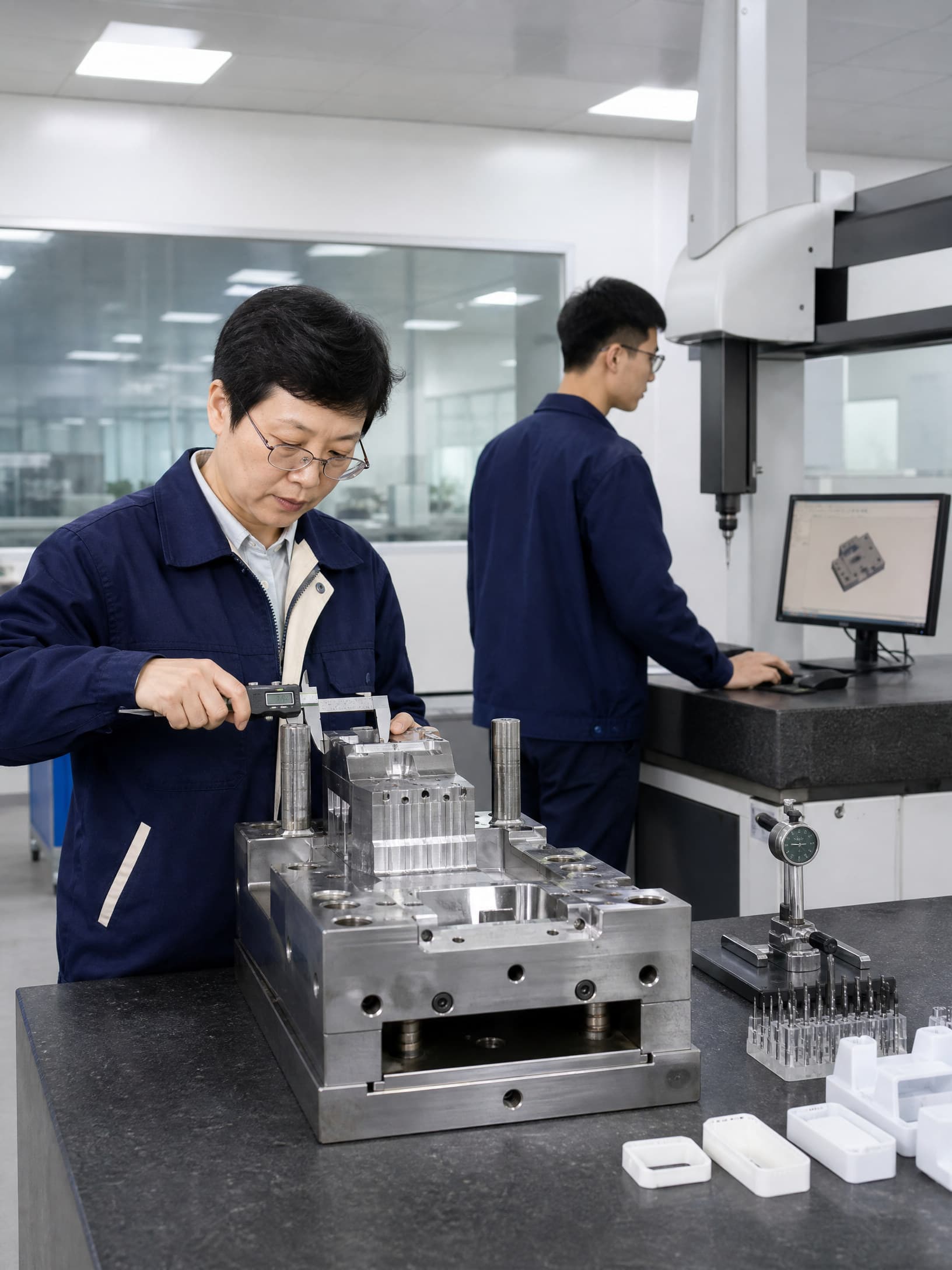
Dimensional and process control
Precision injection molding for
critical plastic parts.
Align material, mold design, process control and measurement evidence for precision plastic components and demanding interfaces.
InjeForm
For OEM and product teams across Europe, North America & the Middle East
A practical sourcing route
Make the next
decision clearer.
Precision molding is a system of controls rather than a single tolerance promise. InjeForm helps teams connect material behaviour, tool design, machine conditions, measurement method, cavity consistency and part function before defining how precision will be approved.
Buyer-led scopeEngineering evidenceControlled handover
Project fit
Where this route
helps most.
Start with the questions that affect tooling, quality, timing and total program risk.
Industrial components with critical fits or movement
Automotive, laboratory and equipment parts with controlled CTQs
What buyers can align
Evidence that supports
the next gate.
Scope the work around decisions and records—not broad promises.
CTQ and datum review
Defined with the part, tool, material, volume and acceptance requirements in scope.
Material, shrinkage and stability discussion
Defined with the part, tool, material, volume and acceptance requirements in scope.
Tool and process risk review
Defined with the part, tool, material, volume and acceptance requirements in scope.
Inspection, FAI and change-control plan
Defined with the part, tool, material, volume and acceptance requirements in scope.
Decision framework
Compare the
trade-offs.
| Precision question | What influences it | Buyer should define |
|---|---|---|
| Dimensional stability | Material, moisture, temperature, geometry and cooling | Conditioning, measurement timing and limits |
| Cavity consistency | Balance, tool wear, process window and sampling | Cavity identity, sample size and reaction rules |
| Functional fit | Mating parts, assembly force and tolerance stack | Fixture, test method and functional acceptance |
How the conversation moves
From brief to
controlled next step.
Use the first conversation to identify what is known, what is open and what evidence should come next.
- 01
Identify the CTQs, datums, mating parts and operating environment.
- 02
Review material, tool architecture, shrinkage and measurement method.
- 03
Approve a sample and inspection plan that matches the function.
- 04
Use trial and production evidence to control the agreed characteristics.
Buyer questions
Clear answers before
you commit.
Can a supplier guarantee tight tolerances on every plastic part?+
A responsible commitment needs the exact geometry, resin, tool, measurement method, process conditions and acceptance limits. A generic tolerance guarantee without those inputs can be misleading.
Does CMM inspection prove molding capability?+
CMM data can provide useful dimensional evidence, but it does not by itself prove long-run capability, functional performance or every production condition.
Which materials are suitable for precision molding?+
The choice depends on stiffness, temperature, moisture, shrinkage, chemical exposure, electrical needs and function. Material selection should be made against the part and validation plan, not a material name alone.
Start a technical conversation
Bring us your
next part.
Share the drawing, resin, target volume, market and timing. We will return with focused questions and a practical next step.