
Existing molds with wear, flash, burrs or unstable dimensions
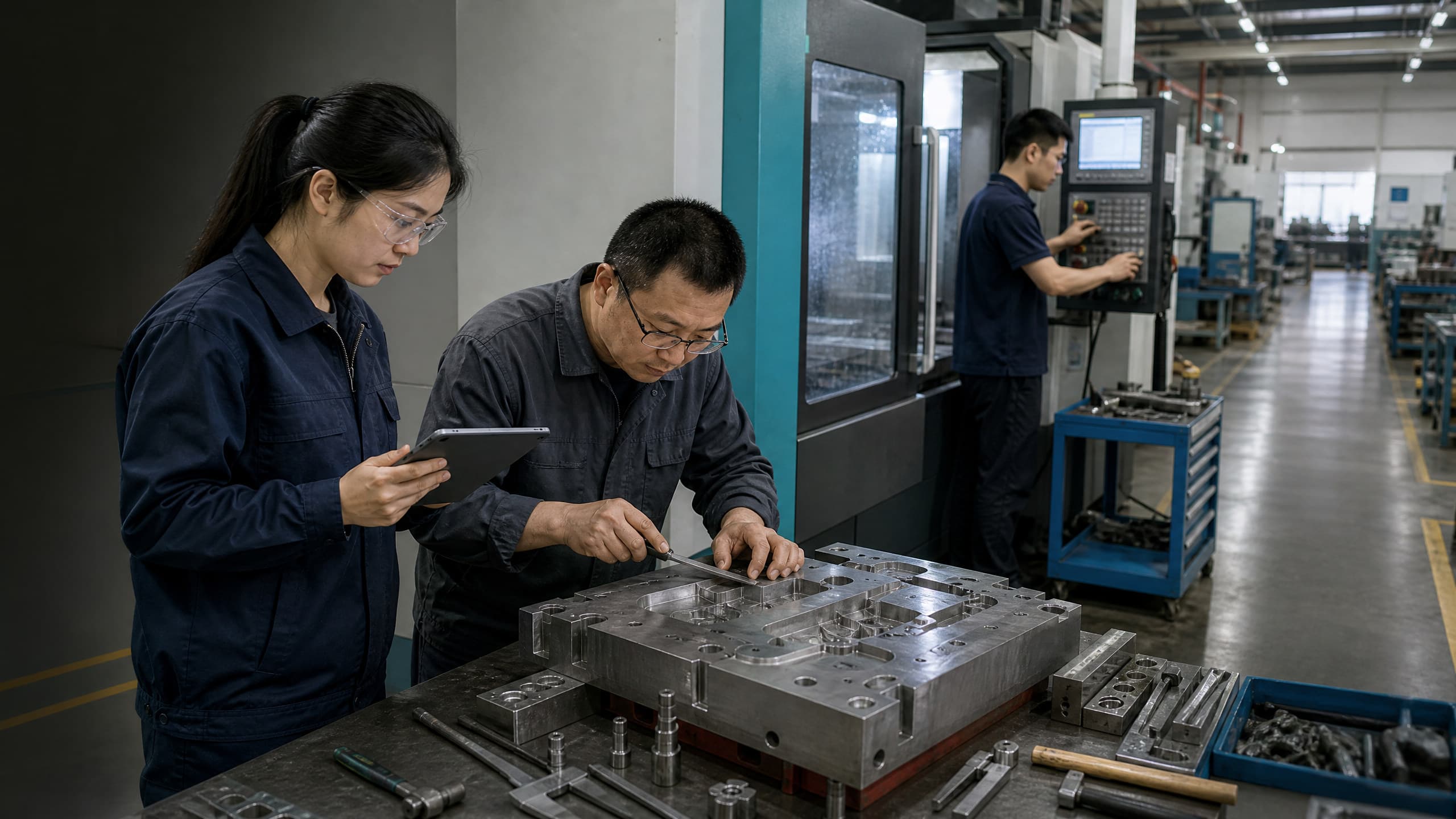
Protect the production asset
Injection mold maintenance &
repair support.
Keep production tooling ready with practical mold maintenance, repair planning, spare-parts control and documented tool condition reviews.
InjeForm
For OEM and product teams across Europe, North America & the Middle East
A practical sourcing route
Make the next
decision clearer.
Maintenance is part of production control. A tool can make acceptable parts today while hidden wear, blocked cooling, corrosion, damaged shutoffs or undocumented repairs increase tomorrow’s risk. InjeForm helps buyers turn mold condition into a documented repair, maintenance and release plan.
Buyer-led scopeEngineering evidenceControlled handover
Project fit
Where this route
helps most.
Start with the questions that affect tooling, quality, timing and total program risk.
Customer-owned tooling needing a maintenance partner
Programs that need planned spare parts and preservation between orders
What buyers can align
Evidence that supports
the next gate.
Scope the work around decisions and records—not broad promises.
Tool condition review and issue register
Defined with the part, tool, material, volume and acceptance requirements in scope.
Preventive maintenance schedule by component and risk
Defined with the part, tool, material, volume and acceptance requirements in scope.
Repair or replacement scope with approval points
Defined with the part, tool, material, volume and acceptance requirements in scope.
Post-maintenance trial and release evidence
Defined with the part, tool, material, volume and acceptance requirements in scope.
Decision framework
Compare the
trade-offs.
| Condition | Response | Evidence before release |
|---|---|---|
| Routine wear | Planned maintenance | Measured condition, replaced parts and trial check |
| Quality drift | Root-cause review and repair | Before/after samples and linked inspection results |
| Major damage | Repair, insert or redesign decision | Scope, risk, cost and re-qualification plan |
How the conversation moves
From brief to
controlled next step.
Use the first conversation to identify what is known, what is open and what evidence should come next.
- 01
Identify the mold, part revision, symptoms and recent production history.
- 02
Inspect wear components, cooling, slides, shutoffs, ejection and records.
- 03
Agree repair, maintenance, spare-parts and approval scope.
- 04
Run the required trial and update the controlled tool record.
Buyer questions
Clear answers before
you commit.
How often should an injection mold be maintained?+
There is no single interval for every tool. Set intervals around shots, cycle conditions, resin abrasiveness, corrosion risk, moving components, quality history and the toolmaker’s recommendations, then adjust based on evidence.
When should a mold be repaired instead of replaced?+
Compare the failure mode, remaining tool life, repairability, part risk, timing and cost. A repair should include a clear acceptance and re-trial plan rather than only a machining activity.
What records should a buyer keep?+
Keep the mold identity, maintenance date, shot or production context, condition findings, replaced components, photos, changes, trial results and next due action.
Start a technical conversation
Bring us your
next part.
Share the drawing, resin, target volume, market and timing. We will return with focused questions and a practical next step.