
A medical or laboratory molded component should not enter validation because a sample looks good or because a supplier uses the word validated. The buyer first needs to define what the part must do, which risks matter, what evidence will support release, and which records must remain traceable from resin lot to finished shipment. Those requirements may be shaped by the product owner, legal manufacturer, laboratory operator, customer quality agreement and applicable market rules; the molder can support execution, but cannot assign those responsibilities by itself.
Validation is not a certificate attached to a generic molding process. It is a documented, risk-based conclusion for a defined part, material, tool, process, measurement method and intended use. Agree the scope and change triggers before tooling or qualification runs begin.
01
Define the intended use and responsibility boundary first
Start with the function of the molded item in the finished medical device, instrument, consumable or laboratory workflow. Identify whether it contacts a specimen, reagent, patient, operator, drug, cleaning agent or another component; whether it is fluid-path, structural, optical, sealing, locating or merely protective; and whether cleanliness, extractables, biocompatibility, sterility, barrier performance or assay interaction are relevant. These are not automatically established by choosing a medical-grade resin or by molding in a controlled area.
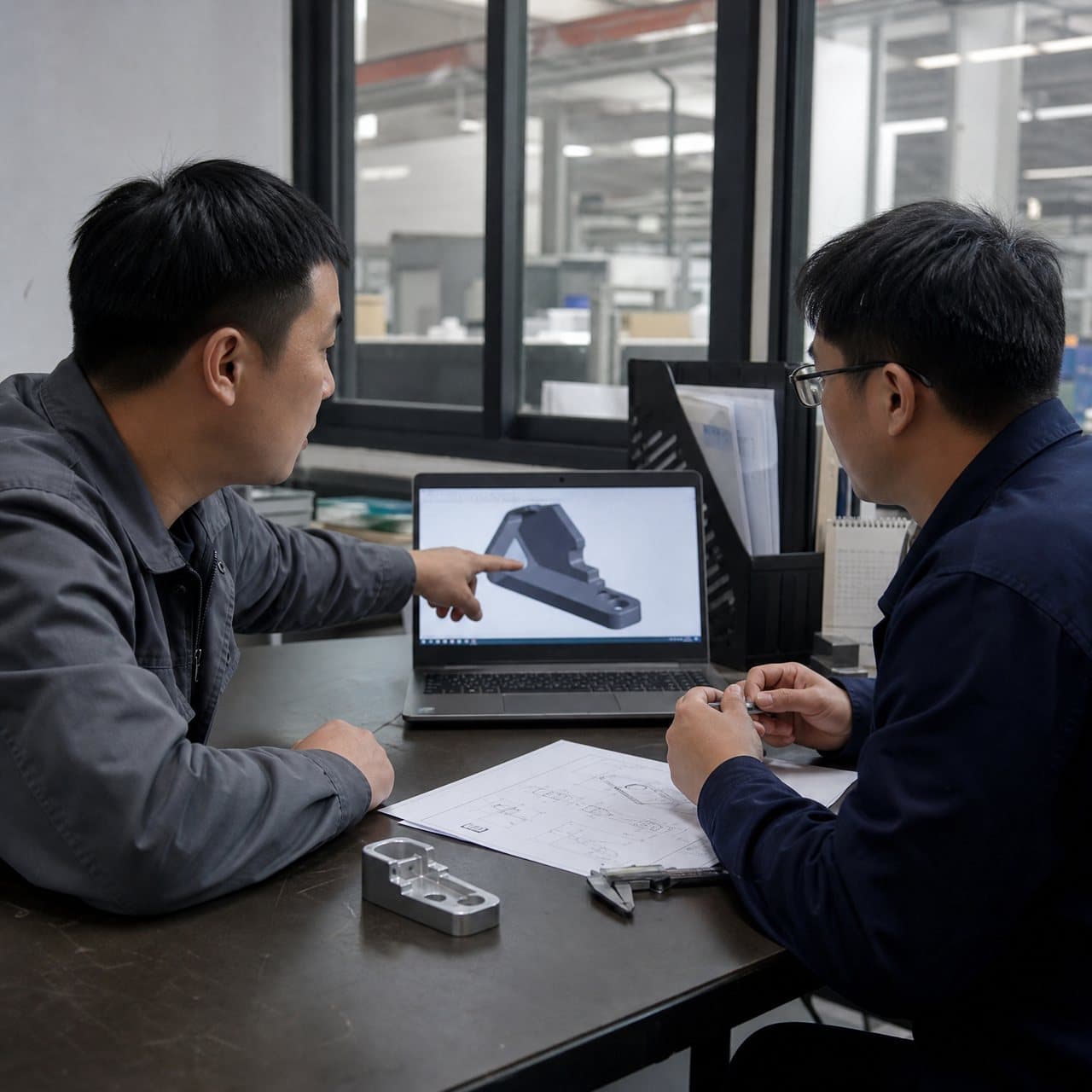
Name the parties that own product requirements, regulatory interpretation, process execution, inspection, release and change approval. A quality agreement can allocate records and notification duties, but it does not transfer the legal manufacturer’s product responsibility to the molder. In the RFQ, link each requirement to a drawing, specification, risk file, test method or customer document. InjeForm’s [medical and laboratory molding](/medical-laboratory-injection-molding) page can introduce the capability discussion; the buyer’s controlled requirements should govern the programme.
02
Translate product risk into validation questions
Validation scope should follow what could harm performance or make a result unreliable. For a pipette component, a small geometry change may affect liquid handling; for a diagnostic cartridge, flash or residue may affect fluid movement; for a housing, dimensional drift may affect alignment, ingress protection or assembly. List critical quality attributes and process parameters, then define how each will be verified. Avoid asking for every possible measurement when a smaller, justified set can answer the real risk question.
Separate design verification, process qualification, cleaning or packaging studies, and routine monitoring. A molding qualification run can provide evidence about repeatability under specified conditions, but it does not by itself prove the finished product’s clinical, analytical, sterility or shelf-life performance. FDA’s process-validation model is lifecycle-oriented and context-specific; use it as a disciplined framework, not as a universal protocol for every molded part.
| Requirement area | Buyer should define | Evidence to agree before the run |
|---|---|---|
| Function and risk | Intended use, interfaces, failure modes and critical quality attributes. | Risk assessment, controlled drawing, test method and acceptance criteria. |
| Material | Resin grade, colour/additives, approved suppliers, regrind policy and substitution rules. | Material identity, supplier documentation, lot record and receiving/handling controls. |
| Process | Tool revision, cavity scope, process window, conditioning and permitted settings. | Qualification protocol, run record, parameter history and deviation log. |
| Measurement | Datums, fixtures, conditioning, method capability and reporting units. | Calibrated equipment record, raw results, uncertainty or suitability rationale where relevant. |
| Release | Who approves, what is conditional, and what blocks shipment or further use. | Signed report, lot disposition, deviations, actions and requalification triggers. |
03
Make material, tool and lot traceability usable
Traceability should let a reviewer connect a finished lot to the controlled part revision, tool and cavity where relevant, molding machine, date or shift, resin grade and supplier lot, colourant or additive direction, drying or conditioning record, operator or run identifier, inspection results and final disposition. The exact record set depends on risk and contract, but a shipment label alone is rarely enough to investigate a later question. Ask how records are linked and retained, not only whether a supplier says the process is traceable.
Control supplied material and permitted alternatives before qualification. A resin family name does not identify a grade, formulation, colour, additive package or lot. Define what happens when the nominated grade is unavailable, when a supplier changes formulation, when regrind is proposed, or when material is dried outside the agreed condition. An alternative may require document review, testing, customer approval or a new qualification; do not let purchasing substitution become an undocumented process change.

04
Specify the qualification run and its acceptance record
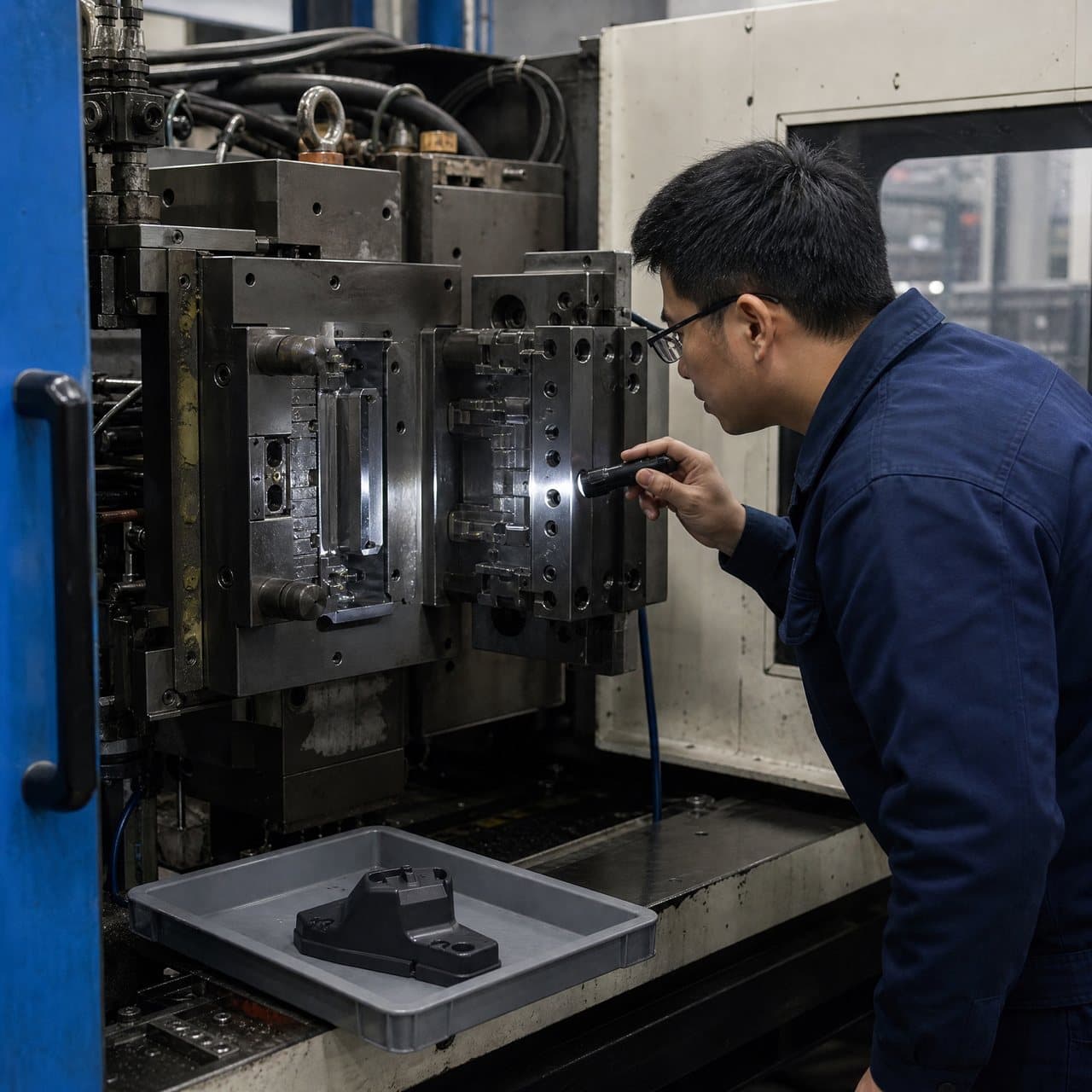
Write the protocol around a named decision: approve the process for routine production, approve a limited pilot, investigate a deviation, or release a tool correction for another study. State the tool and part revisions, cavity population, material lots, machine, planned settings or operating ranges, environmental and conditioning conditions, sample quantity rationale, inspection sequence, functional tests, statistical treatment where needed, and the rules for failed or missing data. If a laboratory method is involved, identify the method revision and any reference or control materials that make results comparable.
A report should distinguish observed data from interpretation. Include raw or traceable results for critical features, unexpected events, scrap or rework, equipment status, sample identification, deviations, corrective actions and the final decision authority. NIST describes metrological traceability as a documented chain to a reference and cautions that traceability alone does not prove fitness for purpose. Therefore, calibration records should be reviewed alongside method suitability, fixture design, tolerance, uncertainty and the function being judged.
05
Define routine control and revalidation triggers
Validation ends in a controlled state, not in a report stored on a shared drive. The production control plan should identify incoming material checks, critical process or part checks, sampling logic, lot identification, reaction to an out-of-specification result, quarantine and release authority. Decide which process data the buyer receives routinely and which is available on request. Link the plan to the [quality](/quality) workflow, while keeping the customer-specific acceptance criteria and quality agreement as the governing documents.
Agree in advance what changes require notification, impact assessment, sample review, partial requalification or full revalidation. Examples include a part or drawing revision, mold repair or transfer, cavity addition, gate or cooling change, resin or colourant change, machine relocation, major control-system change, measurement-method change, cleaning or packaging change, and an extended production interruption. A trigger is not proof that revalidation is always required; it is a prompt for the named owner to assess impact and record the decision. Buyers can send these assumptions through [Request a Quote](/request-a-quote) and review tooling scope through [injection mold making](/injection-mold-making) before award.
Practical takeaway
Before you move
to the next review.
- Identify intended use, product risk, critical quality attributes and the party responsible for final regulatory and product release decisions.
- Specify the controlled part, tool, cavity, resin grade, colour/additives, approved suppliers, regrind policy and material-lot traceability path.
- Define the qualification protocol, sample rationale, process conditions, measurement methods, functional tests and acceptance criteria before the run.
- Require a decision record that links results to revisions, lots, equipment, deviations, corrective actions and named approval authority.
- List change and interruption triggers that prompt notification, impact assessment, sample review or requalification rather than relying on informal notice.
FAQ
Common questions
Does a medical-grade resin make a molded component validated?
No. The grade may be one input to the material decision, but validation still depends on the finished part, intended use, process, cleanliness or other applicable requirements, inspection method and documented acceptance decision.
Who owns the validation protocol for an outsourced molded part?
The product owner or legal manufacturer normally defines the product risk, intended use and release requirements. The molder can propose feasible process evidence and execute agreed work; the quality agreement should make responsibilities and records explicit.
What material information should a laboratory buyer request for each lot?
At minimum, identify the resin grade and supplier lot and link them to the run and finished-lot record. Depending on risk, also control colour or additives, drying or conditioning, certificates, regrind status, storage and any approved substitution decision.
Is one successful qualification run enough?
Not necessarily. The required evidence depends on risk, process knowledge, customer requirements and the decision being made. A buyer should justify the run design, conditions, sample quantity and acceptance basis instead of relying on a universal number of runs.
Does a calibrated gauge prove that validation measurements are suitable?
No. Calibration supports confidence in the instrument’s relationship to a reference, but the buyer should also consider datum strategy, fixture, method capability, uncertainty, conditioning and whether the measurement answers the functional question.
References
Source material
- [1] U.S. Food and Drug Administration, “Process Validation: General Principles and Practices.”
- [2] U.S. Food and Drug Administration, “Quality Management System Regulation (QMSR).”
- [3] International Organization for Standardization, “ISO 13485 — Medical devices — Quality management systems.”
- [4] National Institute of Standards and Technology, “Metrological Traceability.”
- [5] International Organization for Standardization, “ISO/IEC 17025 — General requirements for the competence of testing and calibration laboratories.”
This guide is general information for early procurement and engineering discussion. It does not replace product-specific DFM, qualification, validation, regulatory assessment or legal advice.