
Instrument housings, panels and protective covers
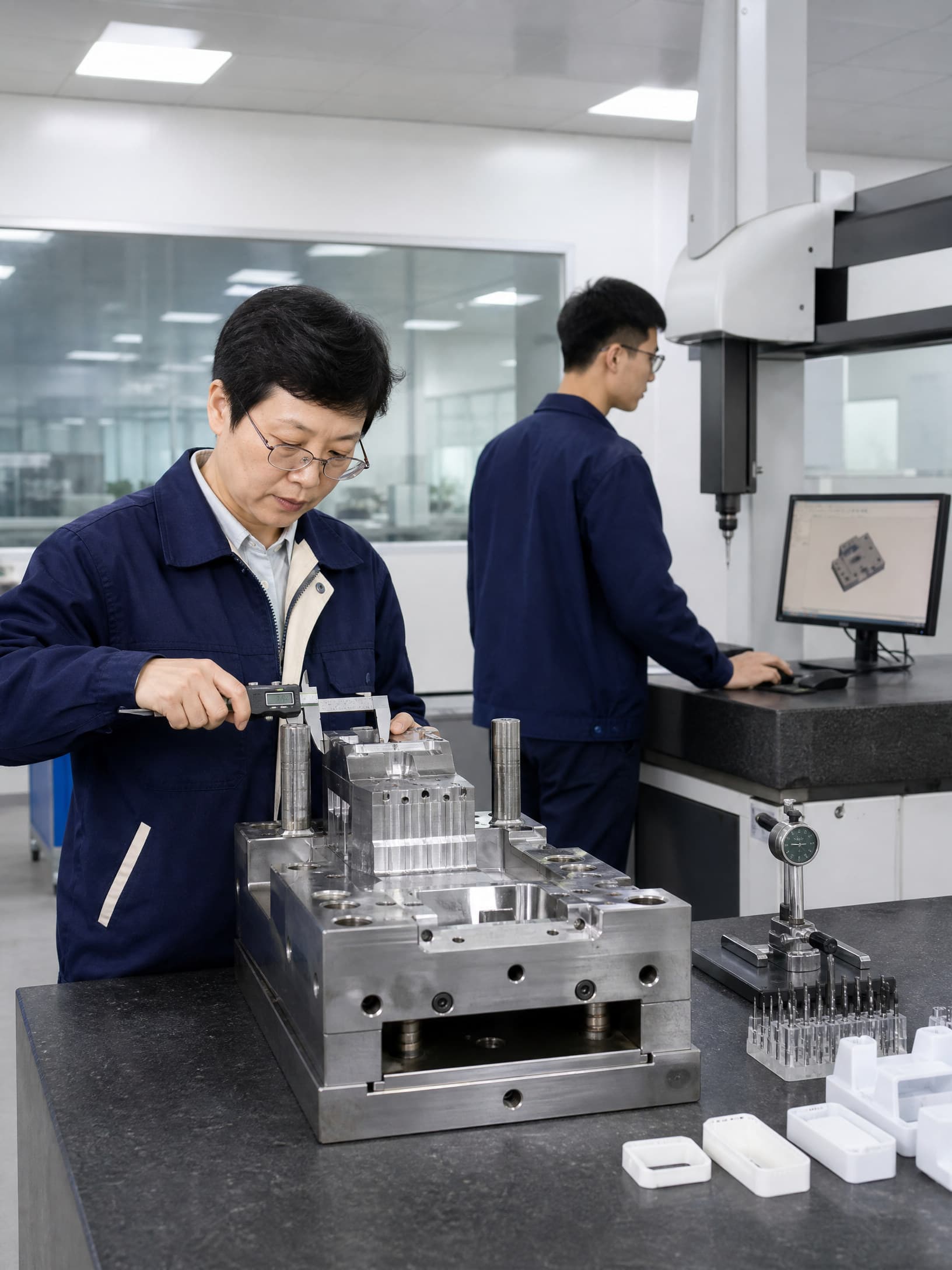
Controlled-use plastic components
Medical & laboratory
injection molding.
Discuss housings, trays, fixtures and workflow components for medical and laboratory equipment around customer-defined materials, validation and inspection needs.
InjeForm
For OEM and product teams across Europe, North America & the Middle East
A practical sourcing route
Make the next
decision clearer.
Medical and laboratory components require disciplined requirements management. InjeForm can support the manufacturability, tooling, sampling and inspection discussion while the customer defines the final regulatory, validation, cleanliness and intended-use requirements.
Buyer-led scopeEngineering evidenceControlled handover
Project fit
Where this route
helps most.
Start with the questions that affect tooling, quality, timing and total program risk.
Sample trays, cartridge bodies and workflow fixtures
Low-force snaps, buttons and controlled-use interfaces
What buyers can align
Evidence that supports
the next gate.
Scope the work around decisions and records—not broad promises.
Use-environment and requirement review
Defined with the part, tool, material, volume and acceptance requirements in scope.
Material, appearance and assembly discussion
Defined with the part, tool, material, volume and acceptance requirements in scope.
DFM, tooling and sample plan
Defined with the part, tool, material, volume and acceptance requirements in scope.
Customer-defined inspection and validation evidence
Defined with the part, tool, material, volume and acceptance requirements in scope.
Decision framework
Compare the
trade-offs.
| Requirement | Question to align | Customer input |
|---|---|---|
| Material | What environment and compatibility are required? | Resin, additives, colour and supplier approval |
| Validation | Which tests and records are needed? | Protocol, sample count, acceptance and approver |
| Cleanliness | What handling and packing condition is required? | Cleanliness level, packaging and storage controls |
How the conversation moves
From brief to
controlled next step.
Use the first conversation to identify what is known, what is open and what evidence should come next.
- 01
Share intended use, component role, resin direction and customer requirements.
- 02
Review geometry, assembly, material and inspection assumptions.
- 03
Define sample, validation and approval evidence with the customer team.
- 04
Release production only after the agreed requirements are approved.
Buyer questions
Clear answers before
you commit.
Does this page mean the parts are automatically medical-device compliant?+
No. Final regulatory and quality compliance depends on the intended use, product classification, customer quality system, materials, validation and applicable requirements. These must be defined project by project.
What should a laboratory equipment RFQ include?+
Include the component function, mating parts, material constraints, environment, appearance, cleaning or chemical exposure, expected volume, validation needs and target timing.
Can clear or cosmetic housings be reviewed?+
Yes, cosmetic and clear features can be discussed around gate position, weld lines, sink, ejection, texture, inspection lighting and the customer’s appearance standard.
Start a technical conversation
Bring us your
next part.
Share the drawing, resin, target volume, market and timing. We will return with focused questions and a practical next step.