
Buyers verify a scientific injection molding process window by reviewing a controlled study that links decoupled fill, pack and hold stages to defined part responses, cavity-pressure evidence, grade-specific drying records and repeat runs. The goal is not to find one attractive shot; it is to show that an acceptable region exists and remains usable when normal, documented variation occurs. A process window is specific to the part, tool, resin, machine, measurement method and acceptance criteria. Research on injection molding process-window development likewise treats the window as an operating envelope built from controllable variables and part-performance measures, rather than a universal set of machine numbers.[1]
For an OEM or procurement team in Europe, the United States or the Middle East, ask for evidence that can be traced back to the approved drawing revision and material grade. Keep engineering judgment visible: a supplier may recommend a robust center point, but the product owner still decides which dimensions, functions, appearance zones and downstream tests determine acceptance.
Quote-oriented CTA model: ‘Please quote a process-window study for part revision [X], tool/cavity [Y], resin grade [Z] and machine [W]. Include the proposed DOE factors and levels, cavity-pressure outputs where available, drying and material traceability, repeatability plan, acceptance criteria, deliverables, exclusions and the price for any follow-up run.’
01
Define what the window must protect
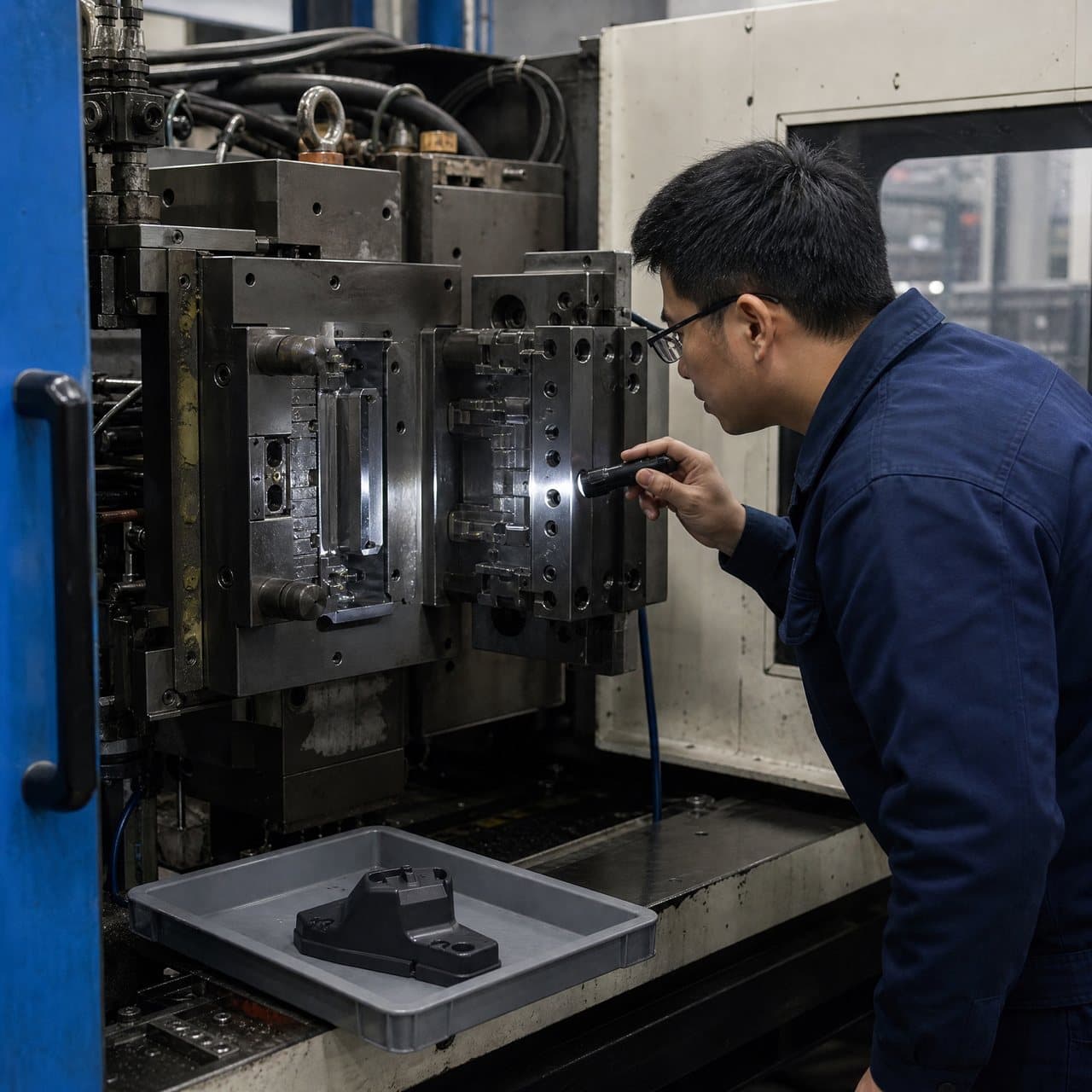
Start with the decision the study must support. It may be tool release, production approval, a transfer to another press, a material-source review or a response to a recurring defect. Translate that decision into measurable responses: critical dimensions, part mass, fit, seal performance, appearance, warpage, weld-line condition or another product-specific characteristic. Do not accept ‘stable process’ as a sufficient response unless the buyer has defined what stable means.
The study brief should identify the controlled part and drawing revision, tool and cavity map, resin manufacturer and grade, colour or additive direction, approved regrind rule, machine, inspection method and sampling conditions. If a feature changes after the study, the prior window may no longer apply. Measurement capability also matters: NIST’s design-of-experiments guidance lists a capable measurement system and a stable process among the assumptions that support useful analysis.[2]
Separate a development window from a release window. A development study can explore why a part fails. A release study should state the conditions and evidence that justify routine production. Neither should be presented as a guarantee for an unapproved resin, transferred tool, different machine or later geometry revision.
02
Review the DOE, not just the selected settings
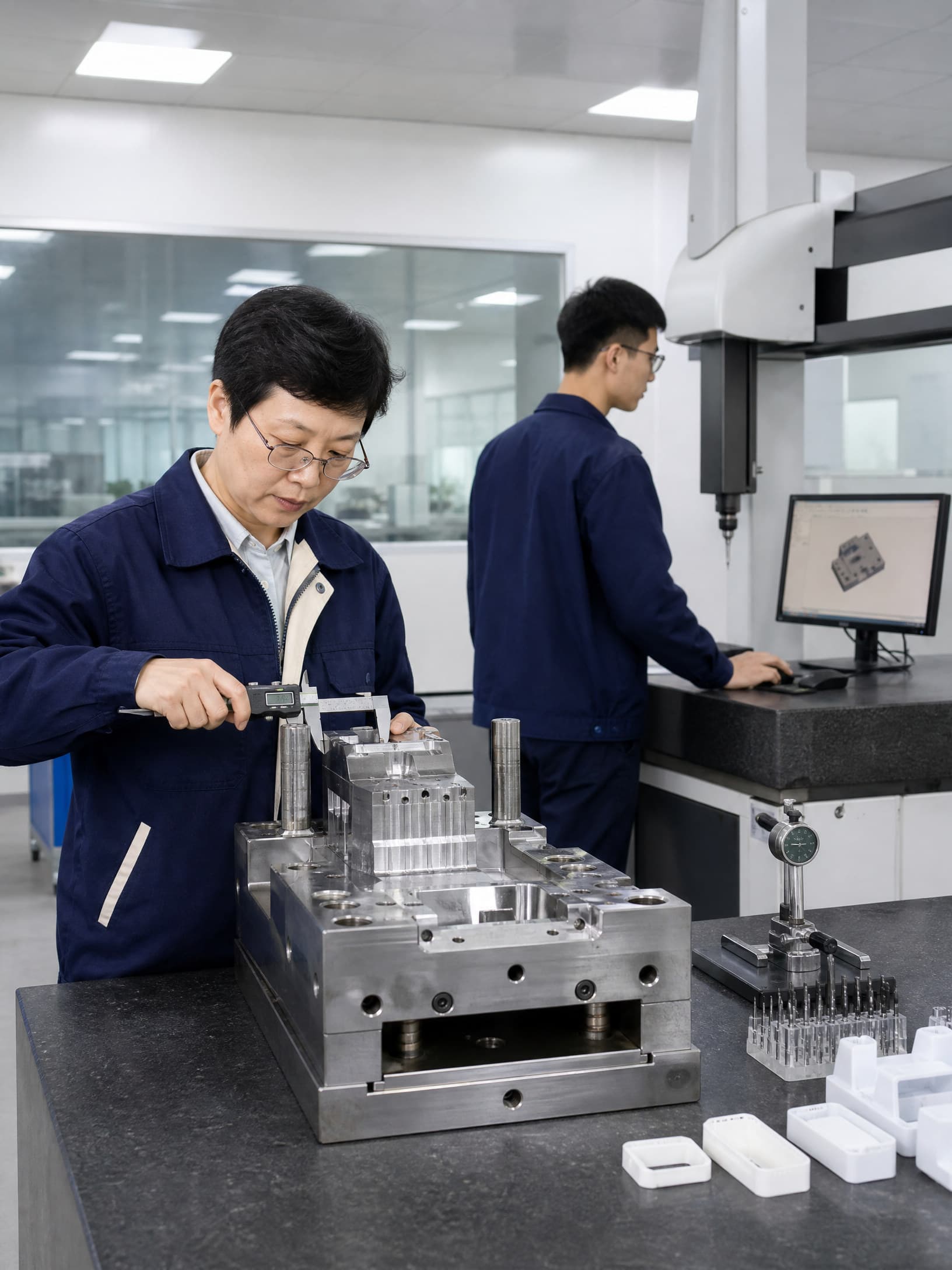
A design of experiments should make the tested factors, levels, responses, run order and confirmation logic visible. Common factors may include fill speed or profile, transfer strategy, melt and mold temperature, pack pressure or velocity, hold time, cooling time and material condition. The right factors depend on the part and risk; buyers should be cautious when a supplier presents a generic DOE template without explaining why those variables govern the part’s CTQs.
Look for a deliberate separation of primary factors from controlled background conditions. Record the actual values, not only nominal setpoints, and identify interactions that could make a narrow-looking window misleading. NIST describes selecting objectives, process variables and levels, choosing an experimental design, analysing the results and confirming the conclusions as connected DOE steps.[2] A supplier does not need to use the most elaborate design for every part, but the chosen design should be proportionate and technically explained.
A useful buyer decision table can be simple:
| Evidence in the DOE package | Buyer question | Decision signal |
|---|---|---|
| Factors and levels | Were the variables that can move the CTQs tested across meaningful, documented levels? | Proceed only if the tested range is relevant to the intended process. |
| Responses and limits | Are dimensions, mass, appearance or function tied to written acceptance criteria? | A pass/fail conclusion is weak when the response and limit are undefined. |
| Run order and records | Can each run be traced to actual settings, material, cavity and samples? | Untraceable runs cannot support a defensible window. |
| Interaction and boundary review | Are defects or out-of-spec results near the edges understood? | A center point alone does not establish usable boundaries. |
| Confirmation run | Was the proposed operating point repeated after the DOE analysis? | Confirmation supports the recommendation; it does not replace boundary evidence. |
03
Check whether decoupled molding matches the evidence
Decoupled molding separates the major molding stages so fill, pack and hold can be developed and controlled for their different purposes. In a typical approach, fill is primarily velocity-controlled, packing is developed separately, and hold is maintained for the required condition or time. The exact method and terminology can vary by equipment and training system, so buyers should ask the supplier to define the logic in plain language rather than approving a label alone.
RJG describes decoupled methods as separating process stages and using in-mold information to make stage decisions; its current description of a cavity-pressure-supported approach distinguishes velocity-controlled filling, a pressure-targeted pack transition and a hold phase until gate freeze.[3] This is useful evidence of method, not a promise that every mold needs cavity sensors or that one named method automatically makes a process capable.
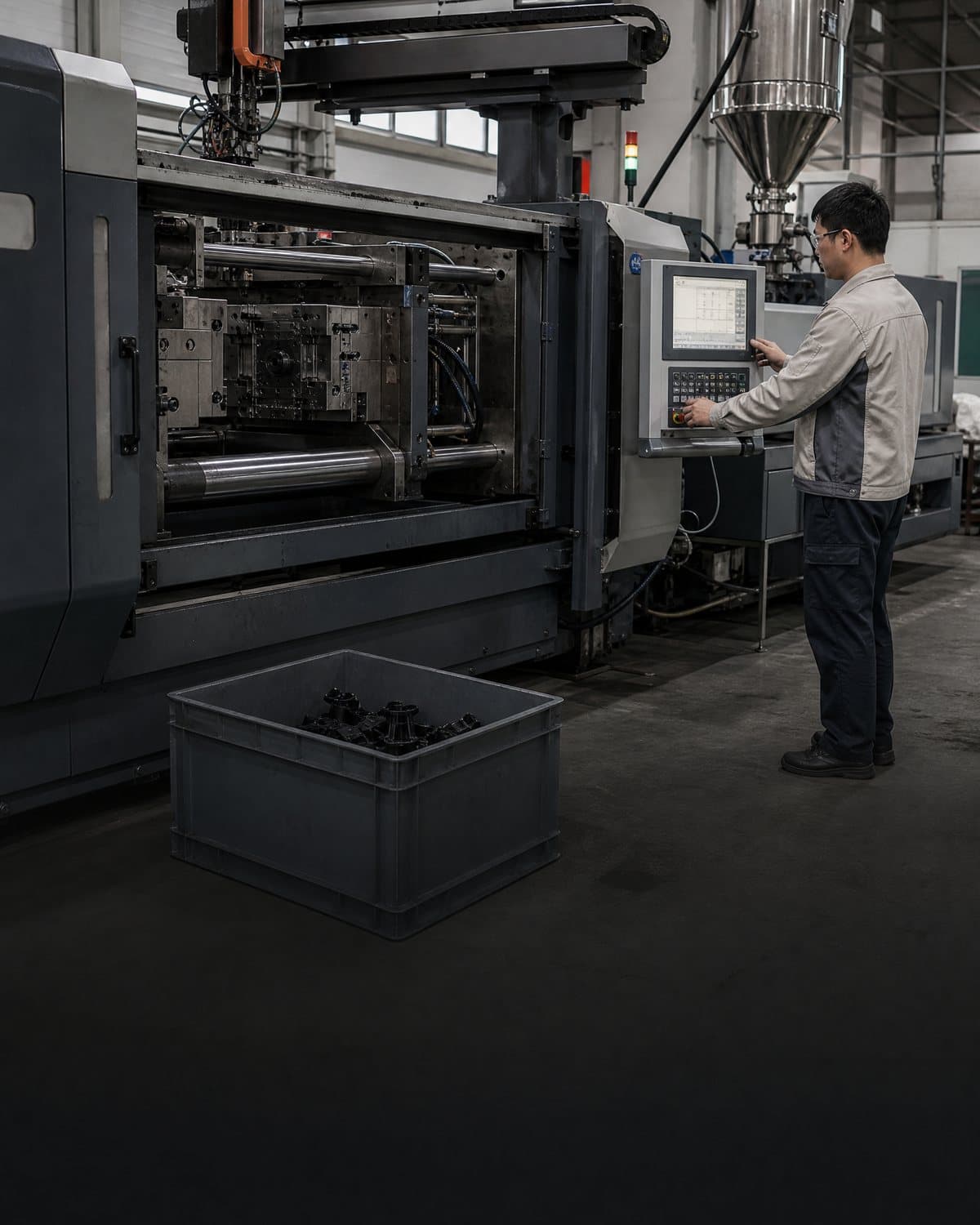
Ask for the process graph or record showing fill time, transfer point, injection pressure, pack or hold profile, screw position, cushion, cycle time and relevant temperature trends. Compare those machine-side records with the part results and, where installed, the cavity-pressure trace. If the supplier cannot explain which variable controls each stage and what happens when a limit is exceeded, the process may still be operator-dependent even if the setup sheet looks precise.
04
Use cavity pressure and drying records as linked evidence
Cavity pressure is closer to the part-forming event than machine pressure because it reflects conditions inside the cavity. It can help a team compare fill completion, packing behaviour, pressure decay and shot-to-shot curve shape. RJG identifies signals such as peak pressure, end-of-fill pressure, pressure integral and gate-freeze behaviour as potentially useful process indicators.[4] The buyer should still ask which signal is correlated with which CTQ; a pressure curve is not a substitute for dimensional or functional inspection.
Review sensor location, calibration or verification status, cavity identification, sampling rate, alarm limits and how the trace is retained. For a multi-cavity tool, compare curves by cavity rather than hiding imbalance in an average. If no cavity sensor is available, ask what indirect evidence is used and what its limitations are. Weight, transfer position and machine pressure can support a study, but they do not directly prove cavity conditions.
Drying belongs in the same evidence chain when the material requires it. Plastics Technology identifies airflow, temperature, dew point and drying time as linked drying concepts and advises using the material supplier’s technical data for specific conditions.[5] Request the exact grade instruction, incoming lot, packaging condition, dryer identification, setpoint and actual trend where available, residence time, dew-point evidence, transfer or hopper exposure and any agreed final-moisture measurement. A generic statement that resin was ‘dried’ is not enough to explain a viscosity shift or moisture-related defect.
05
Confirm repeatability before approving the window
Repeatability is demonstrated by repeating the defined process and checking the defined responses, not by reporting one cycle trace. Ask how many shots, parts, cavities, shifts or material lots are needed for the decision, and why. The plan should identify warm-up or stabilization rules, sample selection, part conditioning, measurement sequence, operator or equipment changes and the reaction path for an alarm or outlier. Exact sample quantities should be agreed for the part and risk rather than copied as a universal statistic.
A strong confirmation package compares runs at the recommended center point and, where justified, near the proposed boundaries. It reports actual settings and ranges, cavity-pressure curves or agreed proxies, part mass, CTQ measurements, visual results and any exclusions. If the process passes only after manual adjustments, record those adjustments and decide whether the window describes a controlled process or a skilled operator’s intervention.
Close the review with a change boundary. Resin grade or supplier, colourant, regrind content, tool repair, gate or cooling change, machine transfer, sensor replacement, dryer change and measurement-method change may each require notification or new evidence depending on product risk. The release record should name the approved center point, permitted ranges, monitoring signals, reaction plan, retained records and conditions that reopen the study.
Practical takeaway
Before you move
to the next review.
- The study names the approved part and drawing revision, tool/cavity, resin grade, machine, CTQs and acceptance criteria.
- DOE factors, levels, actual run records, responses, edge conditions and confirmation logic are reviewable.
- Decoupled fill, pack and hold logic is explained, with machine data linked to part results.
- Cavity-pressure evidence or its stated limitation is documented, and drying/material records are traceable where required.
- The release record defines repeatability evidence, approved ranges, monitoring, reaction actions and change triggers.
FAQ
Common questions
Is a single stable machine cycle enough to prove a process window?
No. One cycle can show that the machine made a part under one condition. A process window needs defined boundaries, responses, traceability and confirmation that the selected process remains acceptable when the documented study conditions are repeated.
Does scientific molding require cavity-pressure sensors?
Not necessarily. Sensors can provide direct in-cavity evidence and may be justified by part risk, cavity count or process sensitivity. Without them, the supplier should state which indirect signals are used and what those signals cannot prove.
What should a buyer request in a DOE report?
Request the objective, factors and levels, run order, actual settings, material and tool traceability, responses and acceptance limits, analysis, proposed operating point, boundary risks and confirmation-run results.
How should resin drying be included in process-window approval?
Tie drying to the exact grade’s supplier instructions. Record the material lot, packaging and storage status, dryer conditions, exposure after drying and any agreed moisture check. Do not substitute a generic temperature or time for grade-specific requirements.
Can an approved process window be transferred to another machine or supplier?
Not automatically. A transfer changes the equipment, control response, tooling interface or measurement context. Treat the original window as reference evidence and define a transfer study or confirmation plan before routine release.
References
Source material
- [1] Myers, Castro, Mulyana and Hoffman, “Experimental Development of an Injection Molding Process Window,” Preprints (2023).
- [2] National Institute of Standards and Technology, “NIST/SEMATECH e-Handbook of Statistical Methods: Process Improvement and Design of Experiments.”
- [3] RJG, “Automated Injection Molding Concepts Explained: A Powerful Scientific Approach with DECOUPLED MOLDING.”
- [4] RJG, “The Source of Truth Is Inside the Mold: Why Cavity Pressure Data Matters.”
- [5] Plastics Technology, “Resin Drying: Drying Basics.”
This guide is general information for early procurement and engineering discussion. It does not replace product-specific DFM, qualification, validation, regulatory assessment or legal advice.