
Programs with critical dimensions or appearance requirements
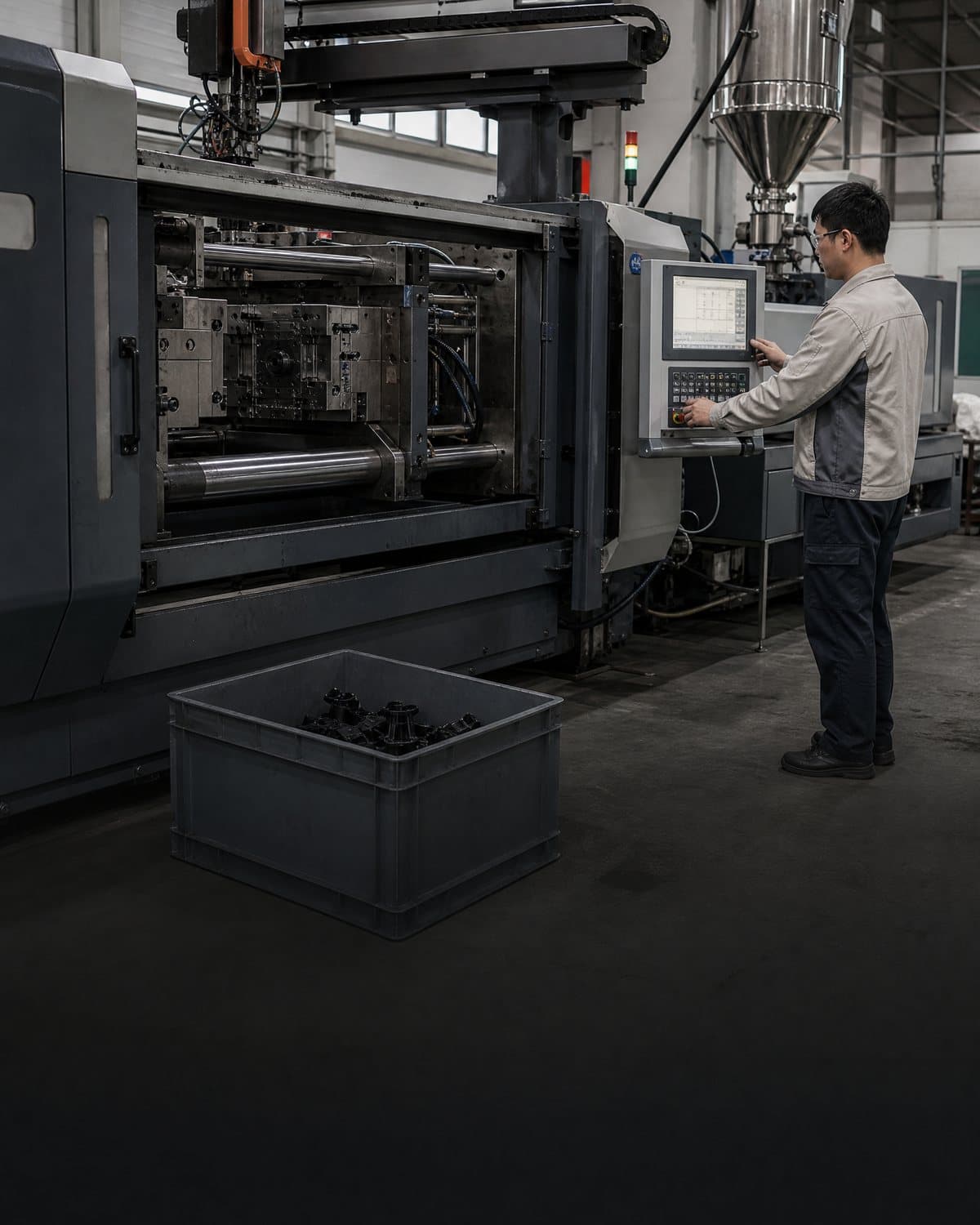
Repeatability beyond operator experience
Scientific injection molding
process control.
Plan repeatable injection molding with process windows, material control, documented setup parameters and evidence-based production decisions.
InjeForm
For OEM and product teams across Europe, North America & the Middle East
A practical sourcing route
Make the next
decision clearer.
Stable molding comes from understanding the process window rather than relying on undocumented machine settings. Buyers can ask suppliers how material, filling, packing, cooling, measurement and reaction controls will be established and maintained.
Buyer-led scopeEngineering evidenceControlled handover
Project fit
Where this route
helps most.
Start with the questions that affect tooling, quality, timing and total program risk.
High-volume parts requiring repeatable process capability
Buyers comparing documented process control with operator-dependent setup
What buyers can align
Evidence that supports
the next gate.
Scope the work around decisions and records—not broad promises.
Process-window questions for the RFQ
Defined with the part, tool, material, volume and acceptance requirements in scope.
Material drying and lot-control review
Defined with the part, tool, material, volume and acceptance requirements in scope.
Setup-sheet and parameter-locking discussion
Defined with the part, tool, material, volume and acceptance requirements in scope.
Capability, reaction-plan and change-control scope
Defined with the part, tool, material, volume and acceptance requirements in scope.
Decision framework
Compare the
trade-offs.
| Control area | What to establish | Useful evidence |
|---|---|---|
| Material | Resin grade, moisture and lot identity | Drying record and material traceability |
| Process | Fill, pack, cool and transfer conditions | Setup sheet and approved process window |
| Output | Critical dimensions and reaction limits | SPC, capability data and corrective action |
How the conversation moves
From brief to
controlled next step.
Use the first conversation to identify what is known, what is open and what evidence should come next.
- 01
Identify the CTQs and material-sensitive features.
- 02
Define the process variables and evidence required at trial.
- 03
Agree setup, monitoring and reaction controls before production.
- 04
Review capability and changes against the approved process basis.
Buyer questions
Clear answers before
you commit.
What is scientific injection molding?+
It is an evidence-based approach that connects part requirements to material behavior, machine settings, process limits, measurement and controlled production decisions.
What is a process window?+
A process window is the range of conditions that can produce acceptable parts under defined material, tool, machine and measurement conditions. It should be validated rather than assumed.
Does closed-loop control eliminate defects?+
No. It can improve monitoring and response, but part design, tooling, material, machine condition and acceptance criteria still determine the result.
Start a technical conversation
Bring us your
next part.
Share the drawing, resin, target volume, market and timing. We will return with focused questions and a practical next step.