
An injection mold spare-parts BOM should tell a buyer what to buy, why it matters, how quickly it can be obtained and who will control it after the tool is accepted. A supplier's broad recommendation is useful for starting the conversation, but it is not enough for sourcing, maintenance or a later tool transfer. The BOM should be tied to the actual mold revision, cavity arrangement, hot-runner or cold-runner system, moving components, approved materials and expected production conditions.
This guide focuses on the procurement evidence behind the list. It complements InjeForm's existing [injection mold transfer](/injection-mold-transfer) and [toolmaking](/injection-mold-making) discussions by showing how to turn spare parts into a controlled handover package. The correct quantities, service intervals and stock levels remain project-specific; confirm them with the toolmaker, component manufacturers and the signed commercial documents.
Do not approve a spare-parts BOM because it looks comprehensive. Approve it when every critical item has a usable identity, a defined failure consequence, a realistic replenishment path and an owner for the record and the stock.
01
1. Define the BOM boundary and link it to the actual tool
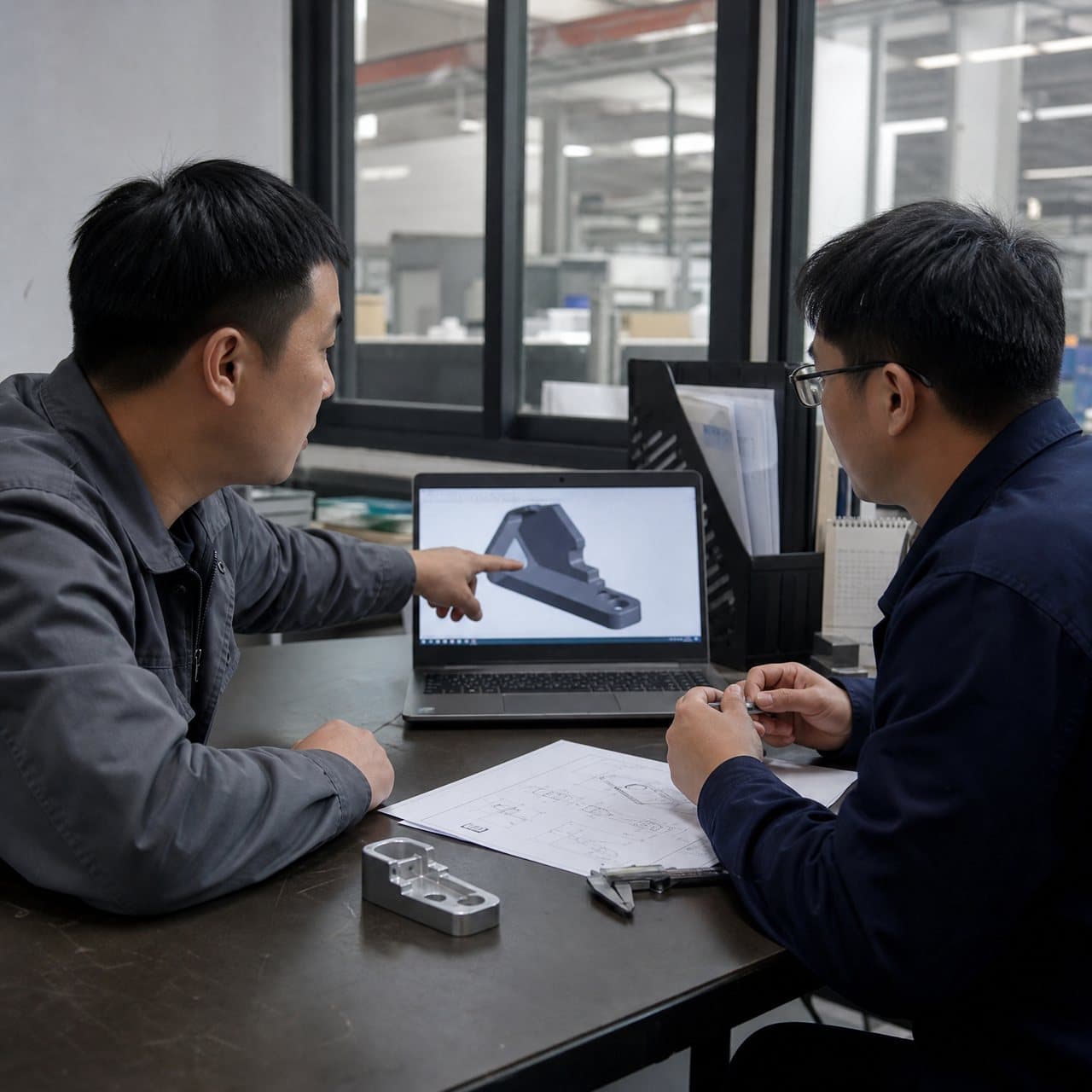
Start with a tool identifier, part number, drawing and mold revision, cavity count, mold-base reference and runner architecture. Record whether the BOM covers the complete tool, a hot half, a cold half, a cavity insert set, an automation interface or only the service kit. Include the supplier's internal item number and the original component manufacturer's part number where available. A photograph or marked-up assembly drawing can prevent a replacement insert, ejector set or controller cable from being mistaken for a generic equivalent.
The BOM should also show quantity per tool, quantity per cavity where relevant, installed quantity, recommended initial stock and unit of measure. Separate items supplied with the tool from optional replenishment stock and from buyer-supplied consumables. Link each line to an assembly position or drawing balloon. InjeForm's [DFM and tool-design process](/process) can help establish the tool architecture, but the released BOM and as-built record should control purchasing.
| BOM field | Minimum buyer evidence | Why procurement needs it |
|---|---|---|
| Tool identity | Tool number, part number, revision, cavities and assembly reference | Prevents parts from another mold or superseded design entering stock |
| Part identity | Manufacturer, exact part number, material or grade, dimensions and revision | Makes the item searchable and reduces non-equivalent substitutions |
| Quantity | Installed quantity, per-cavity quantity, initial stock and reorder quantity | Separates what is in the mold from what should be held as backup |
| Criticality | Failure mode, affected cavity or function, safe replacement condition | Supports prioritization instead of treating every line as equally urgent |
| Supply evidence | Lead time, source, alternates, minimum order and last verification date | Shows whether the stated recovery plan is actually buyable |
02
2. Classify critical spares by failure consequence
Use a risk-based classification rather than calling every wear component critical. A broken ejector pin may stop one cavity or damage a part; a failed hot-runner heater, thermocouple, controller cable or valve-gate component may affect temperature control, filling or multiple cavities. Slides, lifters, leader pins, bushings, return pins, springs, seals, O-rings, hydraulic fittings, cooling connectors and replaceable inserts can have different failure modes depending on the design. The BOM should state the consequence that justifies the proposed stock level.
A practical classification can use critical, planned and convenience categories. Critical means a failure could stop production or create a significant quality risk and the part is not quickly obtainable. Planned means the item is expected to wear or be replaced during scheduled maintenance. Convenience means it is useful to have but can be sourced without threatening the production plan. Do not turn these labels into universal inventory rules: confirm them against cycle count, resin abrasiveness, temperature, corrosion exposure, tool complexity, local supply and the cost of downtime.
03
3. Require lead-time and substitution evidence, not just estimates
For each critical line, ask for a lead-time basis: stock status, manufacturer production time, quoted validity, shipping assumptions, minimum order quantity and the date the information was checked. Distinguish an off-the-shelf standard component from a custom insert, engraved detail, hot-runner element or cavity-specific part. A statement such as ‘available quickly’ is not a recovery plan unless the source, quantity and route are identifiable. Include a second source only when dimensional, material, temperature, electrical and interface equivalence has been reviewed.
Define the substitution route before a failure occurs. The buyer may permit an approved equivalent for a standard seal or connector, while a gate insert, valve pin, heater, sensor or cavity component may require engineering review, a dimensional check or a trial before release. Any substitute should retain the tool and BOM revision, approval authority and verification evidence. InjeForm's [quality](/quality) workflow is a useful prompt for this evidence discussion; it does not make a substitute automatically acceptable.
| Spare category | Evidence to request | Release caution |
|---|---|---|
| Standard wear parts | Exact standard, dimensions, material, supplier and approved equivalent | Check fit, hardness, temperature and lubrication requirements |
| Hot-runner parts | Zone, connector, wattage or resistance, sensor type, controller compatibility and drawing | Do not assume similar-looking heaters or thermocouples are interchangeable |
| Cavity or core inserts | Tool position, steel or coating, geometry revision, inspection basis and machining source | Replacement may require fitting, polishing, texture and sample approval |
| Seals and fluid fittings | Size, compound, pressure or temperature range and circuit identification | Confirm compatibility with the actual coolant, oil or process condition |
| Electrical or control items | Voltage, pinout, connector, cable length, controller model and configuration | Verify safe isolation and control-system compatibility before installation |

04
4. Connect the BOM to maintenance, storage and ownership
A BOM becomes useful only when it is connected to the maintenance record. For each item, state whether replacement is triggered by cycle count, inspection finding, leakage, dimensional trend, electrical test, visible damage or a planned overhaul. Record any special tools, torque values, measurement checks, fitting instructions, lubrication or preservation requirements. The maintenance record should identify what was replaced, why, by whom, when, and what sample or inspection evidence allowed the mold to return to service.
Clarify ownership and custody before the tool is shipped or stored. The buyer may own the mold and spare stock while the molder holds and uses both, or the supplier may purchase service parts under an agreed maintenance scope. The purchase order or tooling agreement should state who pays for initial stock, replenishment, emergency freight, obsolete parts, engineering changes and damage caused by misuse. InjeForm's [mold transfer](/injection-mold-transfer) guidance is a natural place to frame this discussion, but title, access and permitted use should be confirmed in the contract.
05
5. Close acceptance with a signed BOM and handover pack
At tool acceptance, compare the BOM with the as-built mold rather than accepting an early quotation list unchanged. Confirm installed part numbers, actual quantities, cavity positions, revisions, supplied spare quantities, packaging labels and any deviations. Ask the supplier to identify items that were changed during build or trial and to update the drawings, electrical or cooling diagrams and maintenance instructions accordingly. ISO 9001 describes a quality-management framework, but certification alone does not prove that the BOM is complete or that every listed replacement is suitable for this tool.[1]
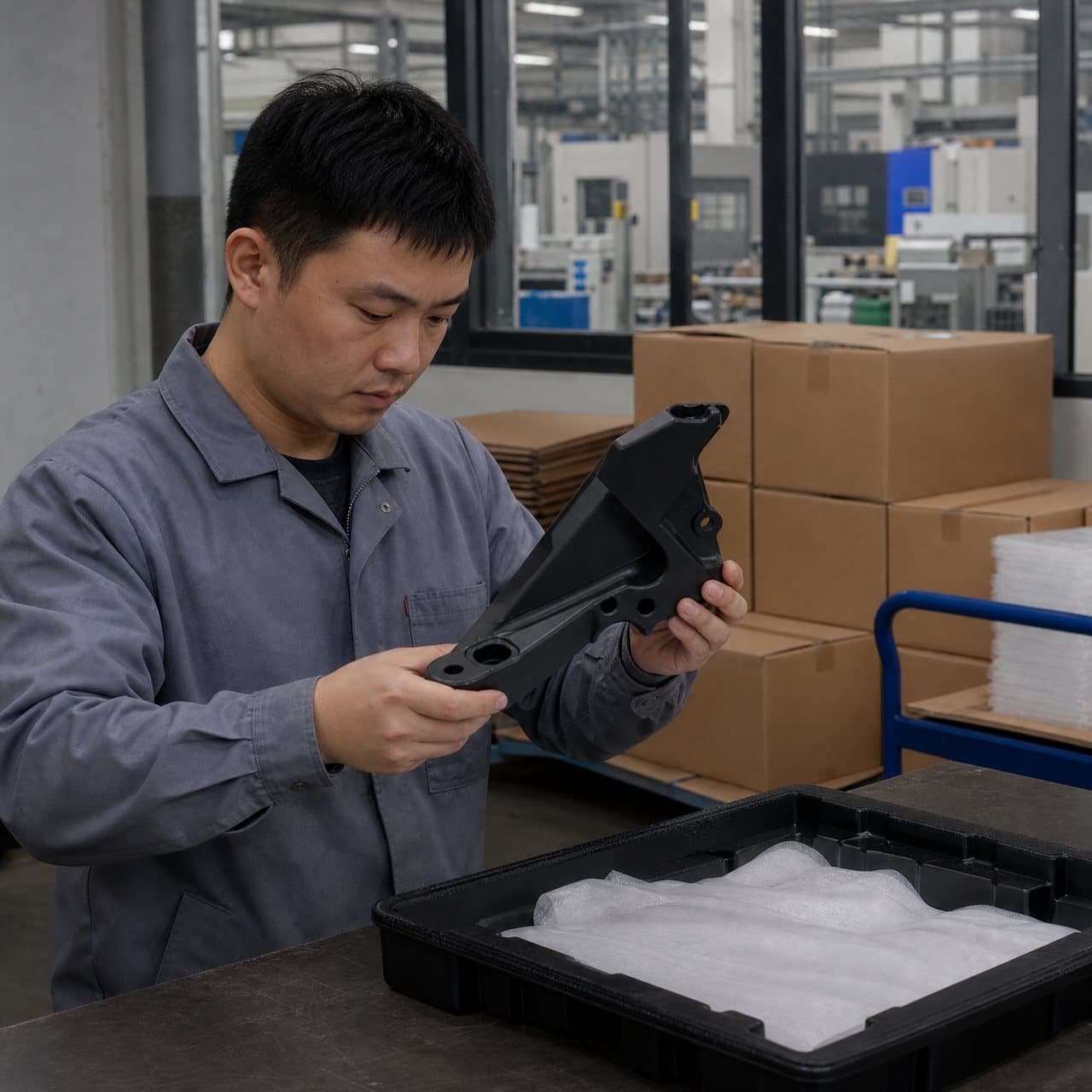
The handover pack should make the next buyer, maintenance team or receiving supplier able to identify and order the right part. Include the controlled BOM, as-built assembly or exploded views, component data sheets, approved-alternate decisions, lead-time evidence, maintenance schedule, storage and preservation instructions, tool condition report, trial and inspection records, change history, open actions and named signatories. Configuration-management principles support retaining an identifiable baseline and change history; NASA's guidance is a useful reference for that discipline.[2] For an RFQ or handover review, send the controlled package through [Request a Quote](/request-a-quote) rather than relying on an informal spreadsheet.
Practical takeaway
Before you move
to the next review.
- Tie every BOM line to the actual mold, part revision, cavity or assembly position and an exact searchable part identity.
- Classify critical, planned and convenience spares using failure consequence, replenishment difficulty and tool-specific evidence.
- Record lead-time basis, source, minimum order, approved alternatives and the review route for any substitution.
- Define maintenance triggers, storage conditions, replacement checks, ownership, custody, replenishment and emergency-cost responsibilities.
- Sign off an as-built BOM with drawings, records, labels, stock quantities, change history and named handover owners.
FAQ
Common questions
Is a generic injection mold spare-parts list enough for procurement?
Usually not. A generic list can identify categories, but procurement needs the tool number, exact part identity, quantity, criticality, source, lead-time basis and substitution rule for each applicable item.
Which injection mold spares should buyers normally prioritize?
Prioritize items whose failure can stop production or affect a critical feature and whose replacement is not immediately available. Depending on the tool, that may include cavity inserts, ejector or slide components, hot-runner heaters and sensors, valve-gate parts, seals and dedicated electrical items.
Should the BOM include standard components that can be bought locally?
Yes, when they are installed, safety- or quality-relevant, or needed for planned maintenance. Record the exact standard, material and dimensions, then state whether a local equivalent is pre-approved or requires engineering review.
Who owns injection mold spare parts after tool handover?
The answer depends on the purchase order and tooling agreement. State title, custody, permitted use, stock location, replenishment responsibility, emergency purchasing, obsolete stock and access to records instead of assuming that payment alone settles the issue.
How should a buyer validate a spare part before returning the mold to production?
Use the tool-specific instruction and risk level. Confirm fit and installation, inspect the affected feature or circuit, record the replacement, run the agreed trial or checks, and obtain the required quality or production release before normal output resumes.
References
Source material
- [1] International Organization for Standardization, “ISO 9001 — Quality management systems.”
- [2] NASA, “Configuration Management.”
- [3] International Organization for Standardization, “ISO 20457:2018 Plastics moulded parts — Tolerances and acceptance conditions.”
- [4] National Institute of Standards and Technology, “Metrological Traceability.”
- [5] U.S. Food and Drug Administration, “Quality Management System Regulation (QMSR).”
This guide is general information for early procurement and engineering discussion. It does not replace product-specific DFM, qualification, validation, regulatory assessment or legal advice.