
A mold can be paid for, qualified and still become a production constraint when a cavity insert, ejector component, seal, guide element or hot-runner part fails without an identified replacement route. The answer is not to purchase every possible component. It is to connect each spare to a failure consequence, a controlled identity, a realistic replenishment lead time and an evidence-based restart check.
This guide focuses on the procurement decisions behind mold spare parts and replacement inserts. It is intentionally different from a generic maintenance-kit checklist: the central question is whether the buyer can recover an approved production configuration without improvising dimensions, material, cavity identity or release evidence. Use InjeForm's [request-a-quote](/request-a-quote) route with the current tool records, demand profile and continuity scenario.
Buy a controlled recovery route, not an unlabelled inventory of components. Every critical spare should have an identity, technical basis, storage status, replenishment trigger and post-replacement release check.
01
1. Rank spare parts by interruption consequence
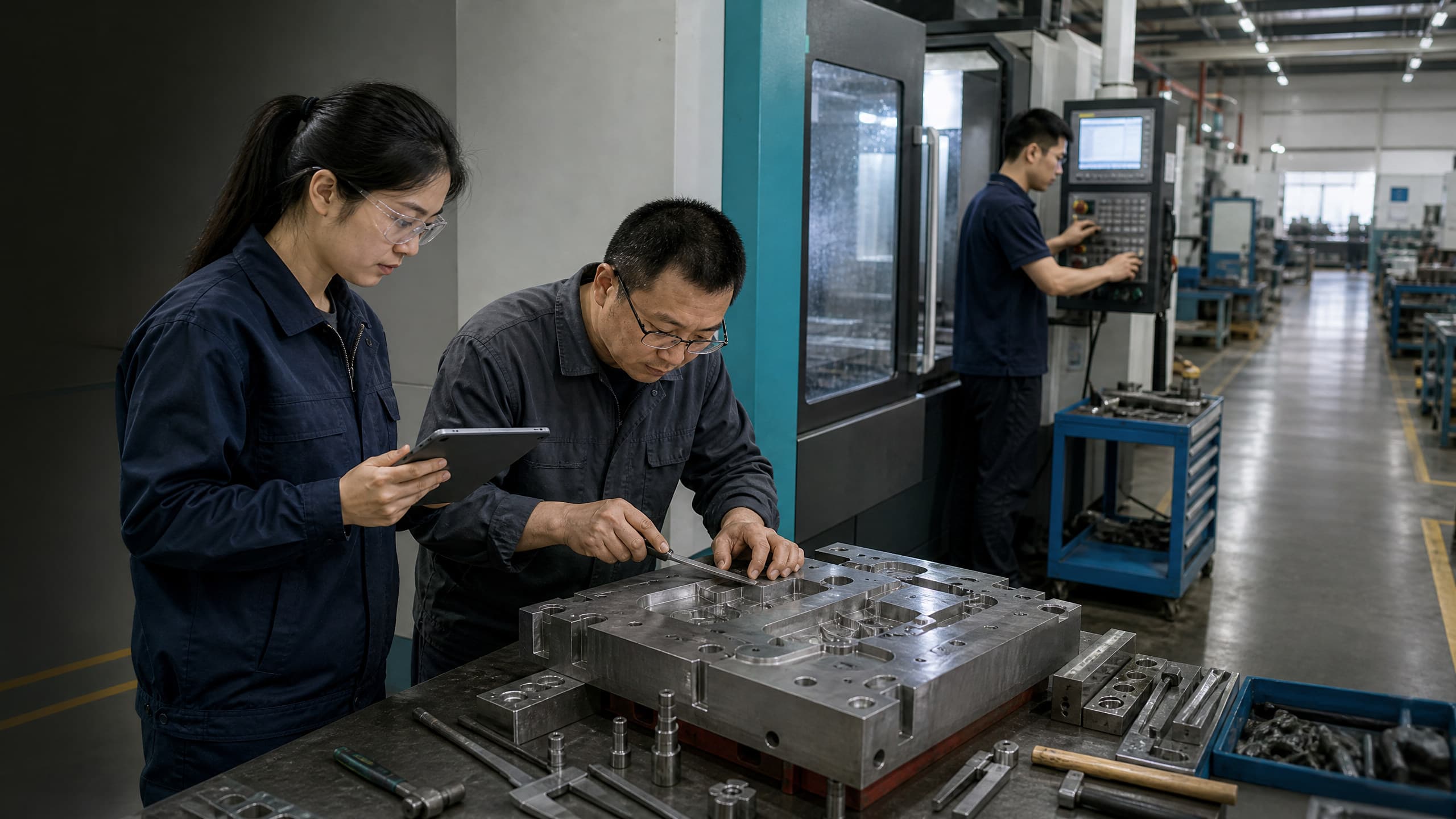
Start with the tool assembly, component drawings, maintenance history, production schedule and known failure modes. Record the installed quantity, cavity or station served, function, current condition, replacement lead time, supplier and the production consequence if the item is unavailable. A replacement insert that disables one cavity is a different continuity risk from a component that stops the complete mold or affects a critical-to-quality feature.
Separate critical spares, planned-service parts and general consumables. Critical spares may include cavity inserts, shutoff elements, ejector components, hot-runner heaters or sensors, and dedicated seals or fittings. The category depends on the actual tool and product; it should not be inferred from a generic catalog. Link each line to a drawing, photograph, CAD location or measurement record. InjeForm's [process](/process) and [quality](/quality) pages can help frame the engineering and evidence discussion before a quotation is issued.
Define the continuity scenario before setting quantities. Is the stock intended to cover a weekend failure, an overseas replenishment delay, a planned refurbishment, a supplier transfer or a peak-demand launch? The answer changes the acceptable lead time, local-versus-toolroom sourcing decision and level of backup capacity.
| Risk class | Typical buyer question | Planning response |
|---|---|---|
| Production-stopping | Would failure halt all approved output? | Prioritize an identified spare, realistic replenishment route and emergency approval path. |
| CTQ or cavity-specific | Could replacement affect dimensions, sealing, appearance or cavity balance? | Hold controlled drawings, cavity identity and defined post-replacement evidence. |
| Planned-service | Is replacement condition-driven or scheduled? | Set inspection criteria, service window and reorder trigger. |
| Standard consumable | Can it be sourced and verified quickly without changing the tool baseline? | Control compatibility and storage, but do not confuse it with a precision spare. |
02
2. Specify replacement inserts as engineered components
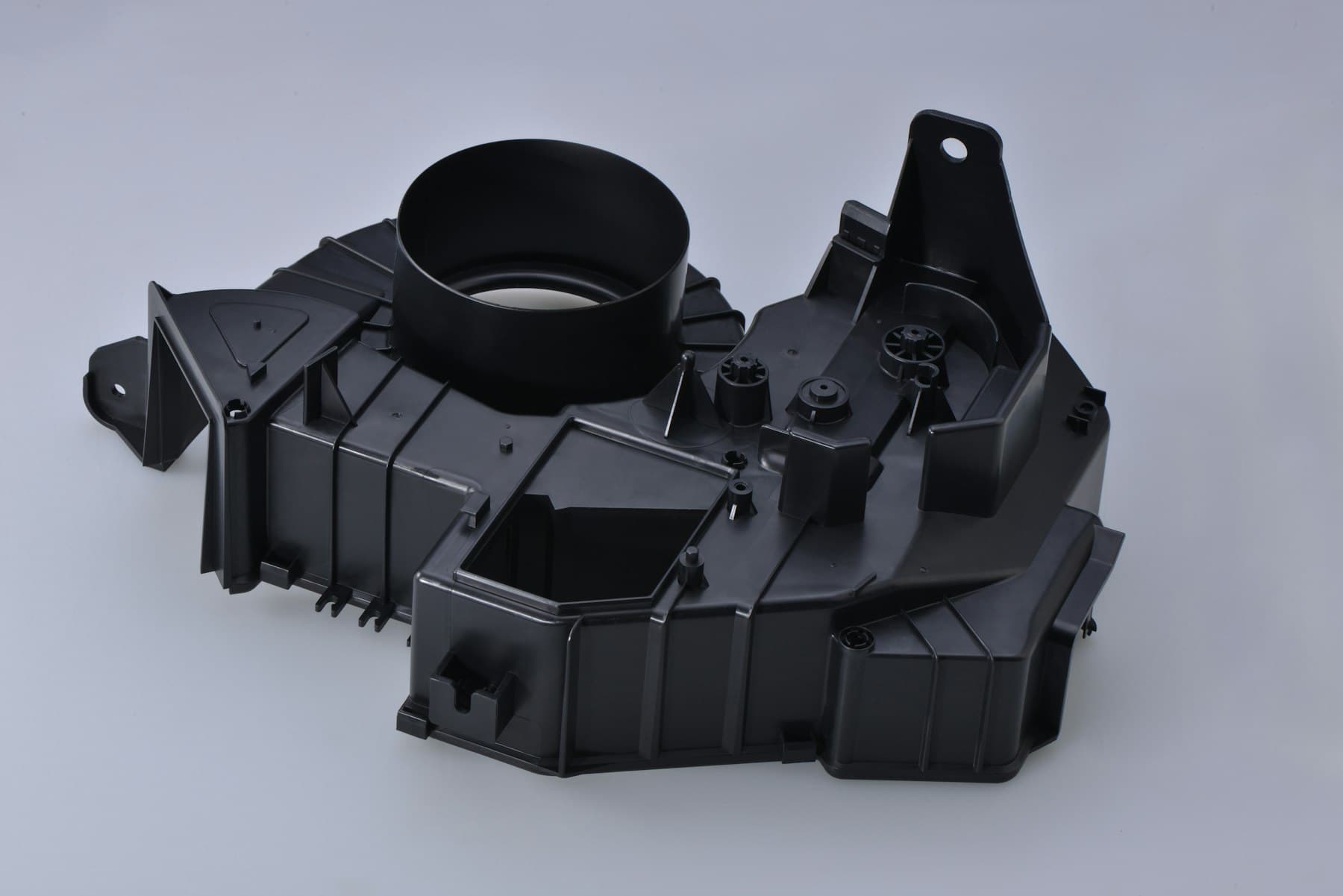
A replacement insert is not interchangeable merely because it fits the pocket. The RFQ should identify the tool number, part and cavity, insert drawing revision, steel or material direction, hardness or treatment requirement where applicable, datum and interface scheme, shutoff or sealing surfaces, surface finish, texture, cooling features and any critical dimensions. State whether the insert is a like-for-like replacement, a wear-compensation item, a design change or an emergency temporary component.
Ask the toolmaker to show how the replacement will be inspected and matched to the existing assembly. Useful evidence may include a marked-up drawing, dimensional report, material or treatment record, photographs of reference features, fit or blue-check results, and a list of dimensions that must be checked after installation. Do not accept a substitute based only on a supplier statement that it is a standard component. Material, clearance, hardness, alignment, venting and thermal behavior can all affect molded parts.
For multi-cavity tools, preserve cavity identity and interchangeability rules. A spare made for cavity 3 should not be issued to cavity 1 because the outside shape appears similar. If the design permits interchangeable inserts, document the basis and the inspection method that confirms it. For a new or revised insert, use the [DFM and tool-design](/dfm) review to identify possible effects on cooling, ejection, weld lines, shrinkage and appearance before steel is committed.
03
3. Set stock levels and replenishment triggers from evidence
There is no universal number of spare inserts or mold components to hold. Use the failure consequence, installed quantity, observed consumption, supplier lead time, minimum order, available backup mold, repair capability, transport route and production value at risk. A custom cavity insert with a long machining and treatment lead time may justify a different protection level from a standard fitting available locally. Record the reasoning so procurement can revisit it when demand or the supplier route changes.
Use a parts register with minimum and maximum quantities, but treat those fields as decisions rather than automatic inventory truth. A reorder trigger might be one spare remaining, a forecasted maintenance event, a supplier obsolescence notice or a lead-time change. Review the register after every failure, insert refurbishment, engineering change, transfer, long idle period or material change. The register should show issued quantity, remaining quantity, reason for use, replacement order and expected receipt.
Ask for a commercial response that separates replacement hardware, inspection, engineering review, packaging, preservation and expedited logistics. This makes a low-priced part list distinguishable from a complete recovery package. When the mold is customer-owned or may move between sites, link the register and drawings to the [injection mold transfer](/injection-mold-transfer) handover rather than leaving them with one supplier's informal records.
| Planning input | Evidence to collect | Decision it supports |
|---|---|---|
| Failure consequence | Affected cavity, CTQ, output loss and recovery scenario | Criticality and urgency class |
| Replacement lead time | Manufacturing, treatment, inspection and shipping stages | Safety stock or alternate route |
| Consumption history | Issue records, wear findings and repair causes | Minimum quantity and review frequency |
| Supply route | Approved maker, drawing ownership, local capability and obsolescence risk | Replenishment and second-source plan |
| Demand exposure | Forecast, peak window, service obligations and downtime cost | Continuity investment and escalation level |
04
4. Control storage, identity and supplier evidence
A spare that cannot be identified or trusted at the moment of failure is not production protection. Label each item with the tool number, component reference, revision, cavity or location, status and quantity. Separate released, quarantined, returned, obsolete and under-inspection stock. Protect precision surfaces from impact, corrosion and contamination, and follow the component maker's storage or shelf-life instructions for seals, chemicals and temperature-sensitive items.
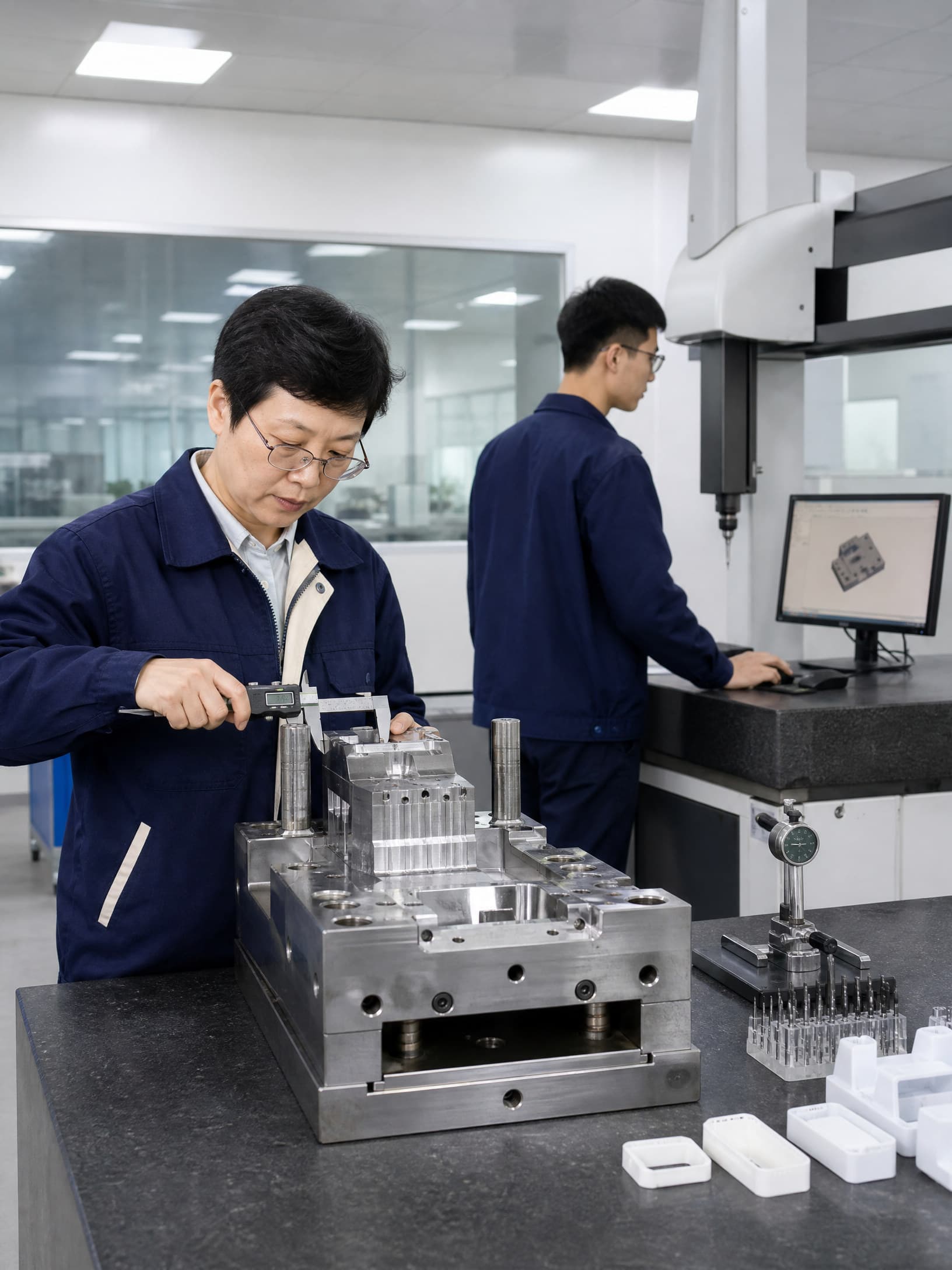
Request evidence proportionate to the component risk. A standard fitting may need a size, material and compatibility check. A cavity insert or shutoff may need controlled dimensional inspection, material or treatment evidence and a documented fit or functional check. For hot-runner components, match the heater, sensor, manifold and controller records; never rely on visual similarity or an unverified electrical substitute. ISO 9001 describes a quality-management framework, but it does not prescribe one universal mold-spare record set for every program [1].
Define who may approve a substitute, who can release stock, and who must be notified if the original component becomes unavailable. Drawings and replacement data should be part of the agreed tooling record, subject to the contract and applicable intellectual-property terms. InjeForm's [mold transfer](/injection-mold-transfer) information can support this handover conversation, but the purchase agreement should govern ownership, access and permitted use.
05
5. Make replacement and restart a release gate
Before work starts, record the tool condition, installed component, cavity identity, orientation and reason for replacement. Define whether the work is routine maintenance, corrective repair, an engineering change or a temporary containment. A like-for-like seal replacement may require a leak or pressure check; an insert, shutoff, ejector, gate or hot-runner change may require movement checks, dimensional inspection, visual review, functional testing or a controlled molding sample. The required evidence comes from the tool drawing, product requirements and customer-specific quality plan.
After installation, verify the assembly before production: fasteners and locating features, clearances, ejection, cooling or electrical connections, guarding and cleanliness. Identify the tool and cavity used for the first shots. Compare agreed CTQs and visual features against the approved baseline, and record any deviation or containment. If the replacement addresses repeated damage, investigate alignment, lubrication, process conditions or an underlying design issue rather than treating the event as simple consumption.
Close the event by updating the parts register, tool history, installed-component list, maintenance instruction, inspection records and remaining stock. For regulated, safety-relevant or customer-controlled products, the product owner or legal manufacturer must determine whether additional validation, notification or approval applies; a supplier's replacement report is not automatically market authorization. If the tool, insert data or spare package needs a project-specific review, send the controlled files through [request a quote](/request-a-quote).
Practical takeaway
Before you move
to the next review.
- Rank each spare or replacement insert by its effect on output, CTQs, cavity availability and recovery time.
- Specify tool number, cavity, drawing revision, material or treatment, interfaces, inspection basis and approved-substitute route.
- Set stock and reorder triggers from failure history, supplier lead time, demand exposure, backup capacity and transport risk.
- Store released, quarantined, returned and obsolete items separately with labels, preservation controls and traceable issue records.
- Define pre-installation checks, post-replacement evidence, first-shot release and records that must be updated before routine production.
FAQ
Common questions
How many injection mold spare parts should a buyer keep?
There is no universal quantity. Set the level from failure consequence, installed quantity, lead time, consumption history, backup capacity and demand exposure. Revisit it after failures, tool changes, supplier changes or long idle periods.
What information should an RFQ for a replacement mold insert include?
Include the tool and cavity identity, drawing and revision, material or treatment requirements, interfaces, critical dimensions, surface or texture needs, quantity, inspection evidence, packaging, delivery trigger and any required post-installation sample or release check.
Can a standard insert replace a custom mold insert?
Only after the responsible technical owner confirms the interface and performance requirements. Check dimensions, alignment, hardness, surface finish, sealing or shutoff function, temperature behavior and product impact, then record the approved basis.
Does replacing an insert require a new mold trial?
It depends on the insert and product risk. A change that can affect CTQs, appearance, cavity balance, ejection, cooling or sealing generally needs defined verification, which may include inspection and controlled molded samples. The project acceptance plan should decide the scope.
How can spare parts support production continuity during an overseas supply delay?
Identify long-lead and production-stopping items first, hold controlled local or regional protection where justified, document an approved repair or alternate route, and agree escalation, export, packaging and restart evidence before an emergency occurs.
References
Source material
- [1] International Organization for Standardization, “ISO 9001 — Quality management systems.”
- [2] International Organization for Standardization, “ISO 20457:2026 — Plastics moulded parts — Tolerances and acceptance conditions.”
- [3] D-M-E, “Mold Components” catalog.
- [4] U.S. Food and Drug Administration, “Process Validation: General Principles and Practices.”
This guide is general information for early procurement and engineering discussion. It does not replace product-specific DFM, qualification, validation, regulatory assessment or legal advice.