
Preventive maintenance should be planned before a mold becomes a production problem. The schedule needs to reflect the tool’s design, resin, cycle severity, cavity count, hot-runner or cold-runner arrangement, corrosion exposure, storage conditions and actual production history. A generic calendar can miss the failure modes that matter most to a particular tool.
For an OEM or procurement team, the schedule is also an evidence system. It should show what was inspected, who performed the work, what was measured, which parts were replaced, whether the tool returned to an approved condition and when the next review is due. InjeForm’s [request-a-quote](/request-a-quote) workflow can help buyers ask for this plan before award, while the [injection mold transfer](/injection-mold-transfer) page is a useful prompt when custody or supplier location may change.
Do not approve a maintenance plan that only says ‘service as needed.’ Require task triggers, acceptance criteria, named responsibility, retained evidence and an escalation route for condition that threatens part conformity or supply continuity.
01
1. Start with a tool baseline and risk register
Create one controlled record for each mold, with a unique tool ID, part numbers, cavity count, steel and insert details, runner type, hot-runner components, cooling circuits, ejection system, slides or lifters, surface-finish requirements and approved machine interfaces. Add the released tool drawing, component list, spare-parts list, assembly photographs and the last accepted sample or dimensional report. This baseline lets a technician distinguish normal wear from an unauthorized change.
Rank risks by consequence and likelihood rather than assigning every task the same interval. A corrosive resin, abrasive glass-filled grade, high-cavitation tool, tight shutoff, textured cosmetic surface or long storage period may justify more frequent checks. Record the failure effect as well: flash, short shot, dimensional drift, sticking, cooling imbalance, contamination, cavity mismatch or an unplanned stop. ISO 10007 describes configuration-management guidance that applies from concept to disposal; using the same discipline for a mold record helps preserve identity as the tool changes over its life.[1]
| Baseline item | Buyer evidence to request | Risk if missing |
|---|---|---|
| Tool identity | Tool ID, part revision, cavity map, location and custody | Maintenance may be logged against the wrong configuration. |
| Design condition | Approved drawings, steel, inserts, runner and cooling layout | Wear or repair can be judged without a known reference. |
| Operating exposure | Resin, cycle history, shot count, storage and corrosion conditions | Intervals may be too long for the actual duty. |
| Acceptance baseline | Approved samples, CTQs, visual standard and inspection report | A repaired mold can run without proving part conformity. |
| Critical spares | Part numbers, lead times, approved substitutes and stock status | A minor failure can become a prolonged outage. |

02
2. Separate routine checks from condition-based tasks
Use more than one clock. Calendar intervals can cover cleaning, rust protection and storage checks, while shot-count or cycle-count triggers can cover ejector lubrication, vent cleaning, cavity inspection and hot-runner review. Event triggers are equally important: a flash complaint, rising injection pressure, sticking, unusual noise, coolant leakage, a material change, an extended shutdown, a tool transfer or a repair should open a defined inspection or requalification task.
Define what the technician actually checks and what result is acceptable. For example, ‘inspect vents’ is weaker than ‘clean and inspect vent condition; record location, finding, action and sample disposition.’ The exact interval must be set by the toolmaker or qualified maintenance team from the tool design and process history. Do not present a universal number of shots or months as a guarantee of tool life.
A practical schedule can have daily or pre-run checks, periodic planned-service checks, and an annual or programme-gate review. The first group may cover cleanliness, visible damage, water connections, sensors and safe mounting. The second may cover lubrication, venting, ejector travel, slide wear, cooling flow and hot-runner symptoms. The deeper review should examine trend data, spare-part condition, dimensional evidence, repair history and whether the tool remains fit for forecast demand.
| Trigger | Typical review focus | Release evidence |
|---|---|---|
| Before each run | Cleanliness, rust, utilities, visible damage, safe installation | Pre-run sign-off and open-issue status. |
| Shot or cycle threshold | Lubrication, vents, ejection, slides, cooling and runner condition | Completed task record with findings and parts used. |
| Defect or process trend | Affected cavity, wear location, dimensions and containment | Corrective-action record and sample decision. |
| Repair or engineering change | Configuration, fit, function and process impact | Approved change record and post-work inspection. |
| Storage or transfer | Preservation, packaging, identity, accessories and custody | Handover or storage checklist with photographs. |
03
3. Make maintenance records useful for production decisions
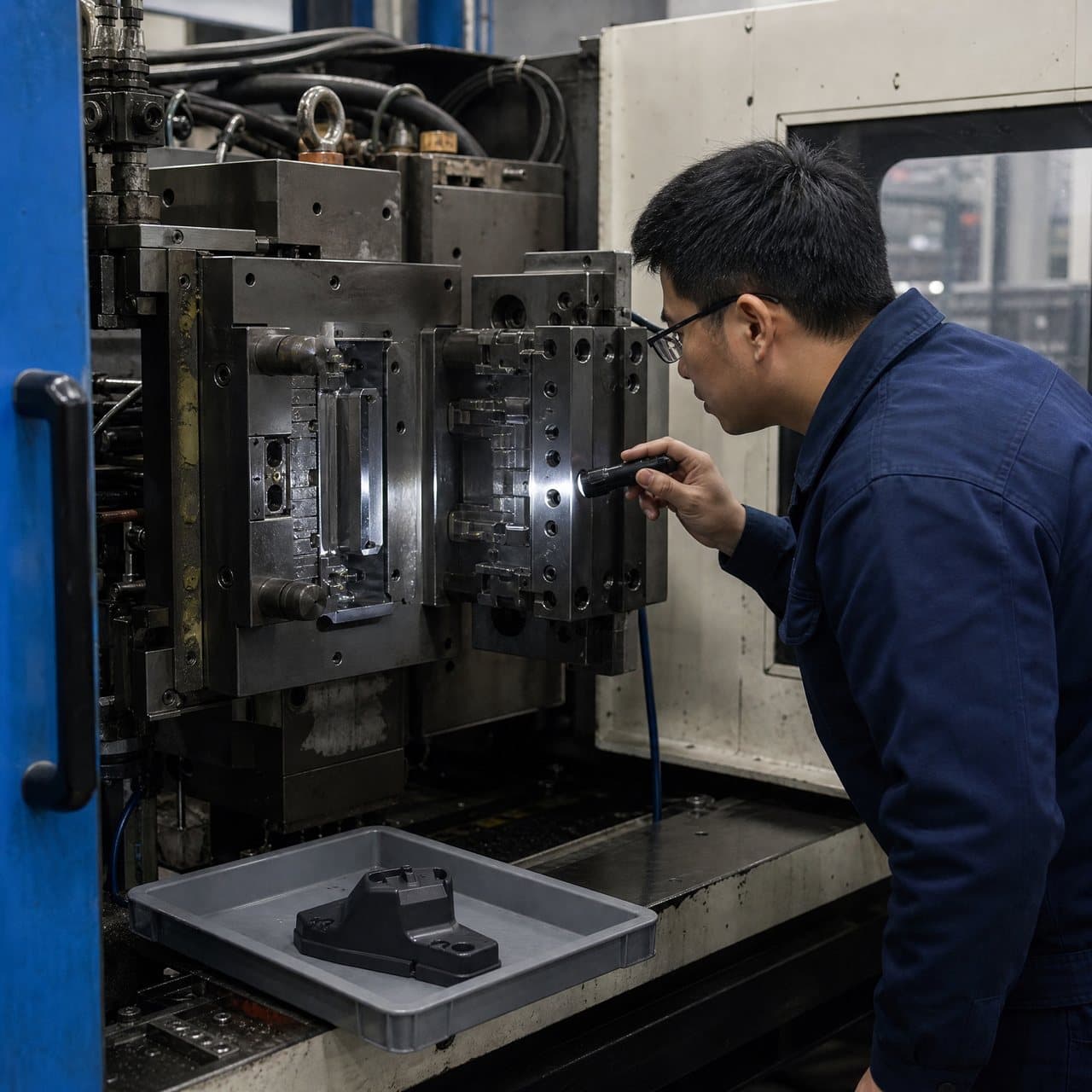
Every completed task should leave an auditable trail. At minimum, capture tool ID, date, trigger, shot or cycle count, technician, task performed, component or cavity affected, measurements or observations, lubricant or replacement part, photographs where useful, nonconformity status, approval and next due condition. Link the record to the production lot, machine and part revision when the work could affect acceptance.
Keep planned work, findings and verification separate. A tick mark can show that someone performed an inspection, but it does not show whether the result was acceptable or whether a follow-up was closed. ISO guidance says documented information should be maintained to support process operation and retained as evidence that processes were carried out as planned; it also highlights records for changes, nonconformities, corrective action, traceability and authorized release.[2]
Review the log for trends rather than filing it passively. Repeated polishing at one shutoff, increasing vent cleaning, recurring cavity imbalance or shorter intervals between ejector repairs may indicate a design, material, process or spare-parts problem. Share a concise condition summary with engineering, quality, operations and procurement before a recurring defect becomes an emergency repair.
04
4. Tie ownership, safety and change control to the schedule
The schedule should name the party responsible for planning, performing, approving and paying for each class of work. Clarify who owns the mold, who may authorize steel removal or component substitution, where the tool is stored, who retains records, who holds spare parts and how the buyer is notified of a condition that may affect delivery. A maintenance clause should also address emergency repair, planned downtime, subcontracting, confidentiality, photographs, transfer rights and record handover.
Maintenance work can change the tool configuration. Require a change number for cavity polishing, insert replacement, vent modification, gate work, cooling alteration, hot-runner replacement or any repair that can affect the molded part. The record should identify the reason, approved drawing or instruction, authorizer, parts removed and installed, inspection result, trial result and whether a new first-article or dimensional check is required. A supplier’s general repair promise is not a substitute for this approval path.
Safety procedures belong in the work instruction, not only in the commercial contract. Where maintenance exposes people to unexpected start-up or stored energy, the employer must apply its applicable energy-control programme. OSHA’s lockout/tagout rule covers servicing and maintenance where unexpected energization, start-up or release of stored energy could cause injury.[3] Buyers should require qualified personnel and documented site procedures, while leaving legal compliance to the responsible employer and jurisdiction.
05
5. Use lifecycle reviews to decide repair, reserve or replacement
A schedule should include a decision gate for lifecycle risk, not only the next maintenance date. Review remaining forecast volume, recent downtime, repair frequency, critical spare availability, cavity-to-cavity performance, corrosion or wear, supplier response time, tool transferability and the cost of another intervention. Compare the risk-adjusted options: continue with controls, refurbish, replace selected inserts, build a duplicate or second-source tool, or retire the mold after a controlled transition.
Set escalation thresholds in terms the buyer can act on. Examples include repeated failures of the same component, an open repair that cannot be verified, loss of a critical spare source, inability to reproduce the approved sample, increasing corrective-action frequency or a projected maintenance outage that conflicts with customer demand. Thresholds should be programme-specific and approved by engineering and quality; they are not universal tool-life limits.
At end of life or transfer, preserve the complete evidence package: current configuration, maintenance and repair history, spare-parts status, approved process window, samples or inspection records, open risks, storage condition and next recommended actions. This package protects continuity when a tool moves between sites or suppliers and gives procurement facts for the next tooling decision. InjeForm’s [toolmaking](/toolmaking) and [quality](/quality) resources can support the technical conversation, but the signed agreement and released records should control the programme.

Practical takeaway
Before you move
to the next review.
- Assign every mold a controlled identity with its current part revision, configuration baseline, custody location and approved acceptance evidence.
- Use calendar, shot-count, condition and event triggers, and define the task, responsible person, acceptance criterion and next due condition for each trigger.
- Retain findings, measurements, parts replaced, photos where useful, nonconformities, approvals and post-maintenance sample or inspection evidence.
- Link maintenance to ownership, spare parts, transfer, safety, change control and notification responsibilities in the purchase or service agreement.
- Review lifecycle trends and forecast risk at defined gates so the team can repair, refurbish, duplicate, transfer or retire the tool before supply is exposed.
FAQ
Common questions
How often should an injection mold receive preventive maintenance?
There is no universal interval. Set calendar, shot-count and condition-based triggers from the tool design, resin, cycle severity, cavity count, storage and maintenance history, then revise them when evidence changes.
What should an injection mold maintenance record contain?
Record the tool ID, revision, date, trigger, shot or cycle count, technician, task, cavity or component, findings, measurements, parts or materials used, photographs when useful, nonconformity status, approval and next due condition.
Should maintenance be based on shots or calendar time?
Use both where appropriate. Shot or cycle exposure reflects use, while calendar checks address corrosion, storage, lubricant condition and long idle periods. Add event triggers for defects, repairs, material changes and transfers.
Does mold maintenance require a new first-article inspection?
Not automatically. Assess whether the work could affect CTQs, fit, appearance, function or process capability. Engineering and quality should define the required post-work inspection, sample approval or revalidation before release.
Who should own the injection mold maintenance schedule?
The contract should name the planning, performing, approving and record-retention responsibilities. The tool owner should retain enough evidence to manage product and supply risk, even when the molder performs the work.
References
Source material
- [1] ISO, “ISO 10007:2017 Quality management — Guidelines for configuration management.”
- [2] ISO/TC 176/SC 2, “Guidance on the requirements for documented information of ISO 9001:2015.”
- [3] U.S. Occupational Safety and Health Administration, “1910.147 — The control of hazardous energy (lockout/tagout).”
- [4] ISO, “ISO 9001 — Quality management systems.”
This guide is general information for early procurement and engineering discussion. It does not replace product-specific DFM, qualification, validation, regulatory assessment or legal advice.