
An injection mold ownership and maintenance agreement should do more than state that a buyer paid for tooling. It should identify the physical asset, define what ownership includes, assign custody and maintenance duties, control storage conditions, and explain how the tool and its records can be released or transferred. Without those details, a buyer may own a mold in principle yet lack a reliable record of its condition, access to critical components, or a practical route to move production.
Treat the agreement as a controlled operating document: separate title from possession, routine maintenance from engineering change, and storage from transfer. Have qualified legal and trade advisers review enforceability, liens, tax, insurance and cross-border terms for the jurisdictions involved.
01
1. Define the tool, ownership scope and permitted use
Start with an asset schedule that makes the mold unambiguous: buyer asset number, supplier tool number, part number and revision, cavity count, mold base, inserts, hot-runner equipment, controllers, dedicated fixtures, gauges, spare components and any auxiliary equipment. Record the location, physical condition baseline and the documents that are included. If an item is leased, loaned, supplied by a third party or excluded, say so rather than assuming it follows the mold.
Separate legal title, physical custody, permitted use and intellectual-property rights. State when title is intended to pass, subject to the governing contract and local law, and whether the supplier may use the tool only to make the buyer's parts. Address subcontracting, liens, insolvency, unauthorized production, confidentiality and access to buyer-owned files. Ownership of steel does not automatically answer who may use native CAD, software configurations, supplier background know-how or licensed hot-runner data; those rights need their own wording. A controlled [request-a-quote](/request-a-quote) package can list these assumptions before the purchase order is issued.
| Agreement area | Question to settle | Evidence or schedule |
|---|---|---|
| Physical asset | Exactly which mold, inserts and accessories are covered? | Asset register, serials, photos and component list. |
| Title and custody | Who owns the asset, and who holds it today? | Contract clause, location record and signed custody acknowledgement. |
| Permitted use | Where, by whom and for which approved parts may it be run? | Part/revision list, approved sites and subcontracting controls. |
| Technical information | Which drawings, programs and records are delivered or licensed? | Revision-controlled file index and rights statement. |
| Release | Who can authorize movement, repair, modification or disposal? | Named signatories, notice route and approval workflow. |

02
2. Allocate maintenance, repair and change authority
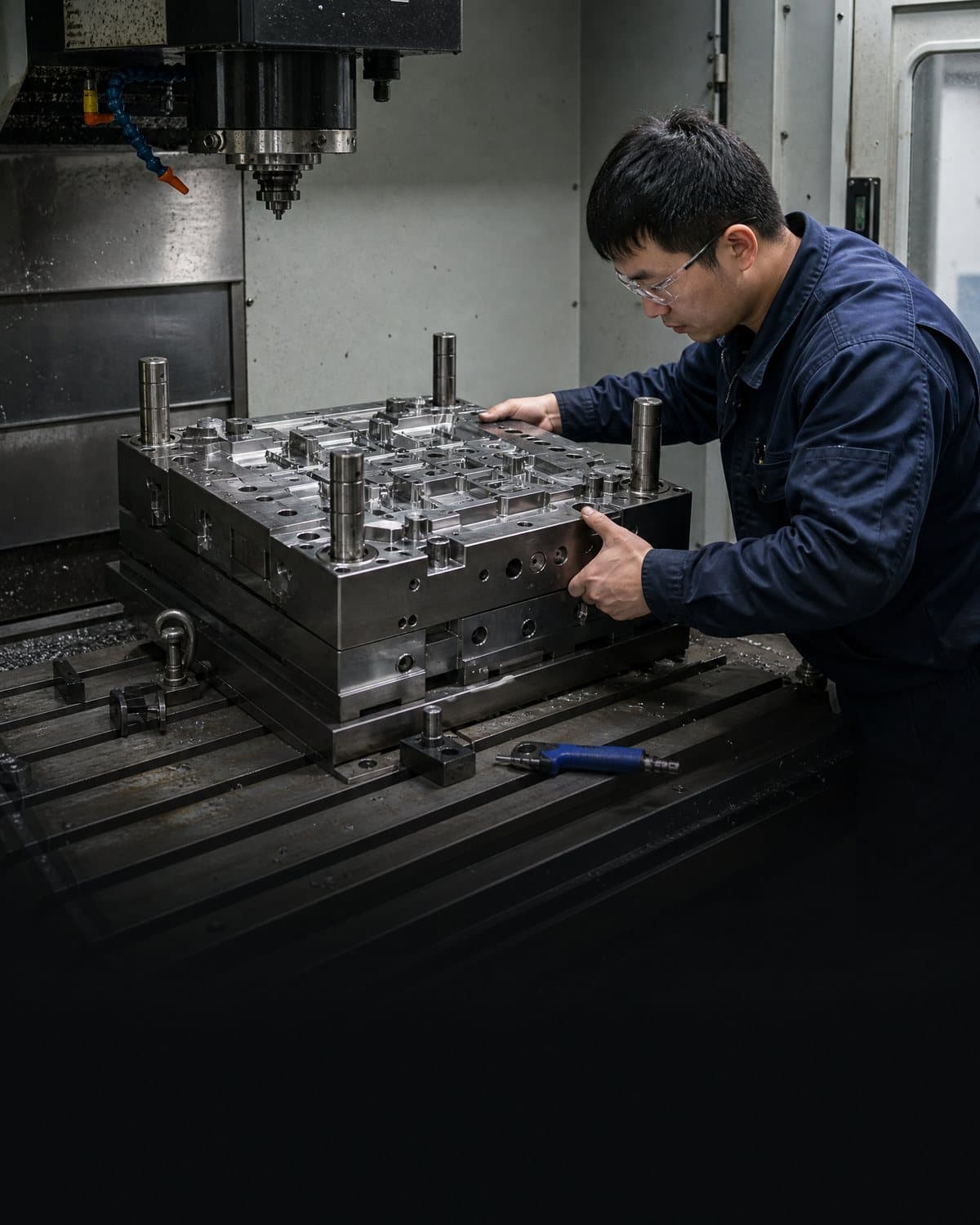
The agreement should distinguish routine care, preventive maintenance, corrective repair and engineering change. Define who performs each class of work, whether subcontractors may be used, which costs are included, and what notice or approval is required. Routine cleaning or replacement of an agreed wear item may follow a standing instruction; a gate alteration, cavity repair, texture change, hot-runner substitution or geometry modification should normally enter the buyer's change-control route. The [injection-mold-making](/injection-mold-making) service context can support technical discussions, but the signed agreement should control authorization.
Require a tool-specific history rather than a generic statement that maintenance is performed. Each entry can identify the date, shot count where available, reason, component, finding, work completed, parts used, technician, photos or measurements, open risks and release decision. Service triggers should be project-specific: cycles, calendar time, resin abrasiveness, corrosion risk, storage duration, defects, leaks, sticking, wear and process drift may all matter. Avoid presenting one universal shot interval or tool-life number as a guarantee.
Set an escalation path for findings. The supplier should contain an unsafe or nonconforming condition and notify the buyer; the buyer or designated engineering owner should decide whether a repair, deviation, trial, product hold or formal change is required. The quality workflow at [/quality](/quality) is a useful reference point, but the product owner remains responsible for its own acceptance and regulatory decisions.
03
3. Make storage, insurance and access measurable
If the tool remains at a molding supplier between orders, specify its storage state and location. The agreement can require cleaning, drying, suitable corrosion protection, capped or protected connections, secured moving elements, identification labels, controlled lifting points and protection from moisture, impact and unauthorized access. Define inspection cadence around the climate, packaging and idle period rather than copying a generic calendar interval. Record preservation materials and the steps required before the next installation or trial.
Clarify responsibility for loss, damage, corrosion, fire, theft, transport and business interruption, including any insurance evidence or notice obligations that are appropriate to the relationship. State who pays for approved preservation, storage space, inspection, reconditioning and emergency response. Storage charges should be transparent and linked to an agreed service or period, not introduced after a release request. Any insurance allocation should be reviewed against the governing contract, policy wording and applicable law.
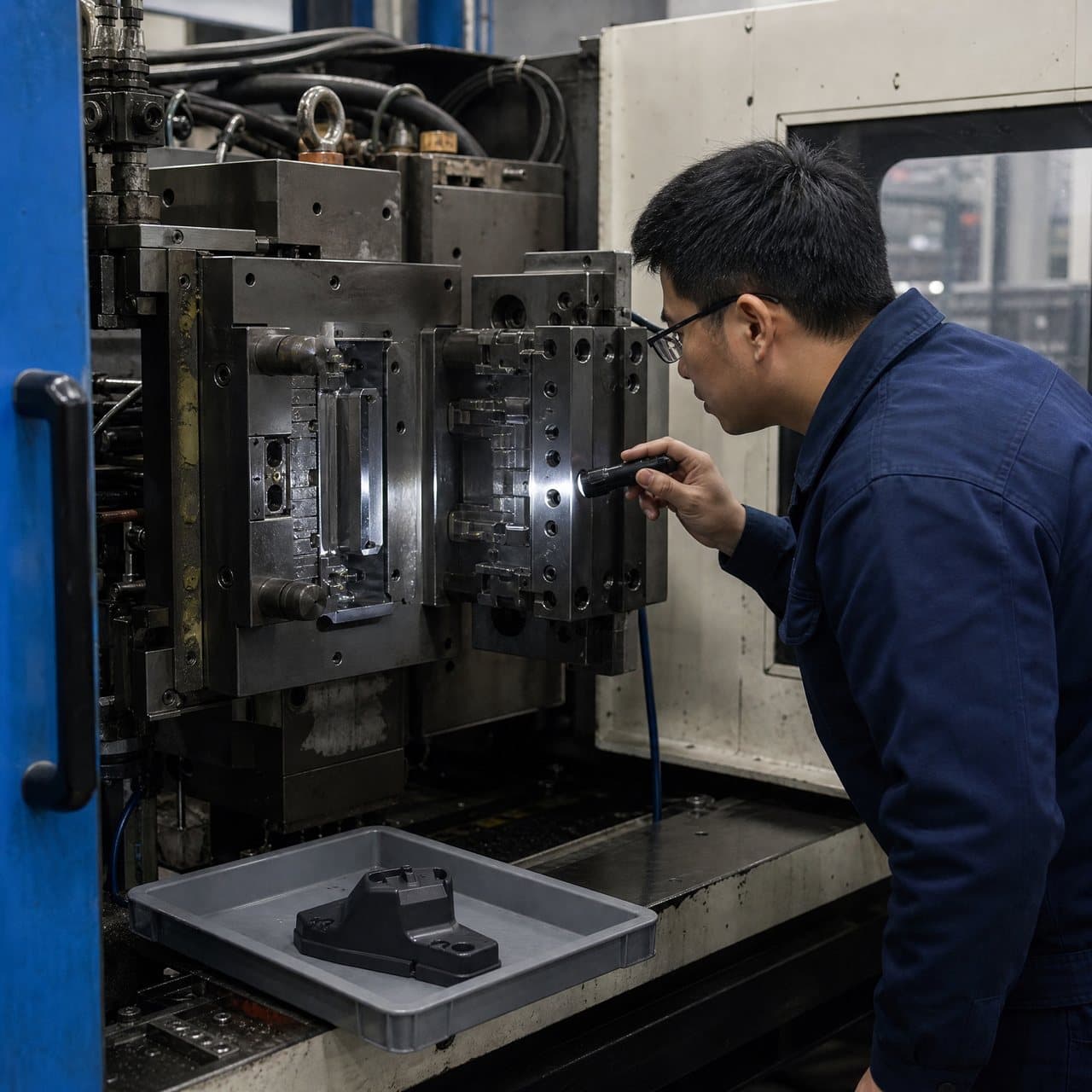
Give the owner practical access to records and reasonable inspection rights, subject to safety, confidentiality and site rules. A buyer should be able to verify the tool's location, condition, maintenance history and accessory inventory without directing unsafe work or bypassing the supplier's controlled procedures. Keep the asset register and digital records backed up so a personnel change, disruption or long idle period does not erase the tool's history.
04
4. Plan production release and evidence after maintenance
Define what happens before the tool returns to production after storage, repair or a significant maintenance event. The release plan might include incoming condition checks, utility and movement checks, a controlled trial, dimensional or functional inspection, appearance review and approval of open deviations. The right evidence depends on the part, material, maintenance scope and customer requirements; do not impose the same qualification package on every minor cleaning task.
Treat historical process settings and old samples as references, not automatic proof that the tool will run unchanged. A different machine, resin lot, auxiliary system, climate, operator sequence or repaired component can alter results. Identify the part revision, resin, machine, sample identity, critical-to-quality features, measurement method and release authority for any restart evidence. For regulated applications, the legal manufacturer or product owner must determine applicable validation, traceability and market obligations; a molder can provide agreed technical records but cannot assume that responsibility.
The agreement should also define records retention, response time for maintenance notifications, nonconformance escalation and how unresolved risks affect production authorization. Link the tool history to the current drawing, control plan, inspection method and approved deviation list. This makes a later audit or supplier review more useful than a checklist marked complete without context.
05
5. Write the transfer, exit and end-of-life procedure
A transfer clause should be executable before a dispute occurs. Set the notice period, release authority, destination information, condition-report format, accessory and spare inventory, packing and lifting requirements, shipping documentation, customs responsibilities, insurance during transit and the receiving inspection process. State the agreed delivery rule and named place separately from title and payment; Incoterms can allocate transport tasks and risk, but they do not replace the rest of the tooling contract.
Require a controlled technical handover: current part and mold revisions, assembly and component drawings where authorized, cooling and hot-runner information, maintenance history, open changes, process references, quality records, master samples and known data gaps. The receiving supplier should acknowledge the package, inspect the asset and identify repairs or qualification work before production release. The existing [injection-mold-transfer](/injection-mold-transfer) resource can help structure that handover, while the agreement should specify the actual deliverables and acceptance steps.
Finally, define what happens at program end, supplier default, prolonged inactivity or tool retirement. Address return, continued storage, disposal approval, deletion or return of confidential files, spare disposition, final condition evidence and outstanding approved charges. Avoid assuming that a paid invoice alone solves every title, access or file-rights question; the parties should obtain jurisdiction-specific advice and record the agreed exit decision.
Practical takeaway
Before you move
to the next review.
- List the mold, inserts, hot-runner equipment, fixtures, spares, records and file rights by asset or revision identifier.
- Separate title, custody, permitted production use, maintenance authority, subcontracting and engineering-change approval.
- Set risk-based maintenance and storage triggers with required records, preservation steps, inspection rights and cost ownership.
- Define the restart evidence and release authority after storage, repair or a material tooling change, with regulated-use responsibilities identified.
- Write a practical transfer and exit procedure covering condition, records, packing, logistics, receiving inspection, confidentiality and end-of-life disposition.
FAQ
Common questions
Does paying for an injection mold automatically prove the buyer owns it?
Not necessarily. Payment, title, possession, permitted use and access to technical files may be treated differently by the contract and applicable law. Identify the assets and ownership trigger in signed terms, then obtain local legal advice where enforceability is material.
Who should pay for routine injection mold maintenance?
The agreement should say which routine services are included in the molding price or storage fee and which are separately chargeable. Cost treatment should distinguish ordinary care, supplier-caused correction, buyer-requested change, wear items and emergency work.
How often should an injection mold be serviced while in storage?
There is no universal interval. Use calendar time, idle duration, climate, preservation method, corrosion risk, prior condition and planned restart date to set a reviewable schedule, then revise it using actual findings.
Can a supplier modify a buyer-owned mold without approval?
Only where the agreement clearly authorizes the work, such as defined routine maintenance or an urgent safety action. Geometry, gate, texture, cavity, control-system and other consequential changes should use a documented approval and verification route.
What should happen when the mold moves to another supplier?
Use a staged handover: signed asset and condition inventory, records and accessory transfer, controlled packing and logistics, receiving inspection, repair or gap review, and part qualification against agreed criteria before routine production is released.
References
Source material
- [1] ISO, “ISO 9001 — Quality management systems.”
- [2] U.S. Occupational Safety and Health Administration, “Control of Hazardous Energy (Lockout/Tagout).”
- [3] World Intellectual Property Organization, “Technology Transfer Agreements.”
- [4] U.S. International Trade Administration, “Know Your Incoterms.”
- [5] U.S. Food and Drug Administration, “Quality Management System Regulation (QMSR).”
This guide is general information for early procurement and engineering discussion. It does not replace product-specific DFM, qualification, validation, regulatory assessment or legal advice.