
Injection mold ownership is a commercial and operational issue, not only a line on a purchase order. A buyer may fund all or part of a tool while the supplier designs, builds, stores, runs and services it. Unless the parties document the arrangement, a later transfer, second-source request, engineering change, production pause or supplier exit can expose uncertainty about title, access, records, wear parts and costs.
For an OEM or procurement team, the practical goal is not to copy a legal clause without review. It is to create a clear tooling schedule that identifies the asset, allocates custody and care, defines permitted use, sets release conditions and explains what evidence is retained. Confirm the final language with counsel in the relevant jurisdictions, especially where title, security interests, insolvency, export controls or cross-border enforcement may matter.
Treat ownership, custody and maintenance as separate decisions. A buyer can own a mold while the supplier has physical custody and a limited right to use it; each part of that arrangement should be stated, evidenced and reviewed at transfer or release.
01
1. Separate title, custody, use and risk of loss
Start by naming the tool precisely. Record the internal tool number, part number, revision, cavity count, mold base, inserts, hot-runner components, electrodes, gauges, spare parts and associated CAD or drawings. A photograph and an asset register can reduce later disputes about whether a replacement insert or service fixture is part of the same tooling package.
Then define four different questions. Title asks who owns the physical tool and its identified components. Custody asks who holds and controls it. Permitted use asks which parts, revisions, customers, plants and production orders the supplier may support. Risk of loss asks who bears the consequence of theft, fire, damage, deterioration or an uninsured event. These may be allocated to different parties. In a sale-of-goods context, title and risk can depend on the contract and applicable law rather than on an invoice alone [1].
Avoid broad language such as ‘customer-owned tooling’ unless the schedule explains what that means. A useful clause can state that the supplier has possession for agreed work, may not pledge or transfer the tool, must identify it as property of the named owner, and must notify the owner before moving it. Ask counsel to adapt the wording to the governing law and any local registration or insolvency concerns.
| Term to define | Buyer question | Evidence or control |
|---|---|---|
| Title / ownership | Who owns the identified mold, inserts, hot runner and dedicated spares, and when does title pass? | Signed tooling schedule, payment and transfer milestone, asset tag and component list |
| Physical custody | Which legal entity and site holds the tool between runs and during service? | Custodian, site address, movement approval and check-in/check-out record |
| Permitted use | May the supplier use the tool only for the named buyer, part and revision? | Approved part numbers, revision controls, purchase-order linkage and access limits |
| Risk of loss | Who bears loss, damage, corrosion or deterioration, and what insurance or notice applies? | Risk clause, insurance evidence where required, incident notice and condition report |
| Release / transfer | What triggers return, relocation, second-source access or destruction? | Notice period, packing standard, transfer checklist and acceptance record |

02
2. Build a tooling schedule that can be audited
A contract is easier to administer when the commercial clause points to a controlled tooling schedule. Include the owner, custodian, site, tool identifier, related product and revision, status, location, replacement value or agreed valuation method, and any exclusions. List separately owned standard components only when they are dedicated, paid for by the buyer or needed for transfer. Do not assume that every item in a toolroom cabinet is part of the buyer's asset.
Record design and manufacturing deliverables as well as the steel. The handover package may include released CAD, 2D drawings, cavity maps, material or heat-treatment records where available, hot-runner manuals, maintenance history, trial reports, inspection data, approved deviations, spare-part list and photographs. Ownership of CAD, know-how and supplier background IP can differ from ownership of the physical mold. State what is licensed or delivered, and avoid claiming that a tooling payment automatically transfers every underlying design right.
A simple quarterly or annual confirmation can check whether the tool remains at the stated site, is identifiable, is in usable condition and has not been modified outside change control. If the supplier operates a quality management system, align the record with its documented control of customer or external-provider property, but do not infer a certification or audit result without evidence [2].
03
3. Specify storage and preservation between production runs
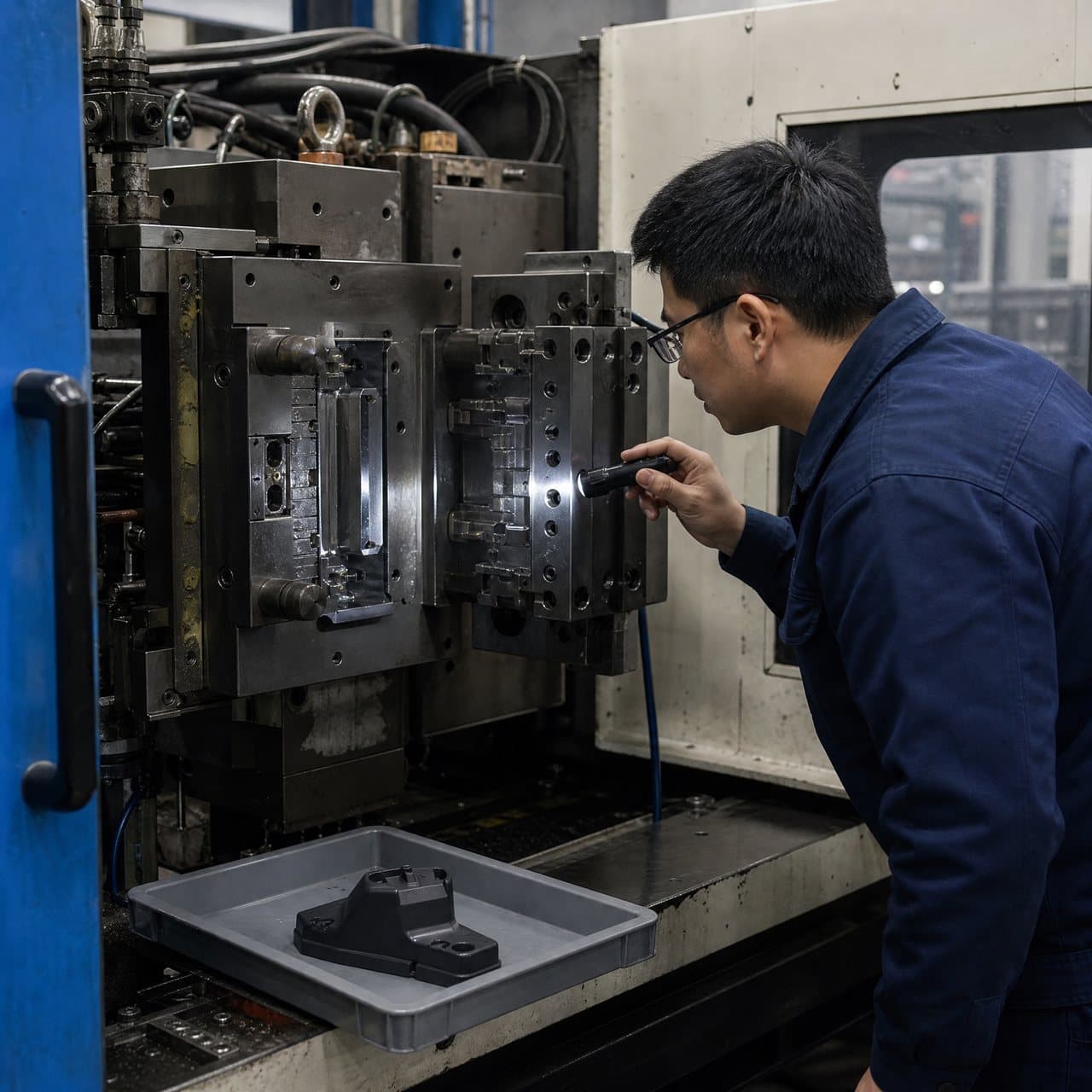
Storage terms should address the condition in which the mold is handed over after production. Ask the supplier to define cleaning, resin removal, water evacuation or drying, corrosion protection, cavity and core protection, rust-preventive product, desiccant or packaging where appropriate, identification, lifting points and safe blocking. The correct method depends on tool materials, coatings, hot-runner design and the supplier's documented procedure; avoid prescribing a universal chemical or storage period.
State the storage environment and inspection cadence in practical terms. Temperature, humidity, dust, water exposure, vibration, stacking, unauthorized access and long idle periods can affect readiness. A supplier may reasonably recommend an inspection before restart, especially after extended storage or relocation. The buyer should ask what the inspection covers, who pays for preparation, and how corrosion, seized components, blocked cooling circuits or degraded seals are handled.
Define notice before a tool is moved, stored off-site or placed in a third-party facility. For international transfers, identify who packs, labels, insures, exports and receives the tool, and make the commercial delivery term explicit rather than assuming that an Incoterm answers every tooling-custody question. Incoterms allocate selected delivery responsibilities and costs, but they do not replace a detailed tooling ownership or maintenance schedule [3].
04
4. Make maintenance responsibilities and costs measurable
Maintenance language works best when it distinguishes routine preservation, preventive service, corrective repair, process-related damage and buyer-requested modification. Routine work may include cleaning, lubrication, inspection of wear components, water-circuit checks and replacement of agreed consumables. Corrective work may include repair after flash, damage, corrosion, broken components or an abnormal event. The contract should say which activities are included in the molding price, which require approval, and how emergency work is authorized.
Ask for a maintenance plan tied to shots, cycles, calendar time or observed condition, whichever is appropriate for the tool. A useful record can show date, production count or estimate, work performed, components changed, measurements, photographs, technician or approver, findings and next action. Do not require an arbitrary service interval if the supplier cannot correlate it to the actual mold, resin, cycle, environment and failure modes. Instead, agree a baseline plan and a review trigger.
Define approval thresholds for repair and modification. A worn ejector replacement may be routine; a change to a gate, cavity dimension, cooling circuit, texture or parting line can affect the released product and should pass engineering change control. If a supplier proposes a change to restore output, require the reason, affected cavities, expected effect, sample or trial plan, cost and buyer approval path. Link major changes to the existing [process review](/process), [quality](/quality) and deviation records rather than relying on an informal email.
05
5. Plan release, transfer, second-source and end-of-life events
A release clause should work when the relationship is healthy and when it is not. Identify triggers such as production completion, prolonged inactivity, supplier change, material breach, insolvency concern, capability issue, second-source qualification or product discontinuation. State the notice period, condition standard, packing method, documents, destination, receiving inspection and responsibility for transport and repair. If the tool cannot be released immediately, define a short preservation period and an escalation route.
Before a transfer, require a joint condition report. Compare cavity dimensions or critical features where relevant, inspect parting surfaces, cooling connections, ejectors, slides, lifters, hot-runner components, lifting points and spare parts, and record open defects. Run a controlled trial at the receiving site only after reviewing machine, resin, process and quality assumptions. The buyer should not treat a successful physical move as proof that the receiving supplier can reproduce the qualified part.
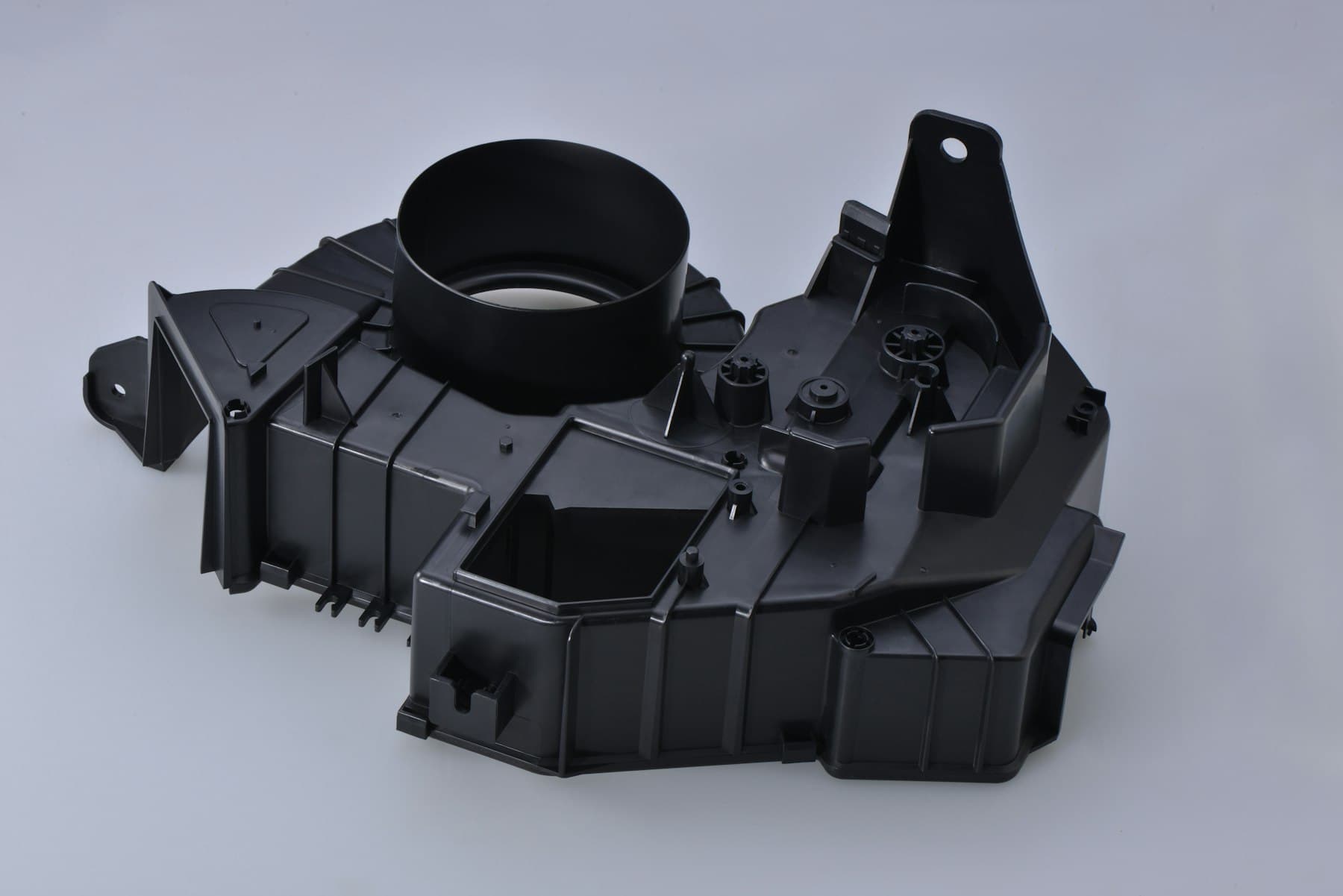
For end of life, agree whether the mold is returned, retained for an agreed period, refurbished, sold, recycled or destroyed. Destruction should require written authorization and evidence because the tool may contain proprietary geometry or be needed for service parts. A documented transfer package also supports a [request for a quote](/request-a-quote) from a second source, while the buyer should protect confidential CAD and know-how through the applicable NDA and IP terms.
Practical takeaway
Before you move
to the next review.
- Identify the mold, inserts, hot-runner equipment, dedicated gauges, spare parts and associated records with asset numbers, revisions and photographs.
- State separately who owns the physical tooling, who has custody, what use is permitted, who bears risk of loss and what insurance or incident notice is required.
- Attach a controlled tooling schedule covering location, storage conditions, preservation method, inspection cadence, movement approval and release destination.
- Define routine maintenance, preventive service, corrective repair, process damage and engineering modification, including approval thresholds and cost responsibility.
- Require maintenance and condition records that show date, cycles or shots where available, work performed, parts changed, findings, photographs and next action.
- Set transfer and end-of-life procedures with notice, packing, documents, receiving inspection, trial expectations, confidentiality controls and written destruction authorization.
FAQ
Common questions
Does paying for an injection mold automatically mean the buyer owns it?
Not necessarily. Payment may support the buyer's contractual claim, but ownership, title passage, security interests and applicable law depend on the agreement and circumstances. Identify the tool and its components, state when title passes, and obtain legal review for the relevant jurisdictions rather than relying on an invoice description.
Who should pay for injection mold maintenance?
The answer should be negotiated by maintenance category. Routine preservation may be included in a molding rate, while abnormal damage, wear beyond an agreed baseline, buyer-requested changes or relocation preparation may be priced separately. Use a maintenance matrix with approval thresholds so that ‘maintenance’ does not become an undefined source of charges.
What should be included in an injection mold storage agreement?
Include the storage site and custodian, identification, access control, cleaning and corrosion-prevention method, environmental expectations, packaging, inspection cadence, movement notice, condition reporting, risk of loss, insurance where required, restart preparation and release procedure. The supplier's tool-specific preservation procedure should control technical details that vary by tool.
Can an injection mold be moved to a second supplier?
It can be possible when the contract, ownership evidence, confidentiality terms, export or import rules and physical condition allow it. Plan the transfer with a condition report, packing and lifting instructions, document handover, receiving inspection and a controlled trial. A transfer does not by itself prove that the second supplier can meet the original dimensional, cosmetic or process requirements.
How often should an injection mold be serviced?
There is no universal interval. Agree a baseline based on tool construction, resin, cycle count, environment, wear components and production history, then add condition-based checks and a review after extended idle periods. Record the rationale and revise the plan when inspection or defect evidence changes the risk.
References
Source material
- [1] Cornell Legal Information Institute — Uniform Commercial Code § 2-401: Passing of Title
- [2] ISO — ISO 9001 Quality Management Systems overview
- [3] International Chamber of Commerce — Incoterms® rules
- [4] WIPO — Trade Secrets
This guide is general information for early procurement and engineering discussion. It does not replace product-specific DFM, qualification, validation, regulatory assessment or legal advice.