
When an injection-molded part fails a dimensional, visual or functional requirement, procurement should not treat the supplier's first explanation as the final answer. A useful supplier corrective action request (SCAR) connects the affected part, lot, cavity, drawing revision and acceptance rule to immediate containment, a tested root-cause hypothesis and a permanent corrective action. It also gives engineering, quality, operations and purchasing one decision record.
This guide focuses on evidence management: what buyers should request, how to separate containment from correction, and when to close or escalate a SCAR. It does not prescribe one universal response time or process setting. The correct sample size, inspection method and release authority depend on the part's risk, use and agreed quality plan. InjeForm's [quality information](/quality) and [request-a-quote workflow](/request-a-quote) can support the initial evidence conversation.
A closed SCAR is not a completed form. It is a traceable demonstration that suspect output was controlled, the mechanism was addressed, the product still meets its requirements and recurrence risk is acceptable.
01
1. Open the SCAR against a controlled defect statement
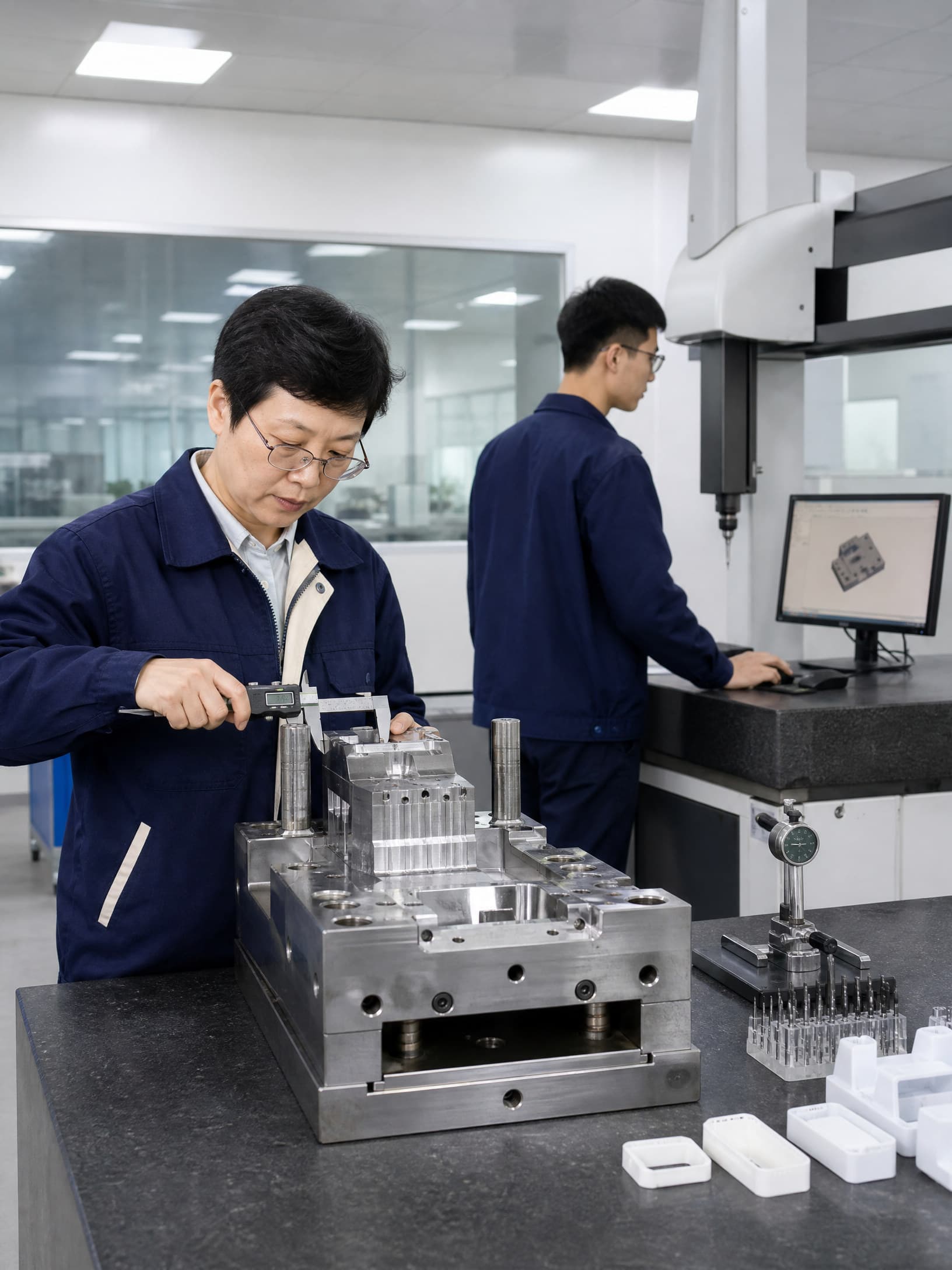
Start with an observable nonconformance, not a conclusion such as ‘the machine was unstable.’ Identify the part number and revision, mold and cavity, resin grade and lot, production dates, quantity produced, quantity inspected, quantity suspected, defect location, requirement, actual result and inspection method. Attach photographs, measurement files, samples or functional-test records where they help explain the condition. Preserve the original record; later edits should be versioned rather than silently replacing it.
State the commercial and product decision needed. Does the supplier need to stop shipment, quarantine inventory, sort finished goods, protect work in process or obtain approval for a temporary deviation? Link the issue to the purchase order, quality agreement or control plan. If the drawing or visual standard is ambiguous, flag that as a parallel clarification instead of allowing an unclear requirement to become an unsupported supplier admission. A buyer can use InjeForm's [DFM and tool-design guidance](/dfm) to frame technical questions, but the released specification and agreed acceptance plan govern disposition.
A strong SCAR assigns an owner and due date for each stage: acknowledgement, containment, investigation, action approval, effectiveness review and closure. The dates should reflect product risk and supply exposure, not an arbitrary promise detached from the affected inventory.
| SCAR field | Evidence to request | Buyer decision it supports |
|---|---|---|
| Defect definition | Requirement, actual result, location, method, photos or raw readings. | Is the condition objectively nonconforming? |
| Affected scope | Part, revision, tool, cavity, resin lot, dates, quantities and shipment status. | What must be held, traced or screened? |
| Immediate control | Stop/hold notice, segregation ID, sort plan, re-inspection and release authority. | Can conforming product continue safely? |
| Action record | Owner, target date, proposed change, risk review and approval status. | Who is accountable for the next decision? |
| Effectiveness | Before/after data, repeat sample, audit or trend evidence. | Is the SCAR ready to close? |
02
2. Demand containment that protects the supply chain
Containment is the short-term boundary around potentially affected product; it is not proof that the underlying cause has been removed. Ask the supplier to identify all inventory locations, open shipments, work in process, finished stock and material already at the buyer or downstream customer. Require unique labels or system status so held material cannot be mixed with released stock. If sorting is proposed, define the inspection method, trained personnel, sample or 100-percent scope, rework rules and who authorizes release.
Keep containment proportionate but explicit. A cosmetic indication may require a controlled visual standard, while a sealing, safety or fit issue may require functional testing and a wider traceability review. Do not let rework erase the original evidence: retain rejected quantities, defect counts, cavity distribution and representative samples. If a temporary deviation is considered, the product owner or designated quality authority should approve the duration, quantity, risk and expiration—not procurement alone.
Ask for a daily or milestone update when supply is at risk, including good quantity, held quantity, sort yield, shipment decisions and unresolved assumptions. InjeForm's [production and delivery process](/process-production-delivery) can help structure the handoff, while the purchase and quality agreement should define the actual communication route.
03
3. Test root cause instead of accepting a plausible story
A root cause should explain why the defect occurred and why the control system did not prevent or detect it. Ask the supplier to separate physical cause, process cause and escape cause. For example, a short shot may involve a restricted flow path, a changed process condition and an inspection plan that did not sample the affected cavity. ‘Operator error’ is not enough unless the investigation shows which instruction, control or capability allowed the error and why the system did not catch it.
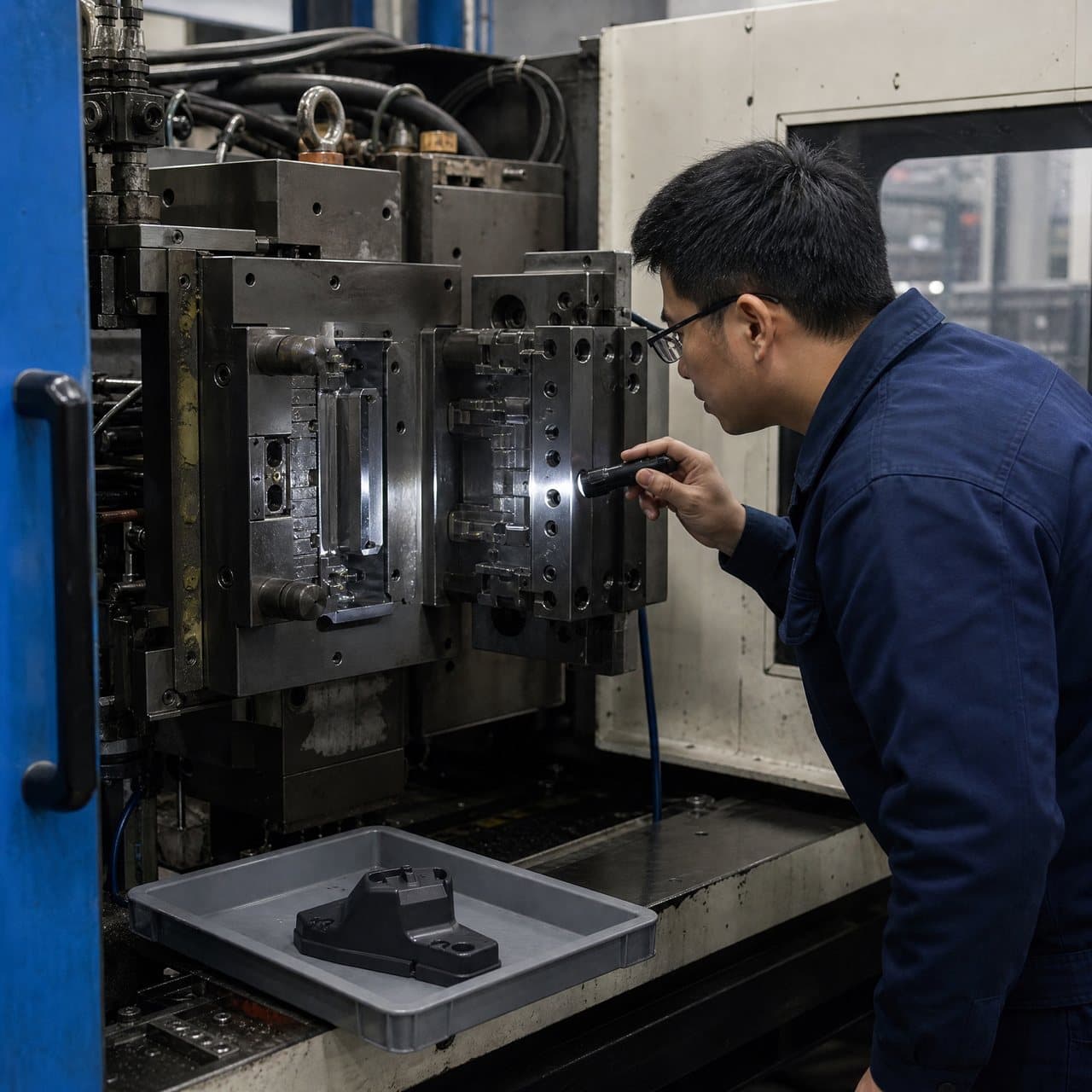
Request evidence tied to the defect mechanism: machine and process records, material-lot and drying records, cavity-specific results, tool-maintenance history, alarm or change logs, measurement-system checks, trial comparisons and controlled samples. Use a five-whys or fishbone diagram as an organizing aid, not as proof by itself. Correlation after a setting change is weaker than a controlled comparison that reproduces or removes the symptom while relevant variables are identified.
The buyer should challenge gaps without dictating an unverified process recipe. Ask what was held constant, what changed, which alternative causes were eliminated and what evidence would falsify the proposed cause. InjeForm's [quality page](/quality) is a useful starting point for discussing inspection and traceability, but the supplier remains responsible for presenting programme-specific evidence and the buyer's technical team remains responsible for product acceptance.
04
4. Approve corrective and preventive actions with change control
Corrective action removes or controls the verified cause; preventive or systemic action reduces the chance that a similar failure will escape elsewhere. The action may involve a tool repair, vent or cooling change, controlled parameter window, material-handling control, inspection update, work-instruction revision, training, maintenance trigger or supplier sub-tier control. Require the supplier to state the intended mechanism, affected documents, implementation date, validation method and any effect on cycle, cost, tooling life, appearance, dimensions or delivery.
Do not approve a permanent tool or process change through an informal email if it affects the released product. Record the change against the mold, part and revision, identify required samples or first-article evidence, and obtain approval from the competent engineering and quality authorities. A supplier may propose a setting adjustment that improves one symptom while moving a dimension, weld line or functional result elsewhere. Compare the complete acceptance set before authorizing production release.
Where the action changes the mold, document ownership, maintenance records, spare parts and future transfer implications. InjeForm's [injection mold transfer](/injection-mold-transfer) information can prompt those questions. A SCAR should show not only that an action was performed, but that the changed baseline is now controlled in the relevant process and quality documents.
| Action type | Typical evidence | Approval question |
|---|---|---|
| Containment | Hold records, sort results, labels and disposition. | Is suspect product prevented from unintended use? |
| Correction | Repair or rework record and verified conforming output. | Was the immediate nonconformance corrected without a new risk? |
| Root-cause action | Trial data, maintenance or material records and mechanism comparison. | Does the action address the demonstrated cause? |
| System action | Revised control plan, work instruction, training or audit record. | Can the control detect or prevent recurrence? |
| Change validation | Approved samples, dimensional/functional results and revision history. | Is the changed product/process released by the right authority? |
05
5. Close only after effectiveness evidence and lessons learned
Set the closure test before the supplier submits the final response. It might require consecutive production lots, cavity-level results, a defined number of parts, functional testing, trend review, an audit or confirmation that no recurrence occurred over an agreed production window. The test should use the approved drawing revision, measurement method, conditioning and visual standard. A handful of good samples may support a decision, but it does not automatically demonstrate a stable process for every programme.
Review the complete packet: original defect statement, traceability, containment, disposition, root-cause analysis, action implementation, revised records, approval signatures and effectiveness results. Check that open actions have owners and dates, and that any residual risk is formally accepted or escalated. For regulated or safety-relevant products, align closure with the product owner's validation and regulatory quality procedures; a supplier SCAR is manufacturing evidence, not a substitute for market authorization.
Finally, feed the lesson into sourcing and production controls. Update the supplier scorecard, inspection plan, incoming checks, mold-maintenance agreement or RFQ assumptions when appropriate. If evidence remains incomplete, keep the SCAR open with a documented interim disposition rather than using a status label to hide uncertainty.

Practical takeaway
Before you move
to the next review.
- Define the defect against the controlled part, revision, cavity, lot, requirement and measurement method.
- Contain and identify all suspect inventory, shipments and work in process before discussing permanent correction.
- Require root-cause evidence that separates physical cause, process cause and escape cause, with alternatives considered.
- Approve tooling, process, document and material changes through the agreed engineering and quality change-control route.
- Close the SCAR only after documented effectiveness results, residual-risk disposition and complete evidence handover.
FAQ
Common questions
What is a SCAR in injection molding procurement?
A supplier corrective action request is a controlled buyer-supplier record for investigating a nonconformance, containing affected product, implementing approved actions and proving effectiveness. Its required fields and timing should match the quality agreement and product risk.
Should a supplier stop production when an injection molding defect is found?
Not automatically. The supplier and buyer should assess risk, traceability and the chance of producing more suspect parts. A hold, controlled production or temporary deviation may be appropriate, but the decision and release authority should be documented.
What evidence proves an injection molding root cause?
Useful evidence can include defect distribution by cavity and lot, machine or process records, material and maintenance history, measurement-system checks, controlled trials and before-and-after results. A five-whys form alone does not prove causation.
Can a buyer close a SCAR after a supplier sorts the parts?
Sorting is containment, not normally permanent corrective action. Closure usually needs a verified cause, implemented action, updated controls and effectiveness evidence showing that conforming product can be produced and released consistently against the agreed requirements.
Who approves a permanent mold or process change?
The authority named in the quality and change-control agreement should approve it, normally involving engineering and quality plus the product owner where requirements or validation are affected. Procurement should record the commercial impact but should not replace technical approval.
References
Source material
- [1] ISO, “ISO 9001 — Quality management systems.”
- [2] U.S. Food and Drug Administration, “Quality Management System Regulation (QMSR).”
- [3] ASQ, “Root Cause Analysis.”
- [4] ISO, “ISO 20457:2018 Plastics moulded parts — Tolerances and acceptance conditions.”
- [5] U.S. National Institute of Standards and Technology, “Manufacturing Extension Partnership.”
This guide is general information for early procurement and engineering discussion. It does not replace product-specific DFM, qualification, validation, regulatory assessment or legal advice.