
Buyers should evaluate an LSR injection molding supplier by asking for process evidence across six linked areas: liquid-silicone handling, metering and mixing, tooling, curing, automation and cleanliness. A supplier that can explain the control plan, show how risks are tested, and state what remains the customer’s responsibility is usually easier to qualify than one that relies on a capability list. Liquid silicone rubber is commonly supplied as two components and processed through a dedicated metering and mixing system, so the review should go beyond general thermoplastic injection experience [1] [2].
For Europe, the United States and the Middle East, procurement teams should also separate technical capability from regulatory or market-access responsibility. Ask the supplier to map its deliverables to your drawing, material specification, validation plan, packaging requirement and change-control agreement. Do not treat a material family, cleanroom statement or quality certificate as proof that a particular finished component is suitable for its intended use.
A credible LSR supplier does not promise that every application is automatically clean, medical-ready or compliant. It explains the controls, evidence and boundaries that would have to be agreed for your specific part.
01
Start with the material system and metering discipline
Ask how the proposed LSR grade is identified, stored, mixed and connected to the machine. In a typical two-component system, A and B are pumped from containers at a defined ratio into a mixer before the material enters the injection unit [2]. The supplier should be able to explain ratio verification, container identification, line purging, color-paste handling if applicable, and how it prevents air, age variation or contamination from changing the shot. Wacker notes that platinum-catalyzed mixtures can begin crosslinking at room temperature and that higher temperature can reduce pot life, which makes temperature control and interruption procedures relevant buyer questions [2].
Do not ask only for a claimed dosing accuracy. Ask what is checked at setup, what is monitored during the run, how a drift is detected and what happens to material made after an out-of-condition event. The answer should connect metering to part weight, fill balance, cure state and cavity-to-cavity consistency. It should also identify which records are available for a pilot or production lot, rather than implying that a machine specification alone proves process capability.
| Buyer review area | Evidence to request | Decision signal |
|---|---|---|
| Material identity | Grade, cure chemistry, lot or batch identification, storage and shelf-life controls. | The supplier can trace the material used for samples and production. |
| Metering and mixing | A/B ratio method, mixer type, temperature control, purge and interruption procedure. | The process explains how premature cure, air and ratio drift are detected or contained. |
| Shot consistency | Setup checks, part-weight or process checks, cavity context and reaction plan. | Checks are tied to your part and acceptance criteria, not only to equipment brochures. |
| Color or additive feed | Approved color direction, dosing route and changeover cleaning method where applicable. | The supplier can separate formulation approval from process convenience. |
| Records | Run identification, material records, deviations and disposition rules. | The evidence can support a release decision and later investigation. |

02
Review tooling as a controlled LSR process, not just a steel asset
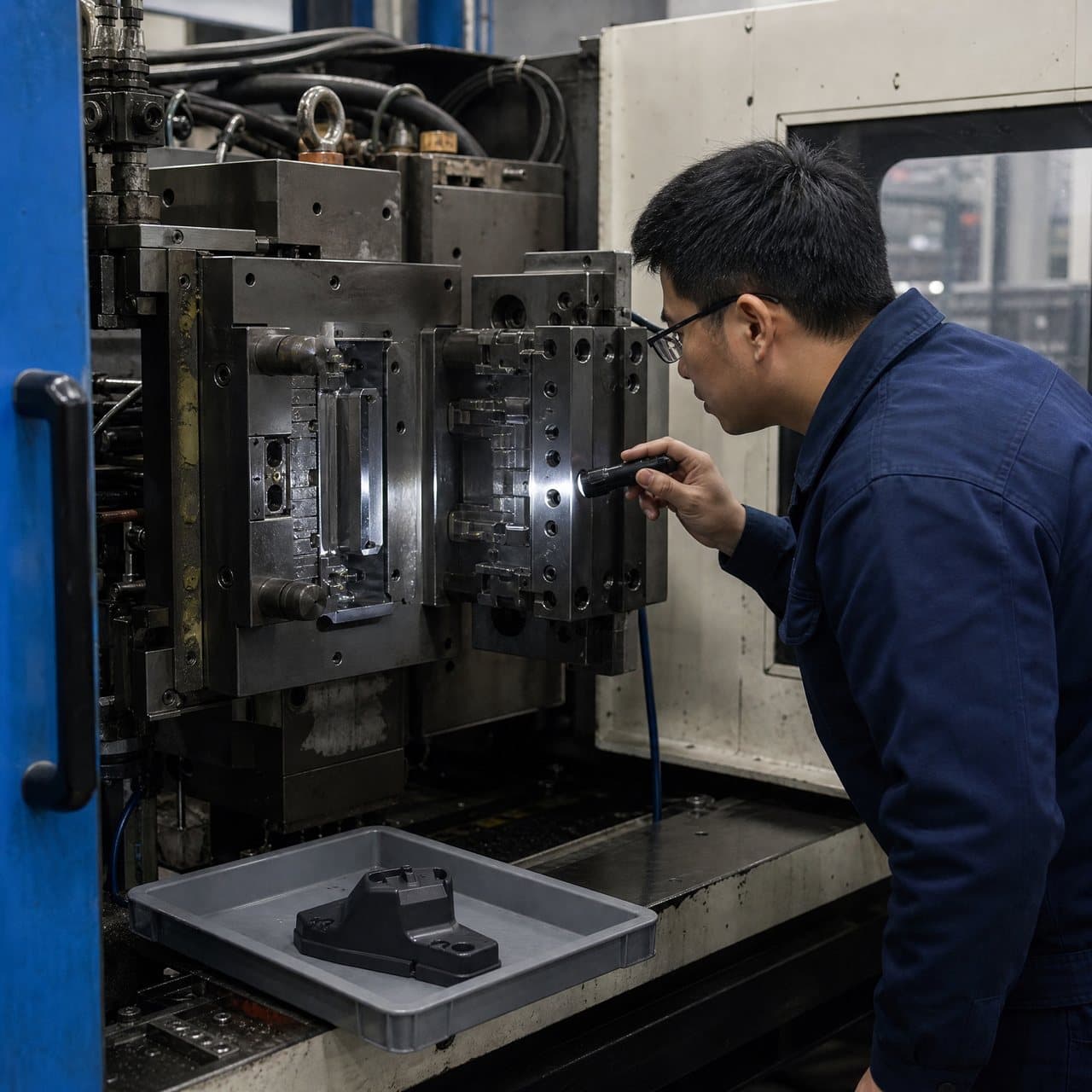
LSR tooling has to manage filling, venting, sealing, demolding and heat transfer while preventing unwanted cure in the feed path. Manufacturer guidance describes dedicated metering and mixing equipment and cold-runner approaches for LSR; the correct arrangement still depends on the geometry, material, volume and automation concept [1] [2]. Ask the supplier to show the proposed gate, runner, vent, parting line, shutoff and ejection strategy on your actual CAD revision.
The tooling review should address flash risk, trapped air, delicate features, tear-sensitive demolding, insert retention and maintenance access. For a multi-cavity tool, ask how balance, cavity identification and cavity-level reaction will be handled. A low tool price may conceal manual deflashing, difficult cleaning, limited service access or an automation interface that was never fully designed. Request a DFM record that identifies open assumptions and the effect of each proposed change on appearance, function, yield and cycle time.
A quote-oriented CTA model is useful here: ask the supplier to return a line-item quotation with the tool concept, cavity count, included trials, sample quantity, expected automation scope, exclusions and three material or design assumptions. This gives procurement a comparable commercial response without turning an early estimate into a fixed promise.
03
Test curing and process windows on the part you will buy
Curing is a coupled result of material chemistry, mold temperature, insert temperature, geometry and the time available for demolding. Dow describes platinum-catalyzed LSR as a system whose cure accelerates with temperature and identifies mold temperature, incoming material temperature and article geometry as important factors [1]. That does not mean a published temperature or cycle time can be transferred directly to your component. Ask how the supplier will establish the window for fill, cure, demolding and part handling, and which characteristics confirm that the part is adequately cured.
The supplier should distinguish machine settings from validated acceptance evidence. A trial plan may include part weight, dimensions, visual condition, flash, tackiness, tear or functional checks, depending on the application. If post-cure, washing, drying or special packaging is proposed, ask what requirement it supports and how the step will be controlled. Dow notes that post-curing can be important when particular guidelines or volatile-related expectations apply, but the need is material- and application-specific [1].
For medical or laboratory parts, the product owner should define intended contact, sterilization or cleaning exposure, extractables and leachables expectations, and the validation route. FDA’s QMSR applies to finished-device manufacturers and incorporates ISO 13485:2016 by reference; that regulatory framework should not be reduced to an unsupported claim about a component supplier [4].
04
Assess automation as a quality-control system
Automation is valuable when it reduces handling variation and makes the intended process repeatable. It is not automatically better because a robot appears in a presentation. Review how parts are removed, oriented, inspected, separated by cavity, placed into packaging and rejected when a condition is not met. For inserts or overmolding, ask how presence, position, cleanliness and retention are checked before injection. The automation concept should include safe recovery after a cycle interruption and a defined response to a mispick, dropped part or sensor fault.
Connect automation to the quality plan. A vision system may detect a missing feature or flash condition, but it does not by itself prove material identity, cure state or fitness for use. Ask which checks are 100 percent, which are sampling checks, what the measurement method is, and how rejected material is segregated. The supplier should also explain manual touchpoints that remain, because those points can matter for lint, particles, fingerprints and traceability.
Compare automation by total operating risk rather than by capital equipment count. A simpler cell with robust poka-yoke, clear maintenance access and documented reaction may be preferable to a complex cell that is difficult to clean or recover. The buyer should receive an equipment and process boundary that states what the supplier controls and what the customer must approve.
05
Verify cleanliness controls and evidence boundaries
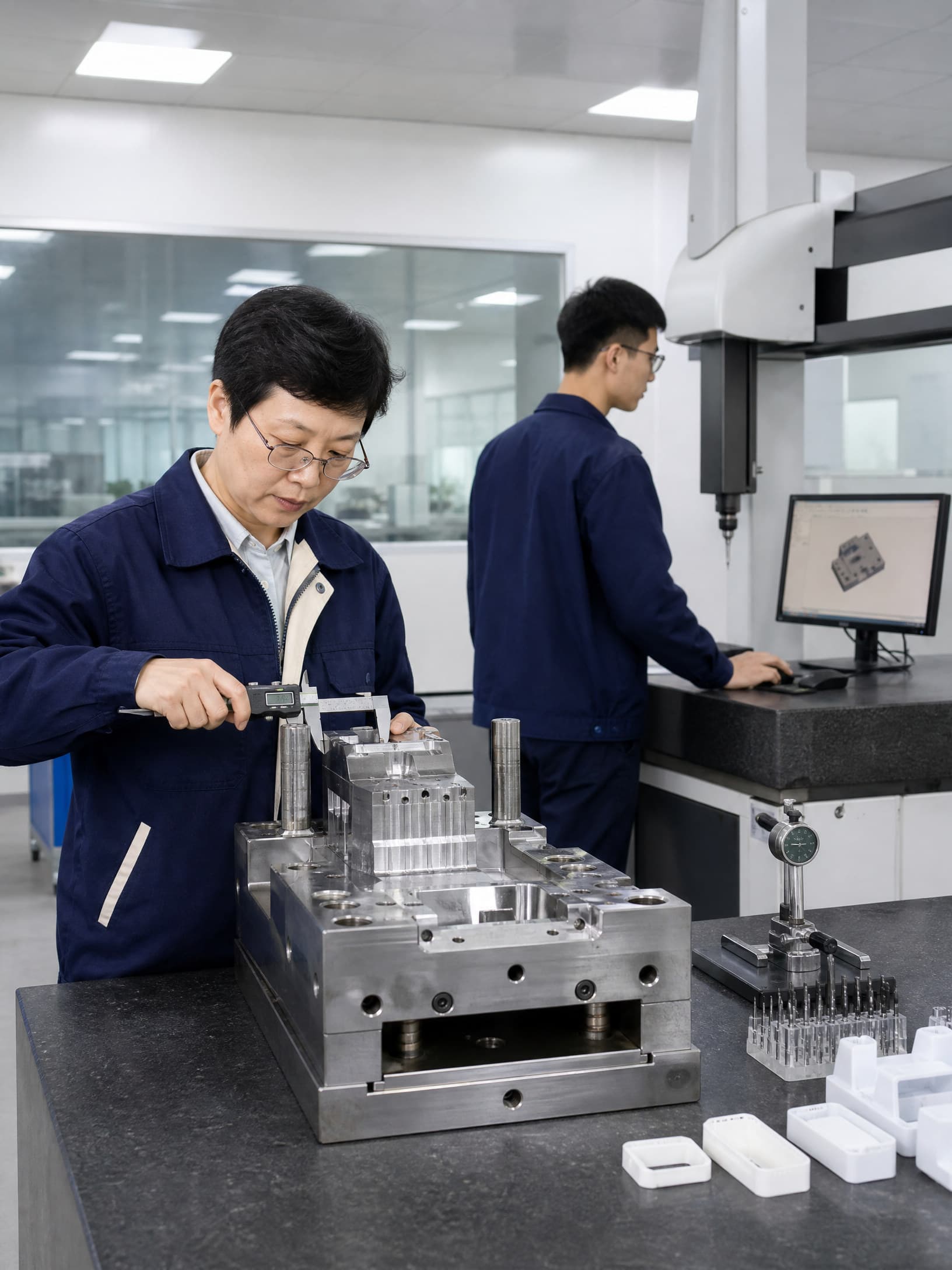
Cleanliness should be evaluated as a process, not as a slogan. Review material storage, tool cleaning, machine changeover, environmental controls, operator garments, part handling, post-cure or washing, inspection surfaces and packaging. Platinum-cured silicone can be sensitive to catalyst-poisoning contaminants such as amines and sulfur-containing compounds; Wacker specifically advises separation from organic rubber and meticulous cleaning to avoid cross-contamination [2]. Saint-Gobain likewise notes that LSR’s closed, metered handling can support cleaner processing, while the final outcome still depends on tooling, post-cure, cleaning and packaging controls [3].
Ask for the cleanliness specification that actually applies to your product: visible-particle criteria, non-volatile residue, bioburden, endotoxin, extractables, packaging or another customer-defined requirement. Do not assume that a general cleanroom, ISO 13485 certificate or “medical” material statement establishes every one of these results. The supplier should identify its controlled environment, cleaning agents, sampling method, limits, records and escalation route, while the product owner retains responsibility for defining the intended-use acceptance criteria.
Use a supplier audit or technical review to observe the route from incoming material to sealed pack. Look for controlled status labels, closed containers, tool-cleaning records, protected work-in-process and a credible response to contamination or cure inhibition. Before approval, send a quote-oriented request such as: “Please quote the defined part and list the cleanliness controls, validation evidence, exclusions and customer approvals included.” This wording invites a useful answer without making an unverified compliance claim.
Practical takeaway
Before you move
to the next review.
- Confirm the LSR grade, cure chemistry, material identity, storage conditions and customer approval route.
- Request evidence for A/B metering, mixing, temperature control, interruption recovery and material traceability.
- Review the actual tool concept for gates, vents, cold runner, shutoffs, ejection, cavity balance, maintenance and flash control.
- Agree how cure, part weight, dimensions, visual criteria, inserts, automation checks and rejected parts will be controlled.
- Define cleanliness, packaging, change notification, validation boundaries and the exact evidence required before release.
FAQ
Common questions
Is experience with thermoplastic injection molding enough to qualify an LSR supplier?
Not by itself. Thermoplastic experience may support general mold and machine knowledge, but LSR requires dedicated attention to two-component metering, mixing, temperature control, cure behavior, venting, demolding and contamination control [1] [2]. Ask for part-relevant evidence rather than accepting a general machine list.
What should an LSR supplier show about metering?
Ask how the A/B ratio is controlled, how containers and lots are identified, how temperature and air are managed, what setup checks are performed, and what reaction follows a suspected drift. The useful evidence is connected to your part, shot size, cavities and acceptance plan.
Does LSR always require a cleanroom?
No universal answer applies. The required environment depends on intended use, cleanliness specification, handling route, packaging and validation plan. A closed metering system can reduce open handling, but cleanliness still depends on tooling, operators, post-processing and packaging [3].
How should buyers compare LSR tool quotations?
Normalize cavity count, runner concept, gates, vents, ejection, steel or insert assumptions, trial scope, sample quantity, automation, maintenance, spare parts, lead-time basis and exclusions. Request the three assumptions that most affect price and performance before ranking totals.
Can a supplier’s certification prove that my LSR medical component is compliant?
No. Certification or a quality-system statement may be relevant evidence, but it does not replace the product owner’s intended-use assessment, material approval, validation, regulatory determination, inspection plan or quality agreement. FDA states that QMSR applies to finished-device manufacturers and incorporates ISO 13485:2016 by reference [4].
References
Source material
- [1] Dow, “Injection Molding of XIAMETER™ Liquid Silicone Rubber.”
- [2] Wacker Chemie AG, “Solid and Liquid Silicone Rubber: Material and Processing.”
- [3] Saint-Gobain Life Sciences Medical, “HCR vs. LSR in Silicone Molding.”
- [4] U.S. Food and Drug Administration, “Quality Management System Regulation (QMSR).”
- [5] International Organization for Standardization, “ISO 13485:2016 Medical devices — Quality management systems — Requirements for regulatory purposes.”
This guide is general information for early procurement and engineering discussion. It does not replace product-specific DFM, qualification, validation, regulatory assessment or legal advice.