
Buyers can assess injection molding supplier stability by reviewing financial resilience, verifying capacity against the production ramp, testing business-continuity arrangements and measuring how realistic a second-source route would be. The objective is not to predict every disruption. It is to gather enough evidence to understand where a supplier could fail, how quickly the programme could recover and which risks remain with the OEM or procurement team.
For Europe, the United States and the Middle East, the review should cover the complete supply route rather than only the press: resin availability, tooling ownership, critical subcontractors, export handover, transport assumptions, communication and the records needed to qualify an alternate source.
Quote-oriented CTA model: “Please quote this part against the attached revision, resin direction, annual and peak volumes, delivery destination, quality requirements and continuity assumptions. Please state your available capacity, key dependencies, recovery actions and the evidence you can provide.” Visuals in this guide are illustrative and do not depict an InjeForm customer, facility, production result or verified supplier capability.
01
Start with evidence, not assurances
A stable supplier is one whose people, assets, cash position, process controls and external dependencies can support the agreed programme over time. That does not mean the supplier is immune to disruption. It means the buyer can identify the main exposures, see how they are monitored and understand what would happen if an assumption changed. CIPS describes procurement as a lifecycle that runs from specification and tender through contract and asset management; stability review therefore belongs before award and during supplier management, not only at onboarding.[1]
Ask for evidence at a proportionate level. Depending on the ownership structure and confidentiality constraints, this may include recent financial statements or a credit report, an organisation chart for the programme, a capacity statement, maintenance and calibration summaries, material-sourcing assumptions, change-notification practice and a continuity contact list. A refusal to disclose every detail is not automatically a failure, but unexplained gaps should be recorded as risk rather than filled with optimism.
02
Review financial resilience without pretending to be an auditor
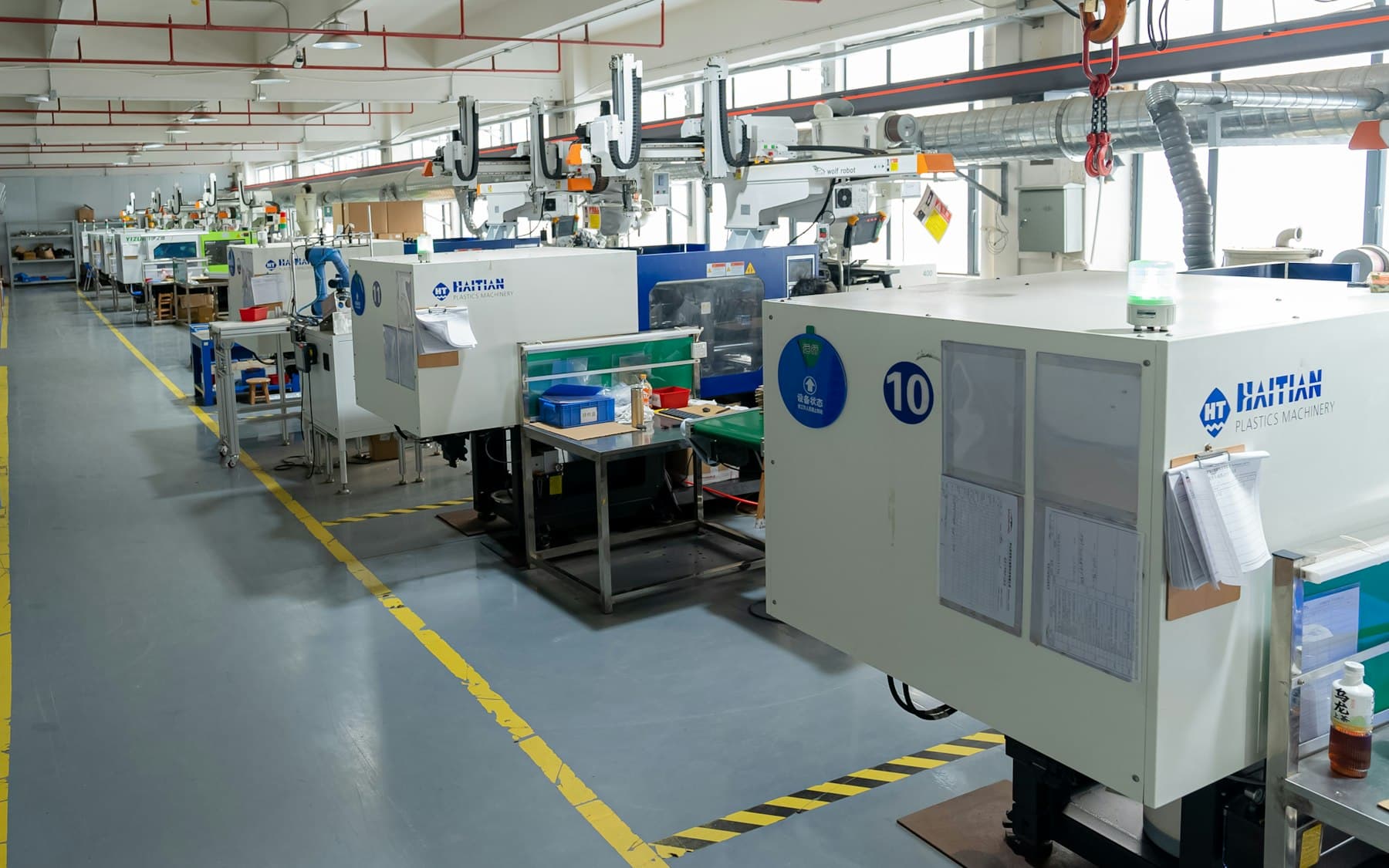
Procurement teams usually need a practical screen, not a full audit. Look for evidence that the supplier can fund ordinary operations and the specific programme: current trading status, liquidity pressure, overdue obligations where legally discoverable, dependence on one large customer, major capital commitments, insurance and the ability to purchase resin, tooling inputs and maintenance services on time. For a private supplier, the buyer may use a credit report, management representation, bank or trade references and a contractual right to receive notice of material changes.
Financial statements should be read carefully and in context. Liquidity and going-concern disclosures are relevant signals, but a clean report does not guarantee delivery and a difficult period does not automatically mean a supplier is unsuitable. IFRS materials emphasise the importance of considering going concern and liquidity disclosures in financial reporting.[2] Use the review to define monitoring triggers, such as a material ownership change, repeated late delivery, inability to fund agreed tooling or a sudden request for unusual prepayment. Do not infer solvency from a factory visit, a large machine list or a low quotation alone.
| Review area | Useful evidence | Buyer interpretation |
|---|---|---|
| Liquidity and trading | Recent financial information, credit screening, trade references or agreed management confirmation. | Identify pressure that could affect resin purchases, payroll, maintenance or tooling work. |
| Customer concentration | High-level revenue mix or explanation of major account dependence. | A sudden loss or priority shift may change available capacity and attention. |
| Capital commitments | Planned press, toolroom, automation or facility investments and their timing. | Check whether the supplier is promising capacity before assets are actually available. |
| Commercial terms | Deposit, tooling payment, inventory funding and change-in-control provisions. | Align payment exposure with evidence, ownership and recovery options. |
| Monitoring plan | Named owner, review frequency and escalation thresholds. | Turn a one-time check into a controlled supplier-management activity. |
03
Test usable capacity against the real ramp
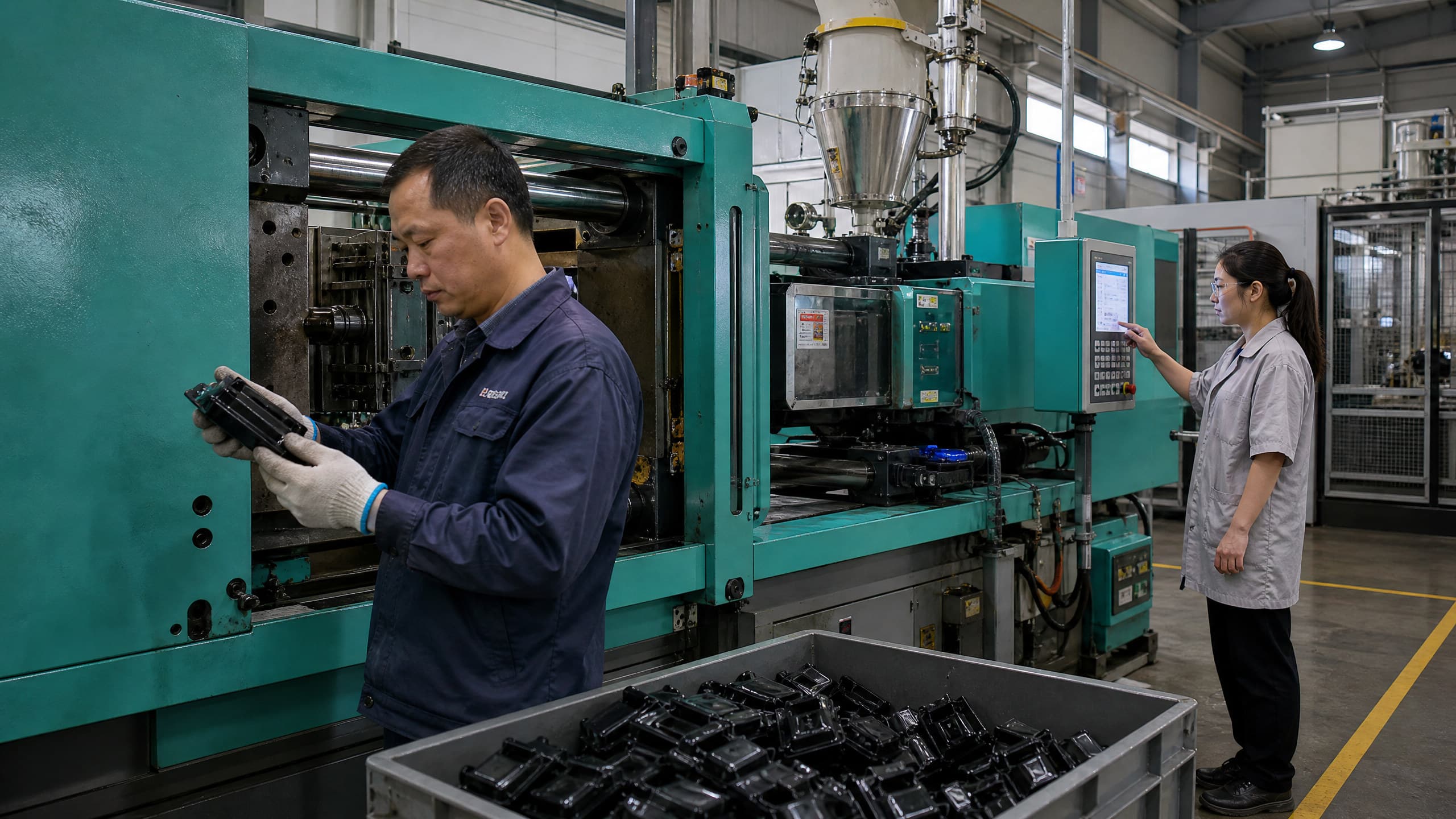
A press list is not a capacity plan. Ask the supplier to map the expected demand by month or quarter against the relevant press, mould, cavity count, cycle assumption, shift pattern, planned maintenance and other committed work. Separate nominal machine tonnage from usable capacity for the specified resin, part envelope, quality controls, automation and packaging. Ask what happens during launch, seasonal peaks, engineering changes and an unplanned press outage.
Capacity should also include the bottlenecks outside the press. Toolroom response, mould maintenance, inspection, drying, colour changes, insert loading, assembly, packing and export handover can constrain output even when injection time appears available. The ECB has documented how logistics, labour, intermediate-input shortages and capacity constraints can lengthen delivery times across production networks.[3] For an overseas OEM, request the assumed lead-time start point, shipment route, buffer policy and escalation contact rather than accepting a single end-to-end number.
04
Ask what continuity planning can actually do
A continuity plan is useful when it identifies important activities, dependencies, recovery priorities, responsible people and practical actions. ISO 22301 frames business continuity around effective response and quicker recovery from disruption, with plans that help an organisation understand vulnerabilities and assign roles.[4] Ask whether the supplier maintains a current plan and whether it has exercised relevant scenarios, but do not treat possession of a certificate or document as proof that your part will be recovered on time.
Use scenarios that match the programme: a press failure, mould damage, resin allocation, power interruption, cyber incident, labour shortage, port delay, fire, severe weather or loss of a key subcontractor. Ask where the mould and approved samples are, how process settings and inspection records are restored, which alternative press or site could run the part, how a material substitution would be approved and how the buyer is notified. Define recovery-time and recovery-point expectations only when they are technically and commercially credible.
05
Measure second-source risk before you need a second source
A second source is not simply another supplier that owns a similar press. The alternate must be able to reproduce the part, material, tooling intent, appearance, inspection method, packaging and approval basis. Assess whether the mould is transferable, who owns the CAD and process records, whether steel and spare parts are documented, which features require special capability, and how the alternate would obtain the approved resin or colour standard. If a second source has never made the part, its quoted contingency may be unproven until a controlled trial and approval are completed.
Classify dependency openly. A single supplier may be acceptable for a low-criticality part with short replacement lead time, while a safety-relevant or line-stopping component may need a qualified alternate, duplicate tooling strategy, safety stock or a documented transfer route. The decision should consider qualification time, tooling cost, transport exposure, regional trade requirements and the cost of holding inventory. Avoid claiming that geographic separation alone removes risk: the same resin producer, toolmaker, port, software system or sub-tier supplier may still connect both sources.
| Dependency level | Typical condition | Practical buyer action |
|---|---|---|
| Low | Non-critical part, short replacement lead time and transferable tool records. | Keep supplier monitoring and a documented RFQ-ready alternate list. |
| Medium | Important part with moderate qualification time or a shared material and logistics dependency. | Develop a transfer pack, review buffer stock and periodically refresh alternate quotations. |
| High | Line-stopping, regulated or technically specialised part with long requalification or unique tooling. | Fund a qualified second source, duplicate critical assets or agree a tested recovery route. |
| Unknown | Supplier cannot explain ownership, records, sub-tier dependencies or recovery timing. | Treat as an open risk and do not represent the source as resilient until evidence improves. |

Practical takeaway
Before you move
to the next review.
- Review proportionate financial, ownership and trading evidence, with clear confidentiality boundaries.
- Compare committed demand with usable press, toolroom, inspection, labour and logistics capacity.
- Ask for scenario-based continuity actions, named owners, recovery assumptions and notification rules.
- Confirm mould ownership, records, approved samples, material details and transfer rights before a crisis.
- Classify second-source risk and agree whether monitoring, buffer stock, duplicate tooling or qualification is justified.
FAQ
Common questions
Should buyers reject a supplier that will not share full financial statements?
Not automatically. Private companies may have legitimate confidentiality limits. Ask for proportionate alternatives such as an independent credit report, trade references, management confirmation or a review by an approved financial assessor. Record what remains unverified and control the resulting exposure.
How much spare injection molding capacity should a supplier have?
There is no universal percentage that fits every programme. Ask the supplier to show usable capacity against your ramp, maintenance, other commitments and realistic outage assumptions. The right contingency depends on part criticality, recovery time, inventory and the availability of a qualified alternate.
Does ISO 22301 certification prove that a supplier can recover our part?
No. ISO 22301 is a business-continuity management standard, not a guarantee of a particular part, press, material or delivery date. Ask how the supplier applies its continuity arrangements to your mould, records, dependencies and agreed recovery requirements.
Can a second supplier quote be treated as a qualified second source?
No. A quote shows commercial interest and an initial capability claim. Qualification may still require tooling or transfer review, material confirmation, trials, dimensional and visual approval, process documentation and customer-specific validation.
What should an OEM include in a supplier-stability review for overseas molding?
Include the full handover: Incoterm, export documents, route, packaging, transit assumptions, destination responsibilities, communication time zones, resin and tool ownership, change control, recovery contacts and the practical steps for an alternate source to receive and reproduce the approved process.
References
Source material
- [1] Chartered Institute of Procurement & Supply, “Procurement and Supply Cycle.”
- [2] IFRS Foundation, “Investor Update: August 2021” (liquidity and going concern disclosures).
- [3] European Central Bank, “Supply chain disruptions and the effects on the global economy.”
- [4] International Organization for Standardization, “Building resilience: ISO standard for business continuity just updated.”
This guide is general information for early procurement and engineering discussion. It does not replace product-specific DFM, qualification, validation, regulatory assessment or legal advice.