
Low-volume, bridge and production tooling are not simply three price bands for the same mold. They are different ways to allocate launch risk between learning, near-term supply and long-term repeatability. A low-volume route may protect cash and preserve flexibility; bridge tooling may cover a defined demand window while a production system is prepared; production tooling may be justified when the part, forecast and quality plan are mature enough to support a larger commitment.
The decision should start with the next business and engineering decision, not with an annual quantity copied into an RFQ. Ask what the first parts must prove, what could still change, what happens if launch slips, and which evidence is required before the route can be extended. For a part-specific review, send the controlled package through InjeForm’s [request-a-quote](/request-a-quote) page.
Do not choose a tooling route from volume alone. Compare the cost of committing too early with the cost of an interrupted launch, an unproven process or a later tool change.
01
Define the launch decision before choosing the tool
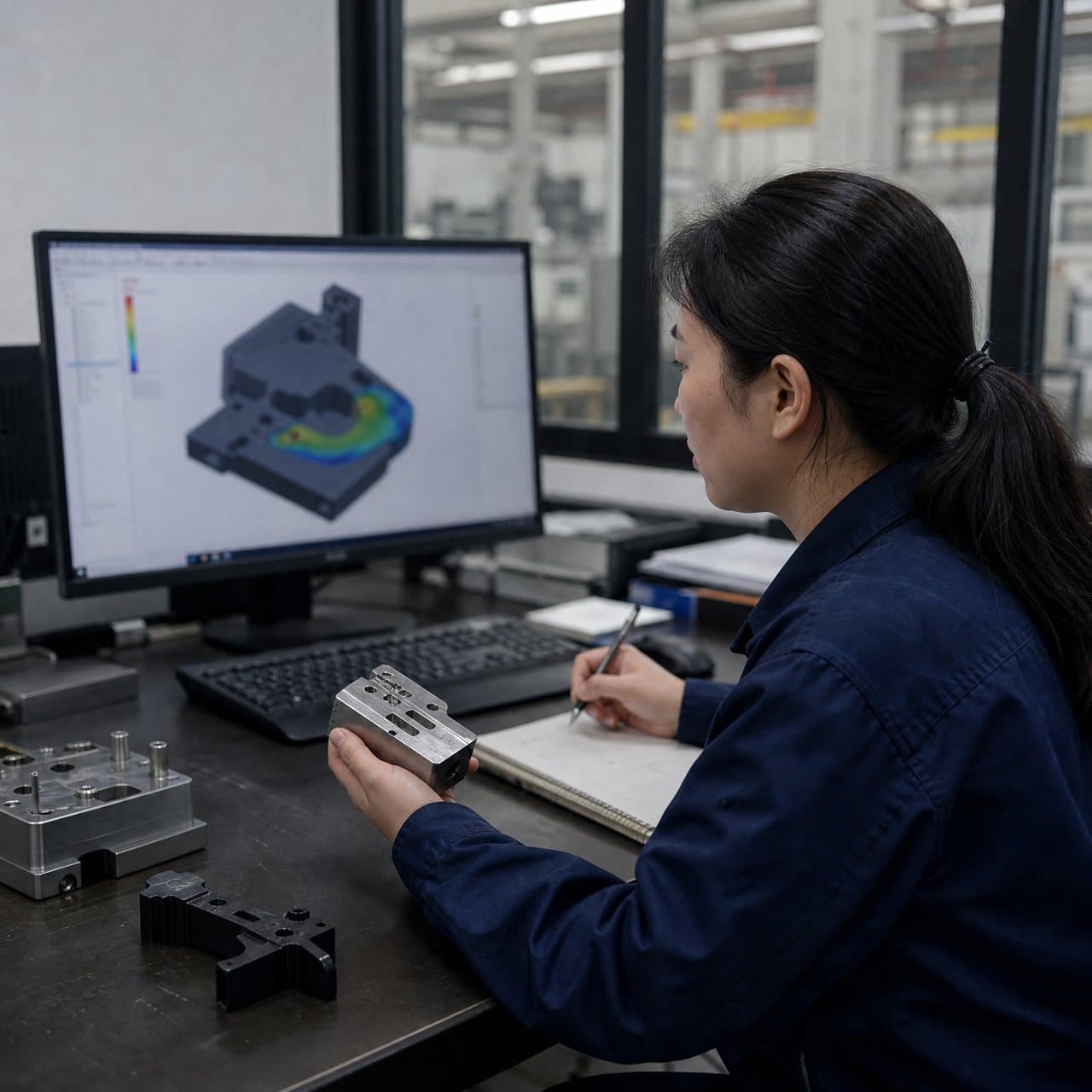
Write down the decision the next molded parts must support. It may be a fit check with mating components, a functional pilot in the intended resin, a controlled market release, service supply, or a repeatable production release. Each purpose needs different evidence. A fit sample may not prove sustained dimensional control; a bridge lot may protect deliveries without proving that a future multi-cavity process will behave the same way.
Separate known inputs from open decisions. Identify the controlled CAD and drawing revision, material and colour direction, critical interfaces, visible surfaces, forecast range, target market, packaging and launch date. If a connector, snap, logo, sealing feature or assembly sequence may still change, make that risk visible before asking a supplier to recommend a tool. InjeForm’s [DFM and tool-design process](/process) can support the review, but the buyer remains responsible for product requirements and release authority.
02
Match low-volume, bridge and production routes to risk
Low-volume tooling is often appropriate when the buyer needs molded evidence but demand or design maturity is still uncertain. Bridge tooling is more useful when a defined near-term supply need exists while the longer-term tool, forecast or manufacturing system is being resolved. Production tooling is a stronger candidate when geometry, material, acceptance criteria, demand and the supply horizon are sufficiently settled to justify a fuller commitment. None of these labels establishes tool life, tolerance, capacity or regulatory suitability by itself.
The comparison should include what each route does not prove. Tool construction, cavity count, cooling, venting, gate location, ejection, insert loading, surface finish, inspection and manual operations can differ. A supplier should state which features are temporary, which are production-intent, and what would need to be rechecked after a route change. For a buyer comparing new or revised tools, the [injection mold making](/injection-mold-making) page is a useful starting point for the technical conversation.
The table below is a decision aid, not a universal volume rule. A part with modest demand can still need a robust tool if interruption has a high consequence; a high forecast may still justify staging if the design or market case is not settled.
| Route | Best fit when | Launch risk to control | Evidence before extending the route |
|---|---|---|---|
| Low-volume tooling | The buyer needs molded parts for learning, a limited variant, service demand or a cautious first release. | Do not assume the tool can be scaled, transferred or modified economically later. | Confirm intended resin, revision, critical features, tool configuration, sample purpose and repeat-order assumptions. |
| Bridge tooling | Near-term supply is real, but a later production tool or process is still being prepared or decided. | Prevent a temporary route from becoming open-ended or being treated as proof of the future system. | Set a demand window, lot-release criteria, transition gate, exit event and fallback plan. |
| Production tooling | The design, forecast, acceptance plan and supply horizon justify a durable production commitment. | Avoid freezing an unstable design or paying for capacity that the programme cannot use. | Review tool design, trial results, capability evidence where required, maintenance and production-release records. |
03
Compare the total launch exposure, not only tool price
A lower tooling invoice can create higher launch exposure if it excludes the work needed to obtain usable parts. Compare tool design, cavities, inserts, runner and gate concept, cooling, trials, sample quantity, inspection, corrections, secondary operations, packing, freight and maintenance assumptions. Separate non-recurring tooling from recurring part pricing so that a low first-tool cost is not mistaken for a low landed cost.
Model at least four plausible paths: the initial release, a repeat order at the same revision, a design change before launch, and a later move to a different tool. Include the cost of delay, expedited freight, extra inspection, inventory, rework or a missed customer build where those consequences are material. The supplier can explain manufacturing effort and options; the buyer should decide which commercial and programme risks it is willing to accept.
For cross-border supply, make the destination, packaging, Incoterms version, export and import responsibilities, taxes or duties, currency and documentation assumptions explicit. Incoterms address defined transport tasks, costs and risks; they do not replace product acceptance, ownership, payment or quality terms. Obtain appropriate customs, tax and legal advice for the transaction.
| Cost or exposure | Question for every route |
|---|---|
| Tool commitment | What tool architecture, cavity count, inserts, services and change scope are included? |
| Part economics | What quantity, cycle, scrap, labour, inspection, secondary work and packaging assumptions shape the unit price? |
| Launch delay | Which unresolved input could move the sample, release or shipment date, and who must decide it? |
| Route change | What records, tool rights, design data and evidence transfer if the programme changes supplier or tooling strategy? |
| Interruption | What is the agreed response if demand rises, a tool needs repair, or the next route is delayed? |
04
Set evidence gates that match the route’s purpose
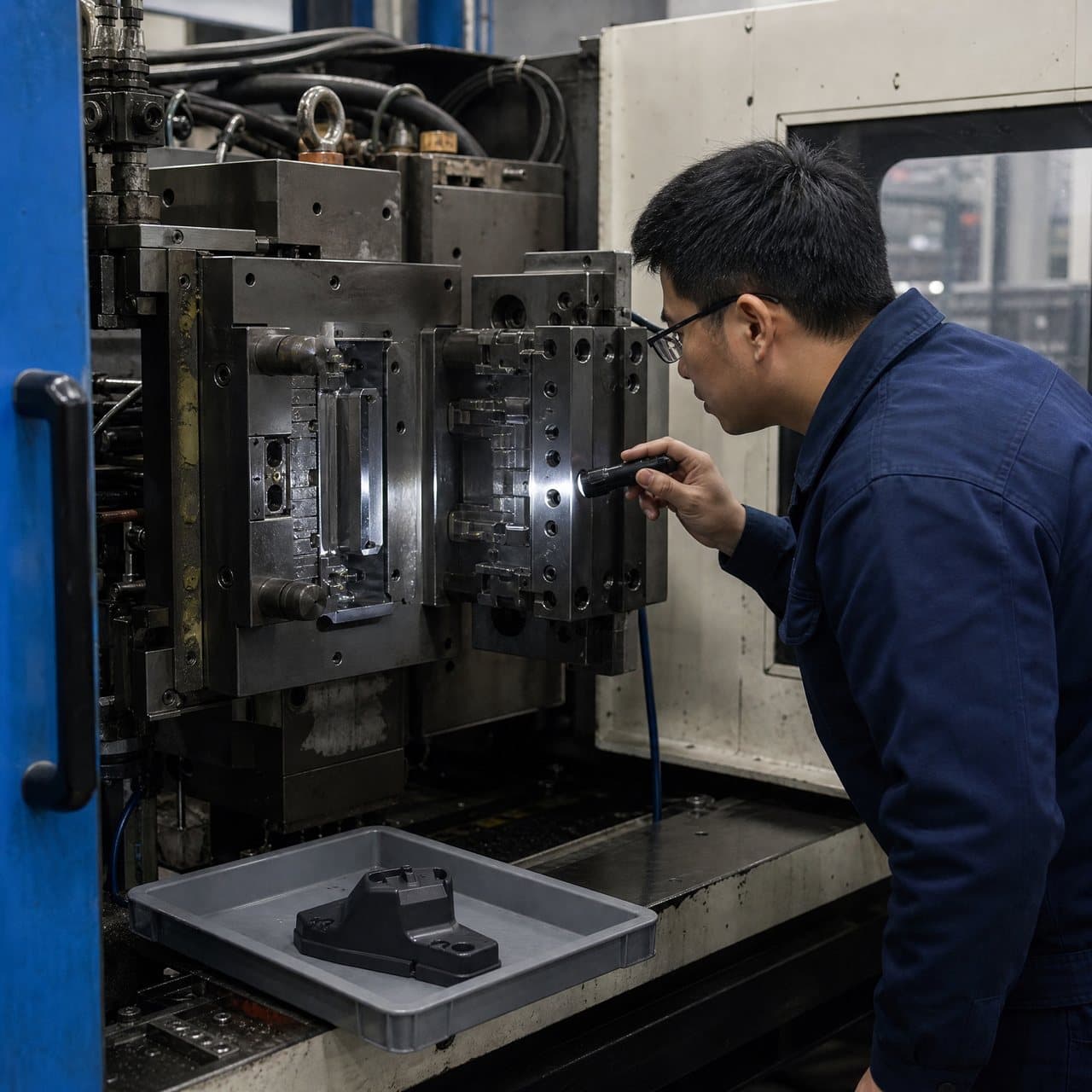
A first molded sample should answer a named question rather than silently approve the whole programme. Record the part and tool revision, resin identity, colour, cavity identity where relevant, process conditions that matter to the evaluation, measurements, visual findings, assembly observations, deviations and open actions. ISO 20457 provides a framework for tolerances and acceptance conditions for molded plastic parts, but it does not choose a product’s critical features, measurement system or release authority. Those must be agreed for the actual application.[1]
Bridge acceptance and production readiness should remain separate gates. The first asks whether an identified lot meets the criteria for its stated purpose. The second asks whether the next manufacturing system, including its tool, process, inspection, material control, packaging and delivery assumptions, is ready to release. A passing bridge lot does not automatically approve a different cavity layout, material substitution, machine, tool or market use.
For medical, laboratory, safety-relevant or otherwise regulated products, the legal manufacturer or product owner must define applicable validation, records, traceability and market obligations. FDA’s QMSR is a quality-system regulation for finished medical-device manufacturers and is not a blanket compliance claim for a molded component or tooling route.[2]
05
Make the next tooling decision reversible where possible
Reversibility is not the same as promising that a low-volume or bridge tool will become the production tool. Ask what can actually be reused: design data, approved material definition, inspection methods, replaceable inserts, fixtures, packaging, process knowledge or the physical mold. The answer depends on geometry, tool construction, ownership, condition, intellectual-property terms and the differences between the routes. Put the answer in the quotation or tooling agreement before release.
Create an exit record for every staged route. It should state the demand covered, the supplied revision, evidence completed, unresolved risks, tool condition, maintenance status, ownership and the event that triggers a new decision. If the bridge is extended, re-approve the revised window rather than treating an old approval as open-ended. If production tooling is selected, retain the assumptions that justified the commitment so future changes can be evaluated against the original decision.
The best route is therefore the one whose remaining exposure the launch team can see, measure and act on. Ask InjeForm for a scoped comparison covering the part, tool concept, samples, inspection, timing, commercial boundary and transition plan rather than requesting a route label in isolation.
Practical takeaway
Before you move
to the next review.
- State what the next molded parts must prove and which decision owner can accept the evidence.
- Provide controlled CAD, critical interfaces, material direction, cosmetic zones, forecast scenarios and launch dependencies.
- Ask every supplier to distinguish low-volume, bridge and production tool features, exclusions, assumptions and route-change limits.
- Compare total launch exposure, including samples, inspection, corrections, landed cost, delay impact, maintenance and continuity.
- Set lot-release, transition and exit gates with documented revisions, evidence, ownership, change control and fallback actions.
FAQ
Common questions
Is there a universal order quantity for choosing production tooling?
No. Quantity matters, but design maturity, resin, geometry, critical interfaces, interruption cost, expected releases, quality evidence and programme life can change the decision. Use quantity as one scenario in a broader risk review.
Can bridge tooling be used as the final production tool?
Sometimes, but never by assumption. Review its construction, cavities, cooling, wear, maintenance, capacity, acceptance evidence, ownership and the differences between bridge and intended production conditions before extending it.
When is low-volume tooling safer than committing to a production mold?
It may be safer when a defined learning cycle or limited demand window has more value than an early full-tool commitment. The buyer should still verify that the route represents the resin, interfaces and evidence needed for the decision.
What should a buyer request before approving a bridge route?
Request the demand window, controlled revision, material and tool assumptions, difference from the later route, sample and inspection plan, transition trigger, exit event, ownership terms and fallback if the next route is delayed.
Does a successful pilot prove production readiness?
No. A pilot proves only the criteria defined for that pilot under its stated conditions. Production readiness may require additional process, dimensional, visual, material, packaging, capacity and quality evidence agreed with the product owner.
References
Source material
- [1] International Organization for Standardization, ISO 20457:2026, Plastics moulded parts — Tolerances and acceptance conditions.
- [2] U.S. Food and Drug Administration, Quality Management System Regulation (QMSR).
- [3] Protolabs, How to Use Injection Molding for Bridge Tooling.
- [4] International Trade Administration, Know Your Incoterms.
- [5] ISO, ISO 9001 — Quality management systems.
This guide is general information for early procurement and engineering discussion. It does not replace product-specific DFM, qualification, validation, regulatory assessment or legal advice.