
An HVAC plastic component is part of an airflow, thermal and assembly system—not just a lightweight enclosure. A housing may locate a fan, motor, filter or control; an air guide may shape flow and noise; a duct may seal a path across temperature cycles; and a clip may hold a cover while absorbing installation and service loads. Those duties create different risks for warpage, leakage, rattling, creep, weld lines, flash and fit.
A useful RFQ therefore combines controlled CAD and drawings with the air path, mating parts, temperature profile, assembly method, material direction, inspection evidence and production assumptions. InjeForm’s [consumer and appliance application page](/products/consumer-appliance) is a relevant starting point, while the [request-a-quote](/request-a-quote) route should receive the actual HVAC interfaces and acceptance criteria rather than an exterior model alone.
Buying rule: specify the air path and thermal duty first, then approve the resin, mold concept and inspection plan against sealing, noise, fit, clip function and service-life evidence.
01
1. Define the HVAC assembly and air path in the RFQ
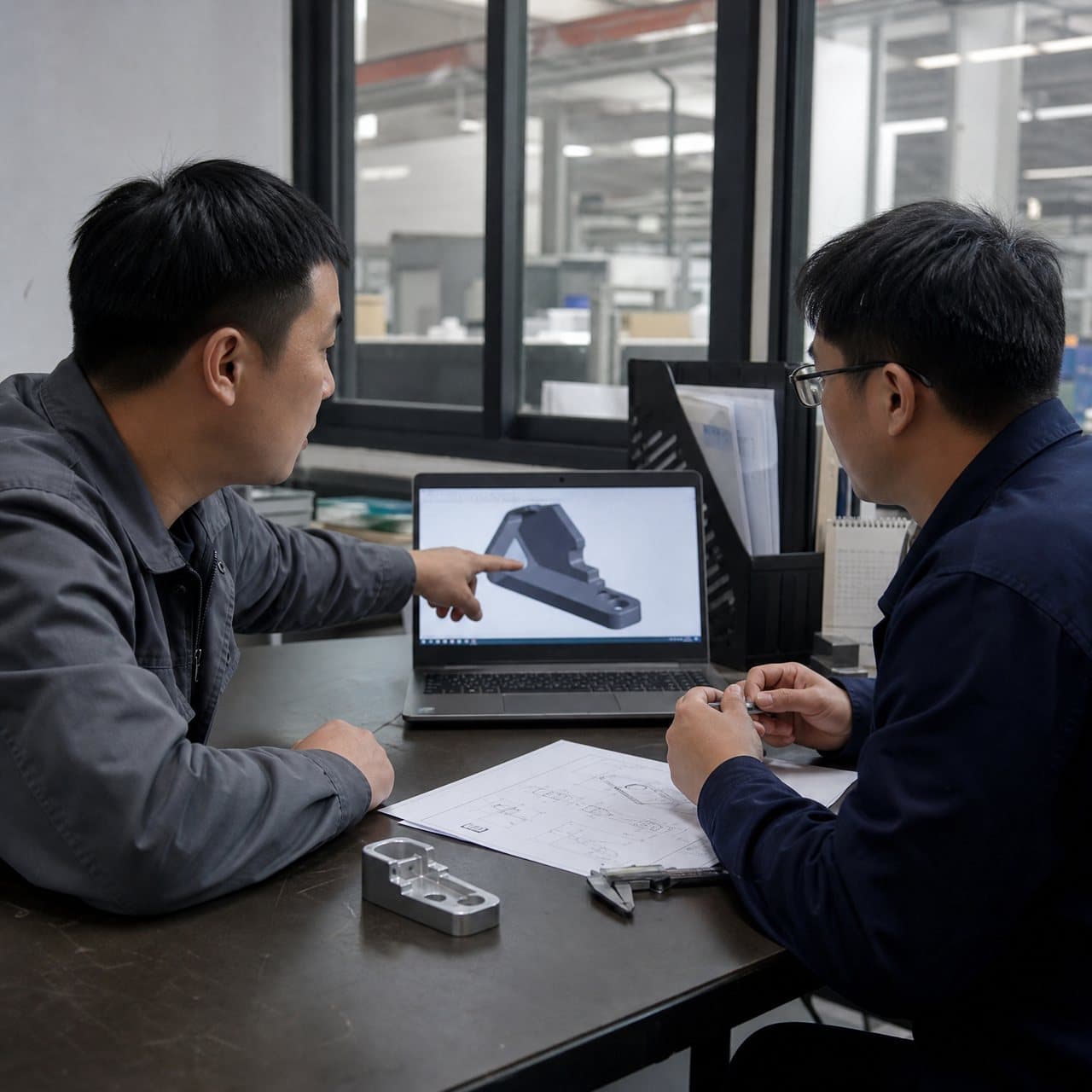
Identify whether the part is a blower or fan housing, return-air or supply-air duct, diffuser, grille, air guide, filter frame, control cover, drain-related shroud or service clip. Provide the released 3D model, 2D drawing, revision and all relevant mating geometry: fan or impeller, motor, heat exchanger, filter, foam or gasket, sheet-metal frame, fasteners, electronics, cover and adjacent ducts. Mark datums, sealing lands, screw bosses, locating pins, clip hooks, airflow entrances and exits, and surfaces that must remain clear.
Describe the actual duty cycle. Include minimum and maximum air temperature, start-up and shutdown conditions, dwell time, humidity or condensation, airflow or pressure context, vibration, cleaning agents, UV exposure and any refrigerant or oil contact that can occur in the finished equipment. Temperature exposure should be a profile tied to the component location, not a single ambient number. The product owner remains responsible for defining system safety, acoustic, energy and market requirements; the molder should not infer them from the word HVAC.
State annual volume, ramp shape, cavity expectation, plant or destination, packaging orientation, color and texture, expected service access, tool-transfer intent and whether the component is molded alone, assembled later or supplied with foam, clips or inserts. Ask every supplier to itemize assumptions for gate, parting line, slides, ejection, secondary operations, machine fit, inspection, packaging and exclusions. InjeForm’s [DFM and mold-design service](/injection-mold-design-dfm) can support this early review.
| RFQ input | What to provide | Risk addressed |
|---|---|---|
| Air path | Sectioned CAD, flow direction, interfaces, sealing surfaces and any pressure or noise target defined by the product team | Leakage, restriction, turbulence or a part that fits but does not perform in the system |
| Thermal duty | Temperature-time profile at the part, start/stop conditions, humidity, condensation and nearby heat sources | Creep, warpage, brittle behavior or material selected from an unrealistic ambient |
| Assembly stack | Fan, motor, exchanger, foam, fasteners, frame, cover, clips and service-removal sequence | Interference, rattle, lost compression or inaccessible maintenance |
| Program demand | Forecast, ramp, cavity expectation, packaging, destination and timing assumptions | A quote that omits capacity, pack-out or export responsibilities |
| Acceptance basis | CTQs, datums, leak or fit checks, visual boundaries and measurement method | Disputes over what an approved duct, housing or clip means |
02
2. Separate housing, duct and air-guide design risks
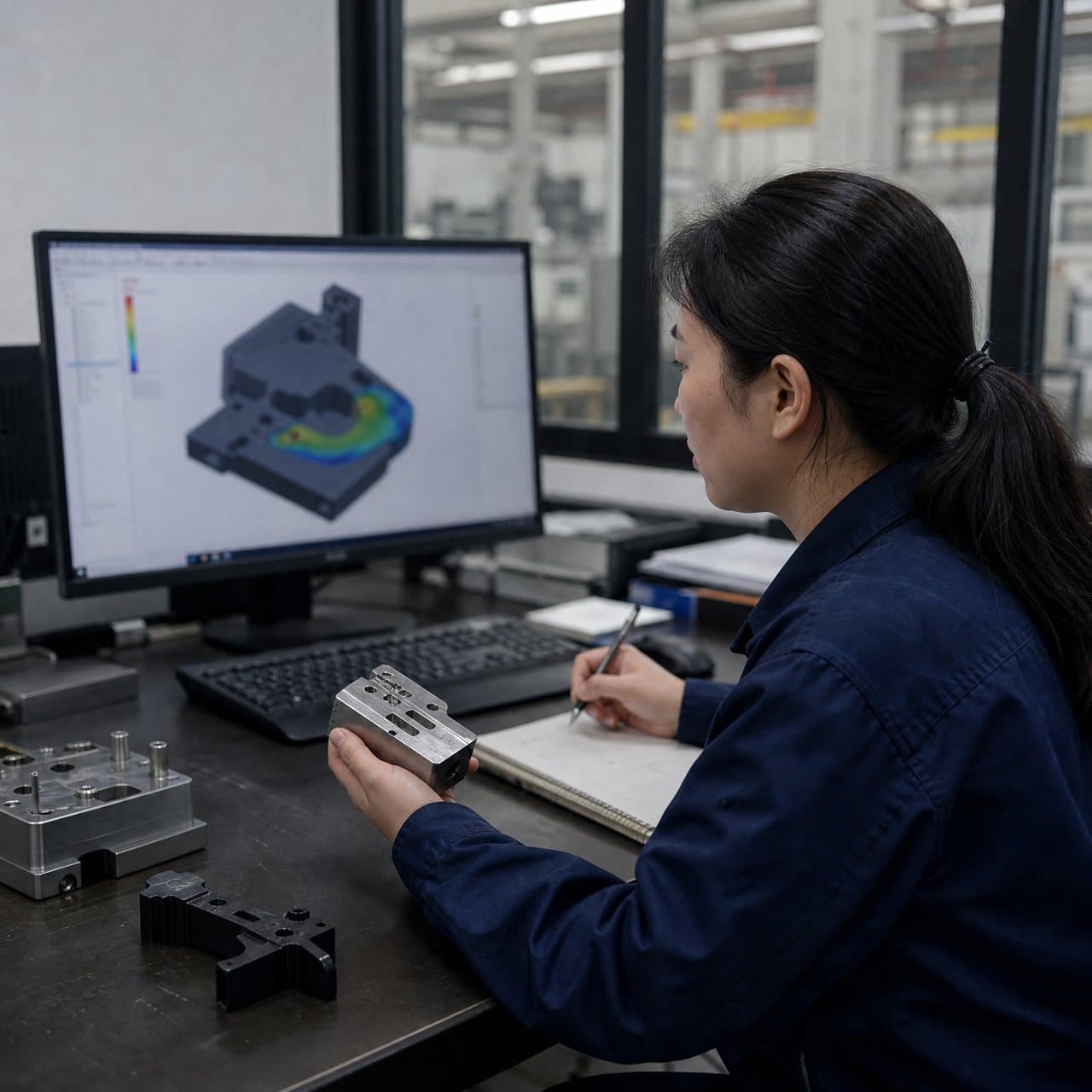
HVAC housings often combine broad panels with ribs, bosses, motor mounts, bearing or shaft clearances, filter tracks and cover interfaces. Review wall transitions, coring, draft, radii, venting and ejection as a system. Large unsupported faces can show sink or warpage; thick boss bases can cool differently from the surrounding wall; and an ejector or parting line in a gasket land can compromise assembly. Use a controlled DFM review to show where the proposed gate, weld lines and tool actions fall relative to sealing and mounting features.
Air guides and ducts deserve a functional section review, not only an outside-envelope check. Define inlet and outlet sections, transitions, vanes, turning surfaces, fastening points, foam seats and the surfaces that control gap or leakage. A small shift in a vane or a warped flange can change the air path, create noise, or prevent the duct from compressing its seal. If airflow, pressure drop or acoustic performance is important, the buyer should define the system-level test or simulation method; a molder can report geometry and process evidence but cannot promise HVAC performance from a visual sample alone.
Treat clips and service features as working interfaces. Specify insertion direction, engagement, installation force, removal access, expected service cycles, mating tolerance and the consequence of partial engagement. Snap hooks, living hinges and thin latch roots may see repeated thermal and mechanical stress. The responsible product engineer should set retention and durability targets; the supplier can review radii, draft, fiber orientation, gate position and toolability against those targets.
03
3. Turn temperature exposure into a grade-specific material decision
A preliminary material screen may include PP for suitable lightweight, chemically resistant housings, ducts and flexible features; ABS for rigid cosmetic covers in an appropriate environment; PC/ABS for a balance of impact and appearance; and PA or PA-GF where stiffness or heat resistance is needed for a functional feature. These are starting directions, not approvals. The exact grade, reinforcement, colorant, additives, shrinkage data, processing window and resin-maker guidance must be checked against the HVAC location and duty cycle. InjeForm’s application data lists PP, ABS, PC/ABS and related directions for consumer and appliance components.
Ask what happens after thermal cycling, not only at the hottest stated temperature. Compare dimensional change, creep at bosses and clips, weld-line strength, impact after conditioning, seal compression, warpage, odor or appearance expectations, chemical exposure and moisture effects where relevant. Glass reinforcement can increase stiffness but also introduce directional shrinkage, fiber-related surface effects and greater tool-wear considerations. A resin or colorant change can alter filling, cooling, clip force, fit and acoustics, so it should follow written change control.
Name the producer and exact commercial grade. Request the current technical data sheet, processing and drying basis where applicable, lot traceability, approved substitutions, regrind policy and any customer-required declarations. If flame, smoke, odor, chemical, thermal or electrical claims apply, specify the method, specimen or part condition, acceptance limit and responsible approver. A family name such as PP or PC/ABS does not establish suitability for a complete HVAC appliance.
| Material direction | Potential fit | Buyer checks before approval |
|---|---|---|
| PP | Lightweight ducts, housings or flexible features where the exact grade suits the duty | Thermal cycling, creep, shrinkage, odor, chemical exposure, clip behavior and sealing |
| ABS | Rigid covers and cosmetic appliance components in a controlled temperature environment | Impact after conditioning, temperature limit, appearance, chemicals and any flame requirement |
| PC/ABS | Impact and cosmetic balance for suitable housings or covers | Exact-grade thermal and chemical behavior, stress cracking, color and surface acceptance |
| PA / PA-GF | Stiff mounts, clips or functional features where grade and moisture condition support them | Moisture, fiber orientation, weld lines, anisotropic shrinkage, creep and tool wear |
04
4. Build inspection evidence around sealing, airflow and service fit
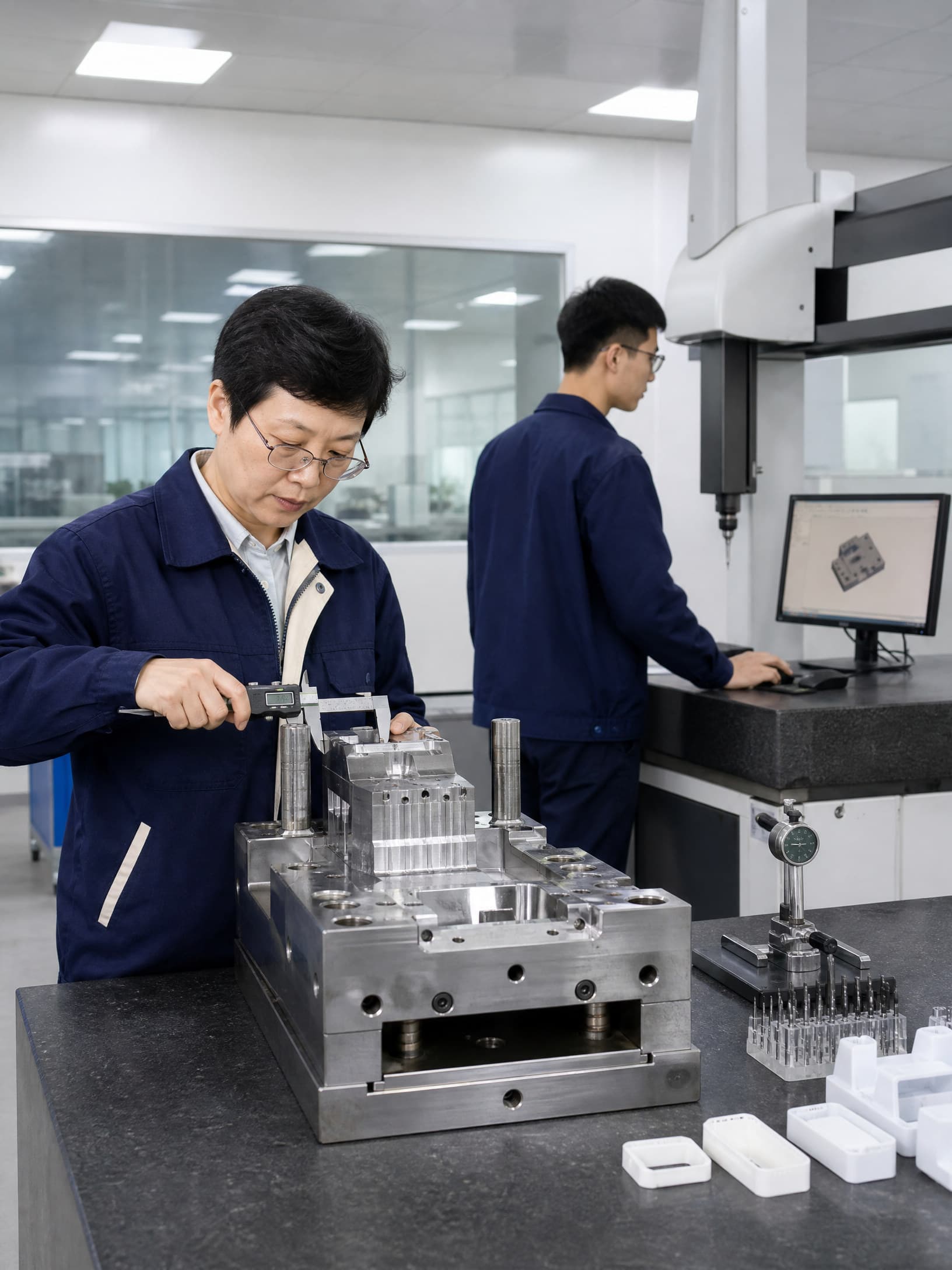
Identify CTQs by failure mode. Typical examples include flange flatness, gasket-land position, duct section dimensions, filter-track alignment, fan or motor clearance, boss location, cover gap, clip engagement, mounting-hole position, vane geometry and visible-surface limits. Define primary and secondary datums, fixture simulation, measurement condition and sampling. A coordinate result without a stated setup or part condition is difficult to compare, especially for a large thin-walled duct that can move after ejection or conditioning.
Request first-article or layout evidence that links the part to tool, cavity, resin lot, process run, revision and inspection method. Dimensional checks may need CMM, optical measurement, gauges or section fixtures; functional checks may include assembled fit, gasket compression, leak or pressure testing, clip retention, fan-clearance verification or a customer-defined airflow or acoustic test. Choose the combination from the product requirements. A supplier’s dimensional report does not by itself certify system airflow, energy performance, noise or regulatory compliance.
Separate molded-part conformity from equipment validation. Passing a flange dimension does not prove a seal under temperature cycling; passing a clip gauge does not prove service durability; and a visually clean duct does not prove acceptable odor or airflow. Ask the supplier to state which checks are in scope, which require customer equipment, and how deviations are contained. InjeForm’s [quality](/quality) discussion can help map CTQs to practical evidence before the quotation is frozen.
05
5. Ask suppliers questions that expose production readiness
Request a marked-up DFM showing gate, weld-line, venting, cooling, ejection, parting line, slides or lifters, draft, warpage risks and the relationship to gasket lands, air-guide surfaces and clips. Ask for the proposed mold steel and cavity plan, machine fit, cycle assumptions, inspection fixture needs and any secondary assembly. The quotation should separate tooling, samples, inspection, leak or functional testing, packaging and production parts so a low unit price does not hide scope.
Probe thermal and material controls. Who owns the approved grade and substitution list? How are resin lots, drying records, colorants and regrind controlled? What happens after a resin, mold component, gate, cavity, foam, clip or inspection method changes? Ask how cavity identity, nonconforming parts, startup purge and rework are managed. If the component is large or thin-walled, ask how process capability, mold maintenance and spare capacity will be monitored through ramp.
Set release gates: requirements and DFM review, material and tool-design approval, T0/T1 samples, dimensional and fit evidence, thermal or leak testing where required, pilot review, production release and change notification. For overseas supply, clarify mold ownership, data and transfer rights, packaging, export documents, Incoterms, sample retention and escalation. Send the current controlled package through [request a quote](/request-a-quote), and use the [injection molding service](/services) discussion to align molding with any assembly or finishing scope.
Practical takeaway
Before you move
to the next review.
- Provide controlled CAD and drawings for the housing, duct, air guide or clip together with fan, motor, exchanger, foam, fastener and service interfaces.
- Define the air path, sealing surfaces, thermal time profile, humidity or condensation, vibration, cleaning exposure and any customer-owned airflow, noise or energy tests.
- Compare exact resin grades for creep, shrinkage, weld lines, impact, moisture, chemical exposure, odor, temperature cycling and clip or seal behavior.
- Require cavity-linked dimensional and functional evidence for flange fit, duct sections, clearances, clips, leakage, thermal conditioning and agreed visual criteria.
- Agree DFM, material, tool, sample, validation, traceability, packaging, change-control, ownership and production-release gates before award.
FAQ
Common questions
What should an HVAC plastic component injection molding RFQ include?
Include controlled CAD and drawings, air-path sections, mating fan or motor and frame data, seals or foam, clips, temperature-time profile, exposure conditions, exact material direction, forecast, CTQs, inspection method, testing expectations and launch timing.
Which plastic is best for an HVAC duct or housing?
There is no universal best material. PP, ABS, PC/ABS and PA or PA-GF may be starting directions, but the exact grade must be checked against temperature cycling, creep, impact, chemicals, moisture, odor, shrinkage, sealing and the product validation plan.
How should buyers specify temperature exposure for molded HVAC parts?
Give the part-location profile: minimum and maximum temperatures, ramp or cycle, dwell time, start-up and shutdown conditions, humidity or condensation and mechanical load. If the profile is uncertain, identify the owner of the test and approval decision rather than using one ambient value.
How can an air guide or duct be checked before production release?
Use datum-based dimensional and section checks plus assembled fit, flange or gasket checks and any customer-defined leak, airflow, pressure, noise or thermal test. A molded-part report alone does not establish complete equipment performance.
What supplier evidence should precede HVAC component production?
Request approved DFM and material records, tool and cavity details, resin-lot traceability, sample dimensions, fit and clip checks, agreed leak or thermal evidence, open-risk disposition, control-plan inputs, packaging assumptions and written change control.
References
Source material
- [1] International Organization for Standardization, ISO 20457:2026 — Plastics moulded parts: Tolerances and acceptance conditions.
- [2] International Organization for Standardization, ISO 9001:2015 — Quality management systems.
- [3] BASF, Ultramid® engineering plastics product and technical information.
- [4] SABIC, LEXAN™ and CYCOLOY™ resin product information and technical resources.
- [5] ASHRAE, HVAC&R industry resources and standards overview.
This guide is general information for early procurement and engineering discussion. It does not replace product-specific DFM, qualification, validation, regulatory assessment or legal advice.