
An injection molding quotation is a set of assumptions, not just a number. One supplier may include mold design, steel, sampling, inspection and export packing while another separates them or leaves them open. A meaningful comparison therefore starts by converting each response into the same decision record: what is being bought, at which volume, to which acceptance basis, and with which risks still unresolved.
This injection molding quote comparison template is intended for engineering, procurement and product teams reviewing custom tooling and molded-part proposals. Use it alongside the released CAD, drawings and material direction, then confirm design questions through InjeForm’s [DFM and tool-design process](/process) or a targeted discussion before award.
A quote comparison is only as reliable as its common scope. If two suppliers price different assumptions, the apparent saving is not yet a saving.[1]
01
Freeze the comparison basis before opening the price column
Start the template with a controlled header: part number and revision, quote date, currency, Incoterm or delivery basis, requested annual and batch volumes, target launch date, cavity expectation, resin grade, colour, finish, tolerance class and required sample stage. Record the files each supplier received. A quotation based on a concept model should not be scored as though it answered a production-ready RFQ.
Define what ‘part price’ means. Confirm whether it includes resin, standard packaging, inspection, secondary operations, assembly, freight, duties, taxes, regrind policy and any customer-supplied inserts. Also state whether the tooling price is a one-time charge, amortized into piece price, or split across milestones. ISO 20457 provides a framework for tolerances on injection-moulded plastic parts, but a buyer still needs to identify the specific dimensions, datums and acceptance method that matter for the part.[2]
Keep a revision-controlled comparison sheet rather than editing supplier PDFs. Link each normalized line to the source quotation and mark any interpretation as an assumption. This creates a practical bridge to an RFQ package and makes a later review on /quality easier because evidence requests are visible from the beginning.

02
Separate the five cost layers that suppliers often combine
A useful template separates tooling, molding, finishing or assembly, logistics and risk allowances. Tooling can include mold design, steel or aluminum, standard components, hot runner or cold runner hardware, electrodes, texturing, engraving, trial shots, corrections and spare parts. Molding can include setup, machine time, labor, resin, process scrap, inspection and packaging. If a quote presents one lump sum, ask for a commercial bridge rather than guessing how it was built.
The part-price line also needs a volume basis. Request prices at the same quantity breaks and state whether the proposed cavity count is fixed, optional or conditional on demand. A lower unit price from a larger mold can carry higher upfront cash, qualification effort and cavity-to-cavity consistency exposure. Conversely, a low-cavity option may be sensible for an uncertain launch even if its nominal unit price is higher.
Do not treat every difference as a negotiation opportunity. A quote that includes a documented inspection plan, validated material route or realistic trial allowance may be more comparable to a higher-confidence program than a bare low number. Use the /capabilities and /process pages as prompts for questions about what is actually included, not as a substitute for supplier-specific confirmation.
| Cost layer | Normalize in the template | Questions to close before scoring |
|---|---|---|
| Tooling | Tool design, mold build, components, runner system, trials, corrections and ownership | Is the price for the stated cavity count and material? What is included through acceptance? |
| Molded parts | Resin, cycle basis, labor, scrap, inspection, packaging and volume breaks | What assumptions drive the piece price, and which operations are excluded? |
| Secondary work | Assembly, printing, texturing, trimming, inserts or special packing | Is the operation performed by the quoting supplier or a separate source? |
| Logistics | Incoterm, freight basis, export packing, duties and delivery destination | What is included in the delivered-cost view and what remains buyer risk? |
| Contingency | Open design, material, qualification or schedule assumptions | Which line is provisional, and what event converts it into a firm price? |
03
Compare tooling scope, ownership and future-change exposure
Two mold prices are comparable only when the underlying tool definition is comparable. Record cavity count, mold base size, steel or insert material, runner approach, cooling concept, ejection, slides or lifters, replaceable wear components, surface treatment, texture, spare parts and intended tool-life statement. These are engineering choices with commercial consequences; they should not be reduced to a single ‘mold cost’ cell.
Ask where the tool will be stored, who may authorize changes, how maintenance is recorded, and what happens if the program moves to a second source. The supplier’s ownership and custody terms should align with the purchase agreement and the buyer’s continuity plan. If the design is likely to change, compare the stated engineering-change process and rate basis, not just the initial tool price.
A quote template should include a dedicated ‘not quoted’ and ‘conditional’ column. Typical examples are customer-supplied inserts, texture approval, corrosion-resistant steel, spare cores, mold-flow analysis, additional T1 rounds and transfer documentation. Surfacing these items early is more useful than forcing an artificially precise total.
04
Make quality and acceptance evidence part of the commercial comparison
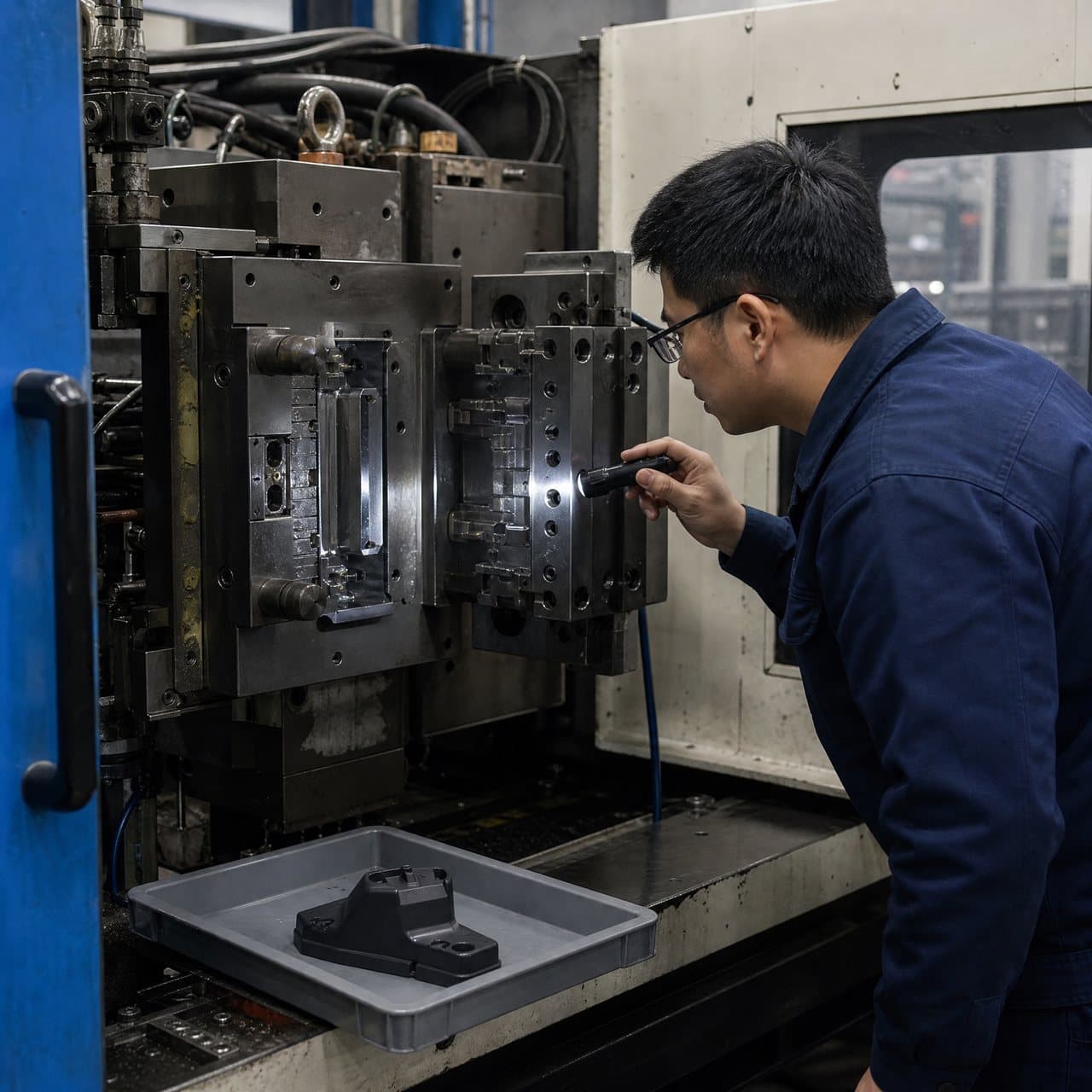
A quote should state how the supplier proposes to prove that the tool and parts meet the agreed intent. Compare the sample stage, number of shots or samples, dimensional report format, material documentation, visual standard, capability evidence where required, and the process for recording deviations. Do not assume that ‘inspection included’ means the same thing across suppliers.
Separate product requirements from supplier promises. For example, a dimensional report may measure selected characteristics, while a capability study may require a defined sampling plan and stable process. The buyer should identify critical-to-quality features, mating checks and cosmetic zones in the RFQ. Reference material from Autodesk and Protolabs emphasizes that draft, wall transitions, ribs, bosses, gates and ejection influence manufacturability and cost; those design choices should be discussed before the quote is treated as final.[3][4]
Include an evidence score only after defining what acceptable evidence looks like. A concise report tied to the released revision can be more valuable than a longer generic quality statement. For an early conversation, InjeForm’s /quality route can frame the inspection discussion, while the buyer retains responsibility for product-specific qualification and regulatory decisions.
05
Score lead time as a sequence, not one calendar number
Request a milestone schedule: quotation clarification, DFM review, design approval, steel release, machining, assembly, first trial, report issue, correction loop, approval samples and production readiness. Record the assumed response time from the buyer at each gate. A ‘six-week mold’ statement is incomplete if it excludes design approval, texture, outsourced processes or correction time.
Compare the schedule against the required sample and launch dates, not against an isolated tooling duration. Identify the critical path and the events that can move it: late material approval, cosmetic sample rejection, unavailable inserts, design changes, shipping, or a second trial. Ask whether the proposal includes one or more correction loops and how additional loops are priced and scheduled.
Use a red-amber-green status for schedule confidence, with a short reason. This is intentionally cautious: a supplier can provide a credible plan without guaranteeing a date before the scope, approvals and dependencies are fixed. A transparent schedule is often the better basis for a /request-a-quote follow-up than a superficially shorter promise.
06
Turn the worksheet into an award decision with explicit trade-offs
After normalizing the quotes, score only the criteria that matter to this program. A simple weighted model might include technical scope, total comparable cost, quality evidence, schedule confidence, communication and commercial protections. Set the weights before seeing the result if the team is trying to reduce confirmation bias, and keep the raw scores beside the weighted result.
Use a ‘decision notes’ field for unresolved questions and a ‘next action’ field for every red or amber item. The preferred supplier may not have the lowest comparable total, but it should have a clear path to close the gap. If a quote cannot be normalized without multiple material assumptions, return it for clarification rather than ranking it as a precise offer.
Finally, preserve the approved comparison with the final RFQ, drawing revision, quote revision and award rationale. That record helps when piece prices are revisited, when a tool is transferred, or when a later engineering change needs a fair commercial baseline.

Practical takeaway
Before you move
to the next review.
- Record the same part revision, resin direction, cavity assumption, volume breaks, currency and delivery basis for every supplier.
- Separate tooling, molded parts, secondary operations, logistics and contingency instead of comparing only a headline total.
- Mark what is included, excluded, provisional or customer-supplied, and link each interpretation to the source quotation.
- Compare tool construction, ownership, maintenance, change control, trials, acceptance samples and transfer obligations.
- Define the dimensional, visual, material and process evidence required before giving a quote a quality score.
- Convert lead time into milestones with buyer dependencies, correction loops and schedule-risk notes.
- Save the normalized worksheet with the approved RFQ and record why the selected quote was preferred.
FAQ
Common questions
What should an injection molding quote comparison template include?
At minimum, include part and revision data, resin and colour, volume assumptions, cavity count, tooling scope, piece-price inclusions, secondary operations, logistics basis, quality evidence, milestone timing, payment terms, ownership and open assumptions. The exact fields should reflect the part’s critical interfaces and program risks.
Should tooling cost be compared separately from the molded-part price?
Yes. Keep one-time tooling and recurring part economics visible, then calculate a clearly labelled program view if amortization or volume scenarios are needed. Separating them prevents a low piece price or a low mold price from hiding the other side of the commercial decision.
How do I compare quotes when suppliers propose different cavity counts?
Normalize the demand scenario, tooling scope, cycle assumptions, qualification effort and cavity-consistency evidence first. Compare each option as a complete program, including upfront cash and capacity implications, rather than ranking unit price alone.
What if a supplier will not provide a detailed cost breakdown?
You can still request a structured inclusion and exclusion schedule, volume-break logic, tooling scope, milestone plan and list of provisional assumptions. If material differences cannot be clarified, label the quote as low-confidence instead of assigning it a falsely precise score.
When should a buyer request a new quote instead of clarifying the old one?
Request a refreshed quote when the part revision, material, cavity strategy, delivery basis or acceptance requirements have materially changed. For smaller uncertainties, keep the quote revision and clarification trail together so the commercial baseline remains auditable.
References
Source material
- [1] U.S. National Institute of Standards and Technology, Cost Analysis and Assessment guidance
- [2] ISO, ISO 20457:2018 Plastics moulded parts — Tolerances and acceptance conditions
- [3] Autodesk Fusion, Injection molding design guide
- [4] Protolabs, Injection molding design guidelines
This guide is general information for early procurement and engineering discussion. It does not replace product-specific DFM, qualification, validation, regulatory assessment or legal advice.