
An injection mold lead time is not one number. It is a chain of decisions that usually runs from RFQ and DFM through tool design, steel or insert procurement, machining, assembly, trials, sample approval, and production readiness. If those stages are compressed into a single promise, a buyer may not know whether the date covers first trial parts, approved parts, or shipment of production quantity.
A more useful production schedule names the deliverable at each gate, the input required to start it, and the condition that allows the next gate to open. The schedule should be confirmed against the actual part geometry, resin, cavity strategy, surface requirements, validation plan, and shipping assumptions. Use InjeForm’s [process](/process) and [request a quote](/request-a-quote) routes to frame those inputs early; final timing still requires project-specific review.
Treat lead time as a sequence of evidence-based gates—not a single calendar promise—and define whether every date means design complete, first samples, approved samples, or production shipment.
01
Start with the schedule definition, not the headline number
Before comparing suppliers, define the event that matters to your program. ‘Tool complete’ may mean a mold assembled and ready for a trial, while ‘first samples’ may mean untrimmed parts from an initial shot. Neither necessarily means the part is dimensionally approved or ready for a production lot. Ask the supplier to label each date with a tangible deliverable and an owner.
A buyer should also separate calendar time from supplier working time. Holidays, customer review queues, material availability, freight, import clearance, and time spent resolving DFM questions can all change the elapsed schedule. A quote can be commercially useful while still being conditional; the conditions should be visible in the RFQ response and later purchase documents. For supplier qualification and documentation expectations, compare the evidence you receive through InjeForm’s [quality information](/quality), rather than relying on a date alone.
| Schedule label | What the buyer should receive | Gate question |
|---|---|---|
| Design release | Approved CAD, drawings, resin direction, CTQs, and DFM disposition | Are open design decisions closed or explicitly owned? |
| Tool ready for trial | Assembled mold and a planned machine/trial setup | Is the tool being trialed, or only machined? |
| First samples | Samples from a stated trial condition with a measurement or defect record | What is included in the sample set and report? |
| Approval to produce | Signed sample disposition and agreed control or inspection plan | Who can authorize production release? |
| Production shipment | Accepted parts packed against the purchase order and shipping plan | Does the date include inspection, packing, and transit? |
02
Break injection mold lead time into controllable phases
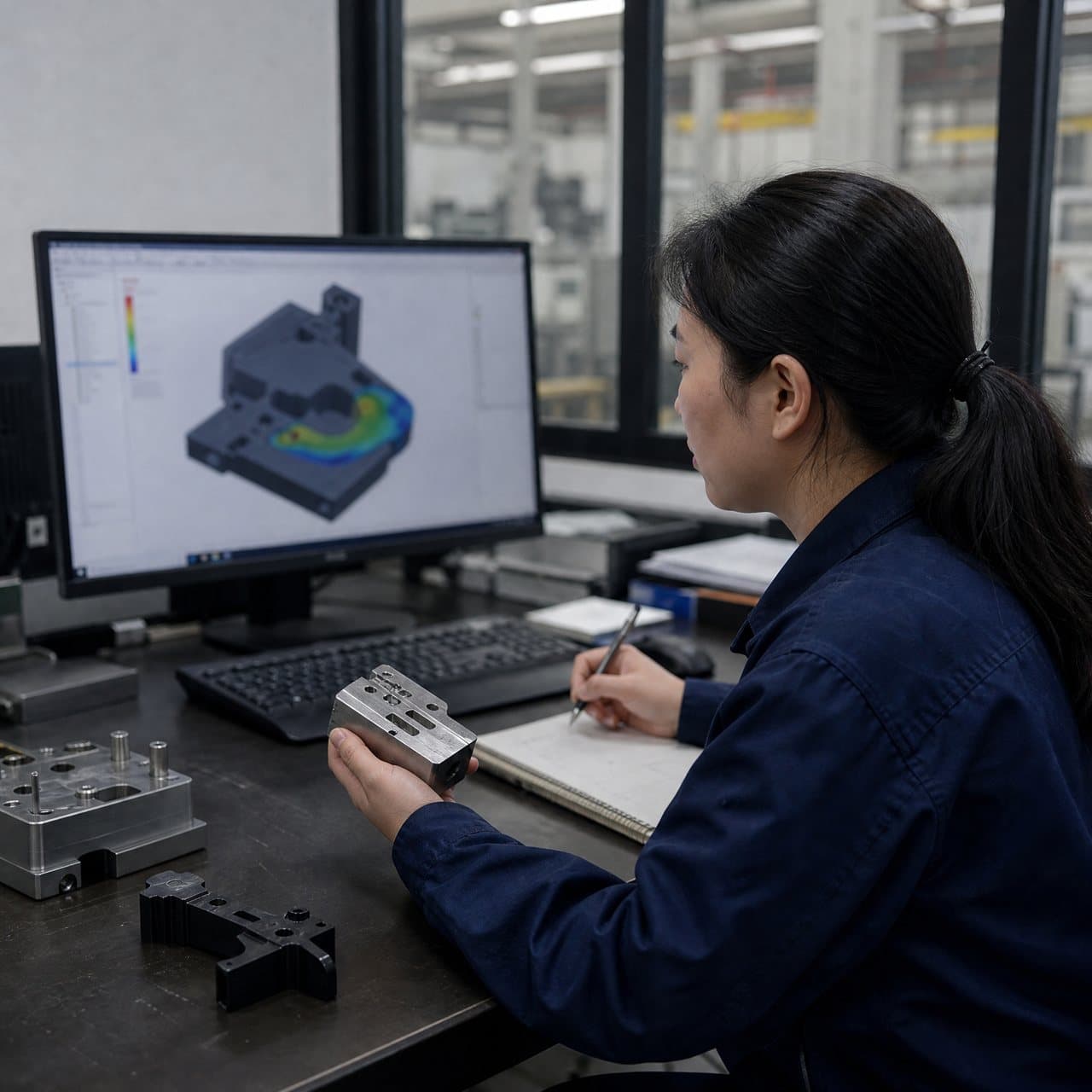
A practical schedule normally has at least five phases: engineering and DFM, tool design and procurement, machining and mold assembly, trial and correction, and production ramp. The boundaries matter because different risks dominate each phase. A late drawing decision is not corrected by faster EDM; a cooling or ejection issue discovered at trial may require tool modification even when machining finished on time.
For an initial planning model, buyers can request a range for each phase rather than a false precision date. A relatively simple single-cavity tool with stable geometry may move differently from a multi-cavity, hot-runner, textured, tight-tolerance, or side-action mold. These are planning distinctions, not guaranteed durations. The supplier should state assumptions such as cavity count, steel or insert choice, texture vendor, resin availability, and whether dimensional correction loops are included.
03
Use DFM and design freeze as schedule controls
The fastest way to lose schedule certainty is to begin tool cutting while gate location, parting line, draft, wall thickness, inserts, or cosmetic criteria remain unsettled. A DFM review should identify those decisions, distinguish recommendations from blockers, and record who approves each deviation. The goal is not to eliminate every engineering discussion; it is to prevent hidden decisions from appearing after steel has been committed.
Set a design-freeze milestone with a controlled revision identifier. After that point, ask how an engineering change would affect tool machining, trial timing, sample approval, cost, and the production date. Buyers can use InjeForm’s [capabilities](/capabilities) context when discussing whether a geometry or secondary operation belongs in the original scope. A concise change log is often more valuable than an optimistic schedule revision.
04
Plan trials, sample approval, and correction loops explicitly
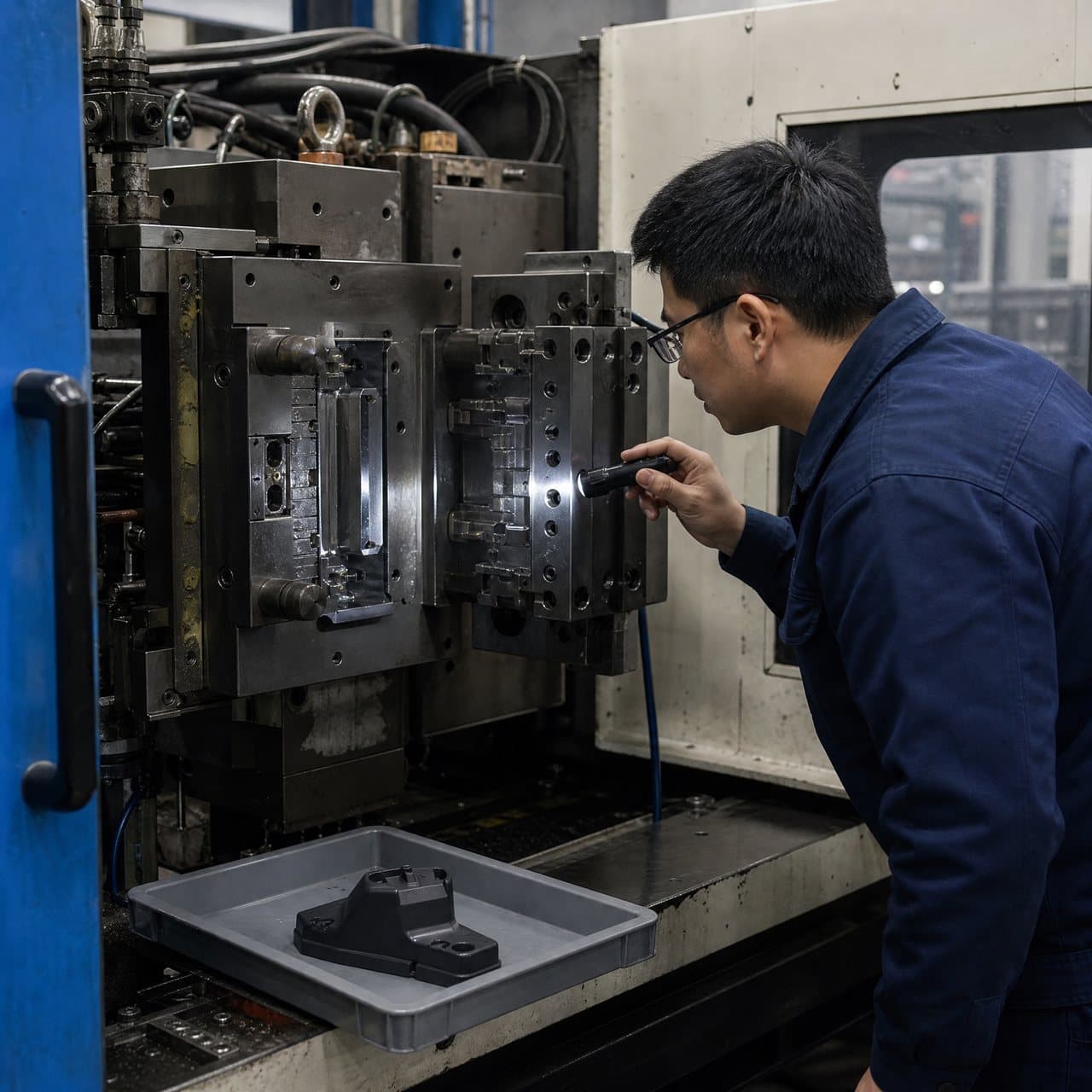
T0, T1, and later trial labels are useful only when the parties define what each trial is intended to prove. A first trial may focus on mold function and filling behavior; a later trial may address dimensional correction, cosmetic acceptance, or process repeatability. Ask for the planned sample quantity, resin lot or grade, machine conditions, measurement method, and report timing. If the part has critical dimensions, appearance zones, inserts, or assembly interfaces, those should appear in the approval criteria rather than being left to informal comments.
Build at least one review loop into the schedule when the tool is new or the part is demanding. Approval time belongs on the critical path: a supplier cannot close a correction loop if the buyer has not returned consolidated feedback. A buyer should also distinguish a sample approval from process validation or regulatory release. Those may require additional evidence and should be planned with the quality team.
05
Protect production readiness after the mold is accepted
Tool acceptance does not by itself reserve molding capacity, confirm resin supply, or complete packaging and inspection instructions. Before release to production, align the control plan, CTQ inspection method, approved sample status, material identification, pack-out, labeling, and escalation contacts. Where a program depends on a launch quantity or recurring delivery, ask how capacity is booked and what happens if the forecast changes.
The first production run can also expose risks that were not visible in a short trial: cavity-to-cavity variation, process drift, handling damage, color or material lot variation, and assembly bottlenecks. Define what evidence accompanies the lot and who can place it on hold. InjeForm’s [quality route](/quality) and [FAQ](/faq) can help structure the questions, but the buyer and supplier should agree the product-specific acceptance plan in writing.
06
Choose the schedule that matches the launch risk
A short quoted lead time is not automatically the best schedule. A buyer should compare the amount of contingency, the clarity of milestone evidence, and the cost of recovery if a trial fails. For a low-risk replacement part, a lean approval path may be appropriate. For a regulated, cosmetic, safety-relevant, or multi-cavity program, more review time can reduce the chance of an expensive launch interruption.
When requesting a quote, provide the target production date but ask for both a baseline plan and the assumptions that would move it. Include a responsible contact for technical decisions, a date for consolidated feedback, and the latest acceptable date for escalation. Then use the [request-a-quote](/request-a-quote) route to submit the model, drawings, material direction, volume, and schedule constraints together.

Practical takeaway
Before you move
to the next review.
- Define whether each quoted date means DFM complete, tool ready, first samples, approved samples, production release, or shipment.
- Provide a revision-controlled CAD package, drawings, resin direction, CTQs, cosmetic zones, and required secondary operations before design freeze.
- Ask the supplier to list schedule assumptions for cavity count, hot runner or cold runner choice, steel or inserts, texture, material availability, and freight.
- Put trial objectives, sample quantity, measurement evidence, correction-loop ownership, and buyer feedback deadlines on the project schedule.
- Confirm how production capacity, resin allocation, inspection, packaging, and lot-release evidence are handled after sample approval.
- Record an escalation rule for missed gates and require any revised date to identify the cause, recovery action, and new evidence milestone.
FAQ
Common questions
What is a typical injection mold lead time?
There is no reliable universal duration. A simple tool may progress faster than a multi-cavity, textured, hot-runner, tight-tolerance, or side-action tool, and the elapsed time also depends on design readiness, material availability, trial corrections, approval speed, and shipping. Ask for a phase-by-phase range with assumptions and a defined deliverable for each date rather than using a generic industry number.
Does injection mold lead time include first production parts?
Not necessarily. Some quotes end at tool completion or first trial samples; others include correction, approval, and a production lot. The purchase documents should state whether the date includes sample inspection, customer approval, production setup, packing, and transit. If those events are not named, the quoted lead time is ambiguous.
How can a buyer reduce schedule risk without lowering quality?
Freeze the design after a documented DFM review, provide consolidated feedback by agreed dates, approve materials and cosmetic criteria early, and request evidence at each gate. Keeping a correction allowance and validating critical dimensions is usually safer than removing inspection or compressing an approval step that the product actually needs.
Should a buyer schedule T0 and T1 trials?
Trial labels are useful when their objectives are defined. T0 can be a functional or filling check, while T1 may address corrections and a more representative sample set, but practices vary by supplier and project. Agree the purpose, conditions, sample quantity, report, and decision authority for each trial; do not treat the label alone as proof of readiness.
What should happen if the mold schedule slips?
The supplier should identify the missed gate, cause, affected downstream milestones, recovery options, and the evidence needed to return to plan. The buyer should assess whether to change the design, prioritize a limited build, use an approved bridge option, or revise the launch date without weakening acceptance criteria. Keep the change and decision trail documented.
References
Source material
- [1] Protolabs, Injection Molding Design Guidelines.
- [2] Xometry, Injection Molding Design Guide.
- [3] AIAG, Quality Core Tools.
- [4] ISO, ISO 9001 Quality Management Systems.
- [5] NIST Engineering Statistics Handbook, Process Capability.
This guide is general information for early procurement and engineering discussion. It does not replace product-specific DFM, qualification, validation, regulatory assessment or legal advice.