
For an overseas buyer, an injection molding quotation is incomplete when it says only “shipping included” or lists an Incoterm without a named place. Molded parts, spare components and injection molds may follow different transport routes and may not share the same handover point. A useful commercial review therefore connects the selected term to the goods, packaging, shipment mode, destination, documents and import process. Incoterms® 2020 is the current ICC edition and its rules clarify tasks, costs and risks in a contract for the sale of goods; they do not replace the technical specification, payment terms, ownership clause or product acceptance plan.[1][2]
This guide is for procurement and engineering teams comparing overseas injection molding suppliers. It uses cautious planning language: the suitable term depends on the buyer’s country, tax and customs position, carrier access, shipment mode and ability to act as importer of record. Confirm the final choice with the parties’ freight forwarder, customs broker and legal or tax advisers where the transaction is material.
Write the term as rule, named place and edition—for example, “FCA [named supplier location], Incoterms® 2020”—then document who pays, who clears, who insures and exactly when risk changes for the specific shipment.
01
1. Start with the delivery decision, not the cheapest freight line
Incoterms are a set of standardized three-letter rules. They allocate defined delivery tasks, costs and risk between seller and buyer, including transport arrangements, export and import formalities, packing and—under selected rules—insurance.[1][2] They do not state the price of the molded part, payment timing, transfer of title, technical conformity, late-delivery remedies or dispute process. Those items need separate contract language.
For injection molding, first identify what is being delivered. A shipment may contain production parts, an injection mold, mold spares, samples, fixtures, packaging or a combination. Parts may be packed for palletized air or ocean freight, while a mold may require a different crating, lifting and insurance discussion. Put the item description, quantity basis, packaging responsibility and destination beside the Incoterm instead of assuming one term governs every asset in the programme.
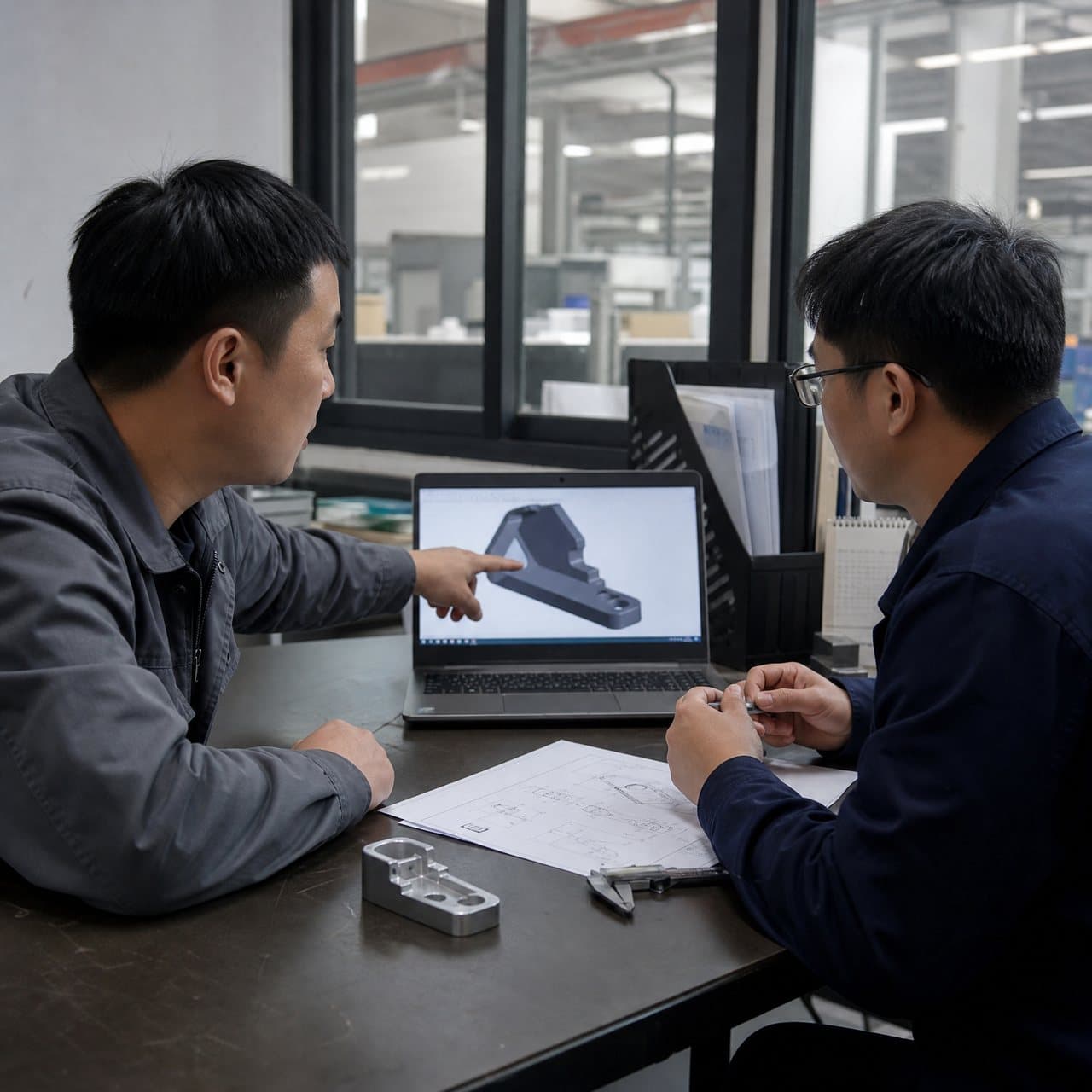
Also separate commercial delivery from engineering acceptance. A supplier can deliver cartons on time while the parts remain subject to dimensional, cosmetic or functional approval. State whether shipment is permitted before first-article approval, how nonconforming goods are handled, and who bears the cost of any rework, return or replacement. The Incoterm helps allocate transport risk; it is not a substitute for a quality agreement or inspection plan.
02
2. Understand where cost and risk move under common rules
The most important comparison is not simply who books freight. Under C-group terms such as CPT and CIP, the seller may pay carriage to the named destination while risk transfers earlier when the goods are handed to the carrier. Under D-group terms such as DAP, DPU and DDP, the seller carries the goods and risk farther toward the named destination, with important differences for unloading and import clearance. EXW and FCA place the handover near origin, but they are not interchangeable: export-clearance capability and the precise delivery point matter.[2][3]
For molded parts, a buyer should ask the supplier to mark three points on the shipment plan: the delivery point, the cost boundary and the risk-transfer point. If they are different, record each one. Ask which party controls the carrier booking, who receives the transport document, who files export declarations, who provides import data, and who can make a claim if packaging is damaged. A freight quote that says “door to door” does not answer these questions by itself.
Insurance deserves a separate line. CIP and CIF include a seller insurance obligation under the rule, but the coverage basis and practical claims process still need review. Other rules do not automatically require the seller to arrange cargo insurance. Decide whether the buyer’s cargo policy, seller-arranged cover or another arrangement applies, and confirm insured value, exclusions, deductible, consignee, claim documents and whether tooling is included.
| Rule family or example | Potential fit for an overseas molding buyer | Main buyer check |
|---|---|---|
| EXW — named supplier premises | Buyer controls main transport and takes responsibility very early in the movement. | Can the buyer or its forwarder legally and practically handle export clearance, loading, pickup, origin charges and claims? |
| FCA — named handover point | Often useful when the buyer wants carrier control while the seller handles export formalities at an agreed point. | Define the exact point, loading responsibility, transport document and whether the handover is at the supplier site or another facility. |
| CPT / CIP — named destination | Seller arranges carriage to destination; CIP adds a seller insurance obligation under the rule. | Do not confuse prepaid carriage with destination risk. Confirm the carrier handover, coverage and import-clearance owner. |
| DAP — named destination | Seller carries goods to the destination ready for unloading; buyer normally handles import clearance and unloading. | Name the receiving location, unloading capability, import broker, duties and taxes, and what happens if the truck cannot access the site. |
| DPU — named destination, unloaded | Seller takes responsibility for unloading at the named destination, subject to the site and equipment being suitable. | Confirm unloading equipment, site access, damage evidence, import clearance and whether the proposed destination is operationally realistic. |
| DDP — named destination | Seller takes on the broadest delivery obligations, including import clearance and duties under the rule. | Verify the supplier can legally act for import in the destination country and price taxes, permits, broker work and local compliance correctly. |
03
3. Match the Incoterm to the shipment mode and named place
Incoterms® 2020 groups seven rules for any mode of transport and four rules for sea and inland-waterway transport.[2] Do not select FOB, CFR or CIF merely because a shipment is international. Those sea terms use a vessel-based delivery point and can be unsuitable for containerized cargo when the commercial handover is actually at a terminal or when a multimodal route is planned. Ask the forwarder whether the quoted mode, container flow and named place match the rule.
Precision matters in the named place. “DAP buyer country” is not enough. Use a named factory, warehouse, terminal or port as appropriate, and state whether the place is the delivery point or only the destination to which carriage is paid. For injection molded parts, include the receiving dock, consignee name, opening hours, unloading restrictions, pallet or crate dimensions and any appointment requirement in the logistics instructions.
A separate decision may be needed for tooling. An injection mold can be high-value, heavy and sensitive to moisture, corrosion, lifting and shock. State whether the tool is delivered to the buyer, stored by the supplier, transferred to another molder or retained for future orders. The Incoterm allocates transport-related obligations, but tooling ownership, custody, preservation, access, insurance and release rights need explicit commercial clauses. See InjeForm’s [tooling and molding capabilities](/capabilities) and [request a quote](/request-a-quote) routes when preparing the technical and logistics scope.
04
4. Treat import clearance and landed cost as a buyer workstream
Import cost is more than the supplier’s unit price plus a freight estimate. The buyer may need a tariff classification, customs value, origin information, commercial invoice, packing list, transport document, permits or product-specific records. The exact requirements depend on the importing country and goods. Under customs valuation principles, transport, insurance and related charges may affect customs value depending on the valuation basis and jurisdiction; do not assume that the Incoterm alone tells you the final duty or tax amount.[4]
Ask who supplies each document and by what milestone. For molded parts, the commercial invoice should identify the goods consistently with the purchase order and packing list. For a mold or fixture, describe the asset accurately rather than hiding it inside a parts line. If the shipment includes customer-supplied engineering, inserts, samples or assists, ask the customs broker whether those items affect declaration or valuation. Keep the contract, invoice, packing list and booking instructions aligned; inconsistent delivery terms can create questions or clearance delay.[3]
DDP can look attractive because it presents one delivered price, but it is not automatically feasible in every destination. The seller may not be able to act as importer, recover local taxes, obtain a required permit or manage post-entry obligations. Conversely, EXW may give the buyer control but create origin-clearance and loading problems. Compare the real landed-cost and responsibility matrix rather than ranking terms by the apparent freight number.

05
5. Put the decision into the RFQ, purchase order and quality handoff
A quote request should ask each supplier to return the same commercial fields: goods included, packaging basis, named Incoterm and edition, named place, transport mode, estimated transit assumptions, origin charges, export clearance, insurance, import clearance, duties and taxes, unloading, destination charges and exclusions. Ask for tooling and production parts as separate lines when their ownership, value or shipment route differs. This makes quotes easier to normalize before award.
The purchase order or sales contract should then preserve the approved wording. Incoterms do not define ownership or payment, so link the delivery clause to separate terms for title, payment milestones, acceptance, warranty, change control, confidentiality, tooling custody and remedies. Identify who may authorize shipment before sample approval and what evidence is required at dispatch, such as photos of packaging, quantity reconciliation, labels, moisture protection or a transport-document copy.
Finally, connect logistics to InjeForm’s technical review. Provide the latest CAD, material direction, volume, packaging constraints, destination and acceptance requirements through the [RFQ and process discussion](/process). Use the [quality route](/quality) for inspection and documentation questions, and keep the [FAQ](/faq) available for general sourcing context. These links do not replace a negotiated contract; they help the buyer assemble a complete brief before requesting a quote.
06
6. Use a documented decision before approving shipment terms
A practical approval note can be short. Record the selected rule and edition, exact named place, goods covered, shipment mode, delivery and risk points, insurance arrangement, import-of-record party, document owner, duty and tax owner, unloading plan, claims process and exceptions. Have procurement, engineering, finance or tax, logistics and the supplier confirm the same version. If the buyer’s broker recommends a different rule for the actual route, revise the commercial comparison rather than leaving the discrepancy in email only.
For repeat molded-part orders, review the decision when volume, destination, packaging, carrier, resin classification, tool location or buyer entity changes. A term that worked for samples may not suit a full container or a mold transfer. Keep a landed-cost model that identifies assumptions instead of presenting a single number as guaranteed. Where the legal, tax or customs consequence is material, obtain local professional advice before committing.

Practical takeaway
Before you move
to the next review.
- List each delivered item separately—molded parts, samples, tooling, fixtures, spares and packaging—and state whether one or several Incoterms apply.
- Write the exact rule, named place and edition, such as “FCA [named point], Incoterms® 2020”; do not use “shipping included” as the operative term.
- Map delivery point, cost boundary and risk-transfer point, then confirm carrier booking, loading, export clearance, import clearance, unloading and claims responsibilities.
- Confirm shipment mode, packaging, crate or pallet details, destination access and whether the selected rule is appropriate for a containerized or multimodal route.
- Ask the customs broker about classification, customs value, origin, duties, taxes, permits and documents; keep invoice, packing list, purchase order and booking instructions consistent.
- Document insurance coverage, insured value, exclusions, deductible, consignee and claim evidence, especially for high-value molds and fixtures.
- Keep title, payment, technical acceptance, warranty, tooling ownership, custody, preservation and change-control terms outside the Incoterm but connected to the same approved contract package.
FAQ
Common questions
Which Incoterm is best for an overseas injection molding buyer?
There is no universal best term. FCA may suit a buyer that wants carrier control while the seller handles export clearance; CPT or CIP may suit a buyer that wants the seller to arrange carriage; DAP may suit a buyer that can manage import clearance but wants delivery to a named destination. DDP requires careful verification that the seller can legally and practically manage import obligations in the destination country. Compare the actual route, broker capability, tax position, risk point and landed cost.
Is DDP always the simplest option for imported molded parts?
No. DDP places broad obligations on the seller, including import clearance and duties under the rule, but the seller may not be able to act as importer, recover local taxes or obtain destination permits. Confirm feasibility with the supplier and local broker before treating a delivered price as complete.
Does CIP mean the buyer has no cargo risk?
No. CIP requires the seller to arrange carriage and insurance under the rule, but risk transfers when the goods are handed to the carrier. Review the policy, coverage level, exclusions, deductible, insured party and claim process. The buyer may still need to protect gaps or address losses after delivery.
Do Incoterms decide when the buyer owns the mold or molded parts?
No. Incoterms allocate specified delivery tasks, costs and risks. They do not determine transfer of title, payment timing, technical conformity, warranty or tooling ownership. Put those subjects in the sales, tooling or quality agreement.
Should the injection mold and production parts use the same Incoterm?
Not necessarily. They can have different values, packaging, routes, custody requirements and acceptance milestones. Ask the supplier and broker to review each shipment type and state the goods covered by every commercial term.
References
Source material
- [1] International Chamber of Commerce, “Incoterms® rules.”
- [2] U.S. International Trade Administration, “Know Your Incoterms.”
- [3] DHL Global Forwarding, “Incoterms Explained.”
- [4] World Trade Organization, “Technical Information on Customs Valuation.”
This guide is general information for early procurement and engineering discussion. It does not replace product-specific DFM, qualification, validation, regulatory assessment or legal advice.