
Bridge production injection molding is the right buyer strategy when a part is sufficiently stable to sell or deploy, but demand, final tooling, or a remaining commercial decision is not yet settled. It uses molded parts to keep a launch moving while generating evidence for the next commitment. It is not a cheaper synonym for production injection molding: buyers should define the learning objective, acceptable part condition, change authority, and exit decision before placing the order.
A bridge run should purchase evidence as well as parts: confirm the molded part, the process window, the field-use requirements, and the trigger for moving to production tooling.
01
Bridge production is a staged buying strategy, not a volume label
A buyer uses bridge production when the design has moved beyond prototype learning but a full production injection molding commitment would be premature or slow. It can support a controlled launch, service demand, regional release, or interim supply while a production-tooling decision is pending. The objective is continuity with controlled exposure, not simply a small purchase order.
A short run injection molding order can be a one-off replenishment with no defined next step. A bridge plan must inform a decision: whether the part performs in its assembly, demand remains credible, the selected resin and finish are acceptable, or the production route can be released.
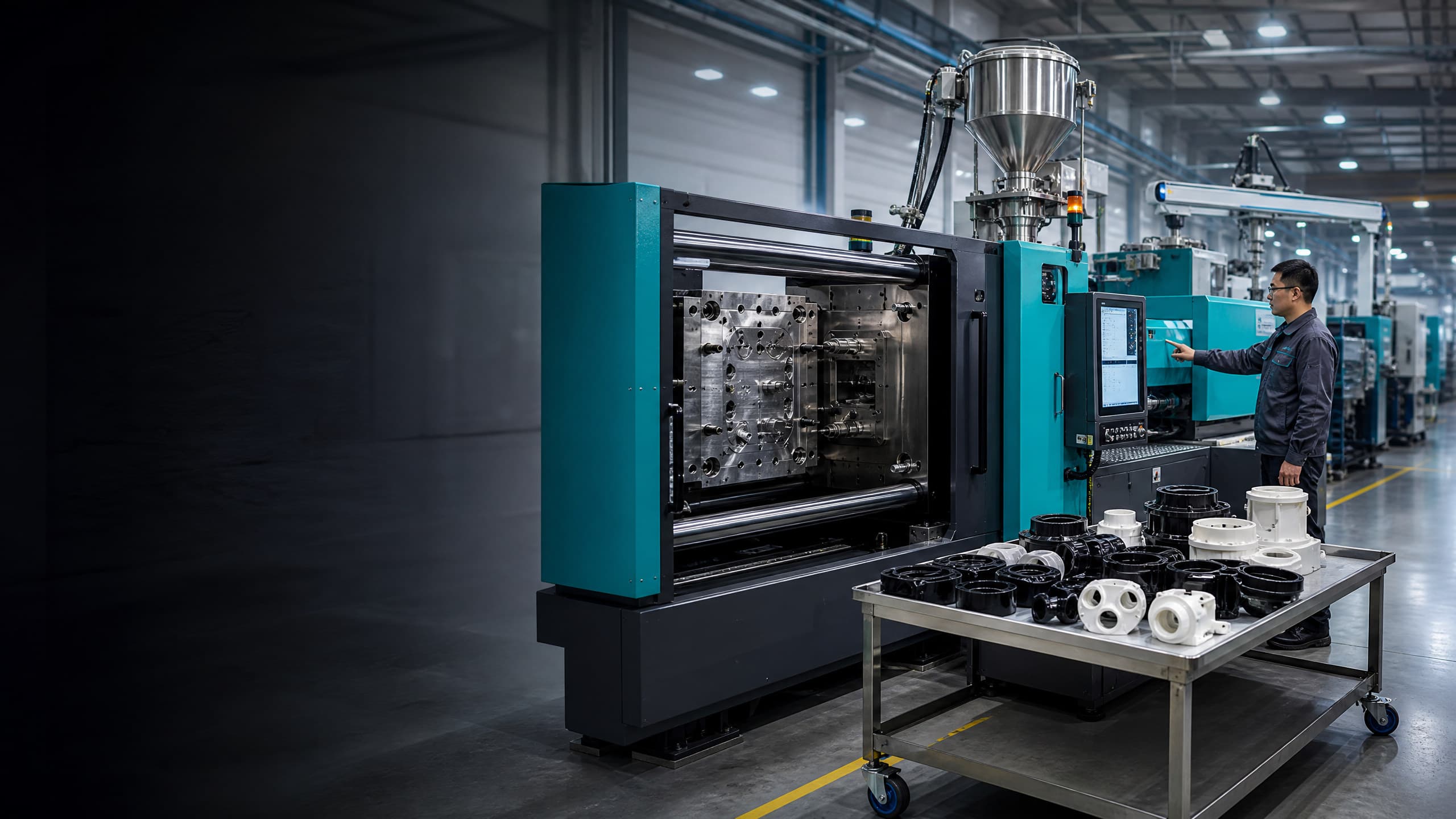
Rapid injection molding can support this stage, although its tooling and operating plan may differ from a future route. Autodesk notes that cooling channels and part geometry affect how material cools and forms. Review bridge results as production-relevant evidence, not visual prototypes alone [2].
02
Use bridge production when the decision signals align
Bridge production is strongest when functional geometry, material family, critical interfaces, and acceptance criteria are stable enough to release. Any bounded change needs an owner, approval route, and a statement of whether prior samples remain representative. If core fit, safety function, resin, or customer requirements are still open, continue design learning first.
Demand uncertainty can justify a bridge, but it must become a purchase decision. A buyer may authorize an example release quantity for an initial market window while reserving a decision on cavitation, automation, or long-term tooling. Quantity, cadence, and duration are project-specific; no universal threshold separates low volume injection molding from full production.
Use the comparison below to test the commercial role. If demand and requirements are stable with a validated plan, direct production injection molding may be more coherent. If the design is not representative, a prototype-focused route may be safer.
| Buyer path | Best-fit condition | What the purchase should prove | Commercial control |
|---|---|---|---|
| Continue prototype learning | Core geometry, material, or assembly requirements remain open | Whether the design can meet the intended function | Do not use prototype observations as automatic release evidence |
| Bridge production injection molding | Part baseline is stable, but demand or final production commitment is pending | Whether market-release parts and the selected process assumptions meet agreed acceptance criteria | Set a bounded release and a documented exit decision |
| Production injection molding | Requirements, demand plan, and long-term process route are sufficiently settled | Whether routine output remains within the approved control plan | Agree change control, maintenance, and ongoing quality evidence |
03
Define the evidence loop before authorizing the bridge run
Identify the released CAD and drawing revision, resin grade or approved alternatives, relevant color or texture, critical-to-quality features, cosmetic zones, and packing requirements. Ambiguity about datums, flash, gate witness, regrind, or labeling makes bridge evidence difficult to compare with the later route.
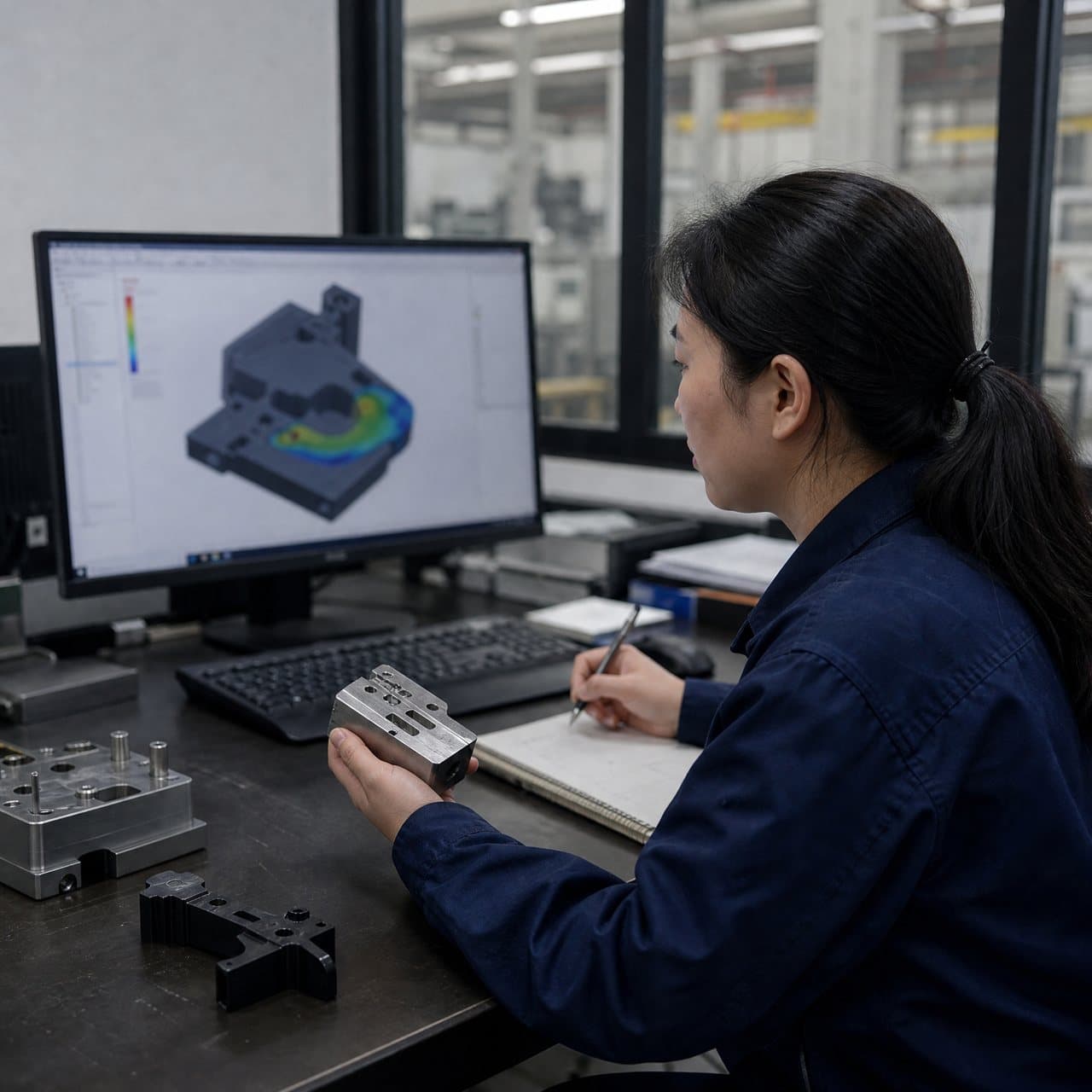
Request a practical injection molding DFM review before tool release. It should flag features that affect fill, cooling, ejection, dimensional stability, or appearance, with actions and unresolved risks. Simulation can prioritize questions, but it does not replace samples, measurement, and functional checks.
Define the sample plan, measurement method, acceptance record, nonconformance route, and change authority. FDA describes a lifecycle view connecting process design, qualification, and continued verification through objective data and control of variation [1]. Although this is pharmaceutical guidance, its buyer principle is useful: bridge evidence should be traceable input to the next decision.
04
Protect cross-border buying decisions with clear commercial boundaries
For European, United States, and Middle East teams, make the handoffs explicit. Confirm destination, required markings or documentation, packing and labeling, Incoterms where applicable, importer responsibilities, and shipment-release authority. Applicable legal, sector, customer, and destination requirements remain project-specific; a bridge run does not reduce them.
Separate the part specification from the tooling arrangement. State intended tool use, storage, maintenance or repair authorization, ownership, access to design records, and transfer or modification process. Do not assume an interim tool has the same service life, cavitation, cycle capability, or transfer terms as production tooling.
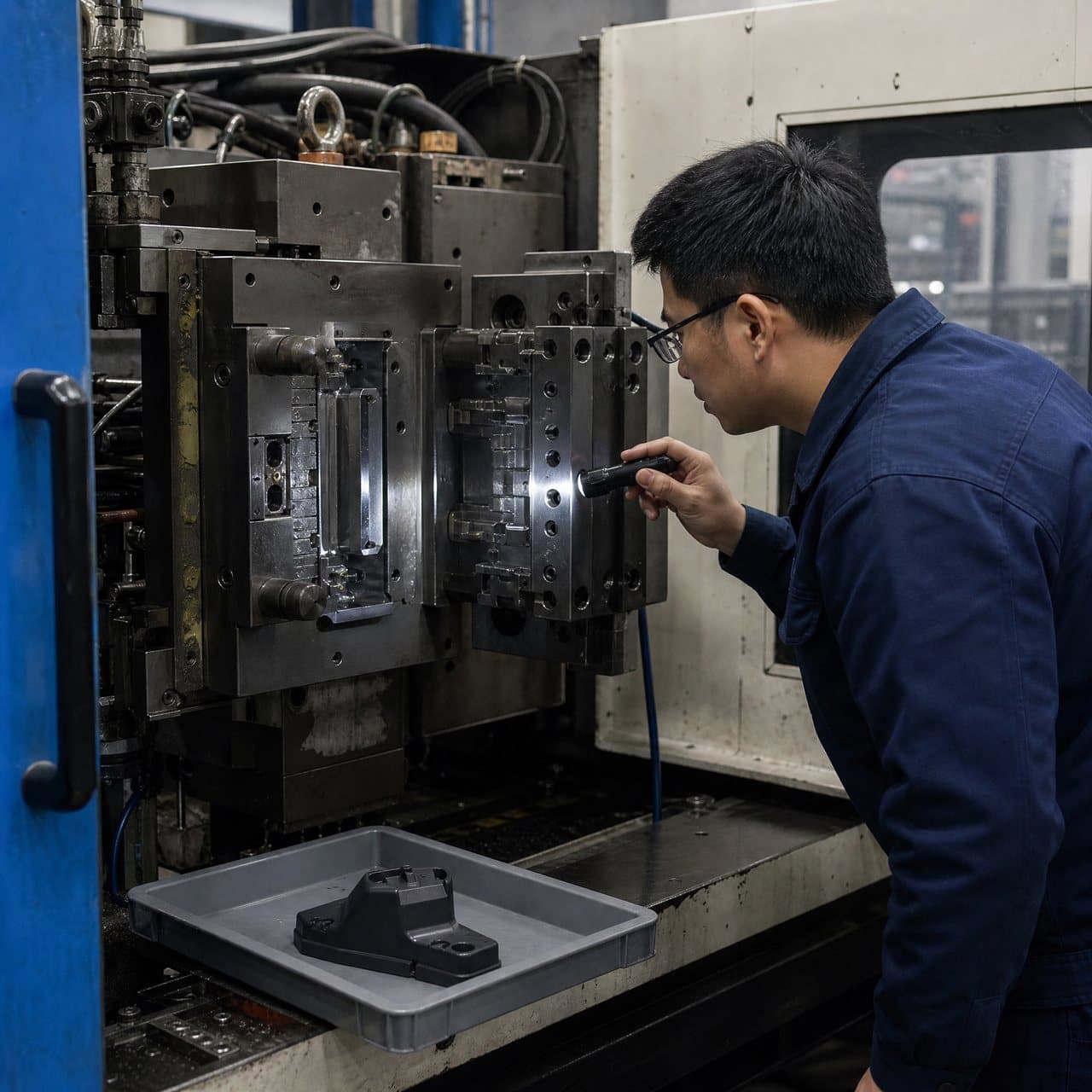
A peer-reviewed review identifies dimensional accuracy, surface integrity, and process stability as important in high-volume injection molding, with material, thermal, and wear demands increasing with use [3]. Ask what interim-tool evidence supports the next step rather than infer a lifetime or capacity.
05
Set the exit trigger before the first shipment
Set a pre-agreed exit route: release production tooling, revise the part, retain controlled low volume injection molding, or stop the product. Tie it to approved functional results, demand review, closed changes, agreed supplier evidence, or commercial release. Avoid an open-ended interim order that becomes the default without a review.
At the decision point, compare bridge records with production requirements: resin, part revision, gates, critical dimensions, appearance standard, inspection, and assembly interface. If the process or tool changes, state what requires re-sampling or re-approval. The outcome should be a documented rationale for the next purchase.
For a focused RFQ, provide released files, application, estimated forecast range, destination, requested evidence, and the decision the run must support. Ask the supplier to flag assumptions and feasibility risks, so proposals are compared on scope and evidence as well as unit price.
Practical takeaway
Before you move
to the next review.
- State the specific gap the bridge run must close, such as controlled launch continuity, demand learning, or a pending production-tooling decision.
- Release a controlled CAD and drawing revision, with critical interfaces, material requirements, cosmetic acceptance, and packing instructions identified.
- Define the bridge evidence package: sample status, measurement method, functional checks, nonconformance handling, and shipment-release authority.
- Record the assumed demand range as an estimate and set a project-specific release quantity, delivery plan, and review point.
- Separate interim-tool terms from long-term production tooling terms, including ownership, modification approval, storage, maintenance, and transfer expectations.
- Confirm destination-specific product, import, customer, and sector requirements with the responsible parties before shipment.
- Write the exit trigger and identify whether the next decision is production tooling, continued controlled low-volume supply, a design revision, or discontinuation.
FAQ
Common questions
Is bridge production injection molding the same as short run injection molding?
Not necessarily. Short run injection molding describes a limited order size or cadence. Bridge production injection molding is a staged buyer strategy that uses an interim molded-part supply to support a defined decision before, or instead of, a long-term production commitment. A bridge run should have a stated evidence objective and exit trigger.
Can bridge-produced parts be sold or used in the field?
They can be considered for that purpose only when the released specification, performance needs, applicable destination requirements, and agreed acceptance evidence support it. The buyer should not assume that a part is suitable for sale or field use simply because it is injection molded. Confirm the project-specific obligations and release authority before shipment.
When should a buyer move from bridge production to production injection molding?
Move when the part baseline, demand decision, quality evidence, and commercial arrangements for the production route are sufficiently settled. Compare the bridge records with the proposed production tool and process, then define any re-sampling or re-approval needed because of changed materials, tooling, gating, inspection, or other conditions.
References
Source material
- [1] U.S. Food and Drug Administration — Process Validation: General Principles and Practices
- [2] Autodesk — Plastic injection molding: Transforming industries with versatility
- [3] Journal of Mechanical Engineering and Manufacturing — Recent Advances and Future Trends in Extending the Service Life of Injection Moulding Tools: A Comprehensive Review
This guide is general information for early procurement and engineering discussion. It does not replace product-specific DFM, qualification, validation, regulatory assessment or legal advice.