
Buyers should review an injection molding supplier business continuity plan as operating evidence, not as a policy document. Ask what can interrupt the specific part, who makes decisions, how the mold, resin, quality records, and approved process will be protected, and what recovery sequence has been tested. Then put the agreed evidence, notification duties, and change controls into the RFQ, quality agreement, and supply terms. A certificate or a generic disaster statement alone does not demonstrate that production injection molding can restart without unapproved changes.
Continuity does not mean “no disruption.” It means the injection molding supplier can identify a disruption, contain its impact, communicate promptly, recover critical work in a controlled order, and preserve approval requirements.
01
Start with the part’s continuity requirement
A useful review begins with the buyer’s own risk tolerance. Identify the molded part number, end use, approved resin and color, annual and peak demand, safety or regulatory significance, acceptable inventory coverage, and the latest acceptable delivery date after an interruption. Separate a cosmetic consumer component from a constrained service spare or a safety-relevant assembly. The recovery target must fit the consequence of a missed shipment rather than a supplier’s standard template.
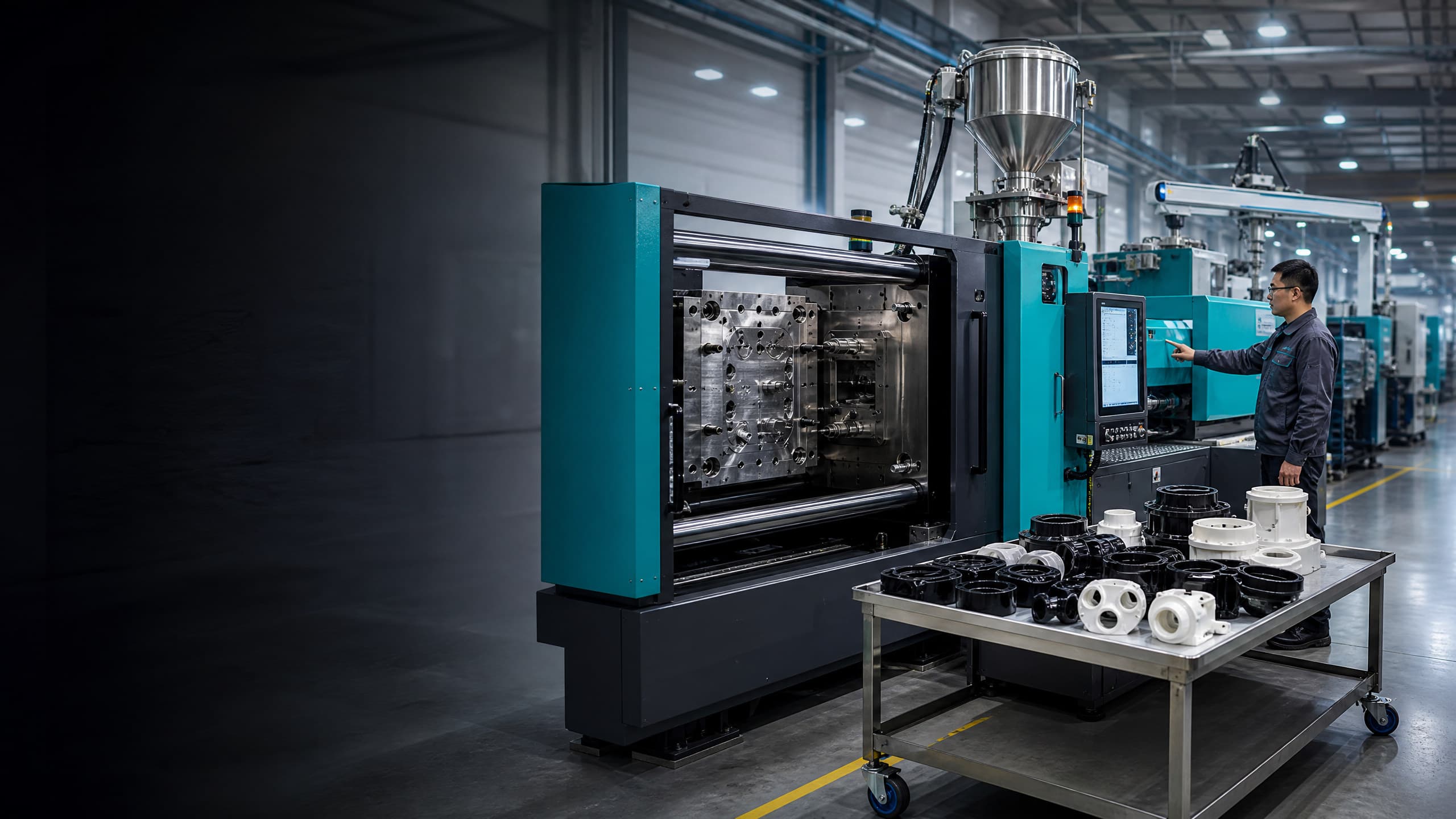
For high volume injection molding, examine the constraint that would actually stop shipments: a dedicated mold, a limited cavity count, a particular press range, automation, a proprietary resin grade, a finishing step, inspection capacity, or cross-border logistics. Ask the supplier to map the dependency from purchase order through molding, inspection, packing, and dispatch. This makes an injection molding lead time discussion more meaningful because it distinguishes ordinary scheduling from recovery after a disruption.
ISO 22301 describes a business continuity management system as a documented framework for planning, implementing, monitoring, reviewing, maintaining, and improving recovery from disruptive incidents [1]. Use that logic as a review lens, but do not infer certification or maturity solely from a supplier’s reference to the standard.
02
Request evidence, not assurances
Ask for a controlled plan or a buyer-appropriate summary that names the continuity owner, revision date, approval authority, escalation contacts, and the trigger for notifying customers. The document should connect plausible events—power or utility loss, fire, flood, equipment failure, cyber or communications outage, labor loss, resin shortage, tool damage, and transport interruption—to actions. Sensitive details can be redacted; the buyer needs enough evidence to judge whether the process is specific and maintained.
FEMA’s continuity guidance frames planning around preparing, defining objectives, identifying and prioritizing risks and impacts, developing strategies, assigning teams and tasks, and testing the plan [2]. Translate those steps into supplier questions. Which orders are prioritized? Who can release an approved alternate route? What data is available if normal systems are unavailable? How are employees and customers contacted? When was a tabletop exercise or live recovery test completed, what gaps were found, and who owns closure?
For a cross-border injection molding factory, ask separately about local emergency response, export documentation, freight alternatives, and time-zone coverage. A recovery plan may be sound inside the plant yet fail at the hand-off to a carrier, customs broker, or downstream assembly provider.
| Review area | Minimum credible evidence | Buyer follow-up | Warning sign |
|---|---|---|---|
| Governance and communications | Named incident lead, deputies, contact tree, notification triggers and revision control | Confirm your escalation contacts, language needs, and notice channel | Generic promise to “inform customers promptly” with no owner or trigger |
| Tooling and process recovery | Tool location, ownership record, backup and spare-parts approach, approved process records and restart checks | Match mold ID, cavity status, resin, CTQs, and requalification steps to the part | Alternate production is claimed but no tooling-transfer or approval path is defined |
| Capacity and alternate route | Constraint map, feasible press/automation range, qualified external dependencies and assumptions | Ask what remains to qualify before an alternate route can run | A second site is named without proof it can use the tool and controlled process |
| Material and quality continuity | Approved-material source status, lot traceability, inspection data backup, deviation controls | State whether substitutions require written approval and what evidence is required | Unapproved resin or inspection changes are treated as emergency shortcuts |
| Testing and improvement | Dated exercise or recovery-test record, findings, corrective actions and closure status | Request scope relevant to the awarded part and verify open actions | No test history, or a test that only checked document availability |
03
Review tooling, data, and process control together
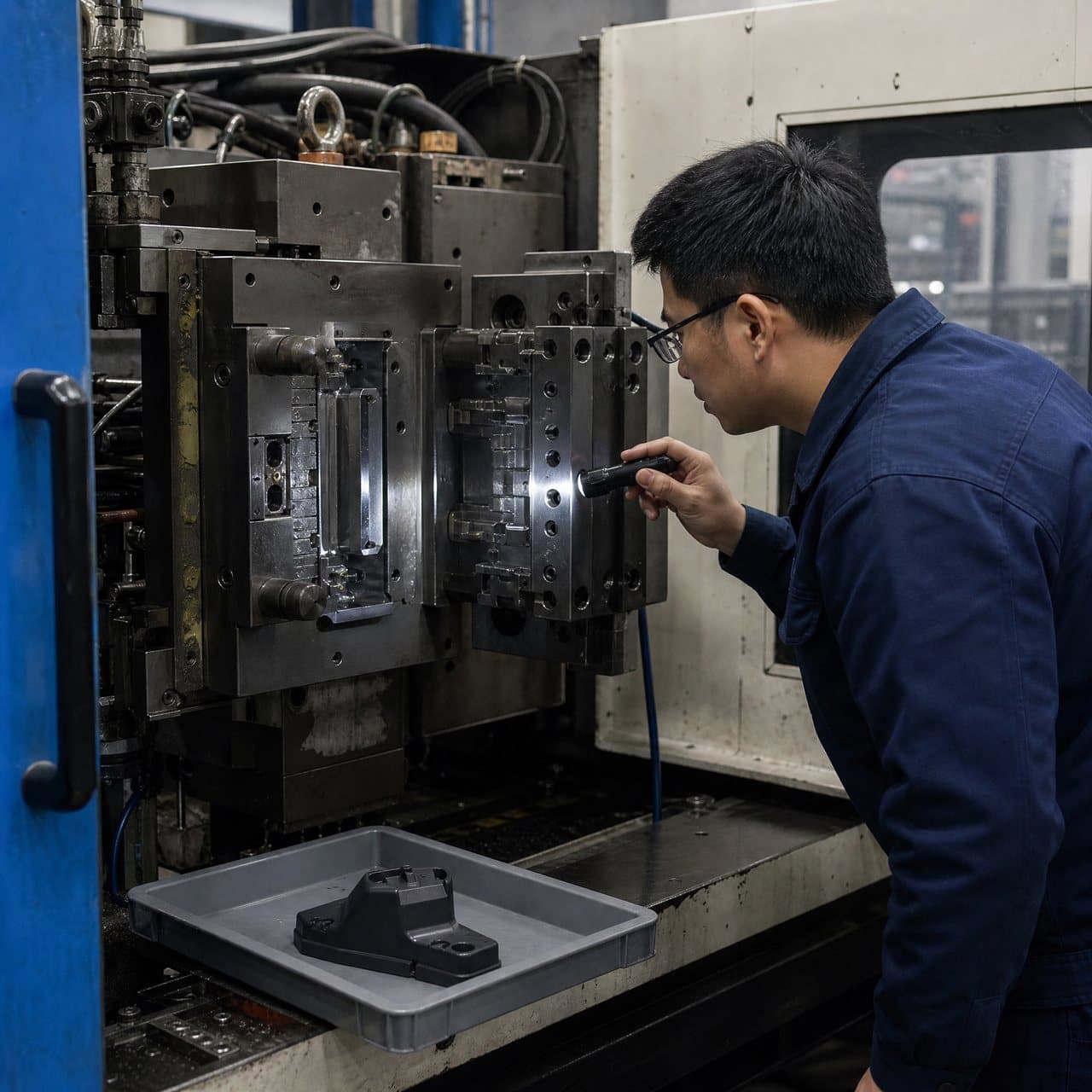
The mold is only one recovery asset. Verify where the production tool is stored, how it is identified, what protects it from corrosion, damage, or unauthorized transfer, and whether its maintenance and repair history is retrievable. Confirm who may authorize removal, repair, modification, or movement. If the plan relies on a backup mold or a second facility, ask whether it is physically available, technically compatible, and subject to the same customer approval requirements.
Request a practical data-recovery view: controlled drawings and CAD revisions, approved process parameters or setup windows, material specifications, master samples where relevant, inspection plans, measurement programs, traceability records, nonconformance history, and packaging specifications. The aim is not to collect confidential process settings unnecessarily. It is to confirm that a restart will be based on the approved revision and that any uncertainty triggers documented revalidation rather than guesswork.
NIST recommends identifying, assessing, and mitigating supply-chain risks throughout the life cycle [3]. Although its guidance is cybersecurity-focused, the discipline is relevant here: identify dependencies and information flows, set mitigations, and avoid assuming that a supplier relationship itself proves control.
04
Challenge recovery claims with part-specific scenarios
Use scenario questions instead of asking whether the supplier has a plan. For example: “The approved mold is unavailable after a utility incident; what happens during the first day, which parts are protected, what evidence supports repair or transfer, and what customer approvals are required before restart?” A good answer distinguishes containment, assessment, decision making, technical recovery, quality release, and customer communication.
Test three types of claims. First, capacity recovery: can the stated equipment, people, resin, and inspection resources be available concurrently? Second, quality recovery: will startup samples, first-off inspection, process verification, and traceability be repeated as appropriate to the event? Third, logistics recovery: can packing, documentation, freight, and receiving requirements still be met? Do not accept a target recovery time without the assumptions and decision points behind it.
Buyers in Europe, the United States, and the Middle East should also align the plan to local obligations such as product documentation, sanctions screening where applicable, data handling, and import requirements. The supplier should escalate uncertainty early; the buyer should retain control over deviations, substitutions, and changes that affect the approved part.
05
Put continuity commitments into the sourcing package
A pre-award review is useful only if relevant commitments survive handover from sales to operations. Reference the part-specific continuity annex in the RFQ or supply agreement. Define the approved manufacturing location or transfer rules, tool ownership and access, records to retain, emergency contact roles, notification timing, restart verification, and written approval requirements for material, process, tooling, site, or subcontractor changes. Legal teams should adapt the wording to the transaction and governing law.
Avoid a false binary between one supplier and immediate dual sourcing. A buyer may choose agreed buffer stock, documented tool-transfer readiness, a repair contingency, a qualified secondary operation, or a separate second-source project depending on part criticality and total risk. Each option has cost, validation, intellectual-property, and quality implications. Review it before the disruption, not while product is already late.
Revisit the plan after major engineering changes, demand shifts, facility moves, new resin dependencies, repeated delivery issues, or material incidents. A plan should remain a living control: revision history, exercise results, corrective actions, and changed assumptions are often more informative than polished presentation materials.
06
Buyer checklist before award and at review
Use the following checklist during supplier qualification and refresh it for critical programs. Evidence may be reviewed remotely, during an audit, or through controlled document exchange; choose the method that matches the risk.
07
Request a continuity-ready molding RFQ
Send the part drawing, 3D model, annual and peak volumes, forecast pattern, approved material and color, CTQs, quality evidence needs, packaging, destination, and required delivery window. State the continuity questions that matter for the program: tool location and ownership, capacity constraints, data and traceability recovery, alternate-route assumptions, incident contacts, and approval gates for restart. InjeForm can use this information to scope a transparent RFQ discussion; capability, availability, lead time, and any recovery route must be confirmed for the specific program rather than assumed.

Practical takeaway
Before you move
to the next review.
- Define the part-specific impact of a missed shipment, including critical demand periods and acceptable inventory coverage.
- Request the current continuity-plan summary with owner, revision date, escalation contacts, and notification triggers.
- Map the single points of failure across tool, press range, automation, resin, inspection, secondary operations, packing, and freight.
- Verify tool identity, location, storage controls, maintenance records, movement authority, and data needed for an approved restart.
- Ask for dated evidence of a relevant exercise or recovery test, its findings, and the status of corrective actions.
- Document written-approval gates for material, process, site, tooling, or subcontractor changes during recovery.
- Review continuity assumptions after major volume, design, supply-chain, or facility changes.
FAQ
Common questions
What is a business continuity plan for an injection molding supplier?
It is a controlled set of roles, risk scenarios, recovery actions, communications, and review activities intended to help the supplier continue or restore critical operations after disruption. For a buyer, its value lies in evidence tied to the actual part, tool, material, process, inspection, and logistics path.
Should a buyer require ISO 22301 certification from an injection molding factory?
Not automatically. ISO 22301 provides a useful continuity-management framework, but certification is not the only indicator of preparedness and may not fit every program. Evaluate current, part-relevant evidence, testing, corrective actions, and contractual controls. If certification is a requirement for your organization or market, state that requirement clearly in the RFQ.
How does a continuity review affect injection molding lead time?
It separates the normal quoted injection molding lead time from the time needed to recover after an interruption. Ask which assumptions support each timeline and which approvals, materials, tooling actions, inspection steps, and transport arrangements could change it. Avoid treating any recovery estimate as unconditional.
Can an alternate injection molding factory start production immediately?
Usually not without verification. Tool availability, machine and automation compatibility, resin access, controlled process data, quality documentation, capacity, and customer approval may all be needed. The supplier should describe what has already been qualified and what remains contingent.
What is the most important continuity question for high volume injection molding?
Ask what single constraint stops shipments first and how it will be controlled. The answer may be a mold, a press range, automation, a resin grade, inspection capacity, or logistics. Then require a recovery path with owners, evidence, approval gates, and tested communications.
References
Source material
- [1] ISO 22301:2019 — Security and resilience: Business continuity management systems — Requirements
- [2] Ready.gov — Business Continuity Planning
- [3] NIST — Cybersecurity Supply Chain Risk Management
This guide is general information for early procurement and engineering discussion. It does not replace product-specific DFM, qualification, validation, regulatory assessment or legal advice.