
Buyers should share a rolling, version-controlled forecast, separate it from firm purchase orders, and agree which periods are only planning signals. A credible capacity reservation links the qualified mold, press range, material plan and production assumptions to a documented response when demand changes. It improves control of production injection molding without promising output, price or date.
A forecast helps the supplier plan. A firm order commits only what the commercial agreement, release rules, material status and capacity assumptions define.
01
H2: Why forecast quality affects molding capacity
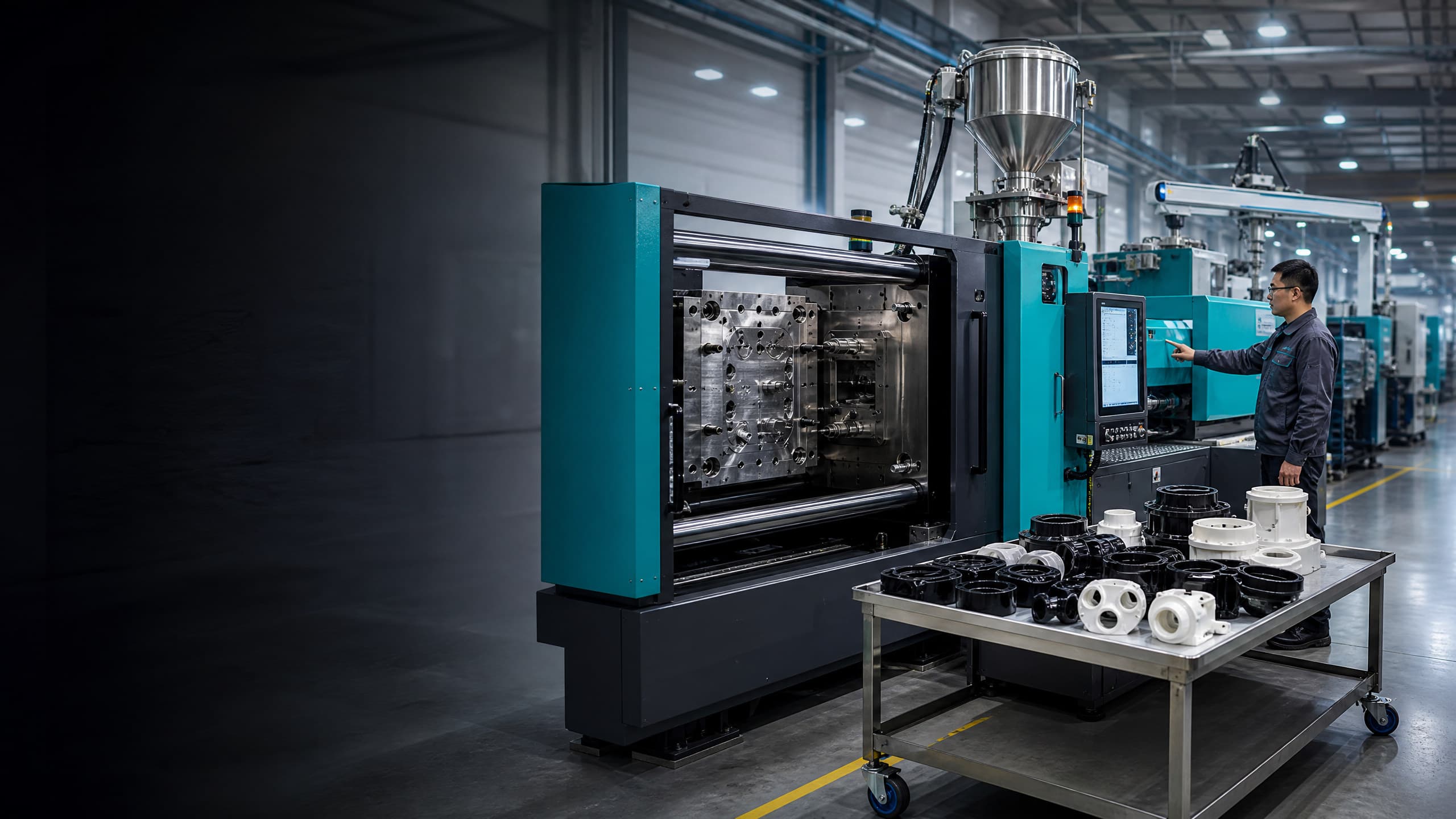
For production injection molding, capacity combines suitable press time, an approved mold, resin, labor or automation, and inspection release. It also depends on validated cycle, yield, changeovers and maintenance. A forecast lets an injection molding supplier test constraints before an urgent release.
The aim is not to make uncertain demand look certain. ASCM explains that demand planning forecasts demand at defined intervals so supply and inventory decisions can be made in advance [1]. Share demand by part number, revision, site, resin, color and delivery period.
For Europe, the United States and the Middle East, also show destination, shipment-ready date versus arrival need date, and applicable holiday or approval calendars. This stops a planned factory date being mistaken for a delivery commitment.
02
H2: Create a rolling forecast with commitment bands
Use one rolling plan with an issue date, revision number and named owner. Show a baseline plus upside and downside scenarios. The supplier should acknowledge the change and identify effects on molding, resin, packaging, secondary operations or transport planning.
H3: Label each period. A planning band is information for load and risk review, not a production instruction. A material-commitment band identifies when agreed resin, colorant, packaging or bought-in components may be purchased against the signal. A frozen band is a short period in which quantity, revision and requested ship date need a documented exception to change. Put actual dates and rules in the agreement.
Review forecast performance by part and period. Compare the newest forecast with the prior version and actual releases, then explain variance caused by a launch change, inventory correction, seasonality or a data error. ASCM recommends planning metrics at product, customer and location level [1]; this makes the capacity response more explainable.
03
H2: Convert demand into a capacity reservation
Ask the supplier to translate planned volume into a part-family model: qualified press range, cavity configuration, approved process, assumed cycle and yield, changeover and maintenance allowances, shifts or automation, and secondary-operation limits. Buyers need not direct the schedule, but should understand what the reservation protects.
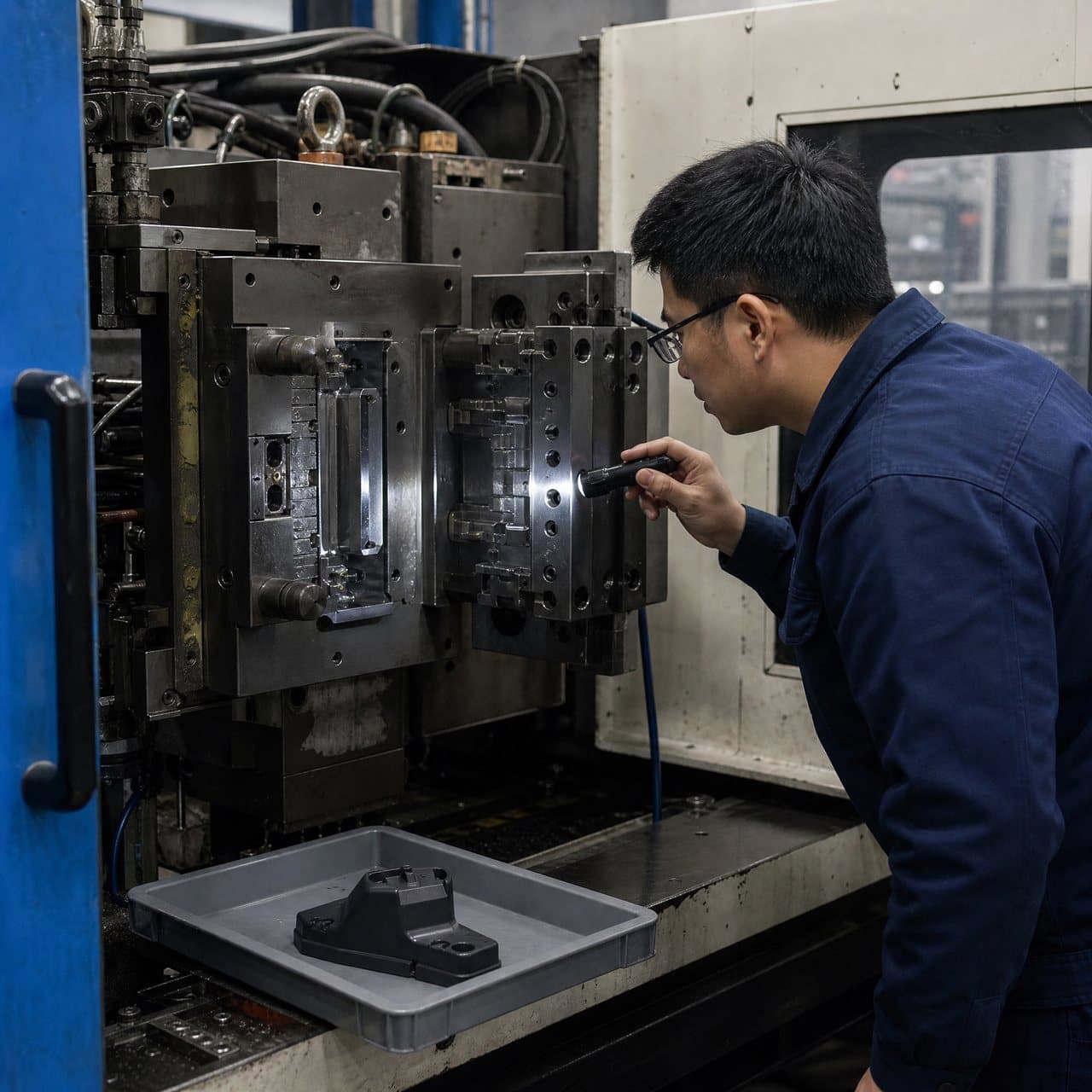
For high volume injection molding, separate mold capacity from press capacity. A multi cavity mold can have theoretical output while machine time, drying, inspection, packing or maintenance constrains deliveries. If the mold is not proven at the planned rate, mark capacity as an assumption and specify the run-rate evidence needed before it supports a firm plan.
NIST identifies visibility and coordination across forecasting, planning, operations and inventory management, and notes that supplier scorecards can measure performance [2]. Request a monthly exception report: forecast versus confirmed load, material coverage, constraints, maintenance, quality holds and buyer decisions.
04
H2: Match the reservation model to commercial exposure
A reservation should name the resource, time period, volume basis and treatment of unused time. It should state whether it grants priority, exclusivity, a right to call off volume or only an early warning. The table is a scoping aid, not a price schedule; feasibility and commercial exposure depend on the program and agreement.
| Planning model | Buyer provides | Supplier evidence to request | Point to clarify |
|---|---|---|---|
| No formal reservation | Forecast and purchase orders | Order acknowledgement and schedule status | How injection molding lead time is recalculated at release. |
| Soft capacity planning | Rolling forecast and scenario range | Capacity review and constraint log | Whether planned time may be reassigned. |
| Firm production slots | Time-phased releases in a frozen window | Named resource basis and schedule confirmation | Cancellation, carryover and expedited-work treatment. |
| Material plus capacity commitment | Forecast, resin specification and sourcing rules | Material coverage and lot-traceability plan | Exposure for material or packaging if demand moves. |
| Dedicated program arrangement | Sustained-volume case and commercial commitment | Resource scope, utilization assumptions and contingency plan | Idle capacity, exit terms and tool maintenance. |
05
H2: Control resin, engineering and supply risk
A press reservation does not solve material risk. Specify approved resin, color, substitution approval, recycled-content requirement where applicable, and storage or drying constraints. The plastics supply chain can face material availability and prolonged lead-time disruption; forecasting and supplier mapping expose risk but do not remove it [3]. Request relevant material-status visibility.
Keep engineering control separate. The forecast must identify the correct drawing and CAD revision. Where a mold modification, resin change or validation is pending, treat associated volume as conditional until approval. For contract injection molding, document who can authorize releases, engineering changes and deviations, plus escalation contacts across purchasing, planning, quality and engineering.
06
H2: Run a decision-focused planning review
Hold a short recurring review at a cadence that fits the program. Cover confirmed orders, forecast changes, material status, current and next production windows, maintenance, quality constraints and actions with owners and dates. Add a review before launch ramps, peaks, tool transfers or major changes.
Use a small scorecard: forecast revision, confirmed quantity, planned versus actual output, open-order status, material coverage, on-time shipment, nonconforming quantity and constraints. When demand rises, ask what is feasible, what needs confirmation and what trade-offs are proposed—not a blanket acceptance.
07
H2: Send an RFQ that supports a capacity discussion
Submit a production planning RFQ with drawing and 3D CAD, demand by period, scenario range, release cadence, destination, resin and color, quality and packaging requirements, target start date, tooling status and secondary operations. Ask the injection molding supplier to list assumptions, constraints, material considerations, its proposed reservation model and the evidence needed before schedule confirmation.
InjeForm can review this package as an RFQ for production injection molding. Identify planning-only periods, intended firm releases and critical change scenarios. That gives a clearer basis to discuss tooling, material planning, injection molding lead time and contract injection molding responsibilities without assuming fixed price, output or delivery.

Practical takeaway
Before you move
to the next review.
- Issue one version-controlled forecast by part number, revision, destination and delivery period.
- Label planning, material-commitment and frozen periods with dates and release rules.
- Request the mold, press, process, cycle, yield, maintenance and staffing assumptions behind capacity.
- Confirm whether the arrangement protects priority, production slots, material, dedicated resources or only planning visibility.
- Document exposure for resin, packaging and bought-in components if quantities move or cancel.
- Define evidence needed before an assumed run rate becomes a firm planning basis.
- Maintain escalation contacts and a decision log for schedule, quality and engineering changes.
- Review cross-border shipment definitions separately from factory production dates.
FAQ
Common questions
Is a forecast the same as a purchase order for an injection molding supplier?
No. A forecast communicates expected demand. A purchase order or release becomes the commercial instruction only as defined in the agreement. Label informative, material-commitment and frozen periods.
What proves that capacity is available?
Ask for the approved mold and revision, qualified press range, cavity status, assumed cycle and yield, planned downtime, staffing or automation, material status and schedule conflicts. The supplier can then separate confirmed facts from conditions.
How far ahead should capacity be reserved for high volume injection molding?
There is no universal horizon. Select one that reflects demand volatility, resin sourcing, tooling readiness, scheduling and logistics. Use a shorter firm window with a longer rolling planning view when uncertainty is high.
Can a capacity reservation guarantee injection molding lead time?
No. A reservation can define a planned resource and priority, but material availability, approved changes, quality containment, maintenance and logistics may still affect output. Define reporting and resolution for exceptions.
What belongs in a contract injection molding capacity clause?
Define part revision, forecast cadence, firm release window, resource or volume basis, material commitments, unused-capacity treatment, maintenance, quality, change control, reporting, escalation, tooling ownership and exit terms. Have legal and commercial teams review final wording.
References
Source material
- [1] ASCM — Demand Planning vs. Supply Planning
- [2] NIST Manufacturing Extension Partnership — Supply Chain
- [3] Kaysun Corporation — How Forecasting and Mapping Benefit Injection Molding Supply Chain Management
This guide is general information for early procurement and engineering discussion. It does not replace product-specific DFM, qualification, validation, regulatory assessment or legal advice.