
OEMs should review PPS injection molding as a linked material, geometry and evidence decision—not as a shortcut from a high-performance resin label to a released part. Start by defining the actual service case, then require the proposed grade and reinforcement to be named, map the critical interfaces and agree what a molded sample must demonstrate. PPS is a partially crystalline, high-temperature polymer family, and supplier literature shows that it is available in materially different polymer and reinforced formulations.[1][2] That is why a promising family-level property is only an input to a component decision.
For a demanding component, precision injection molding is useful only when the critical dimensions, measurement condition and acceptance method are specified for that part. Injection molding dimensional stability depends on more than the resin name: ISO identifies material behaviour, shrinkage, processing conditions, geometry, warpage and non-uniform cooling as contributors to variation in plastic moulded parts.[3] Plan injection molding process validation around the functional risks—fit, sealing, electrical clearance, load path or fluid exposure—rather than around a generic statement that PPS is stable.
Factual callout: PPS is a partially crystalline polymer family; “PPS” alone does not identify a grade or predict an assembled part’s outcome.[1][2]
01
Decide whether the service case justifies PPS—and name the grade
Begin with the failure mode the component must avoid. Record the full temperature profile, not merely a peak number; list the actual fluids, cleaners or vapours; identify sustained and cyclic loads; and show the mating materials and assembly constraints. Add any electrical, flame, food-contact, medical, drinking-water or market-specific requirement as a separate line item. The decision is part-specific.
Next, freeze the candidate material identity early enough to make the quote comparable: producer, exact grade, polymer type, reinforcement or filler, colour/additive direction, data-sheet revision and permitted alternatives. DIC describes both branched and linear PPS, as well as glass-fibre and mineral-filled variants; its guide associates those choices with different balances of rigidity, creep behaviour, toughness and hot/wet response.[2] Ask what change-control route applies if an alternative is proposed. “PPS equivalent” is not a sufficiently controlled purchasing description where a critical interface or service exposure is involved.

02
Review geometry, flow direction and the critical interfaces before tool release
Review the CAD around the places where the part must locate, seal, carry load or clear another component. Mark datum features, thin-to-thick transitions, ribs, bosses, shutoffs, openings and surfaces where a weld line, gate vestige or ejector evidence would matter. For reinforced grades, request a discussion of expected flow paths and where directional material effects could matter.
Treat nominal dimensions as a starting point, then distinguish general dimensions from function-critical ones. ISO 20457:2026 provides a plastics-specific framework for geometrical and dimensional tolerances, acceptance conditions and technically achievable tolerances; it also notes that tolerance methods developed for metals cannot generally be applied directly to plastics.[3] Use that framework as planning context, not as an automatic tolerance allocation. The applicable datum scheme, gauge approach, sample condition and acceptance limit must still be agreed for this component.
| Review topic | Question to resolve before release | Useful part-specific evidence |
|---|---|---|
| Grade identity | Which exact PPS grade, reinforcement and approved alternative apply? | Current grade data sheet, supplier identity and documented substitution rule. |
| Critical geometry | Which dimensions control fit, sealing, clearance or load transfer? | Dated drawing with datums, measurement method and sample condition. |
| Flow and interfaces | Could gate position, weld lines, fibre direction or ejection affect a critical zone? | Proposed gating/ejection review and agreed zones requiring sample inspection. |
| Service exposure | What temperature, medium, load and duration represent the real use case? | Part-specific exposure or functional verification plan, where needed. |
| Change control | What material, tool or process change requires renewed review? | Named approval owner and evidence required before acceptance. |
03
Make the molding plan a controlled input to dimensional evidence
Ask for a grade-specific processing basis rather than a generic PPS recipe. In its PPS guide, DIC says that pre-drying is needed to maintain stable production and molded-part quality even though PPS has low moisture absorption; it also recommends wear-resistant machine and mould elements for glass-fibre or mineral-filled compounds.[2] These are supplier guidance points, not universal acceptance settings. The buyer’s task is to establish which material-handling, melt preparation, fill, packing, mould-temperature, cooling and ejection controls could change injection molding dimensional stability for the nominated grade and part geometry.
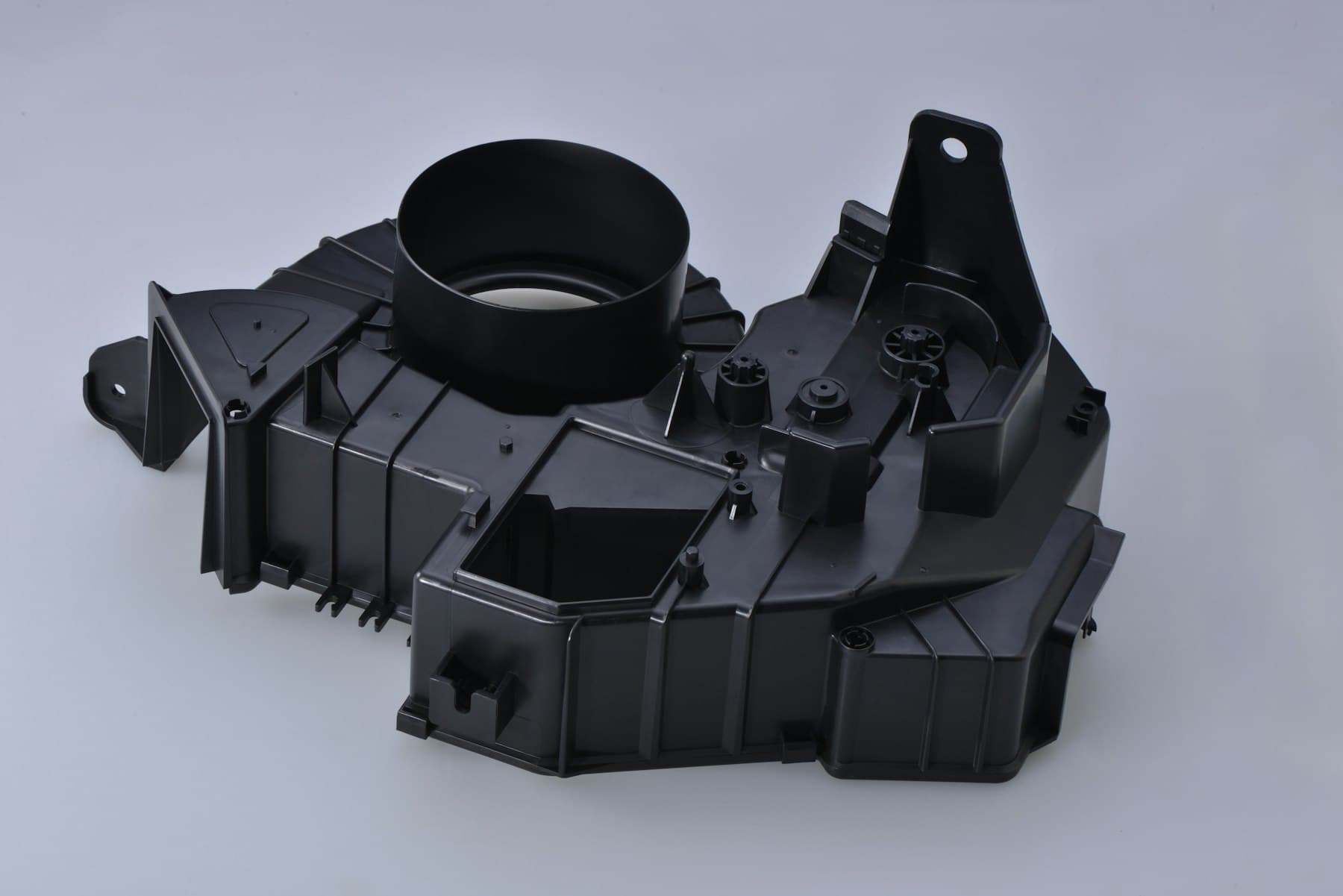
Set the dimensional review around an agreed condition and time point. A hot part, a conditioned part and a part after assembly or exposure may not answer the same question. Record the sample traceability, cavity or tool identification where relevant, measurement device, datum alignment and whether the evidence covers a first-off sample, a process study or another defined stage. This prevents a team from treating one measurement as a blanket statement of capability.
04
Validate function and compliance claims at the finished-part level
A resin data sheet is useful comparison evidence, but it is not proof that the finished component meets its requirement. DIC’s PPS product guide expressly says its general property information is a selection guide and does not remove the user’s obligation to test suitability for the intended application and process.[2] For a critical part, translate each important claim into an agreed part-level question: Does the assembly fit after the relevant conditioning? Does a seal remain effective in the specified medium? Does the electrical or mechanical function remain acceptable after the defined exposure? Choose methods and samples that genuinely answer those questions.
Keep compliance decisions separate from material-family shorthand. A statement that PPS has inherent flame-related behaviour or chemical resistance is not a certification, regulatory approval or finished-product result for a particular grade, colour, geometry or market. The product owner should identify the applicable rule, the approved grade and the required evidence; the engineering team should define any test or verification method; and procurement should control substitutions. Where a requirement is safety- or regulation-sensitive, obtain the current, grade-specific supplier documentation and make the release decision for the actual product.
05
Prepare a quote package that supports an engineering decision
A usable request for quote gives each reviewer the same decision inputs: a revision-controlled 3D model and drawing, candidate grade or material direction, annual and launch volume assumptions, cosmetic restrictions, critical dimensions, service-case summary and expected evidence at sampling. For custom molded plastic parts, also identify inserts, post-molding operations, assembly interfaces, packing constraints and any approved alternative path. This is more efficient than asking a supplier to infer a demanding use case from a resin acronym and a CAD file alone.
Before the engineering review, consolidate the open questions into a short decision record: what is fixed, what is still a hypothesis, who owns each answer and what evidence closes the risk. For a buyer preparing a PPS quote, send the part package and the five review points below to info@injeform.com, then ask for the proposed grade, assumptions and validation evidence to be stated explicitly before release.

Practical takeaway
Before you move
to the next review.
- Define the actual temperature profile, media, loads, mating interfaces and any controlled end-market requirement for this component.
- Name the proposed PPS producer, exact grade, reinforcement or filler, colour/additive direction, data-sheet revision and substitution rule.
- Mark critical dimensions, datums, sealing or load zones, cosmetic restrictions and gate-, weld-line- or ejection-sensitive areas on the drawing.
- Agree the part-specific sample condition, measurement method, functional checks and evidence needed for engineering release.
- Document who approves material, tool and process changes, and what re-evaluation is required before an altered part is accepted.
FAQ
Common questions
Is PPS a sufficient material specification for a quote?
No. PPS identifies a polymer family, not a single commercial grade or finished-part result. A quote should state the producer, grade, reinforcement or filler, additives or colour direction, data-sheet revision and any acceptable alternatives. The part drawing and service case then determine the validation questions that remain.
Why should a buyer review gate location for a PPS component?
Gate location influences the flow path and may influence where weld lines, packing effects and orientation-sensitive behaviour appear. For a reinforced PPS grade, that discussion is especially relevant near a feature that seals, carries load or controls assembly. The appropriate decision is geometric and grade-specific, so it should be made against the actual part rather than a generic gate rule.
Does a PPS data sheet prove compliance or long-term service performance?
No. A data sheet reports controlled information for a named material and test method; it does not approve the finished part for every market or use condition. The product owner should identify the applicable requirement, while the project team agrees the current grade-specific documentation and any part-level verification needed for this application.[2]
References
Source material
- [1] DIC Corporation, “What are PPS Compounds?”
- [2] DIC Corporation, “Polyphenylene Sulfide (PPS) Product Guide.”
- [3] ISO, “ISO 20457:2026 Plastics moulded parts — Tolerances and acceptance conditions.”
This guide is general information for early procurement and engineering discussion. It does not replace product-specific DFM, qualification, validation, regulatory assessment or legal advice.