
Buyers can audit an injection mold supplier remotely by testing a traceable chain of evidence: live video observation, controlled documents, interviews with responsible people, and records linked to the same mold or molded part. A remote audit is useful for screening and monitoring, but it should not be treated as a blanket substitute for an on-site visit when the product, process, or risk requires direct verification. ISO/IEC TS 17012:2024 similarly positions remote methods as a tool that complements rather than replaces on-site auditing (Reference 1).
A convincing remote audit does not ask whether the factory looks busy. It asks whether a buyer can follow one defined project from CAD and DFM through tool build, trial, injection mold inspection, corrective action, and released evidence without broken links.
01
Start With a Remote Audit Plan That Tests Evidence, Not Marketing
Before the meeting, send the injection mold supplier a project-specific agenda and evidence request. Define the part family, resin, intended market, key dimensions, cosmetic zones, production stage, and the decision the audit must support. Ask the supplier to nominate the engineering, quality, tooling, and production people who own those records. Marketing material is context, not proof that the quoted process is controlled for your part.
Set the sequence in advance: document review, live screen share, live factory walkthrough, interviews, and close-out. Request files with revision status and enough context to connect them to a mold number, part number, trial, or nonconformance. ISO/IAF remote-audit guidance recommends planning the ICT method, testing connectivity, identifying participants, and agreeing confidentiality measures before the audit. It also stresses that remote statements should be checked against other evidence (Reference 2). For European, US, and Middle East buyers, agree the working language, time-zone window, recording policy, and secure file-transfer method before sharing controlled CAD or tooling data.
02
Run a Live, Traceable Injection Mold Factory Walkthrough
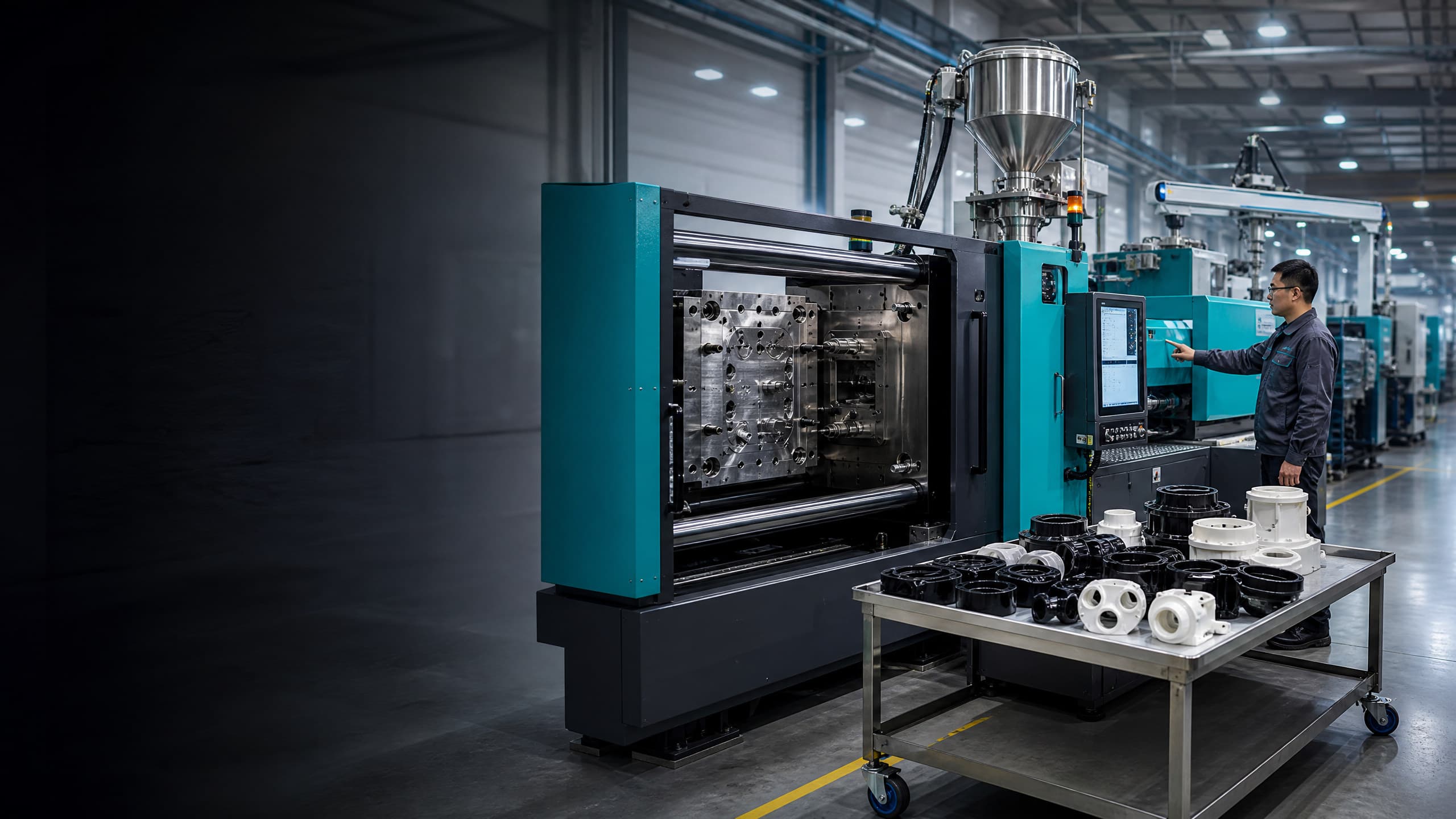
Ask for a live, continuous walkthrough rather than a curated montage. Start at a defined point, such as reception or the tool-design area, and make reasonable route changes during the call. Follow the selected project through design review, machining status, mold assembly, trial preparation, sample handling, and the inspection area. Request close views of job cards, mold identification, revision labels, measuring equipment status, and the records displayed at the relevant workstation. The aim is not to count machines or judge a site by appearance; it is to test whether the people, equipment, documents, and work in progress agree.
Use short interviews to trace ownership. The tool designer should explain how a design change is communicated. The quality contact should locate the relevant inspection plan and measurement report. The trial or production contact should explain how settings, material lot information, and defects are recorded for the selected job. Ask the guide to show the current system clock, then retrieve a record created before the audit request; this helps distinguish live operational evidence from a prepared folder. IAF MD 4 recognizes video, document review, and visual access to remote locations as ICT options, while requiring security, confidentiality, documented risks, and adequate infrastructure (Reference 3).
03
Sample the Tooling and Molding Quality System by Risk
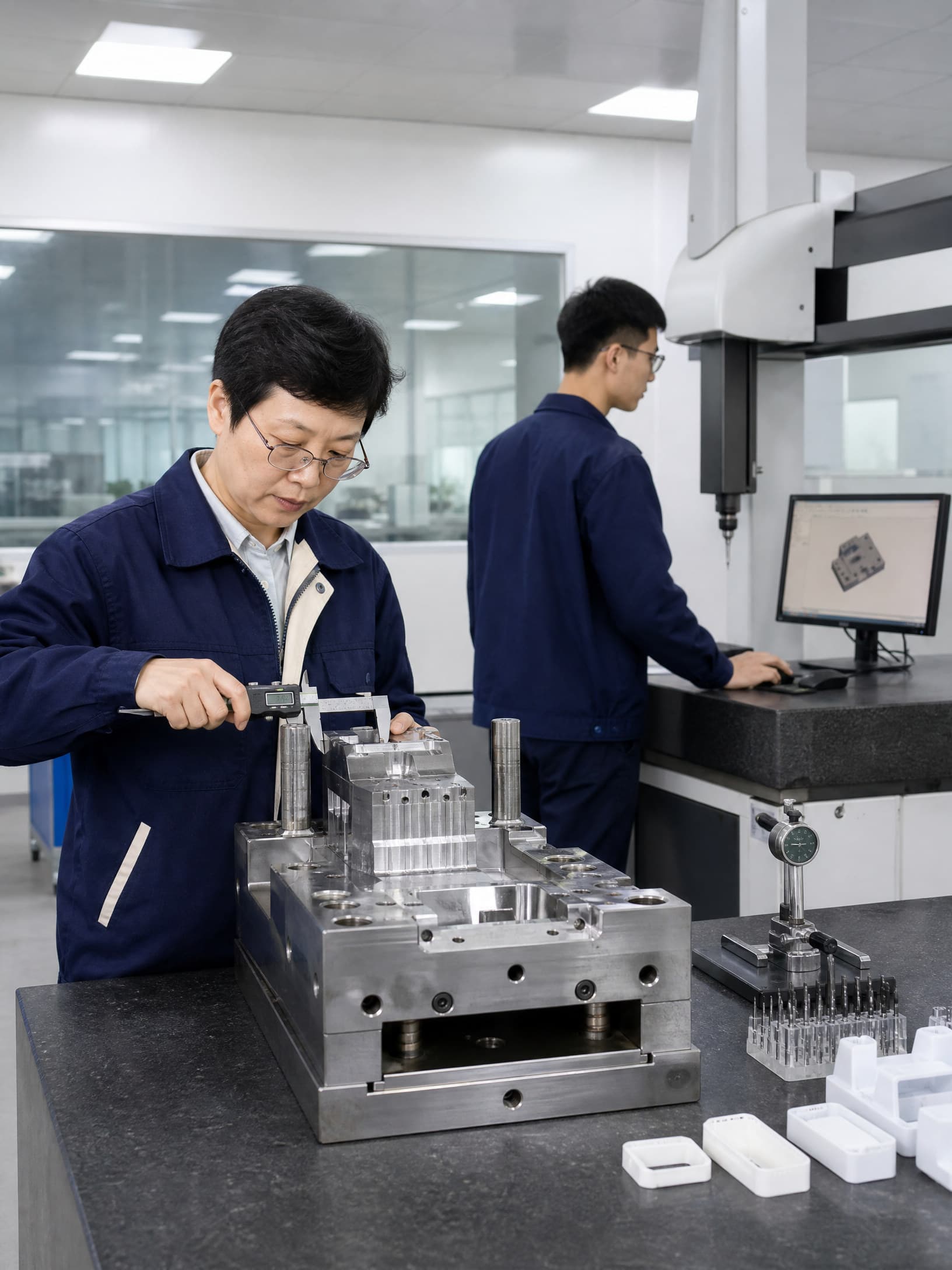
A remote audit should sample the controls that matter most to the part, not attempt to inspect every activity. For a precision enclosure, link the mold drawing, critical dimensions, CMM or other measurement evidence, and corrective-action history. For a cosmetic consumer part, examine the visual standard, defect definitions, sample retention approach, and the route from a complaint to disposition. For an insert-molded or multi-cavity part, trace identification and cavity-specific evidence where the project requires it. The supplier should explain what is actually checked, who approves results, and what happens when a result fails.
The comparison below shows how a buyer can translate broad claims about injection molding quality control into audit tests. It is a planning example, not a universal acceptance plan. The exact sample size, tolerances, inspection frequency, and approval gates must be defined for the project and confirmed in the quality agreement.
| Evidence area | What a remote review can test | Useful proof | When to escalate to an on-site visit |
|---|---|---|---|
| Design and change control | Whether the quoted revision, DFM feedback, and released mold design are linked | Revision-controlled drawing, change log, approval trail | Changes are informal, untraceable, or affect safety, fit, or regulation |
| Tool build and trial | Whether the identified mold is progressing through planned build and trial steps | Live mold ID, job record, trial report, sample labels | The mold cannot be linked to records or trial results are incomplete |
| Injection mold inspection | Whether measuring methods, acceptance criteria, and result disposition are defined | Inspection plan, dated report, gauge status, nonconformance record | A critical feature needs physical witness, correlation, or independent verification |
| Corrective action | Whether a defect is contained, investigated, assigned, and closed effectively | Example record with cause, action owner, due date, and verification | Repeat issues, unclear root cause, or no evidence that action worked |
04
Build an Evidence Chain for a China Injection Mold Maker
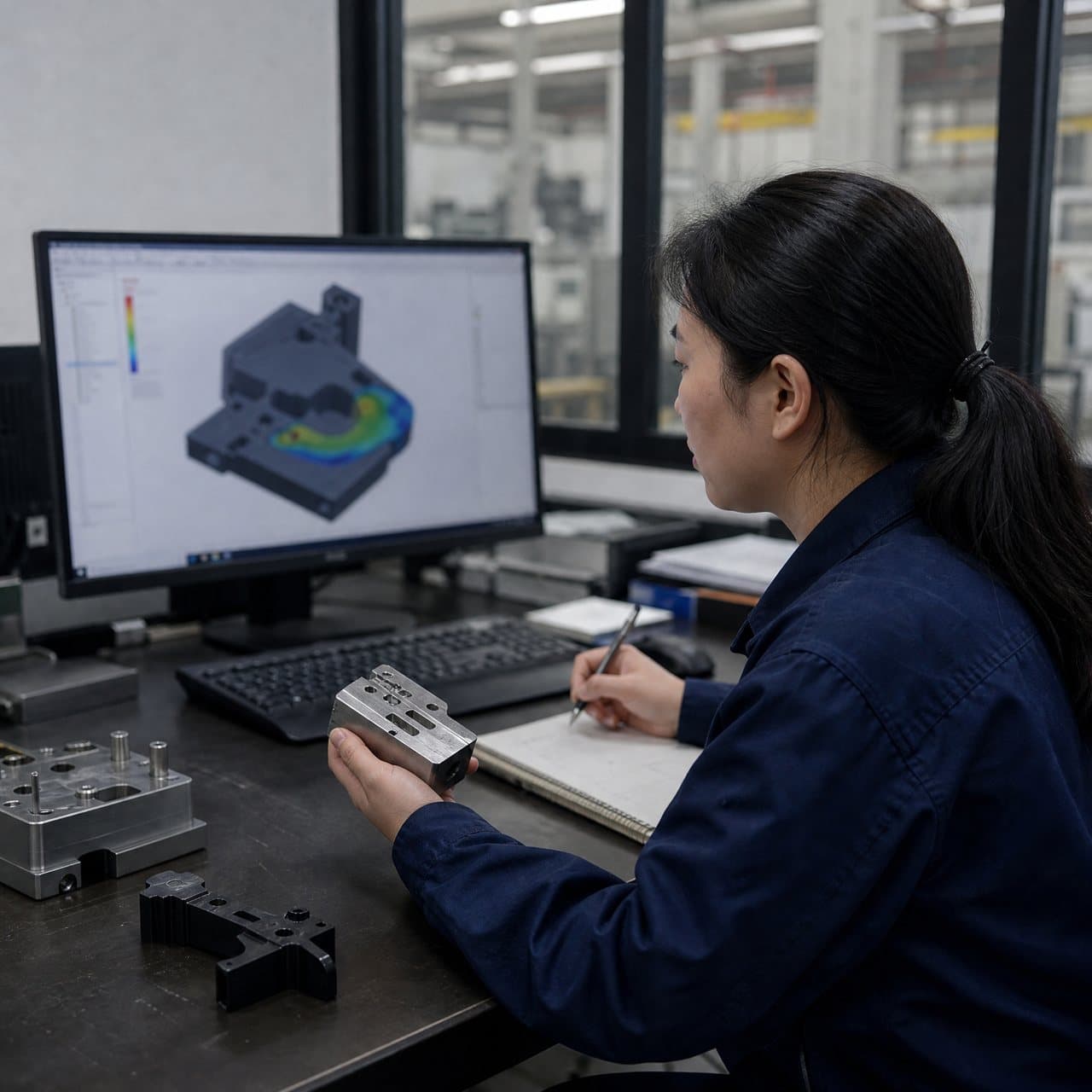
When auditing a China injection mold maker from abroad, avoid relying on country labels, logos, or an isolated certificate as a proxy for capability. Instead, select one recent or active project with comparable technical risk and ask to trace the evidence chain. Start with the customer requirement and 3D CAD revision. Continue through injection mold DFM, material and component decisions where applicable, tool build records, injection mold trial data, inspection results, open issues, and final release evidence. Redact customer names, commercial values, and protected geometry when necessary, but preserve dates, revision relationships, roles, and decision logic.
Test records in both directions. From a dimensional result, ask which drawing revision and measuring method controlled it. From a mold change, ask which trial samples and inspection outcomes confirmed the change. From a corrective action, ask whether the issue appears in the control plan or work instruction. Consistency is more useful than volume. A small set of coherent, retrievable records can provide stronger assurance than a large unconnected file archive. Keep your own audit notes against agreed acceptance criteria, requested follow-up, owner, and due date.
05
Know the Boundaries of a Remote Audit and Make a Decision
Remote methods are strongest for reviewing document control, interviews, digital records, live observation, and follow-up on known actions. They are weaker when confidence depends on unrestricted physical observation, independent measurement, confidential evidence that cannot be shared, or a broad assessment of a complex injection mold factory. ISO guidance says remote-audit feasibility depends on objectives, data quality, organization complexity, and whether relevant facilities and processes can be accessed by video; if objectives cannot be achieved, the audit should be partly or fully on site (Reference 2).
Close the audit with three outcomes: approved for the defined next step, conditionally approved with dated actions, or not approved pending further verification. Do not turn a remote audit into a binary verdict on every future program. A supplier may be suitable for a lower-risk prototype tool yet require an on-site audit, third-party inspection, or witness trial before a regulated, high-value, high-cavity, or safety-critical production program. Send InjeForm your CAD, drawing, resin, forecast volume, target market, and required evidence package to request a project-specific tooling and quality discussion.
Practical takeaway
Before you move
to the next review.
- Define the part, critical-to-quality features, audit objective, and approval decision before scheduling the call.
- Require a live route through the relevant engineering, tool build, trial, and inspection activities rather than relying only on pre-recorded media.
- Select one comparable project and trace its revision-controlled evidence from requirement through release or corrective action.
- Verify that mold ID, part ID, drawing revision, trial record, and inspection result can be connected without unexplained gaps.
- Agree secure screen-sharing, file-transfer, confidentiality, participant identification, and recording rules before controlled data is shown.
- Record follow-up actions with an owner, due date, needed proof, and an explicit trigger for on-site or independent verification.
FAQ
Common questions
Can a remote audit replace an on-site audit of an injection mold supplier?
Not in every case. A remote audit can support supplier screening, document review, live observation, and action follow-up. It should be supplemented or replaced by an on-site visit when audit objectives require direct physical verification, broader sampling, independent witnessing, or assessment of complex and high-risk operations.
What should buyers ask to see during remote injection mold inspection?
Ask for the current inspection plan, part drawing revision, measurement method, gauge or CMM status where relevant, dated result, disposition of any out-of-specification result, and the link to the related mold or trial. The required characteristics and acceptance criteria must be agreed for the actual program.
How can a buyer verify that a remote factory video is live?
Use a pre-agreed but flexible route, ask for reasonable changes during the walkthrough, request live views of project identifiers and current records, and interview the people responsible for the work. Then cross-check what was shown against documents sent before and after the call. No single video technique proves capability by itself.
References
Source material
- [1] ISO/IEC TS 17012:2024 — Conformity assessment: Guidelines for the use of remote auditing methods in auditing management systems
- [2] ISO 9001 Auditing Practices Group — Remote Audits
- [3] International Accreditation Forum — IAF MD 4:2025, Use of ICT for Conformity Assessment Purposes
This guide is general information for early procurement and engineering discussion. It does not replace product-specific DFM, qualification, validation, regulatory assessment or legal advice.