
Choose neither title by itself. An injection mold maker may describe a specialist that designs and builds the tool, while an injection mold manufacturer may describe a business with a broader or simply different commercial scope. In real sourcing, those meanings overlap. The sound procurement question is which party is accountable for your part definition, design review, tool build, trial evidence, changes and any production handoff. Ask each bidder to map that scope against the same controlled input package, then compare the proof behind the map.
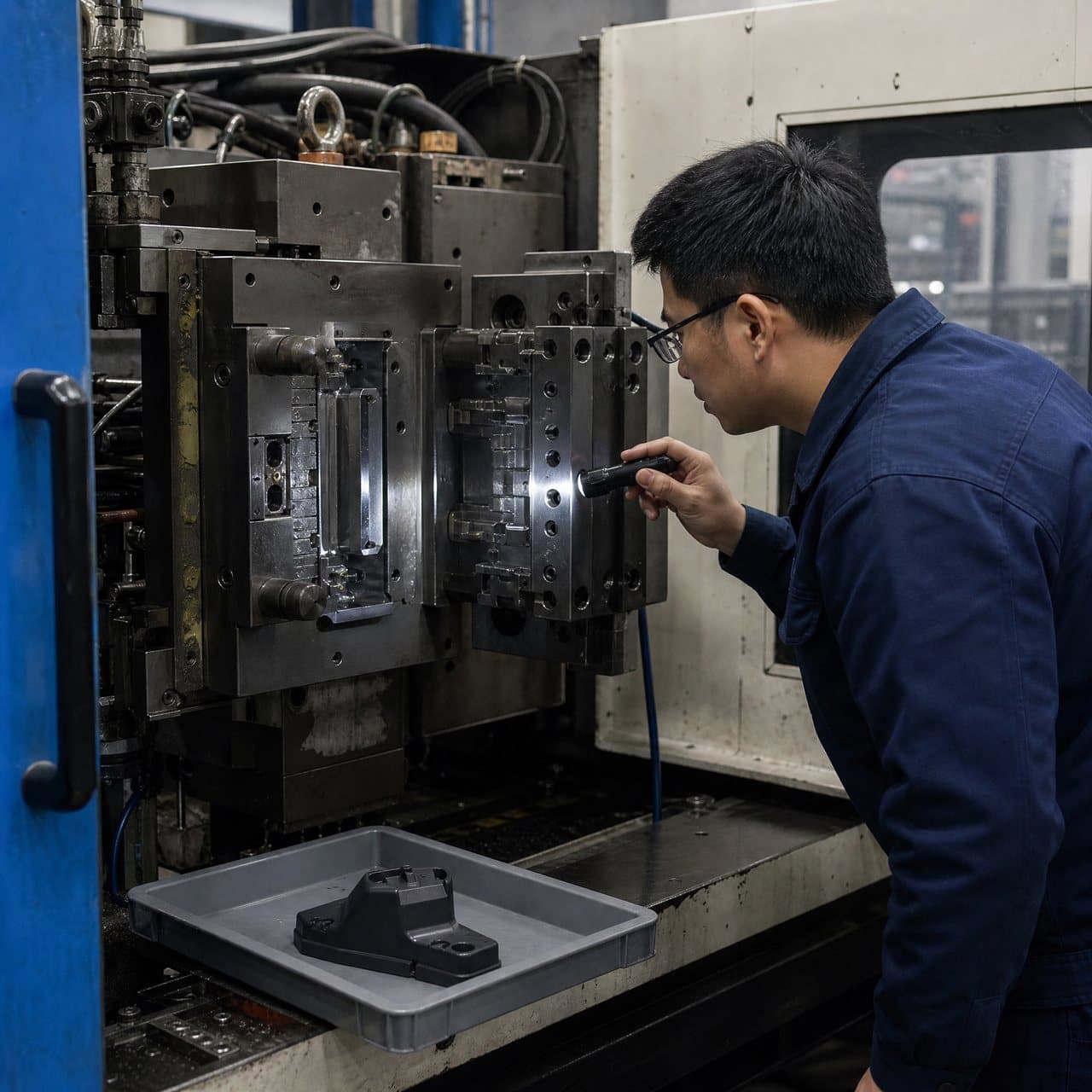
For cross-border buyers, supply-chain structure can add interfaces but does not predetermine quality. A local molder, overseas tool builder or coordinated team can be viable with clear responsibilities. This guide does not assume machines, certifications, location, output, lead time or regulatory status. Site images are illustrative; evaluate the proposal and evidence.
Do not award on the words maker or manufacturer. Award on a defined scope of work, named decision owners, a reviewable evidence path and an acceptance plan for the specific tool and part.
01
What is the practical difference between a maker and a manufacturer?
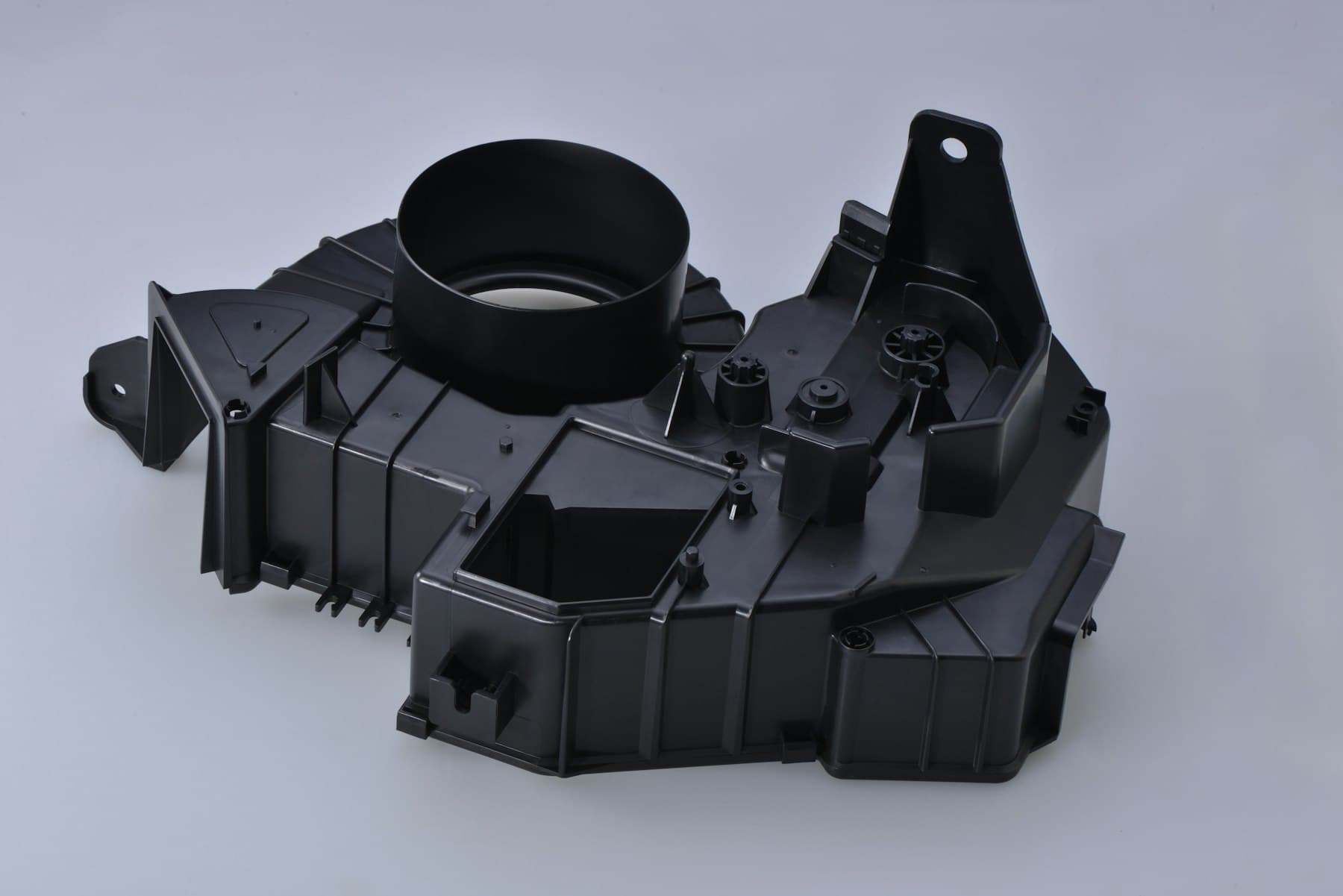
In B2B use, injection mold making refers to engineering and construction of the mold as a production asset. An injection mold maker can therefore be a toolmaking specialist whose principal deliverable is a design-reviewed, trialed mold. That party may work directly, coordinate external processes, or hand the tool to another organization for molding. The title alone does not identify the arrangement.
Injection mold manufacturing is often used more broadly. It can mean manufacturing the tool, plastic parts with that tool, or a combined route. A broad label is not a commitment to provide every adjacent service. A supplier may build the tool but not run serial molding, or may manage trials through a partner. A specialist maker may instead offer design ownership and a documented handover. Treat the words as search terms, not contractual scope.
The useful distinction is between a tool-build scope and a program scope. A tool-build scope ends with an agreed tool and trial evidence. A program scope may additionally cover resin procurement, production molding, inspection, packing, logistics coordination, change management and support. Either can be appropriate. Select the scope that reduces handoffs while keeping technical and commercial boundaries visible.
| Buyer question | Possible maker-led answer | Possible manufacturer-led answer | What to verify |
|---|---|---|---|
| What is being supplied? | A mold, controlled design package and agreed trial evidence. | A mold plus part production, or a tool build with coordinated production support. | The included deliverables, exclusions and the point at which responsibility changes. |
| Who runs the trial? | The tool builder or a named molding partner may conduct it. | The supplier may conduct it internally or coordinate another location. | Trial location, resin direction, sample purpose, records and release authority. |
| Who owns later changes? | The maker may assess the effect on the tool and issue a change proposal. | The manufacturer may assess both tool and recurring-part effects. | Who approves change, revises records and bears each defined cost or schedule effect. |
02
Start supplier selection with the operating model, not a capability claim
Before asking for quotations, decide which operating model you need. With an approved molding source and a transfer-ready tool requirement, prioritize design, construction data, trial conditions and receiving support. If you need molded parts delivered, prioritize the chain from review through sampling, production controls and delivery terms. If the design is still moving, prioritize surfaced, recorded decisions over a broad full-service promise.
Issue one concise project brief to every candidate. Include the latest CAD and drawing revision, critical interfaces, resin direction, cosmetic zones, forecast bands, mating parts, inspection needs, markets, sample purpose and open decisions. Request a responsibility matrix showing the product owner, tool designer, tool builder, trial molder, inspection owner, external providers and commercial decision owner. This is more revealing than a generic factory presentation.
Where more than one company touches the program, ask who controls the interface. A mold manufacturing service can be appropriate when it gives the buyer one accountable coordinator, but only if the coordinated work is disclosed and the escalation path is workable. Do not assume that an in-house claim is better or that subcontracting is unacceptable. Instead, establish who verifies externally supplied work, who authorizes deviations and who returns the records needed for release.
03
Use design review to expose whether the proposed scope fits the part
A supplier comparison becomes technical when anchored to the actual part. Ask every serious candidate for a marked design review identifying parting direction, gate and vent intent, ejection, cooling, undercut strategy, cavity proposal and cosmetic compromises. The goal is to learn whether the bidder has connected geometry to practical molding decisions and labelled unresolved trade-offs.
Review the part and tool as a system. Wall transitions, draft, ribs, gates, material selection, surface finish and ejection interact. General design guidance explains why consistent wall sections, suitable draft and planned gate locations matter, but the answer depends on resin, geometry, finish and functional requirements. A supplier should explain the consequence for your part, not offer a universal tolerance or tool-life statement.
Ask for alternatives only where they inform a decision. Compare, for example, a visible feature with a moved gate, a moving action with part redesign, or one initial cavity with a later capacity route. Each alternative should name the assumptions it changes. That makes injection mold making reviewable engineering work rather than a black-box step after purchase order.
| Evidence to request | What it should answer | Why it helps compare suppliers |
|---|---|---|
| Marked design review | What geometry, material or appearance decisions need buyer input? | Shows whether the supplier makes risks and compromises visible early. |
| Tool concept summary | How are parting, gating, ejection, cooling and moving features intended to work? | Separates a defined concept from a quote based on unstated assumptions. |
| Sample and measurement outline | Which revision, material condition, features and visual criteria will be evaluated? | Links the tool trial to a usable acceptance decision. |
| Change-control example | How is a requested or discovered change evaluated, approved and recorded? | Tests record discipline without relying on a marketing claim. |

04
Compare evidence, commercial boundaries and total decision risk
A lower price cannot be interpreted until scope is normalized. Compare the same drawing revision, resin direction, cavity assumption, tool concept, trial expectation, inspection work, included sample quantity, delivery basis and change assumptions. Ask bidders to state the three assumptions most likely to alter their commercial response. This invites a useful explanation of what they do not yet know instead of encouraging artificial certainty.
Evaluate evidence proportionately. A claimed quality-management certificate should be verified with the issuing body and checked for scope and site; it is not proof that a specific tool route is suitable. More useful material can include an anonymized marked review, revision record, inspection-report format, material-identification process and nonconformance closeout. Do not seek confidential customer information. Ask how the process controls a comparable decision.
Cost should include the management burden created by the selected model. NIST describes total cost of ownership as extending beyond purchase price to items such as freight, inventory, time and the overhead of managing distant suppliers. For this decision, also consider the cost of unclear handoffs, repeated revisions, delayed approvals and unavailable records. These are risks to identify, not figures to invent. A well-scoped lower-cost route can be preferable; so can a broader route when it demonstrably reduces coordination risk.
05
Make the award decision at defined gates
Use a short sequence of gates rather than treating award as the only control point. At input freeze, confirm the controlled files and the open-issue list. At design release, approve the documented tool concept and any accepted compromise. At trial review, assess the agreed sample condition, material record, measurements, appearance and functional observations. At handover or production release, confirm the records, tool configuration, delivery boundary and support route. A deviation should have a disposition, owner and record rather than disappearing into email.
This approach is especially useful for cross-border programs. Define document language, revision naming, meeting cadence, escalation contacts and the physical tool location. If tools or records may later move between Europe, North America or the Middle East, include a transfer-ready data package in the agreement: controlled drawings, tool configuration, agreed component details, maintenance or change history, sample disposition and connection or handling information. Ownership, intellectual-property rights, export obligations and product compliance remain contract- and jurisdiction-specific matters requiring appropriate professional review.
For a first inquiry to an injection mold tooling supplier, attach the project brief and ask for a scope map before requesting a final price. The response should let engineering judge the technical route and let procurement compare the commercial boundary. That is a stronger practical next step than trying to decide whether maker or manufacturer is the better label.
Practical takeaway
Before you move
to the next review.
- Send every candidate the same controlled CAD, drawing, material direction, volume bands, cosmetic requirements and list of open decisions.
- Require a responsibility matrix that identifies the tool designer, builder, trial molder, inspection owner, external providers and change approver.
- Ask for a marked design review and tool concept that make gate, ejection, cooling, moving-feature and appearance trade-offs visible.
- Normalize quotations for tool scope, trial evidence, inspection, samples, packing, delivery boundary, exclusions and assumptions before comparing totals.
- Set written gates for input freeze, design release, trial disposition and handover or production release, with a controlled route for changes and deviations.
FAQ
Common questions
Is an injection mold maker always a smaller or narrower supplier than an injection mold manufacturer?
No. These titles are used inconsistently across the market. A maker may be a focused tool specialist or may coordinate extensive services; a manufacturer may produce tools, molded parts or both. Ask for the actual program scope, named owners and supporting evidence rather than inferring capability from the name.
Should we prefer one company to build the tool and mold the parts?
Not automatically. A combined route may reduce handoffs, while a separate tool builder and molder can work well when the tool interface, documents, trials, acceptance criteria and transfer support are clearly controlled. Compare the risk and evidence path of the proposed arrangement for your program.
What should a buyer see before approving tool manufacture?
At minimum, review the controlled input revision, material direction, critical dimensions and cosmetic zones, plus a marked design review and tool concept. Agree the sample purpose, measurement and visual assessment method, approval authority and change process. The exact package should scale with the part and program risk.
References
Source material
- [1] International Organization for Standardization, ISO 20457:2026 Plastics moulded parts — Tolerances and acceptance conditions.
- [2] International Organization for Standardization, ISO 9001:2026 Quality management systems — Requirements.
- [3] NIST Manufacturing Extension Partnership, Supply Chain Management.
- [4] Protolabs, Injection Molding Guide: Process, Design Tips, and Materials.
This guide is general information for early procurement and engineering discussion. It does not replace product-specific DFM, qualification, validation, regulatory assessment or legal advice.