
An injection mold quote is a purchasing decision record in its earliest form. It should let engineering describe the part that must be made, let procurement compare a common scope, and let quality see what evidence may be needed before money is committed. That is more useful than sending a model and asking for a price. When requesting a custom injection mold, buyers should define the controlled baseline, disclose the decisions still open, and ask each bidder to show the assumptions behind the response. The result is not a promise that every risk is solved before design review; it is a practical way to expose what needs a decision.
Ask every bidder to separate confirmed requirements, stated assumptions, optional items and exclusions. A comparable total depends on those four labels, not on price alone.
01
What should the first quote package establish?
Start with a short cover sheet that names the buyer, part number, latest revision, intended application, request date, decision contact and confidential-information route. Add a file register listing each model, drawing, material document, cosmetic reference and mating-part file supplied. A custom plastic mold maker can then identify which version governed the review rather than guessing from attachment dates or informal filenames. If an NDA, portal, export-control instruction or restricted-data rule applies, state the route before transmitting technical data; do not assume that a generic purchasing email establishes the required controls.
The cover sheet should also distinguish the product requirement from a preferred manufacturing approach. For example, a buyer may require a sealing interface and permit a supplier to recommend the gate or cavity arrangement. Conversely, a customer-specified resin grade, no-gate zone, insert source or customer-owned mold base should be marked as a constraint. That distinction gives a plastic mold manufacturer room to explain a manufacturability concern without treating a preference as permission to change the product. Record who can approve any proposed departure and whether an updated drawing, sample or written concession is needed.
02
Which design inputs make a tool concept reviewable?
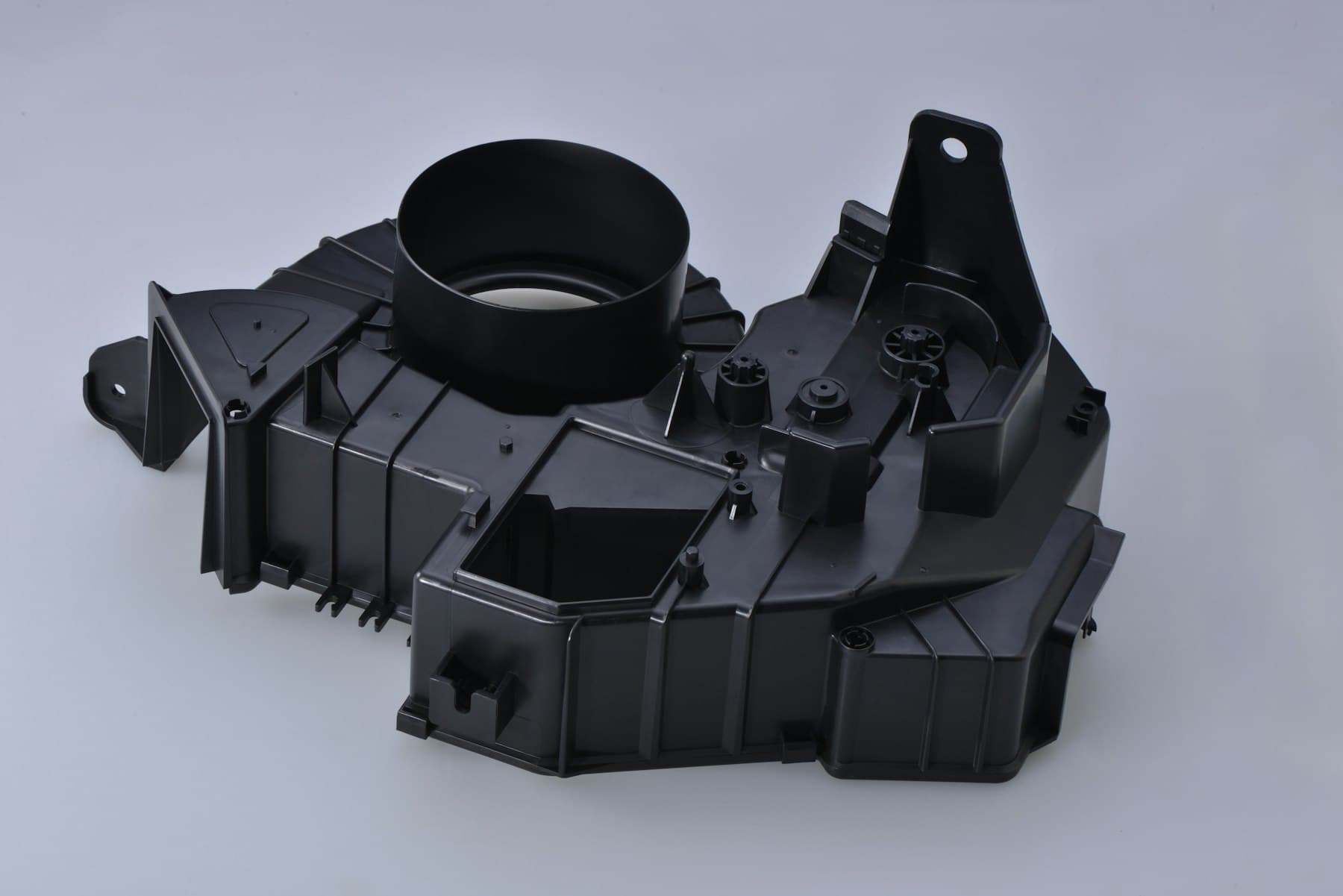
Provide revision-controlled 3D CAD and, where available, a 2D drawing that identifies functional datums, critical interfaces and dimensions that truly govern fit. Send mating-part geometry, an interface envelope or an assembly sketch when an isolated part model does not explain the requirement. Mark visible, textured, sealing and contact surfaces, together with areas where gate vestige, parting line or ejection evidence is unacceptable. The purpose is not to prescribe a detailed mold design before review; it is to show which surfaces and relationships the design review must protect.
State the intended resin family, grade if already approved, color direction, filler or recycled-content constraint, and any allowed alternative path. Material, wall map, flow route, cooling and shrinkage interact, so a polymer family alone is not an acceptance plan. ASTM D955 notes that shrinkage measurements from standard test specimens do not predict absolute values for parts with different geometry and processing conditions. Buyers should therefore identify the part-specific conditions that matter and ask the bidder to flag where a material or geometry decision affects the proposed tool concept.
An injection mold RFQ is clearer when it includes an open-points list. Typical entries are unfinished texture selection, pending color approval, a mating component not yet released, a still-developing annual forecast or a test method owned by another team. Give each item an owner and a target decision date. An honest open point is easier to price as an assumption or option than an unstated one that later becomes a dispute.
| Input group | Buyer should supply | Bidder should make visible |
|---|---|---|
| Controlled product baseline | CAD, drawings, revision register and critical interfaces | Files used, missing information and any conflict found |
| Appearance and release constraints | Cosmetic map, restricted gate, parting-line and ejector areas | Proposed concept effects on the marked surfaces |
| Material and assembly context | Approved direction, inserts, mating parts and service environment | Material-related assumptions and assembly questions |
| Demand and commercial context | Prototype, ramp and annual-volume range; delivery destination | Cavity, sampling and freight assumptions used in the response |
03
How should buyers request tooling alternatives without inviting incomparable bids?
Do not ask every supplier to invent a different commercial problem. Issue one base case and only the alternatives that matter to the buying decision. The base case might define the current part revision, material direction, expected volume band, required sample stage, delivery location and desired currency or Incoterm. Then request separately priced options, such as a different cavity count, a different runner approach, an extra insert set, a texture operation or tool storage after acceptance. Label each option as conditional, not automatically included in the base tool.
For an injection mold tooling quote, request a scope sheet beside the headline figure. It should identify the quoted tool concept at a level suitable for review, included design and trial deliverables, buyer-supplied items, samples, inspection outputs, secondary operations, packaging, freight, taxes or duties where applicable, and excluded work. The request should not force a supplier to disclose proprietary process detail. It should require enough information to determine whether two quotations cover the same decision boundary.
Volume deserves a range and a time profile rather than a single unsupported number. Separate development demand, launch demand, recurring annual demand and expected program life if known. State whether the estimate is a forecast, a contractual commitment or a planning scenario. This allows the bidder to explain which assumptions affect cavitation, handling or maintenance planning, without the buyer implying a production guarantee that has not been authorized.
| Quote line | Base request | Optional or conditional request |
|---|---|---|
| Tooling scope | Tool concept for the named revision and stated volume scenario | Alternative cavitation, runner or interchangeable-insert scenario |
| Sampling and evidence | Named sample stage and agreed critical-feature results | Additional samples, capability study or assembly check if separately required |
| Logistics | Named destination and agreed delivery term | Expedited freight, special pack-out, storage or transfer support |
| Change work | No unapproved product changes included | Priced path for a buyer-authorized revision after review |

04
What evidence should be requested before supplier selection?
A quote is not evidence that a tool will meet every product requirement. Before award, ask candidates for a written assumption log and a marked design-review response tied to the supplied revision. The useful questions are practical: Which feature drives the tool split or release approach? Which cosmetic or mating requirement needs confirmation? What information is missing to complete the recommendation? What sample, measurement or functional evidence is proposed for the critical features? A response that makes uncertainty traceable can be compared more fairly than a broad assurance.
Use the same evaluation sheet for every candidate. Compare the baseline revision, material direction, tool scenario, included deliverables, exclusions, requested buyer decisions, sample definition, quality evidence, commercial term and change route. Do not score a supplier merely for offering more words or a more elaborate drawing. Score whether the response addresses the known risks and identifies the documents or approvals needed to close them. ASQ guidance on supplier quality emphasizes defined requirements and evaluation criteria; those principles are useful here, but the exact evidence should remain proportional to the individual part and purchase agreement.
For European, North American and Middle East buying teams, state the currency, language for controlled documents, measurement-unit convention, destination and applicable customer requirements early. Where a regulatory or end-use claim is relevant, describe the requirement and the responsible approval authority; do not treat a tooling quotation as proof of compliance.
05
What should happen between quote receipt and purchase order?
Hold a short cross-functional normalization review before selecting the preferred offer. Procurement can confirm commercial boundary and delivery assumptions; engineering can examine the proposed feed, split, release and material questions; quality can confirm the requested evidence; and the product owner can accept or reject trade-offs affecting function or appearance. Send the resulting decision record back to the shortlisted supplier, especially if the group has changed the baseline or chosen an option. This prevents a purchase order from silently combining the lowest price with another bidder’s scope.
The final clarification should name the documents expected at the next review point, the buyer-side approval contacts, the route for an engineering change, and the rule for additional work outside the agreed scope. ISO 20457 provides a plastics-specific framework for tolerances and acceptance conditions, but it does not choose the functional priorities for a particular product. Keep the product owner responsible for the acceptance logic, and ask the supplier to connect the proposed tooling and inspection approach to that logic.
A disciplined request does not eliminate iteration. It makes iteration controlled: the bidder knows the starting baseline, the buyer knows what was priced, and both parties can distinguish a design-development decision from a commercial change. That is the practical value of an injection mold quote package.
Practical takeaway
Before you move
to the next review.
- Issue a cover sheet and file register that name the controlled part revision, decision contacts and confidential-data route.
- Mark functional, cosmetic, sealing and assembly interfaces, including any restricted gate, parting-line or ejection zones.
- Request one base tooling scenario plus separately priced options instead of asking suppliers to guess the preferred concept.
- Require an assumptions, exclusions and buyer-decisions log with every response, then normalize those items before comparing totals.
- Before purchase order release, record the agreed sample evidence, approval authority and change-control path for the selected scope.
FAQ
Common questions
Can a buyer request a quote before the final material grade or color is selected?
Yes, if the request labels the decision as open and states the intended resin family, functional environment, constraints and decision owner. Ask the supplier to show how the open material choice affects the tool concept, price or evidence. Do not let an unapproved grade or color become an invisible assumption in the awarded scope.
Should quotes for tooling and molded parts be separated?
Usually, separating non-recurring tooling from recurring molded-part supply makes the commercial boundary easier to review. The buyer can then see the tool scenario, samples and included activities apart from resin, molding, secondary work, packing and logistics. The exact breakdown should match the procurement strategy and agreed scope.
What is the best way to compare two very different tooling proposals?
Return both proposals to the same normalization sheet. Compare the governing revision, resin direction, volume scenario, cavity and runner assumptions, samples, inspection evidence, exclusions, destination terms, ownership terms and buyer decisions still required. Ask each bidder to confirm the sheet or explain an exception in writing before ranking price.
References
Source material
- [1] International Organization for Standardization, ISO 20457:2018 Plastics — Moulded parts — Tolerances and acceptance conditions
- [2] ASTM International, ASTM D955-21 Standard Test Method of Measuring Shrinkage from Mold Dimensions of Thermoplastics
- [3] American Society for Quality, Supplier Quality
- [4] International Organization for Standardization, ISO 9001:2015 Quality management systems — Requirements
This guide is general information for early procurement and engineering discussion. It does not replace product-specific DFM, qualification, validation, regulatory assessment or legal advice.