
Choose a prototype injection mold when the buyer needs real molded parts to answer unresolved questions before committing to production tooling: Does the geometry assemble? Does the selected resin perform? Are critical dimensions, cosmetic surfaces and demand assumptions stable enough to lock? Prototype tooling can make those decisions with small batches in an intended production-grade material, while a production mold is the better commitment once the product and release evidence are sufficiently stable. [1] The correct route is therefore not defined by a universal unit threshold. It is defined by the cost of being wrong, the need to change the design, and the evidence required for the next commercial decision.
Short answer: buy prototype tooling to validate an uncertain part with injection-molded samples; buy production tooling when the design, material, quality plan and volume case are stable enough that durability, repeatability and output justify a less reversible investment. Shot life, lead time, price and capability must be confirmed for the specific project.
01
The buying decision is about uncertainty, not only part quantity
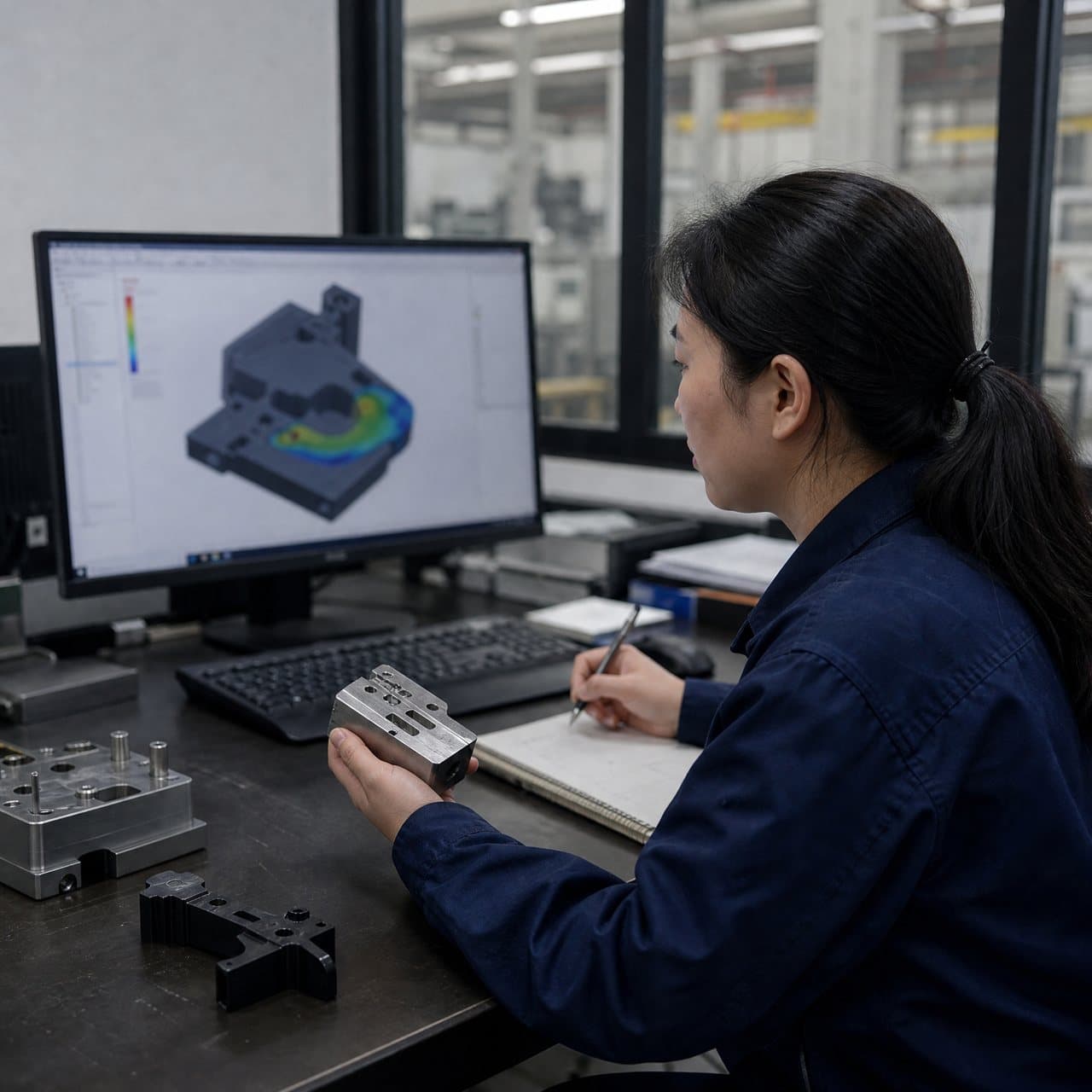
Prototype tooling is a practical choice when a team needs injection-molded evidence but has not yet frozen the decisions that make a durable production tool efficient. Examples include confirming fit with a mating component, checking assembly force, testing the specified resin in use, gathering user or market feedback, or verifying whether a visible surface and gate location are acceptable. A prototype injection mold lets a buyer test the part-making process rather than infer all outcomes from a digital model or a part made by a different process. Protolabs describes prototype tools as a route for form, fit and functional testing using production-grade materials in small quantities. [1]
This distinction matters for buyers coordinating design teams in Europe, the United States or the Middle East with a mold supplier elsewhere. A CAD revision that seems minor can change shrinkage behavior, shutoffs, draft, gating, cooling, ejection, texture, inserts or the cavity layout. If those decisions remain open, committing immediately to production tooling can turn a learning cycle into a tool modification, delay the first acceptable production run, or leave a buyer choosing between compromised parts and additional investment.
02
Compare the route by the decision it must support
The table below is a planning comparison, not a universal specification. Actual tool material, mold life, number of cavities, tolerances, cycle time, cost and lead time depend on geometry, resin, texture, side actions, inspection requirements and supplier process. Formlabs presents rapid tooling as useful for prototyping, validation, bridge and short-run work; it also notes that the applicable quantity range depends on the tooling process and material. [2]
A single-cavity prototype route can deliberately reduce the amount of capital tied to a design that may change. Production tooling may add durability, output or repeatability features that make sense only after the buyer has established the release configuration. Fictiv likewise notes that single-cavity molds suit lower-volume or prototype work, while multi-cavity tooling raises output but demands consistency across cavities. [3]
| Buyer question | Prototype tooling / rapid tooling | Production tooling |
|---|---|---|
| What is the next decision? | Validate geometry, resin, assembly, usability, appearance or a pilot demand assumption. | Supply a released part repeatedly after the commercial and technical baseline is stable. |
| How much design change is expected? | Changes are still plausible; preserve learning and revision flexibility. | Changes should be exceptional and controlled through an engineering-change process. |
| How is output approached? | Often suited to small batches or a controlled bridge; cavity count and shot expectation are project-specific. | Configured around sustained demand, output needs and repeatable quality requirements. |
| What evidence should the buyer request? | Sample identification, resin confirmation, measurement results for agreed CTQs, visual findings and a change log. | A defined approval package, cavity-specific evidence where applicable, process settings scope, inspection plan and maintenance/ownership terms. |
| What is the principal risk? | Overestimating the tool’s transferability or using limited samples as proof of long-run capability. | Freezing an immature design and paying for avoidable change, downtime or rework. |
03
Use a prototype mold when it can retire a named risk
A strong prototype tooling purchase begins with a written hypothesis. For example: an enclosure must close over a specified gasket without excessive assembly force; a clip must survive an agreed test method; a filled resin must meet a measured dimensional condition after conditioning; or a texture must meet a defined visual acceptance sample. The buyer should agree how many samples, which resin grade and color, what conditioning, what test method, and which dimensions are critical to quality before the tool is cut. Without that definition, a quick sample can be useful but cannot conclusively answer the question it was meant to resolve.
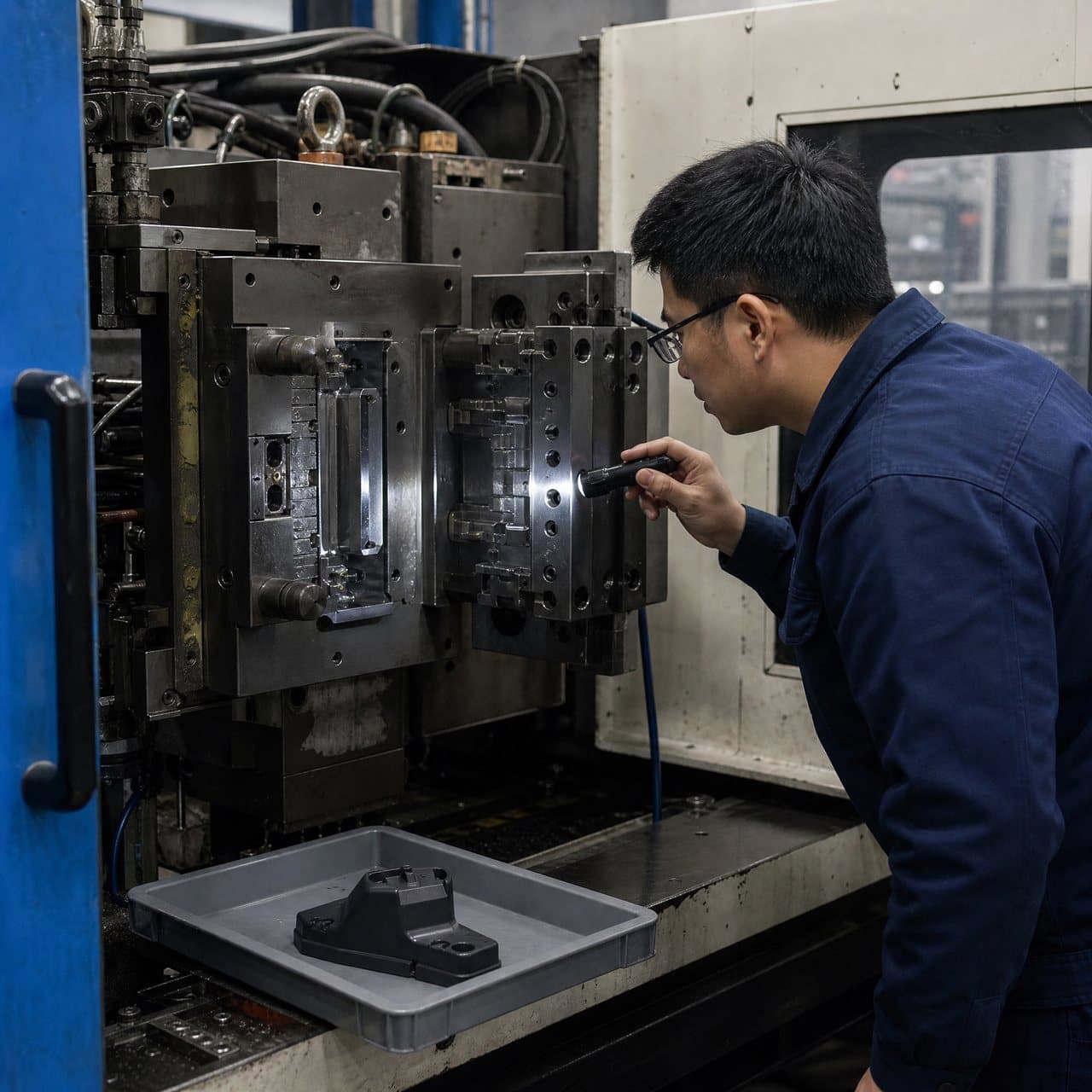
A prototype mold is especially valuable when a component needs to be molded in its intended resin rather than only 3D printed. Material behavior can influence shrinkage, stiffness, weld-line appearance, gate vestige, warpage and assembly behavior. It can also reveal whether tooling features such as ejection, venting or an undercut solution are workable. The objective is not to prove that every production condition is already optimized. It is to produce enough representative evidence to decide what must change before production tooling is specified.
04
Do not use prototype samples as automatic production proof
A prototype sample is not automatically equivalent to a production-approved part. Different tool materials, cooling layouts, cavity counts, runner systems, molding machines and process windows can affect dimensions, appearance and repeatability. Treat the result as evidence within the agreed validation envelope: the part revision, resin, tool configuration, sample quantity, conditions and measurement method actually used. If the production tool will differ materially, identify the remaining risks and plan a new approval step rather than assuming transferability.
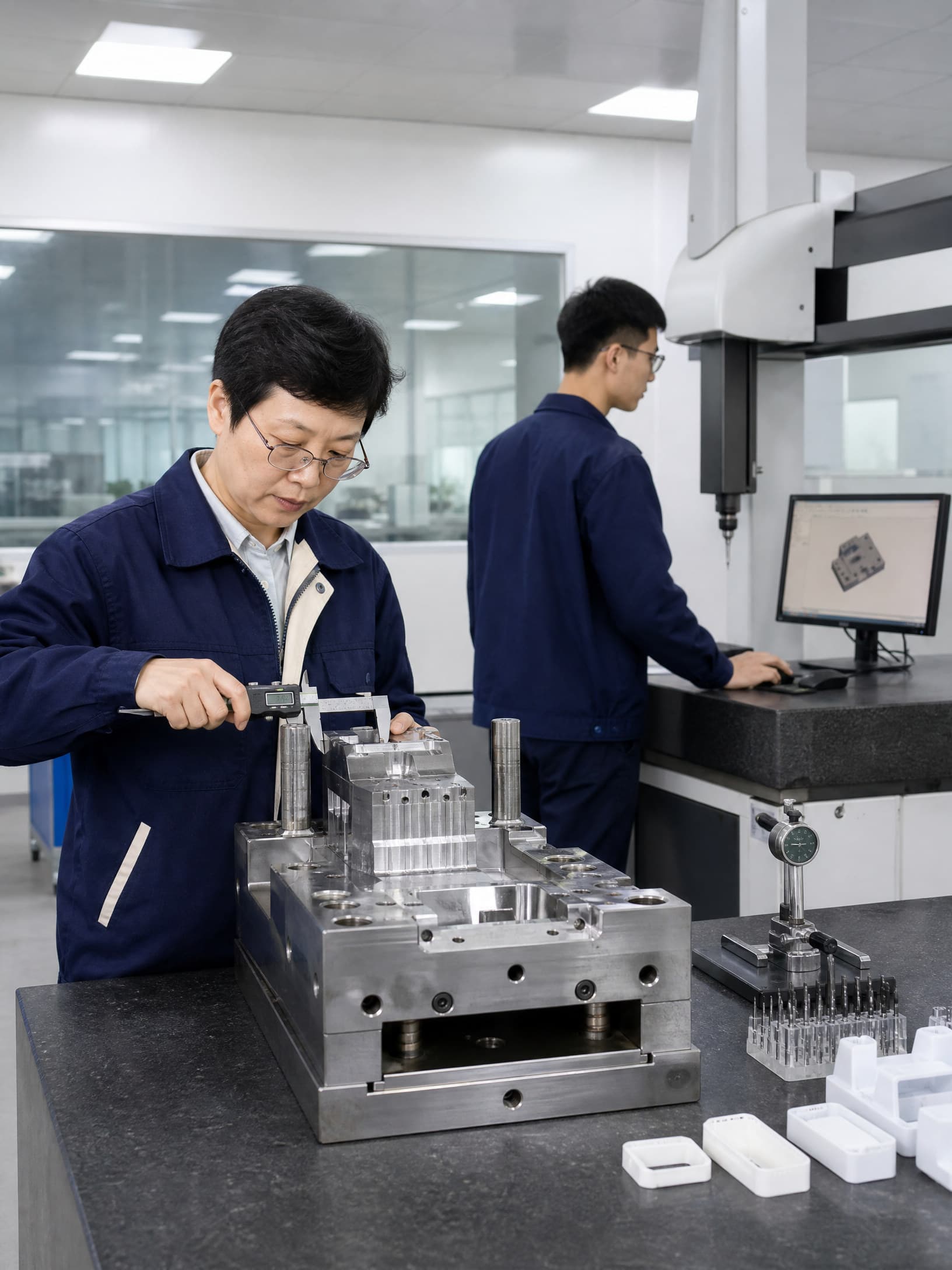
This is important for regulated, safety-related or contractually controlled products. The buyer’s own quality and regulatory obligations determine what verification, traceability and validation are needed. Do not assume a prototype tool, a supplier’s generic inspection report, or an illustrative part photo satisfies product-specific requirements. Put the applicable drawing revision, CTQs, test methods, sample-retention needs and approval authority into the RFQ and quality agreement, then confirm the required evidence with the relevant internal quality, engineering and regulatory teams.
Ready to compare a prototype injection mold with production tooling? Send the current CAD and drawing revision, resin, annual-demand scenario, open design risks, sample purpose and target market with your inquiry. Request two clearly scoped options and a DFM response; project-specific assumptions for tooling, trial evidence, timing and logistics should be confirmed before purchase.
Practical takeaway
Before you move
to the next review.
- State the next decision the prototype samples must support, such as fit, function, material behavior, cosmetic approval or pilot demand evidence.
- Freeze and label the CAD and drawing revision, resin grade, color, inserts, texture and critical-to-quality dimensions supplied for the prototype run.
- Ask the supplier to define the proposed prototype tooling construction, cavity count, runner type, expected operating assumptions and limits; confirm all values by project.
- Agree the sample plan: quantity, molding conditions to record, conditioning, test method, measurement method, visual standard and who signs acceptance.
- List open design risks and the evidence needed to close each one; distinguish them from risks that can only be assessed on production tooling.
- Request a documented prototype-to-production handover plan covering CAD control, change log, test results, data ownership and the proposed production tooling differences.
- Confirm shipping, import, packaging, traceability and communication responsibilities for the relevant destination market before releasing samples.
FAQ
Common questions
What is the main purpose of a prototype injection mold?
Its main purpose is to create injection-molded samples that retire specific development risks before a buyer commits to production tooling. It can support form, fit, functional or limited pilot evaluation when the resin, geometry and acceptance plan are clearly defined. [1]
Is rapid tooling always an aluminum injection mold?
No. Rapid tooling describes a speed- and purpose-oriented approach, not one mandatory material or construction. Depending on the process, it may involve machined metal tooling or other tool-making methods. The supplier should specify the proposed material, expected operating range and limitations for the actual project. [2]
When should a buyer skip prototype tooling and order production tooling?
Consider production tooling when the part revision, resin, acceptance criteria, commercial demand and long-run quality requirements are stable, and the cost of a later tool change is lower than the cost and time of an intermediate stage. This decision should be confirmed with a project-specific DFM, output plan and approval package rather than a generic volume rule.
References
Source material
- [1] Protolabs — Prototype Tooling for Injection Molding
- [2] Formlabs — Guide to Rapid Tooling
- [3] Fictiv — Injection Molding Tooling: The Complete Guide
This guide is general information for early procurement and engineering discussion. It does not replace product-specific DFM, qualification, validation, regulatory assessment or legal advice.