
For an overseas OEM, a pump housing or fluid-handling part should be sourced as a pressure-, temperature-, media- and assembly-specific component—not as a generic plastic enclosure. The supplier must show how the selected resin, wall and sealing geometry, gates, weld-line strategy, tooling, molding window and inspection plan support the intended duty. Buyers should freeze the functional requirements first, then approve material and DFM decisions through documented samples and evidence. No universal pressure rating, tolerance, chemical-resistance claim, cycle time or service life can be assumed from the injection-molding process alone.
Answer first: choose injection molded pump housings and fluid-handling parts when the geometry, material and production volume support repeatable molding, integrated ports or mounting features, and a controlled sealing strategy. Treat pressure containment, media compatibility, dimensional stability and cleanability as approval gates. Require a part-specific quotation, resin documentation, first-article or pilot evidence and a written deviation process before routine production release.
01
1. Define the fluid-handling duty before asking for a quote
The RFQ should identify the fluid or gas, concentration, additives, contaminants, temperature range, pressure profile, vacuum exposure, flow path, expected duty cycle and cleaning or sterilization method. State whether the part is wetted, splash-exposed or only structural. A supplier cannot responsibly select a resin from the part name alone because chemical attack, swelling, stress cracking and permeability depend on the actual medium, exposure time, temperature, molded stress and assembly load.
Separate requirements from recommendations. The requirement may be a customer-defined burst or leak criterion, port interface, operating temperature range, drawing tolerance or regulatory condition. A recommendation may be a resin family, wall-thickness approach, draft angle, gate location or insert strategy proposed after DFM review. Ask the supplier to identify assumptions and unresolved risks rather than silently converting recommendations into guaranteed performance.
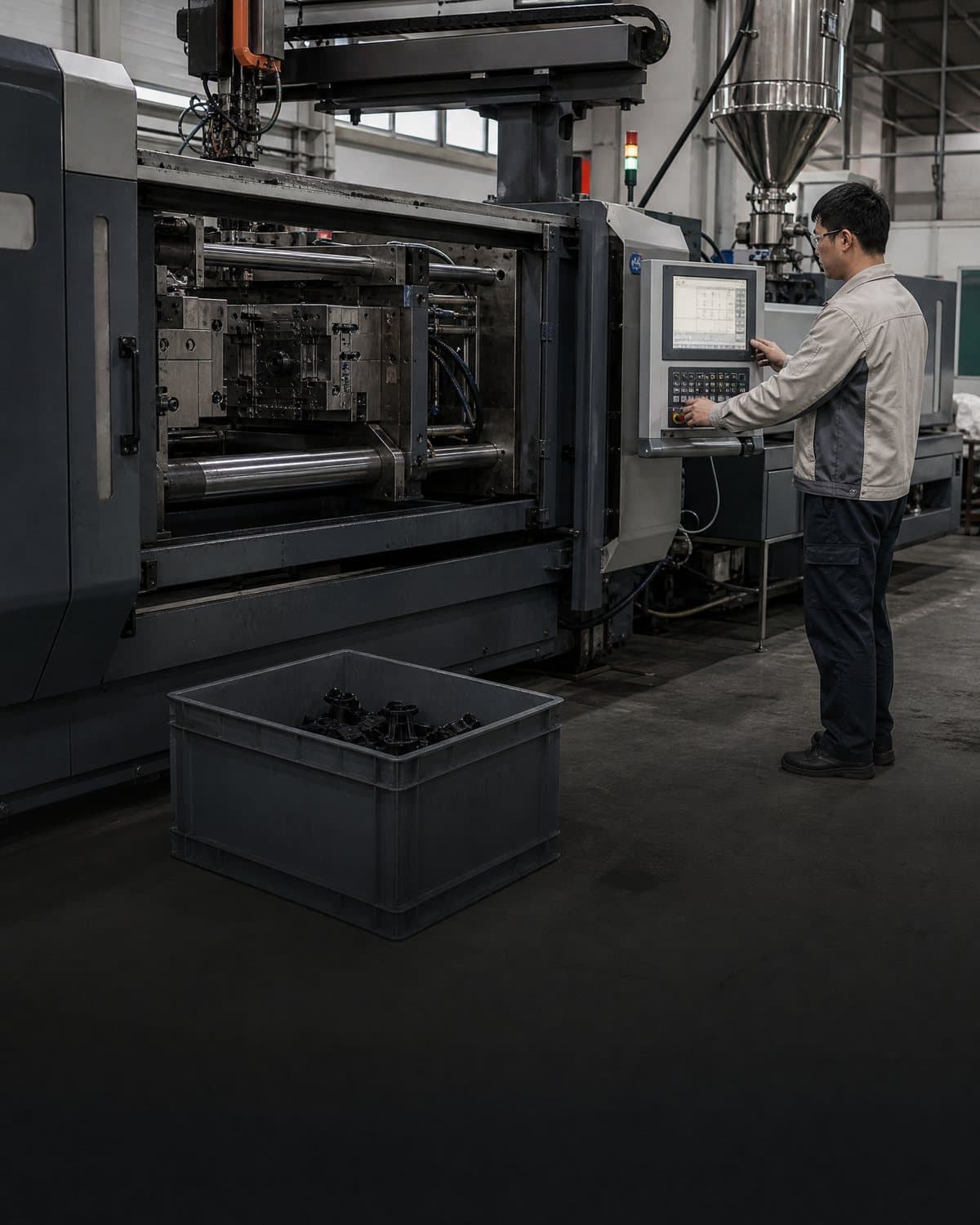
For food, beverage, laboratory or medical applications, define the destination market and intended contact conditions early. FDA explains that the status of a food-contact article depends on each substance reasonably expected to migrate and on the conditions of use [3][4]. That is a compliance workstream for the responsible product team; a material name or supplier statement alone is not a universal certification for the finished assembly.
02
2. Compare housing and flow-path design options
A one-piece molded housing can reduce joints and assembly operations, but it may make cores, slides, venting, inspection and repair more complex. A two-piece housing with a gasket, welded joint or mechanical fasteners can simplify tooling or service access, but it introduces an interface that must be designed and verified. A molded manifold can consolidate passages and ports, while inserts or overmolding may support threads, wear surfaces or connections that the resin alone cannot reliably provide.
Use the following as a decision framework, not as a promise that one configuration is best for every project. The final choice depends on pressure, media, geometry, volume, machine capability, tooling budget, assembly controls and customer specifications.
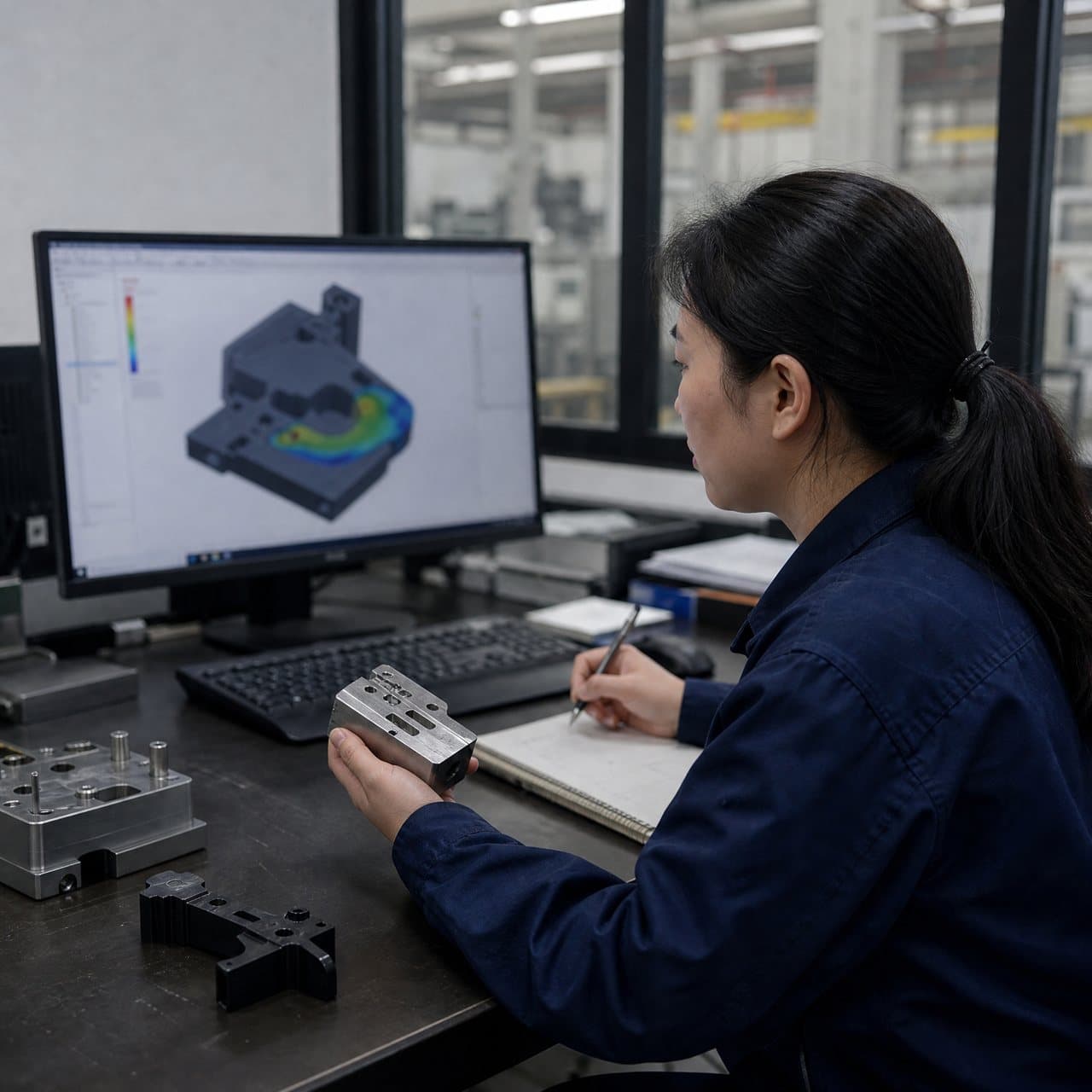
For pressure-containing paths, pay particular attention to knit lines, sharp internal corners, sink, voids, weld-line orientation, port concentricity and local wall transitions. Ask for a mold-flow or equivalent filling review when the geometry or risk justifies it. The review should lead to measurable acceptance criteria and a sample plan, not merely a colored simulation image.
| Configuration | Potential procurement value | Questions before approval |
|---|---|---|
| Single-piece pump housing | Fewer body joints and potentially simpler assembly | Can the tool form and inspect the full flow path, ports, vents and sealing faces? |
| Two-piece housing with gasket or weld | May improve access, tooling split or service concept | What joint process, compression window, leak test and rework limits apply? |
| Molded manifold or valve body | Can consolidate passages and connection features | How are internal passages cleaned, inspected and protected from weld-line or trapped-flash risk? |
| Insert-molded or overmolded assembly | Can combine resin with threaded, wear or connection elements | How are insert identity, position, adhesion, pull-out and supplier changes controlled? |
03
3. Select resin, seals and interfaces as one system
Material selection should consider chemical compatibility, temperature, pressure, stiffness, impact, creep, dimensional change, moisture, reinforcement, colorants and the effect of molding history. Data-sheet values are screening inputs, not a finished-part guarantee. The engineering team should define the acceptance method for the actual geometry and exposure. UL describes chemical-resistance testing as customer-defined by the medium and indicator property, and notes that environmental stress cracking can alter mechanical behavior [2].
Do not assess the housing separately from O-rings, gaskets, adhesives, threaded inserts, tubing or mating parts. A fluid that is acceptable for one polymer may attack another component, and compression, thermal expansion, surface finish and assembly torque can change leakage behavior. Ask the supplier to list all wetted materials and identify the party responsible for compatibility confirmation.
If a standard grade is proposed, request the exact manufacturer, grade, color or additive direction, lot traceability approach and applicable technical data. If a recycled, filled, flame-retarded, antistatic or custom-compounded material is considered, treat it as a controlled change requiring engineering review. Avoid accepting generic claims such as ‘chemical resistant’ without naming the medium, concentration, temperature, stress condition and test evidence.
04
4. Build tooling, molding and inspection around the critical features
Pump housings often combine pressure boundaries with threads, ports, sealing lands, thin walls, ribs, bosses and cosmetic or identification surfaces. Ask the supplier to mark critical-to-function and critical-to-assembly features on the drawing or control plan. General molded-part tolerances should not be copied into every feature: ISO 20457 addresses possible manufacturing tolerances and allows additional functional specifications, while noting that product standards may control instead [1].
The quotation should explain the proposed parting line, gates, runners, vents, cooling approach, ejection, cavity count, expected insert work and inspection method. It should also state which decisions remain subject to DFM, tool trial and approved sample. Machine size, shot capacity, screw configuration, mold temperature control, resin drying and process monitoring can affect the result, so a nominal cycle-time or output statement is not a production guarantee.
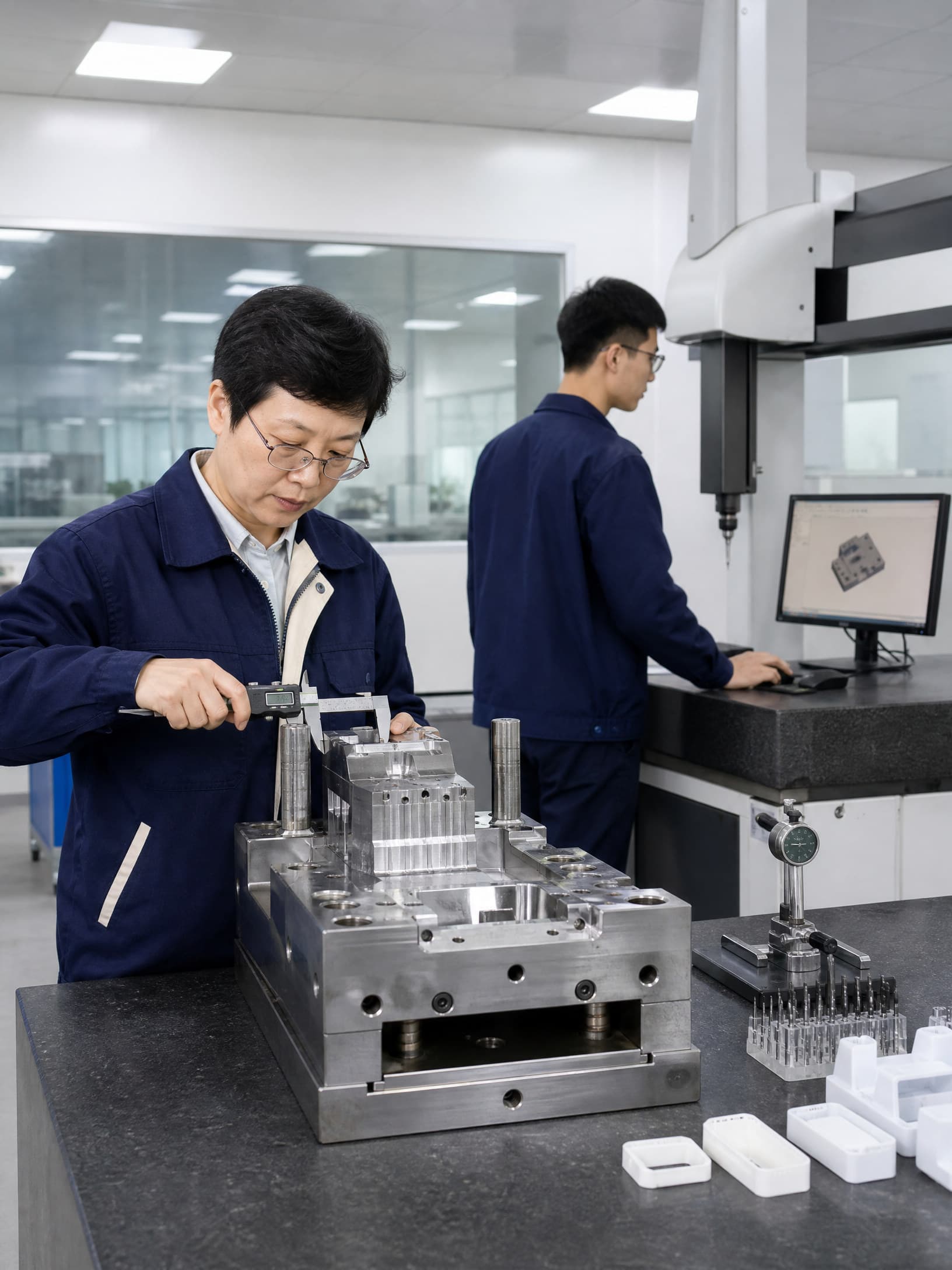
Request evidence in stages: design review record; material and component traceability; tool and cavity identification; first-off or pilot samples; dimensional results tied to a revision; leak, pressure, flow or functional test results where specified; and a reaction plan for failures. Define who can approve deviations, what changes require notification, and whether a tool repair, resin substitution, cavity change or process-window change triggers renewed sampling.
05
5. Use approval gates that match the risk
A practical release route is: requirements freeze, supplier feasibility review, material and interface approval, DFM approval, tool-trial review, dimensional and functional sample approval, pilot-lot release, then ongoing production control. The gates can be narrower or broader depending on application risk. A molded part is not approved merely because it can be produced or because a visual sample looks acceptable.
For leak or pressure performance, define the test medium, temperature, conditioning, fixture, pressure or vacuum profile, hold time, measurement method, sampling plan and disposition of failures. For flow performance, define the relevant test circuit and boundary conditions. For cleanliness, define the residue, particle, flushing or packaging requirement. These details belong in the customer specification or quality agreement; they should not be invented by the supplier after the quote.
At receiving, verify part identity, revision, resin or compound, cavity or lot traceability, packaging condition and the agreed inspection records. Maintain a controlled change process for material, tool, site, sub-supplier, insert, seal, colorant, process window and test method. This is especially important when the part is shipped across borders and multiple teams share procurement, quality and engineering decisions.
Practical takeaway
Before you move
to the next review.
- Provide the fluid or gas identity, concentration, temperature range, pressure or vacuum profile, duty cycle, cleaning method and destination-market requirements.
- Mark wetted surfaces, pressure boundaries, sealing lands, ports, threads, flow-path dimensions and critical-to-function or critical-to-assembly features on the controlled drawing.
- Ask the supplier to identify the proposed resin and all wetted materials, with grade, additive or reinforcement direction, traceability method and compatibility evidence for the actual conditions.
- Define approval gates for DFM, tooling trial, first article or pilot samples, dimensional inspection, leak or functional testing, deviations and production changes.
- Require a quotation that separates tooling, inserts, secondary operations, testing, packaging, logistics assumptions and recurring production costs without treating estimates as guaranteed performance.
FAQ
Common questions
Are injection molded pump housings suitable for pressurized fluid systems?
They can be suitable when the resin, geometry, molding process, assembly interfaces and validation evidence meet the product-specific pressure and temperature requirements. Suitability cannot be inferred from the molding process or a generic resin label. Define the pressure profile, conditioning and leak or burst acceptance method, then approve representative samples before production release.
How do I choose a plastic for a fluid-handling component?
Start with the actual medium, concentration, temperature, exposure time, mechanical stress, pressure, cleaning method and regulatory market. Shortlist grades using supplier data, then verify the selected material and molded geometry under representative conditions. Include seals, inserts, adhesives and mating parts because the complete wetted system—not only the housing—determines compatibility.
Can a supplier guarantee a universal tolerance for molded pump parts?
No. Tolerance depends on resin, feature size, wall transitions, shrinkage, tooling, cavity balance, machine and process control, measurement method and the function of the feature. Use a recognized tolerance framework where appropriate, but specify tighter tolerances only for identified functional features and confirm them with capability or sample evidence agreed by the buyer and supplier.
What documents should an OEM request before approving fluid-handling parts?
Request the controlled drawing and revision, DFM and tool review record, exact resin and component identification, cavity or lot traceability, first-article or pilot inspection, agreed leak or functional test results, packaging and cleanliness information where applicable, deviation records and change-notification terms. The required document set should match the product risk and customer specification rather than be treated as a universal certification package.
References
Source material
- [1] ISO 20457:2026, Plastics moulded parts — Tolerances and acceptance conditions
- [2] UL Solutions, Chemical Resistance Tests for Plastics
- [3] U.S. FDA, Food Packaging & Other Substances that Come in Contact with Food
- [4] U.S. FDA, Determining the Regulatory Status of Components of a Food Contact Material
This guide is general information for early procurement and engineering discussion. It does not replace product-specific DFM, qualification, validation, regulatory assessment or legal advice.