
Injection mold refurbishment is usually preferable to a replacement tool when the existing mold base, critical geometry and operating concept remain fit for the next phase of demand, while the defects are localized, diagnosable and correctable. Typical candidates include serviceable inserts, worn gates or shutoffs, damaged ejector components, surface damage, leaking connections or recoverable cooling restrictions. The decision should follow inspection and a defined repair scope—not a visual assessment, an assumed shot count or the lowest quotation.
A new tool is often the safer route when the problem originates in the basic design, material duty, capacity requirement or structural condition of the existing asset. Buyers in Europe, the US and the Middle East should ask the supplier to distinguish evidence from assumptions, especially if the mold will change press, resin, production site or ownership. Illustrations in this guide support engineering discussion only; they do not depict an InjeForm customer part, facility or production result.
Refurbish a proven tool only after the supplier can show what failed, why the proposed scope addresses that cause, what remains outside scope, and how the restored tool will be accepted.
01
Start with the production decision the tool must still support
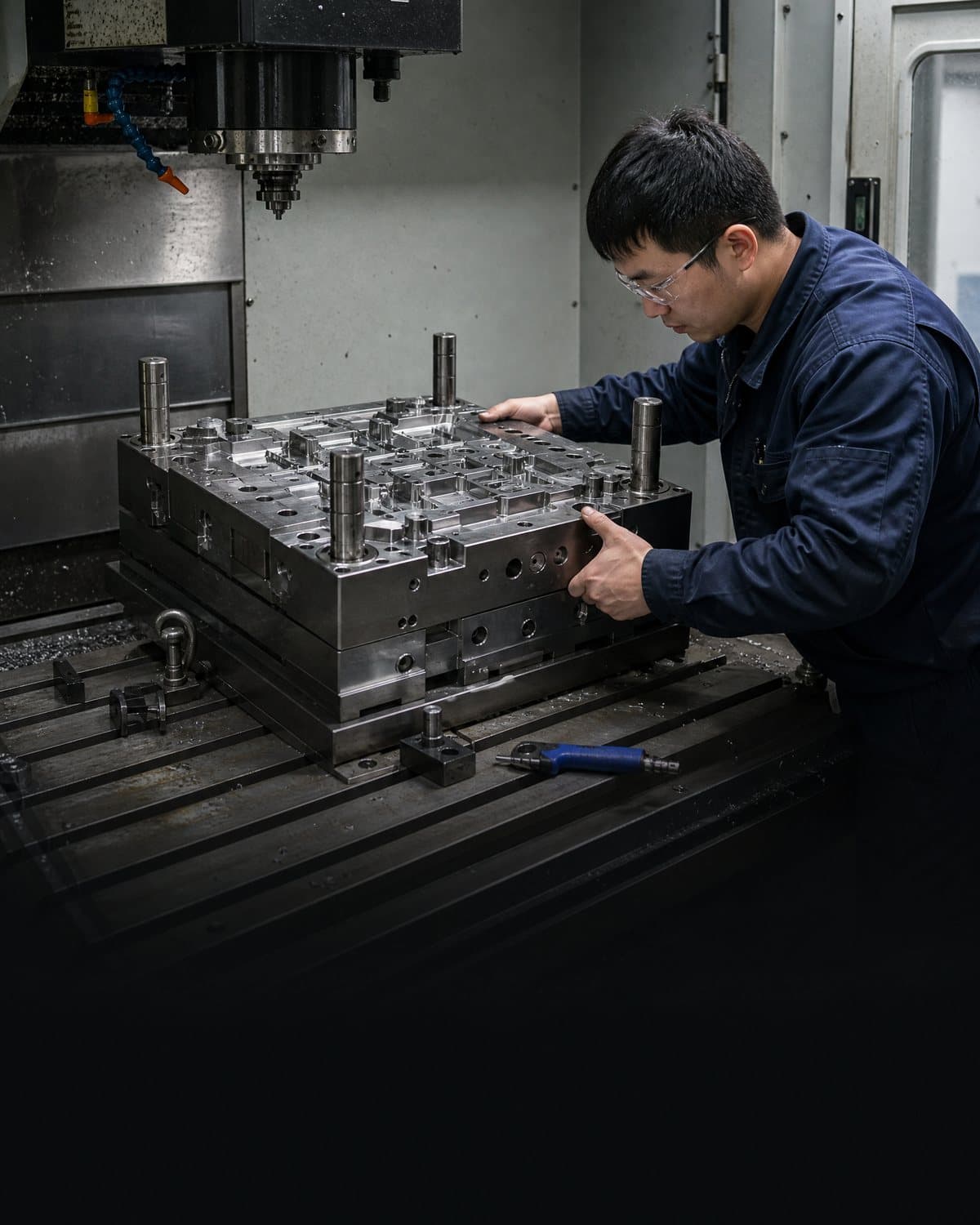
Do not frame the choice as repair versus replacement in isolation. First confirm whether the current part revision, resin direction, cosmetic standard, annual demand, press interface and release requirements are still valid. A mold that once made acceptable parts may no longer suit a revised assembly, a new resin grade, higher cavitation need or a different production location. In that case, restoring worn features may solve an immediate symptom while leaving the commercial or technical mismatch in place.
A useful first screen asks whether the correction is local or system-level. Replacing pins, bushings, springs, inserts or connectors can be a credible injection mold repair route when the supplier confirms compatibility and the surrounding structure is sound. Reworking a gate, restoring a shutoff, cleaning cooling passages or repairing a damaged surface can also be feasible, but the method and its downstream effects need review. Welding, plating, re-machining and polishing may alter dimensions, texture, hardness or venting; suitability is part- and location-specific and requires supplier confirmation.
Treat injection mold maintenance history as decision evidence. Production records, fault descriptions, prior repairs, maintenance logs, shot-counter records where reliable, process settings and retained samples can reveal whether the issue is isolated or recurring. None is conclusive alone. A stable history with one identified event supports a different decision than repeated flash, sticking, dimensional drift or cooling-related cycle variation without a confirmed cause.
| Observed situation | Refurbishment may be reasonable when | Replacement-tool review is stronger when |
|---|---|---|
| Localized moving-component wear | Wear surfaces and mating features can be measured; compatible replacement parts or inserts are available; no broader alignment issue is found. | Wear indicates plate movement, base distortion or an unresolved mechanism-design issue. |
| Part quality deterioration | The defect has a documented, correctable tool-related cause and the part requirement has not changed. | Cause is uncertain, defects recur after prior work, or the requirement now exceeds the original tool concept. |
| Capacity or transfer change | The existing configuration still meets the required output and can be safely interfaced to the intended press and utilities. | Cavitation, automation, hot-runner, press, resin or regional production conditions require a different design basis. |
02
Request a diagnosis that separates condition from conjecture
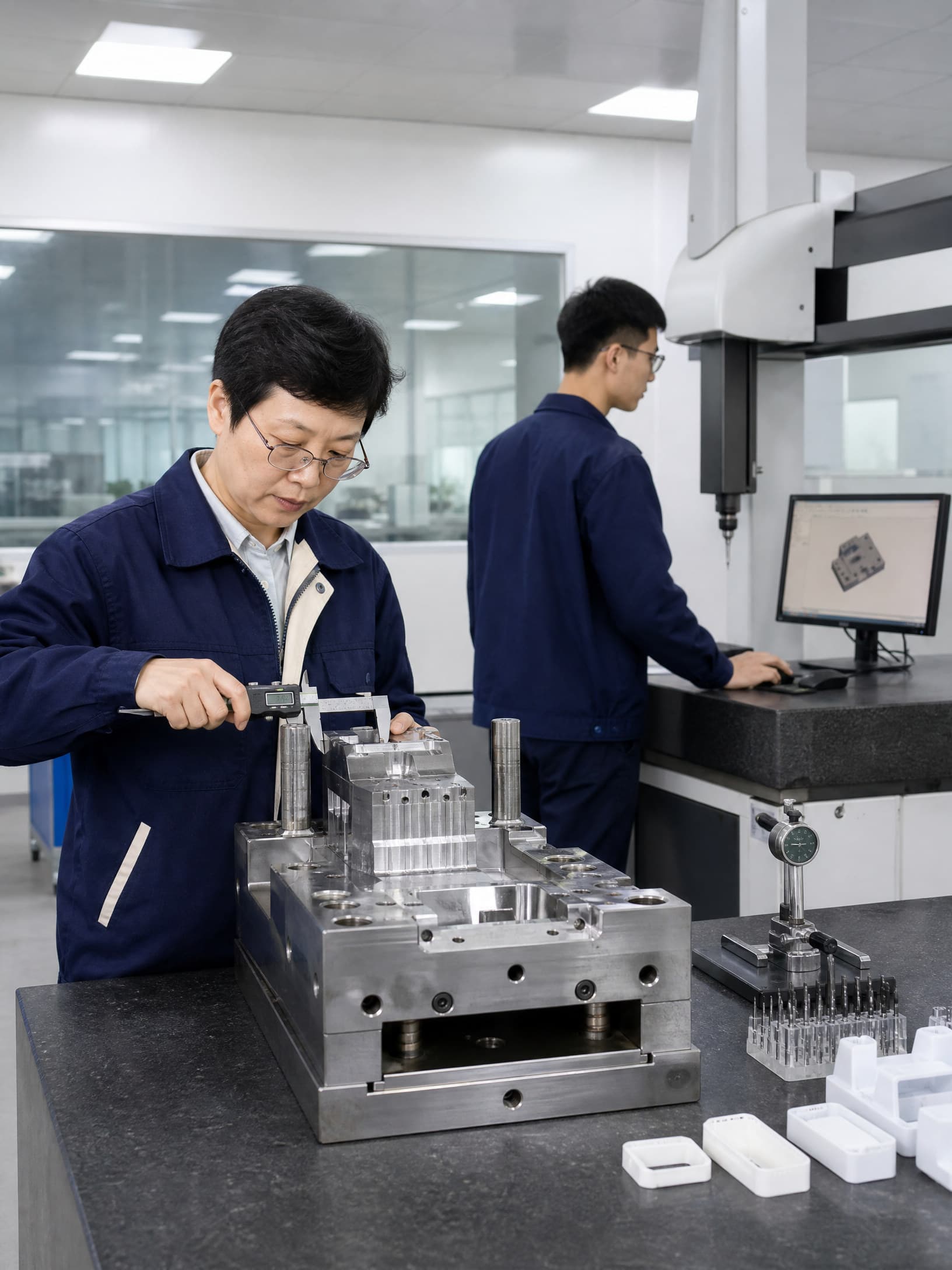
Before authorizing refurbishment, send the tool drawing and configuration record if available, the current part revision, material and color direction, recent fault history, representative defect photographs, measurement data and proposed production conditions. Ask the repair source to inspect the relevant core and cavity surfaces, shutoffs, guides, ejection, slides or lifters, runners, gates, vents, cooling circuits, seals, connections and safety or handling features as applicable. The exact examination should scale with tool complexity and failure mode.
The deliverable should identify the suspected failure mechanism, measured or observed condition, proposed operation, affected features, dependencies and residual unknowns. For example, a blocked circuit should not automatically be described as the cause of all warpage; a supplier should explain what was found and what trial evidence would be needed. When the repair requires weld build-up, heat input, coating work, an insert replacement or dimensional rework, obtain confirmation of the proposed method, material compatibility and any limitations before approval.
Avoid asking for confidential details from another customer program. Instead, ask the supplier to show its inspection format, repair traveler, revision control and nonconformance route. If the tool has an undocumented history or has been transferred, allow for a discovery phase and separate its findings from a fixed-scope quotation. This protects both the buyer and the mold manufacturing service from treating hidden damage as a promise of unlimited repair.
03
Compare the full decision cost, not repair price against new-tool price
A lower refurbishment quote is meaningful only if the scope is comparable with the replacement alternative. Ask for a line-by-line statement of inspection, disassembly, components, insert or surface work, machining, assembly, cleaning, leak checks where relevant, trial support, sample quantity, measurements, shipping, storage and exclusions. Ask the replacement bidder to state its concept, trial scope, data package, delivery basis and assumptions on the same product revision. Do not treat an unpriced contingency as evidence that it will not occur.
The injection mold cost decision also includes interruption risk. Consider planned downtime, the availability of spare inserts or a backup mold, freight and customs exposure, qualification effort, inventory needed during the work, document recovery and the cost of managing multiple handoffs. NIST describes total cost of ownership as extending beyond purchase price to factors such as freight, lead time, inventory and supplier-management overhead.[2] These are inputs for a project-specific comparison, not universal percentages.
For a continuing program, request two scenarios: a limited restoration that returns the tool to an agreed production condition, and a broader refurbishment that addresses known life-risk items. Then compare each with a replacement route on timing, evidence, residual risk and expected support—not merely initial cash outlay. Suppliers should confirm whether an estimate assumes existing drawings, available standard components, stable material and no concealed damage.
| Cost or risk input | Ask in the refurbishment proposal | Ask in the replacement proposal |
|---|---|---|
| Scope boundary | Which components and surfaces are restored, and what investigation or hidden-condition limits apply? | Which design, construction, trial and handover deliverables are included? |
| Evidence before release | Which inspection, functional checks, sample run and measurement records will be supplied? | Which design review, tool-build checks, trial records and samples will be supplied? |
| Residual exposure | What existing features remain unchanged, and what risks cannot be removed by the scope? | What design or demand assumptions could change the tool concept, price or schedule? |
04
Use explicit no-go gates for refurbishment
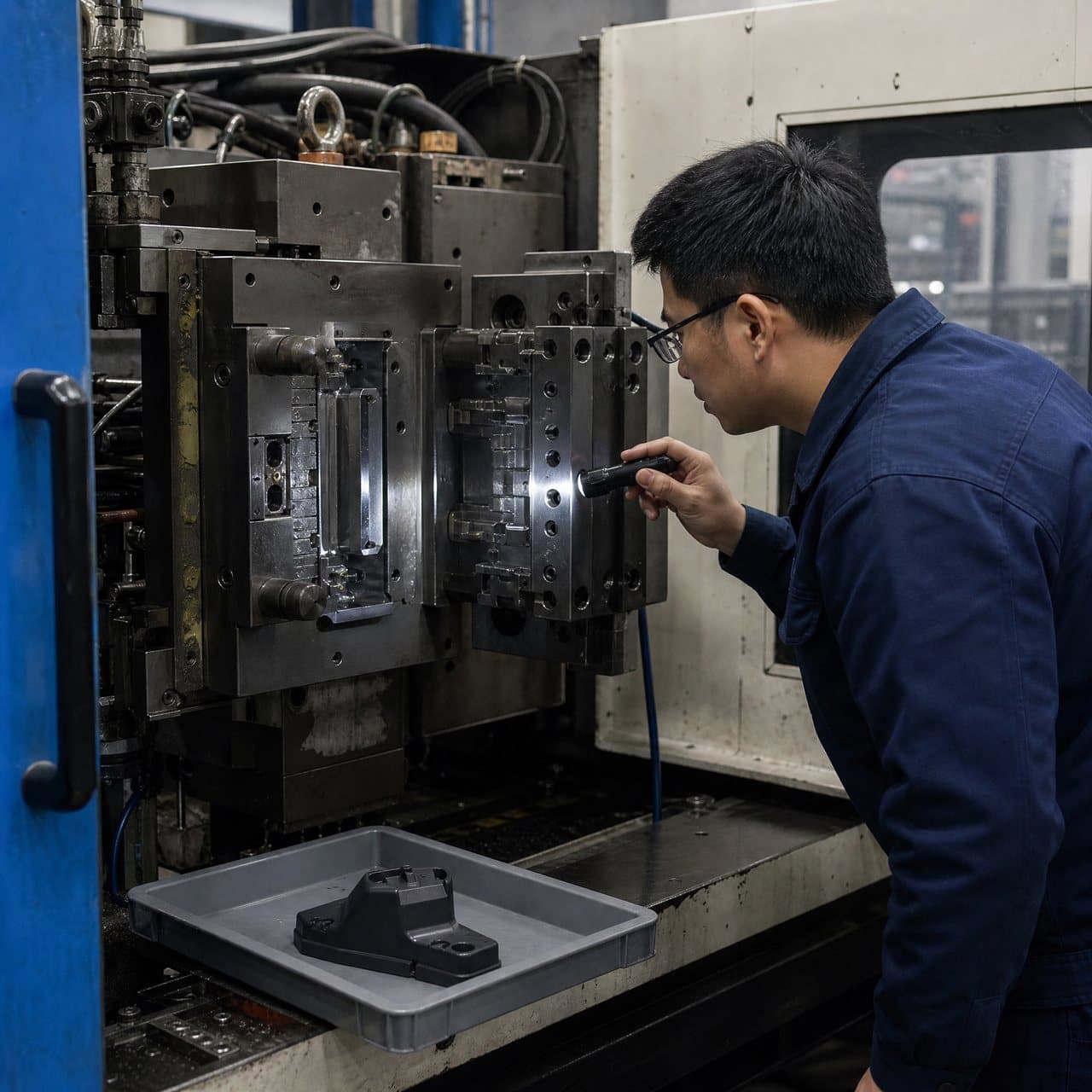
Refurbishment should pause or move to a replacement-tool evaluation when the supplier cannot establish a credible repair boundary. Examples include suspected cracking or base distortion, pervasive corrosion, uncertain alignment of critical features, repeated failures after similar work, unavailable proprietary components, unresolved hot-runner condition, or no controlled definition of the part and tool configuration. These observations do not automatically condemn a tool; they mean the buyer needs a deeper assessment before deciding.
A replacement may also be justified by a business change rather than damage. Demand may require another cavity strategy, the part may need a changed gate location or cosmetic treatment, the original material may be unsuitable, or a tool transfer may create an interface the existing design cannot safely support. A replacement review is particularly prudent when refurbishment would preserve a geometry or process compromise that the business no longer accepts. The eventual choice should be confirmed by the responsible toolmaker and molding source for the intended conditions.
Where urgent supply is at risk, a controlled interim repair can be reasonable while a replacement feasibility study proceeds. Make the interim status explicit: define the approved run quantity or review point, the operating conditions, containment actions and trigger for reassessment. Do not imply that a short-term injection mold repair proves remaining tool life or future part capability.
05
Accept the restored tool with part-specific evidence
Acceptance is the point at which refurbishment becomes a managed production decision. Agree in advance on the part revision, resin and color condition, molding location, press or relevant process window, sample purpose, quantities, critical dimensions, visual criteria, functional checks and authority to accept deviations. ISO 20457 addresses tolerances and acceptance conditions for plastics moulded parts; it can inform the conversation, but it does not replace a part-specific requirement.[1]
Ask for an as-repaired record that identifies the work completed, changed components or inserts, relevant dimensions or checks, trial date, material identification, sample disposition and open items. The level of detail should be proportionate and should not demand proprietary process information. If a repair changes an interface, part marking, texture, gate vestige or critical dimension, confirm whether controlled drawings, inspection plans, service records and spare-parts lists must be revised.
For a cross-border tool, confirm the tool location, packing and preservation, shipment responsibility, document language, customs data needed from the parties, and who approves a later transfer. The most useful inquiry to InjeForm is a controlled package: tool and part records, failure history, images, resin direction, expected demand, target press or site, and the acceptance evidence you need. InjeForm can then confirm whether a refurbishment assessment, a repair scope, or a replacement-tool proposal is the appropriate next step.
Practical takeaway
Before you move
to the next review.
- Freeze the part revision, material direction, target production conditions and commercial objective before comparing repair and replacement routes.
- Provide maintenance records, production history, defects, previous repair information, available tool drawings and representative samples or measurements.
- Require the supplier to identify observed condition, suspected cause, proposed method, exclusions, dependencies and residual risks separately.
- Normalize injection mold cost proposals for diagnosis, parts, machining, trial evidence, logistics, downtime exposure and change-control assumptions.
- Set no-go gates for unresolved structural condition, recurring unexplained failure, changed capacity need, tool-transfer incompatibility or an obsolete product requirement.
- Approve release only against agreed part-specific samples, measurements, visual or functional checks, an as-repaired record and documented deviation decisions.
FAQ
Common questions
Can any old injection mold be refurbished?
No. Age or an estimated cycle count alone does not determine repairability. The decision depends on current condition, the cause of failure, availability of components, required part performance and whether the existing design still fits future production. Ask a qualified supplier to inspect and confirm the proposed scope.
Is injection mold refurbishment cheaper than a replacement tool?
It can be, particularly for defined local wear, but a lower repair price is not automatically the lower-risk option. Compare diagnosis, scope limits, downtime, trial evidence, logistics, residual risk and expected demand with the new-tool alternative on the same assumptions.
What evidence should be supplied after injection mold repair?
Agree it before work starts. A proportionate package can include the repair record, changed-component details, inspection or functional checks, trial conditions, material identification, sample measurements, appearance review and a disposition of any deviations. The exact evidence must match the part and program risk.
References
Source material
- [1] International Organization for Standardization, ISO 20457:2018 — Plastics moulded parts: Tolerances and acceptance conditions.
- [2] National Institute of Standards and Technology, Manufacturing Extension Partnership — Supply Chain Management and total cost of ownership.
- [3] ASTM International, ASTM D955 — Standard Test Method for Measuring Shrinkage from Molding Compounds.
- [4] NIST, Dimensional Measurement Services — measurement and traceability resources.
This guide is general information for early procurement and engineering discussion. It does not replace product-specific DFM, qualification, validation, regulatory assessment or legal advice.