
Buyers should not approve an injection mold engineering change from a revised drawing alone. Freeze the affected revision, ask the supplier for a documented technical and commercial impact assessment, compare modification with alternatives, and release the change only after the toolwork, validation evidence, ownership of altered data, and production cutover are agreed. This turns a potentially open-ended injection molding cost increase into a controlled purchasing decision.
The most important question is not whether a change is physically possible. It is whether its functional benefit justifies the one-time toolwork, validation effort, supply exposure and any recurring cost it creates.
01
H2: Put every injection mold engineering change behind a release gate
An engineering change may follow a customer request, failed assembly test, new resin, cosmetic correction or cost-reduction idea. Its cost follows the effect on part geometry, mold steel, molding process and acceptance criteria. Treat it as a controlled baseline, not an informal instruction to make the tool match the latest CAD.
Issue one numbered request identifying old and proposed revisions, reason, affected cavities or inserts, critical dimensions, resin, color and effective date. Attach marked drawings and CAD. Name the buyer representative who may approve technical and commercial scope; do not let samples, emails or meeting notes imply production authorization.
FDA design-control guidance for regulated devices requires identification, documentation, review, approval and validation or appropriate verification before implementation. It is not a universal contract template, but its sequence is useful: define, assess, approve and prove the released result against measurable requirements. Reference 1 explains verification and validation.
02
H3: Separate geometry impact from tooling direction
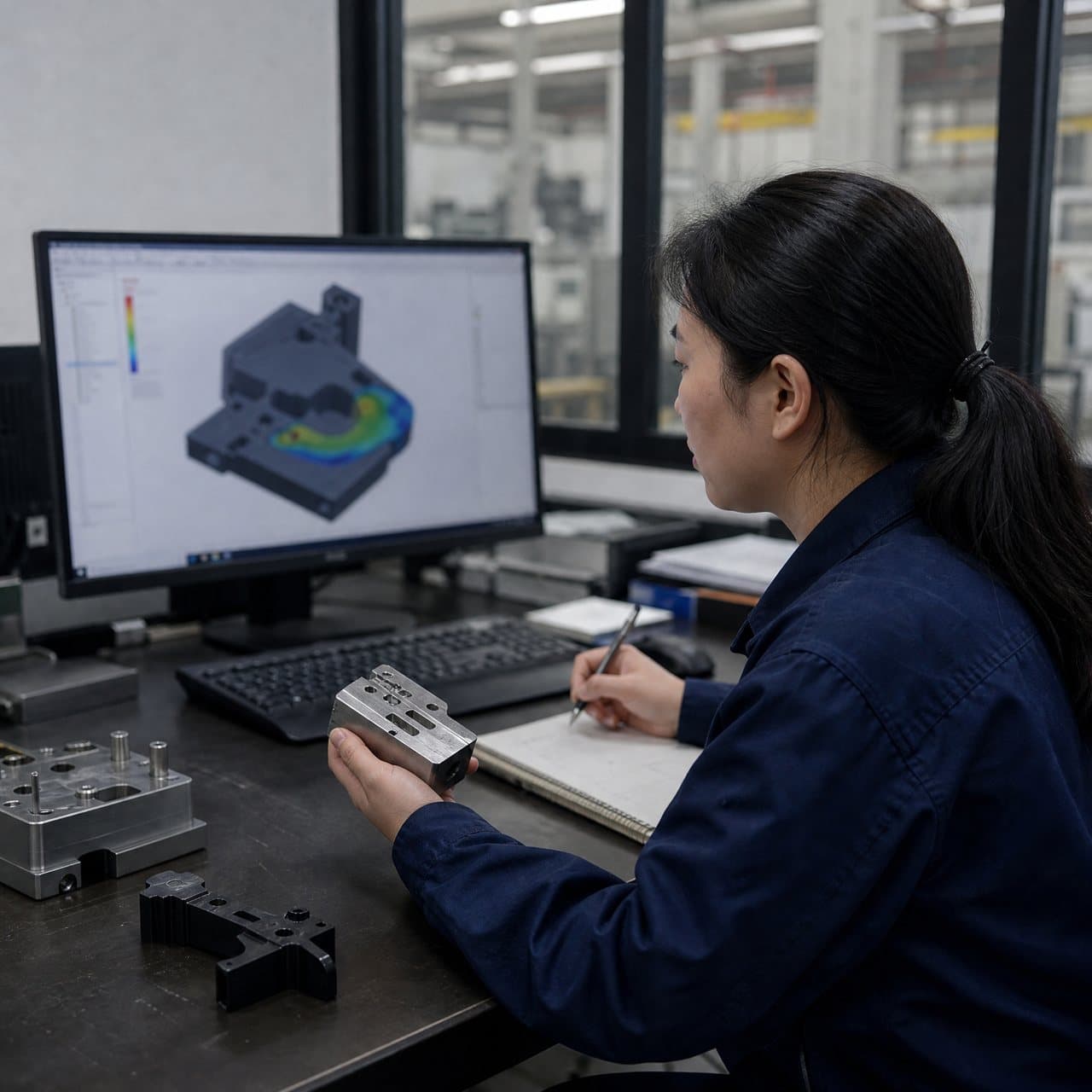
Ask the moldmaker to map the proposed part difference onto the cavity, core, shutoffs, gate, runner, cooling, ejection, texture and any slider or lifter. A mold design change may touch only a replaceable insert, or it may alter several interdependent surfaces. The same visible part revision can therefore create very different scope across tools.
The direction matters. Removing mold steel can add plastic to a part; adding steel to reduce plastic may need welding, an insert or a new component. Protolabs describes this ‘steel-safe’ logic: removing metal is generally easier than adding it, with the reverse part effect. It is a feasibility principle, not a cost or risk guarantee. Reference 2 explains it.
Require the supplier to flag any change that affects parting-line shutoff, thin sections, gate balance, cooling paths, ejector placement, draft, dimensional stability, cosmetic texture, cavity matching or machine interface. These effects may require more than machining. They can require rework, a new insert, re-polishing or re-texturing, trial molding and renewed inspection.
| Change route | Typical manufacturing logic | Cost and supplier-control questions |
|---|---|---|
| Drawing or process correction only | The released part geometry and tool remain unchanged; a documented setup, packaging or inspection instruction changes. | Which controlled documents, operators and acceptance records are affected? Is a trial or first-off check required before the new instruction is effective? |
| Steel-safe cavity or core revision | Material is removed from a defined tool surface, often to add plastic or close a feature on the part. | Which surfaces, dimensions, texture and cooling paths are exposed? Can the original datum scheme still demonstrate conformance? |
| Weld, insert or component replacement | Metal must be added or a localized tool detail must be replaced to reduce plastic or restore a feature. | What heat, distortion, fit, hardness, finishing and spare-part implications exist? Who owns the replacement design and removed component? |
| System-level mold revision | The change reaches gating, runner, cooling, ejection, slides or multiple cavities. | What trials, balancing work, validation evidence, inventory protection and revised production assumptions must be costed before approval? |
| New or parallel tooling | The existing mold cannot reasonably support the requested geometry, capacity or risk profile. | What data can be reused, what remains compatible, and what are the commercial and ownership boundaries between the old and new tools? |
03
H2: Build a complete cost view before choosing the solution
Separate one-time toolwork from recurring part economics. Toolwork can include engineering, CAD, machining, EDM, welding, components, finishing, assembly, trials, metrology, scrap and document updates. Recurring scope can include cycle time, resin, labor, inspection, secondary operations and maintenance. Compare these on the same demand, quality and logistics assumptions before claiming lower total landed cost.
Request assumptions and exclusions, not one total. Clarify cavities, resin, finish, available inserts and press compatibility. Also define the action and authorization if the first trial reveals a dimensional, cosmetic or functional issue outside the approved toolwork.
For European, US and Middle Eastern sourcing teams, record currency, tax, shipping, export packing, customs and remote approval costs separately from the technical modification price.
04
H3: Make supplier evidence and approval proportional to risk
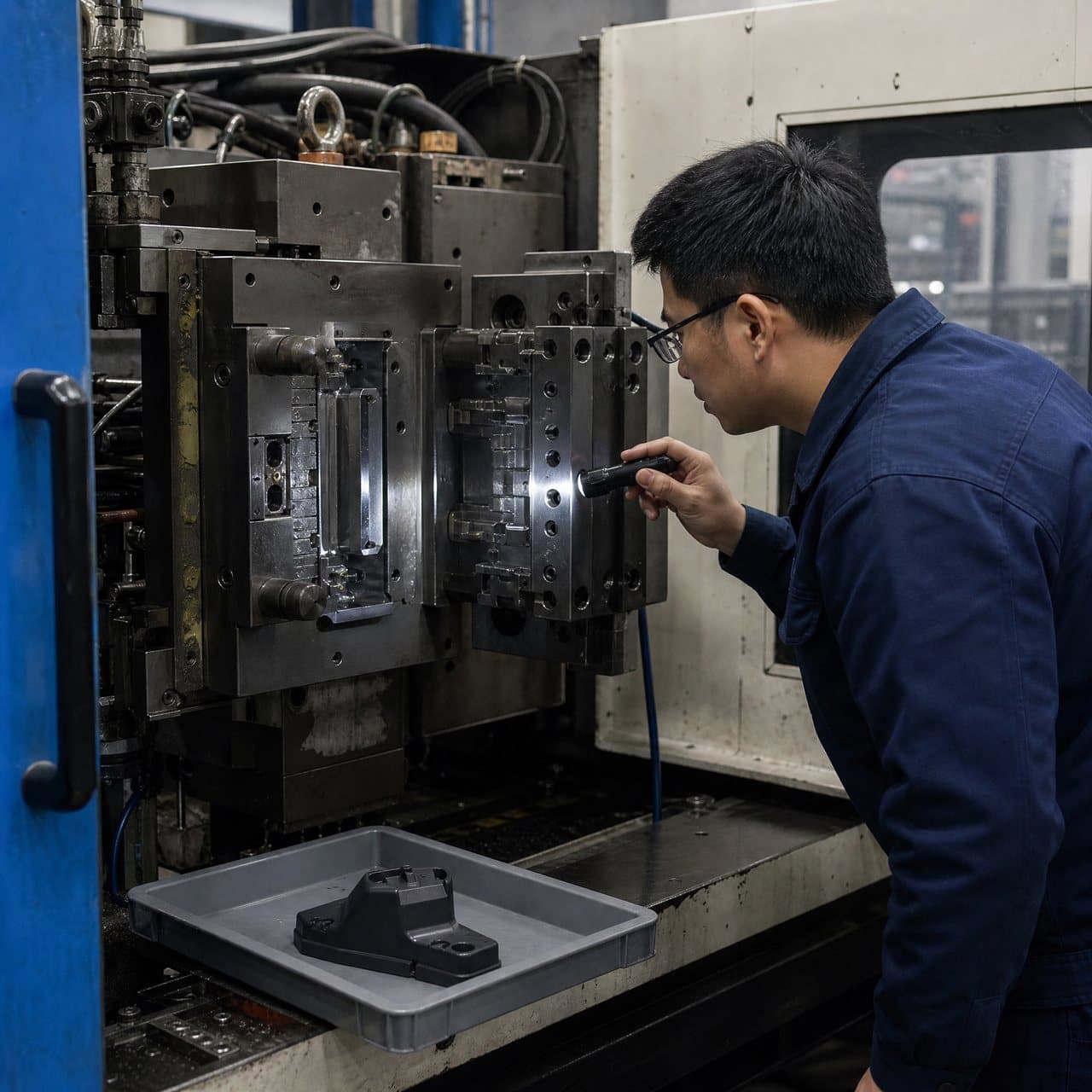
Define evidence before work starts. Low-risk changes may need a revised drawing, photo record and first-off dimensional report. Changes affecting a CTQ, mating feature, cosmetic class, material, seal, safety function or regulated requirement can need broader samples, measurement, functional testing, capability evidence or customer validation. Match the package to product risk and the contract.
Authorize in stages: evaluation first, defined toolwork after accepting the impact report, and production after accepting evidence. State spending authority, revision, sample status and what remains unauthorized at each stage. This prevents engineering discussion from becoming permission for production or unbounded corrective work.
Document control also protects the factory floor. FDA guidance calls for a change description, affected documents, approver signature and date, and an effective date. Reference 3 shows why condition, CAD, material and process data, maintenance history, press compatibility and sample validation matter when a mold moves.
05
H2: Preserve injection mold ownership while the tool evolves
An approved modification changes an asset and its record. The purchase order or tooling agreement should identify ownership of the mold, inserts, spare components, altered CAD, drawings, programs, trial reports and inspection results. It should also state change authority, supplier-use limits, and release, storage, access and transfer rights. The signed agreement and applicable law govern ownership; payment alone is not universal proof.
Request an updated asset register: tool identification, revision, cavity count, component list, condition, maintenance, photos, location and production status. Retain both the old and new baselines for maintenance, insurance, supplier transition and root-cause work.
A clear process makes surprises reviewable before commitments expand. If the supplier identifies an unanticipated issue, require a new impact statement and written authorization. For an engineering-change RFQ, submit the released and marked CAD or drawing, part requirements, current tool status, expected demand and requested evidence so suppliers can return a comparable scope.

Practical takeaway
Before you move
to the next review.
- Create a numbered change request with old and proposed drawing or CAD revisions.
- State the functional reason, affected CTQs, cosmetic zones and intended production effective date.
- Request a supplier impact map covering cavity, core, gate, runner, cooling, ejection, slides, finish and all cavities.
- Separate defined one-time toolwork from recurring part-cost, logistics and inventory implications.
- Agree the trial, measurement, functional and approval evidence before authorizing modification work.
- Use distinct written approvals for evaluation, toolwork and production release.
- Update tool ownership records, CAD, drawings, maintenance history and asset condition after acceptance.
- Define the escalation route if trial results require scope beyond the approved change.
FAQ
Common questions
What is an injection mold engineering change?
It is a controlled revision that can affect the molded part, the injection mold, the molding process, acceptance criteria or supporting records. A proper request identifies the revision difference, reason, technical impact, cost scope, approvals and evidence needed before production release.
Why can a small mold design change increase injection molding cost?
A small visible feature can affect steel direction, texture, shutoffs, cooling, ejection, gates or cavity balance. Cost may therefore include more than machining: engineering, replacement details, trials, measurement, rework, inventory protection and document updates can be relevant. The actual scope depends on the specific mold and approved requirements.
When should a buyer modify a mold instead of build another tool?
Choose after comparing feasibility, risk, tool condition, capacity needs, future design stability, validation scope and total commercial exposure. A localized, well-understood change may suit an existing tool. A system-level revision or a change that compromises the current design may justify considering replacement or parallel tooling.
Does injection mold ownership include modified CAD and replacement inserts?
It should be made explicit in the purchase order or tooling agreement. Identify the physical tool, inserts, spare parts, CAD, drawings, programs, trial data and transfer rights. Ownership and release rights vary by contract and applicable law, so retain clear written records rather than relying on assumptions.
What should a supplier provide after an injection mold modification?
Request the agreed evidence package, which may include revised drawings, tool identification and condition record, description of work, trial samples, dimensional results, relevant functional or cosmetic results, updated process information and a clear revision-effective date. Scale the package to the feature risk and your quality agreement.
References
Source material
- [1] U.S. Food and Drug Administration, Design Controls
- [2] Protolabs, A Guide to Steel Safe and Metal Safe Injection Molding
- [3] Pioneer Plastics, Injection Mold Tool Transfer: Relocate Without Downtime
This guide is general information for early procurement and engineering discussion. It does not replace product-specific DFM, qualification, validation, regulatory assessment or legal advice.