
An injection mold coating should be assessed as part of a tooling system, not as a stand-alone upgrade. Resin additives, injection mold steel, surface geometry, finish, ejection method, expected duty cycle and maintenance all influence the result. A hard or low-friction layer can be useful when a defined contact mechanism or polymer-to-tool interaction justifies it. It is not a universal remedy for insufficient draft, trapped gas, poor cooling, unstable processing or a part mechanically locked onto a core.
For a buyer, the useful question is not “Which coating is best?” It is “Which surface needs protection or easier release, from what mechanism, under which material and production conditions, and what evidence will confirm it?” A capable mold manufacturing service should turn those inputs into a coating scope by component and surface zone, with the preparation, dimensional effect, trial evidence and repair route confirmed before tool release.
Define the technical inputs, evidence and acceptance gates before the tool or production decision is released.
01
Define the failure mechanism before choosing a coating
Start with the surface that is failing and how it fails. Abrasive injection mold wear may occur where glass, mineral or other reinforcement passes through gates, cavity edges or high-velocity regions. Adhesive wear or galling is more likely at moving metal contacts such as cores, lifters and slides. Sticking, drag marks or residue on a cavity face may instead be a release issue involving polymer adhesion, texture, draft, shrinkage, venting, mold temperature or process settings. Corrosive deposits and gases require another review. A coating selected without this distinction can add cost without protecting the limiting mechanism.
Map the affected region on the current CAD or tool layout. Record its contact partner, motion, resin grade and filler level, colour or additive package, temperature range, planned annual shots, cosmetic status and cleaning method. Ask the supplier to identify whether the proposal covers a cavity, core, gate insert, shut-off, slide or another replaceable component. “Coat the mold” is not an adequate scope. The selected route should be confirmed by the tool and coating suppliers—and, where relevant, the resin provider—for the actual grade, rather than inferred from a resin family name [1][2].
| Observed risk | Inputs to review | Possible contribution | Not established by coating alone |
|---|---|---|---|
| Abrasive loss at a gate, core or cavity | Filler type/loading, flow velocity, steel condition and forecast shots | A harder working surface on the nominated insert or face | Base strength, gate suitability, process stability or guaranteed tool life |
| Sticking, scuffing or high ejection force | Polymer, draft, texture, shrinkage, core geometry and ejection layout | Lower adhesion or friction on a defined release surface | A cure for undercuts, vacuum lock or poor ejection balance |
| Deposits or corrosion concern | Resin chemistry, moisture control, venting and base steel | Additional chemical or corrosion resistance in a confirmed system | Compatibility with every gas, cleaner and storage condition |
| Sliding-component scoring | Contact pressure, alignment, lubrication and service access | Wear reduction on specified moving-contact surfaces | Correct alignment, load distribution or maintenance practice |
02
Confirm steel, finish and geometry before coating
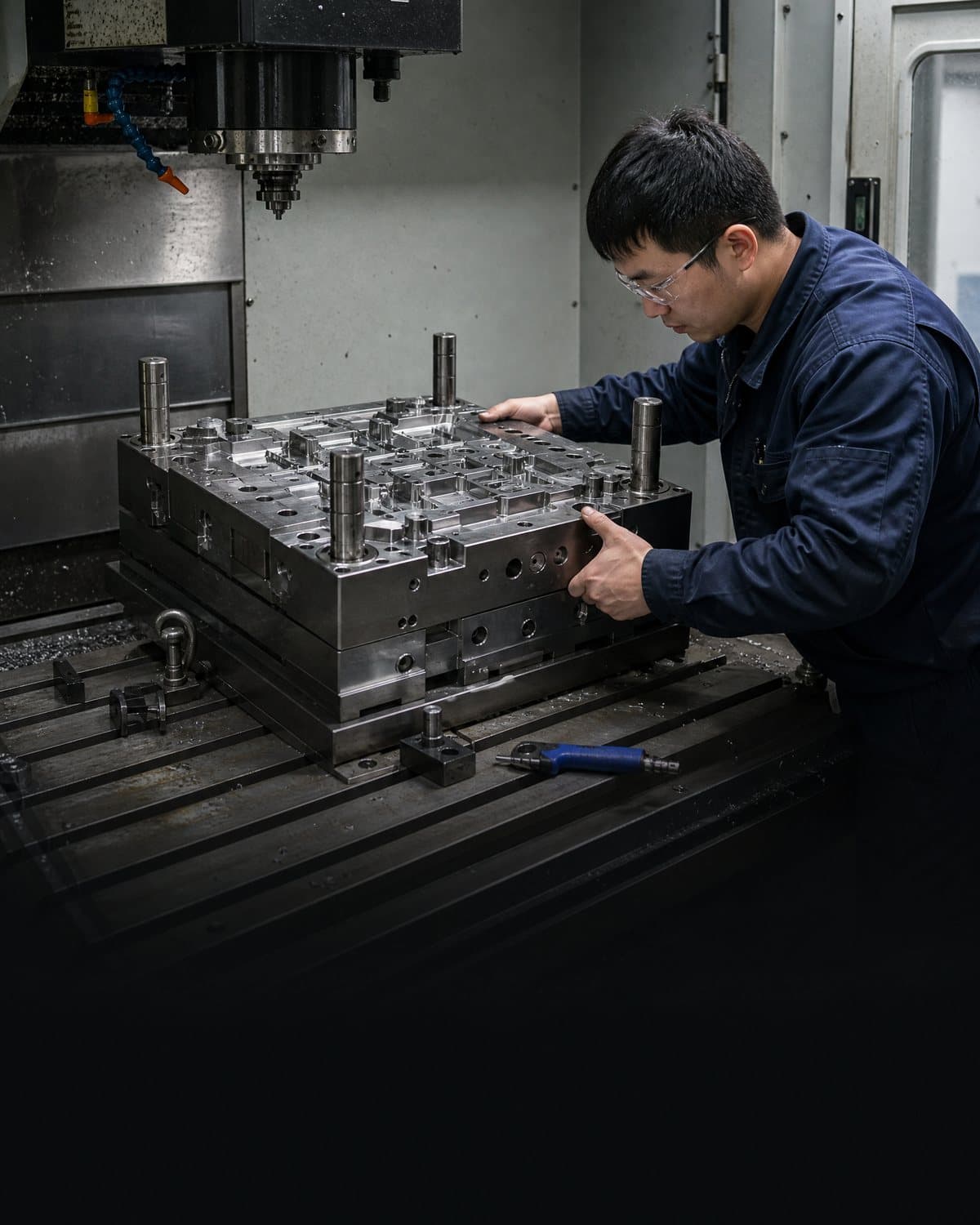
Injection mold steel is the foundation. Its heat-treatment condition, hardness route, corrosion resistance, polishability and weld-repair plan must be compatible with the proposed pre-treatment and deposition temperature. Thin PVD or PACVD/DLC films are often measured in micrometres, but thin does not mean that an unsuitable or poorly supported substrate becomes durable. Request the exact steel grade or approved equivalent, final condition, and confirmation of whether nitriding, polishing, texturing or stress relief is performed before coating. Also identify surfaces that must remain uncoated for fits, vents, electrical contact, lubrication or assembly.
Injection mold surface finish matters as much as the coating name. A coating generally follows the prepared surface; it does not reliably remove machining marks, pits, damaged texture or a poor polishing sequence. For a gloss-critical or sealing zone, agree the finish direction and dimensional-control method first. For a textured release zone, verify that draft and ejection remain practical. Coating specialists caution that actual performance varies with surface condition, component size and application conditions [2]. Deep ribs, blind holes, recesses and undercuts need explicit coverage confirmation; do not assume an internal face is coated because its insert appears on a certificate.
03
Compare coating families by the work they must perform
Buyers may be offered nitriding or nitrocarburizing, PVD nitride films, DLC or PACVD carbon-based coatings, plated systems, or other specialist routes. These are processes and material systems, not interchangeable labels. Nitriding changes a near-surface zone of compatible steel; PVD nitrides are thin hard films; carbon-based routes are commonly reviewed where low friction or release is the central issue. Their suitability depends on substrate, finish, geometry, resin interaction, contact mechanism and the coating provider’s process window.
Require the supplier to state the proposed family and trade grade, target thickness range, pre-treatment, deposition temperature, anticipated coverage and reason for selection. A hard PVD layer may be relevant where a filled resin erodes a defined tool face. A low-friction carbon-based layer may be a candidate for documented sliding or release constraints. Published technical guidance supports these potential functions but also notes that performance depends on actual application conditions [1][2]. Neither route should be promised as a universal material recommendation or as a guaranteed cycle-time reduction. If coating is offered instead of a geometry or ejection change, retain the uncoated alternative and its risks in the decision record.

04
Purchase acceptance evidence and a service route—not only a certificate
Before the first trial, ask for a coating specification linked to the released tool revision: covered components, steel and heat-treatment identity, provider, preparation route, target thickness or tolerance effect, masks, finish requirement and post-coating handling limits. A certificate can show that a stated process occurred; it does not by itself prove adhesion, full coverage, release performance or part quality on a complex component. Specify what part-specific evidence is required and who accepts it.
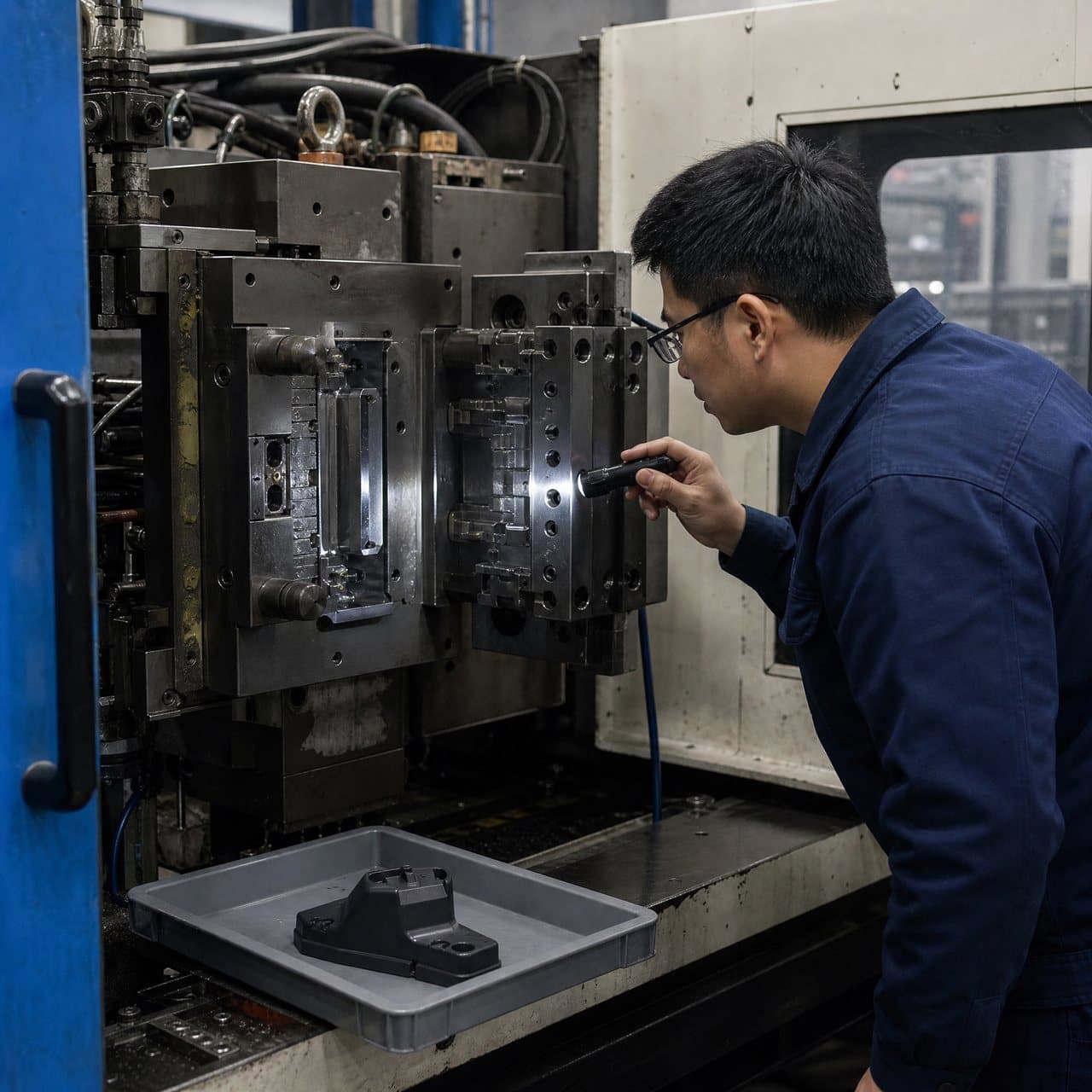
At trial, use the intended resin grade, filler package and relevant colour where practicable. Record cavity or component identity, process conditions, ejection observations, cosmetic zones, critical dimensions, deposits and drag or sticking evidence. For a higher-risk programme, discuss suitable witness coupons, thickness verification, visual inspection and a shot-count or maintenance checkpoint. Finally, define whether polishing, EDM, welding or vent cleaning affects the coating; whether the insert can be stripped and recoated; and which dimensions require requalification. This is especially important when the mold is built, operated and serviced in different locations. No generic coating test replaces product-specific functional, cosmetic or regulatory validation.
Practical takeaway
Before you move
to the next review.
- Map the failure mechanism to the exact cavity, core, gate, shut-off or sliding component.
- Provide the resin grade, reinforcement, additive and colour information, production forecast and service environment.
- Confirm steel, heat treatment, final surface condition, geometry access and dimensional sensitivity before choosing a route.
- Request the coating family, pre-treatment, target thickness, masks, coverage, temperature and acceptance evidence in writing.
- Agree representative-trial, maintenance and requalification steps for repair, polishing or recoating.
FAQ
Common questions
Is DLC always the best injection mold coating for release?
No. Low-friction DLC or related carbon-based coatings can be worth reviewing for a defined release or sliding problem, but polymer grade, texture, draft, core geometry, steel and deposition compatibility determine whether they fit. Confirm the proposed grade and trial method with the tool and coating suppliers [2].
Can a hard coating prevent all injection mold wear with glass-filled resin?
No. A suitable hard coating may improve resistance on identified surfaces, but base steel, filler loading, flow conditions, gate design, alignment and maintenance still influence tool life. Request an insert-specific wear rationale and inspection checkpoints rather than a universal life claim [1].
What should buyers receive as coating acceptance evidence?
Receive the component scope, steel and preparation identity, coating specification, coverage or mask record, dimensional/finish considerations and a trial record using the agreed material. Add thickness, coupon or service evidence only where it is meaningful for the named surface and risk.
References
Source material
- [1] voestalpine High Performance Metals, “Importance of PVD Coatings for Medical Injection Molds.”
- [2] RUBIG, “PACVD & PVD Coatings by RUBIG.”
- [3] P. A. Dearnley and A. L. M. Malloy, “Low friction surfaces for plastic injection moulding dies—an initial appraisal,” Wear, 1999.
This guide is general information for early procurement and engineering discussion. It does not replace product-specific DFM, qualification, validation, regulatory assessment or legal advice.