
Buyers should prepare a controlled handover package that identifies the approved configuration, gives the incoming injection molding supplier technical and quality evidence, and sets a trial plan. A file or injection mold transfer alone does not prove repeatable production. Freeze the revision, record gaps, confirm injection mold ownership and custody, and require evidence before normal shipments.
A handover package should preserve design intent and production knowledge, not merely send CAD files. Keep a revision register, identify authority, and separate verified facts from assumptions the new supplier must test.
01
H2: Start with one controlled production baseline
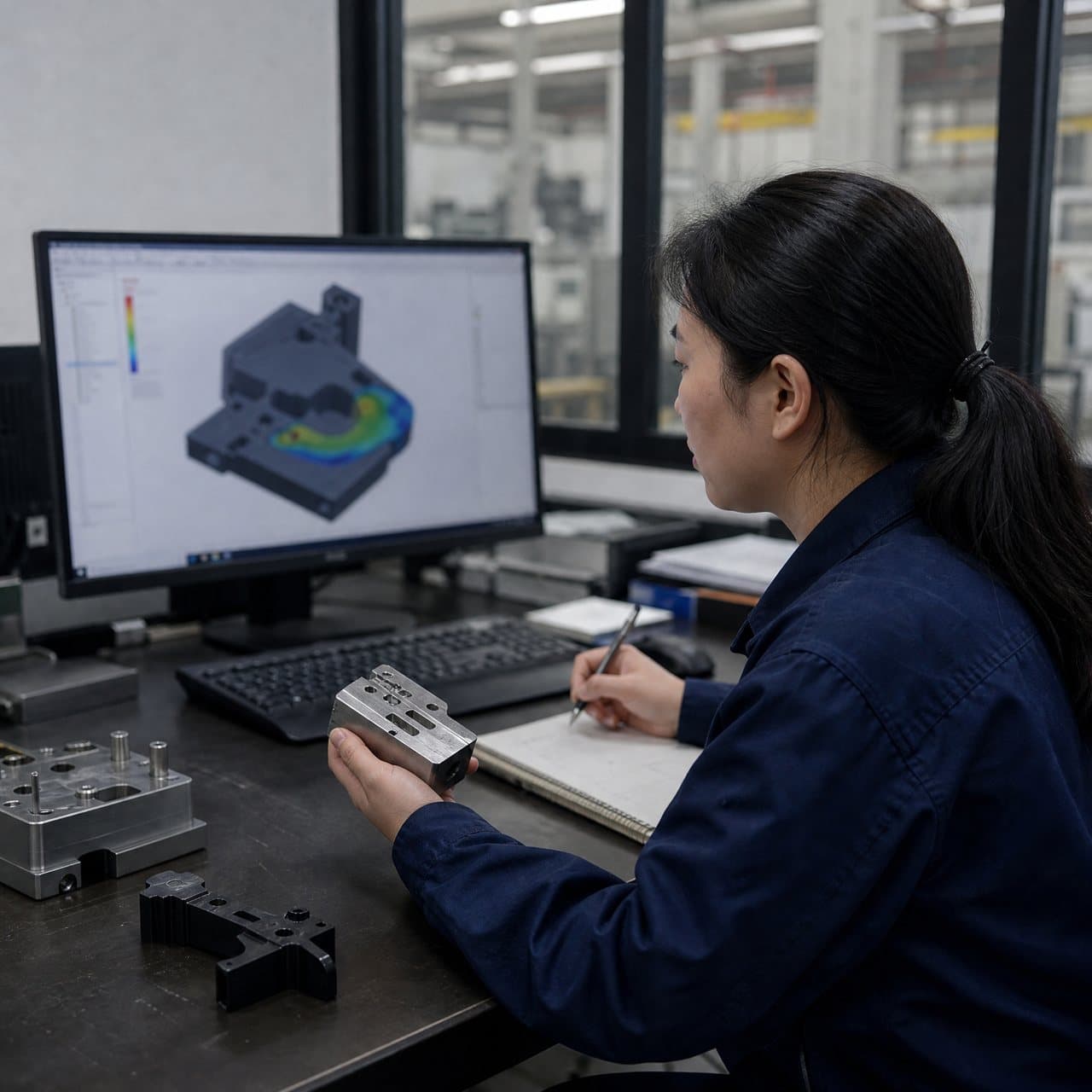
Before sharing anything, name the part number, revision, approval status and configuration the receiving supplier is expected to reproduce. Use a document index with owner, revision, date, source, approval status and file location. It should distinguish released information from reference-only material and superseded records. This reduces the common handover problem in which a current 3D model is paired with an obsolete drawing, sample or inspection plan.
The baseline normally includes 3D CAD, a locked PDF injection molding technical drawing, material and finish requirements, insert or assembly details, and packaging specification. State units, revision, datums, tolerances, critical-to-quality features and visual zones. ASME describes Y14.5 as a common language for communicating design intent on drawings, models and related documents [2]. If CAD and drawing conflict, obtain written engineering disposition before release.
02
H2: Establish custody and injection mold ownership before moving the tool
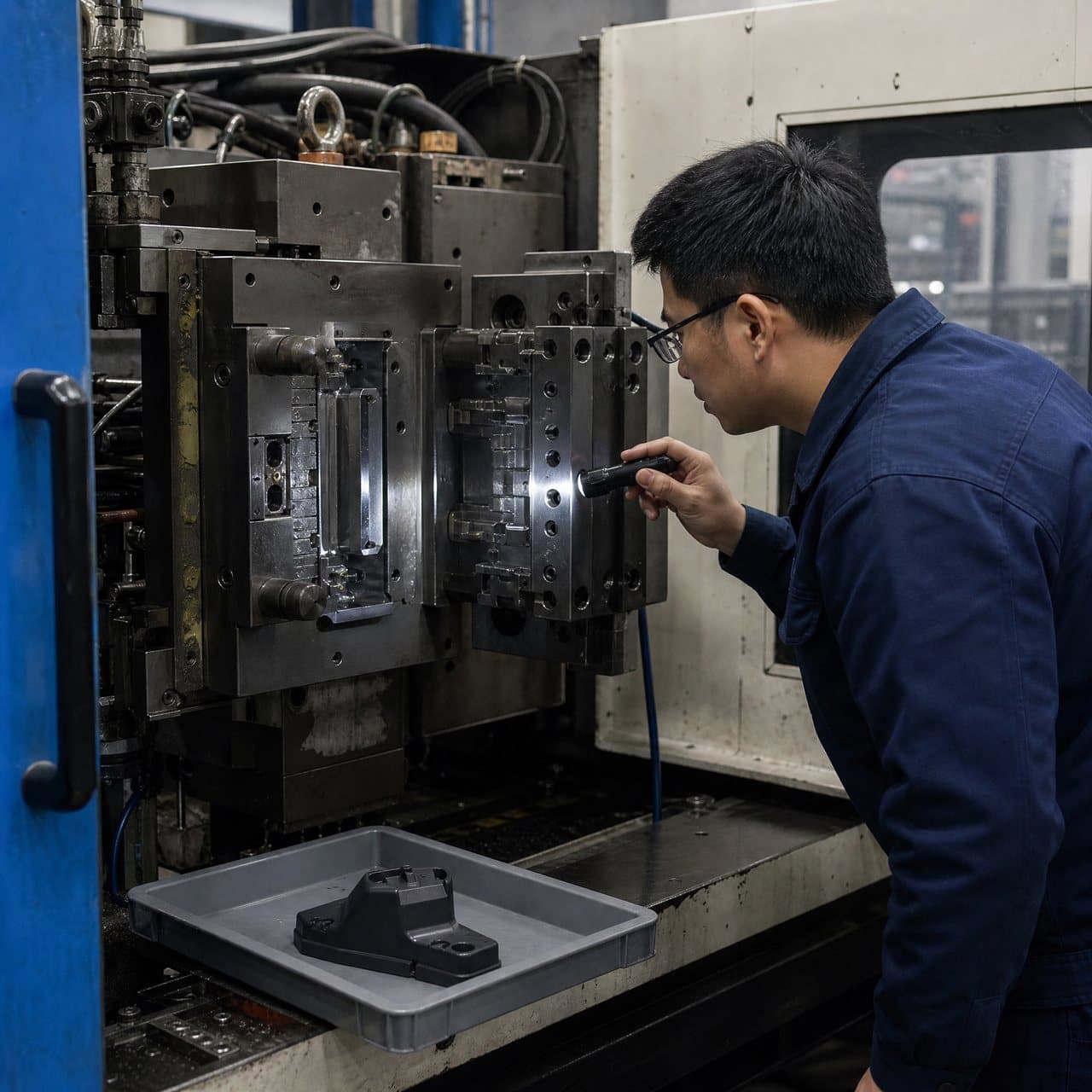
An injection mold transfer needs a physical-tool record as well as technical files. Create a joint inventory with tool ID, cavities, inserts, hot-runner or controller details where applicable, serial numbers, visible condition, known damage, spare parts, maintenance status, storage condition, photographs and packing requirements. Record the transfer date, pickup point, consignee, shipping terms, export or import documents, and who accepts custody at each stage. For a cross-border move, allow time for customs, insurance, local safety requirements and power or water interface checks rather than assuming a tool will run immediately on arrival.
Injection mold ownership is a contractual and legal question, not a label on the mold. Retain the purchase order, payment and acceptance records, ownership clause, tool specification, inventory and release rights. Confirm coverage of inserts, spares, CAD, gauges, hot-runner components and maintenance history. Use qualified legal and trade advice for a disputed or cross-border transfer.
03
H2: Transfer manufacturing knowledge without copying unverified settings
Give the receiving injection molding supplier a process dossier: resin grade, colour, regrind policy, drying requirements, gate configuration, cosmetic sensitivities, inserts, secondary operations, packaging and any approved process window. Include DFM findings, mold modifications, trial reports and open corrective actions. Old settings are context, not a recipe for a different press, resin lot or environment. The receiving supplier should establish its own capable process through trials.
Retain the evidence behind past acceptance and rejection. ISO guidance says documented information can communicate requirements, provide evidence and preserve knowledge; it lists records for supplier evaluation, changes, traceability, release and nonconformities [1]. Preserve approved deviations, concessions, containment actions and unresolved risks rather than silently resetting them.
04
H3: Compare handover depth against the production risk
The level of evidence should match the consequence of a bad transition, the maturity of the tool and part, regulatory or customer-specific obligations, and the ability to detect defects. An automotive or other controlled program may require a customer-defined PPAP or comparable submission. AIAG describes PPAP as an industry process for showing that engineering design records and specification requirements are achieved by the supplier's manufacturing process [3]. Do not assume that PPAP is required, or that it replaces the buyer's own approval criteria, outside its agreed scope.
| Handover approach | What the incoming supplier receives | Quality verification | Primary risk |
|---|---|---|---|
| File-only release | CAD and a drawing, often without history | Visual sample comparison only | Revision, material, cavity and measurement assumptions remain hidden |
| Controlled technical package | Released design, tool inventory, material and process dossier, change log | Feasibility review, trial plan and dimensional report | Gaps may still emerge if acceptance limits or measurement methods are unclear |
| Risk-based production handover | Controlled package plus retained samples, inspection plan, defect history and release matrix | Documented trial, injection molding quality report, functional checks and formal release | More coordination is required, but transition decisions are auditable |
05
H2: Make the quality package measurable and comparable
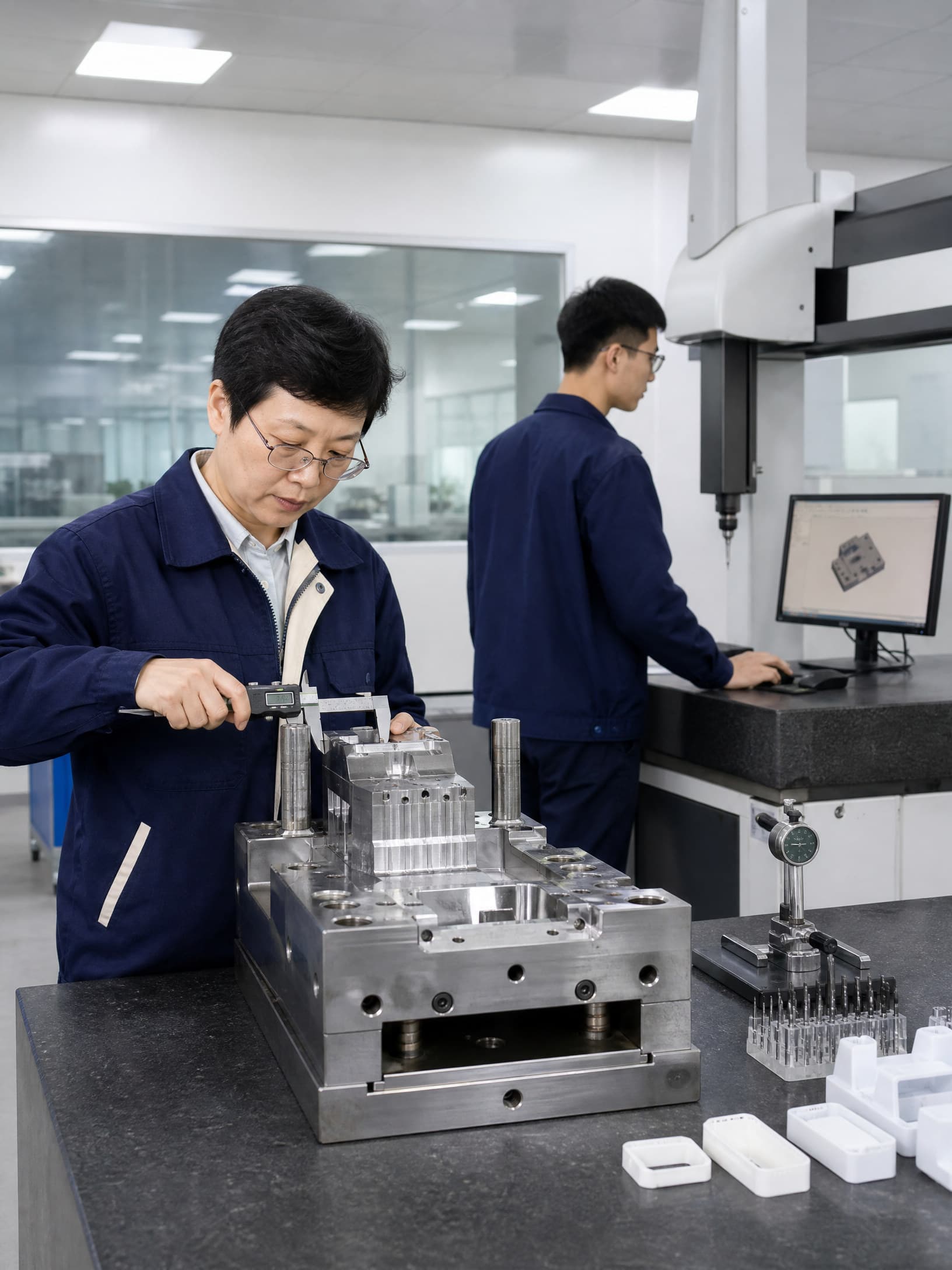
Specify what to measure, the method and the lot or cavity identity that accompanies results. The file can include approved first articles, ballooned drawing, dimensional layout, CMM or functional results, visual limits, inspection plan, sampling rule, gauge status, certificates when required, and traceability format. An injection molding quality report should link results to the released revision and sample or lot. Revision, units, method, acceptance criterion and disposition are essential.
Label retained samples with revision, production date, cavity where relevant, storage and approval authority. Treat them as comparison aids unless the quality agreement makes them binding. Record exactly what any visual boundary sample demonstrates.
06
H2: Release the new source in stages and keep change control active
A practical sequence is: receiving-supplier feasibility review; gap register and buyer decisions; tool receipt and condition check; trial under documented conditions; sample and report review; corrective action where needed; formal release; then defined heightened inspection for early production. Assign a named decision owner for engineering, quality, purchasing and tool custody. Set an escalation path for any mismatch between the approved baseline and the trial result. No party should rely on verbal acceptance for a changed material, tool condition, process or inspection method.
For buyers in Europe, the United States and the Middle East, use agreed English terminology, unambiguous dates, controlled file access, stated units and named engineering, quality, logistics and commercial contacts. Confirm regulatory, customer and import requirements separately; a handover package does not replace a regulatory file, quality agreement or customs advice.
07
H2: Send an RFQ that tests handover readiness
In an RFQ, state whether the request is for a new mold, existing-tool transfer, alternate source or bridge supply. Attach the controlled index and ask the injection molding supplier to identify missing inputs, tool compatibility concerns, trial evidence, measurement methods, material assumptions, change-control route and exclusions. Request a written feasibility response, not a promise to match an existing part.
RFQ CTA: Send the released drawing, 3D model when available, expected volumes, resin and finish requirements, tool status, target markets and current quality evidence. Ask for a documented feasibility review and a handover plan that lists assumptions, risks, required trials and acceptance deliverables before you authorize production.
Practical takeaway
Before you move
to the next review.
- Freeze the approved part number, revision, drawing, CAD model and acceptance authority in a controlled index.
- Record tool ID, cavity count, inserts, components, condition, maintenance history, spares and chain of custody before shipment.
- Confirm injection mold ownership, release rights, payment records and the scope of associated data and spare parts with appropriate legal review.
- Provide exact material, colour, regrind, drying, finishing, assembly and packaging requirements, with known process sensitivities.
- Attach approved samples, inspection plan, dimensional and functional evidence, visual limits, traceability rules and open corrective actions.
- Require the receiving supplier to log feasibility gaps and validate its own process through documented trials rather than copy old settings.
- Define release gates, approvers, change notification, early-production containment and escalation contacts in writing.
FAQ
Common questions
Is an injection mold transfer the same as changing an injection molding supplier?
No. A supplier change may use an existing tool, a newly built duplicate tool or no transferred tool at all. An injection mold transfer is the physical and documented movement of an existing tool. In either case, the buyer still needs a controlled technical baseline and evidence that the receiving source can meet the released requirements.
What should an injection molding quality report show during handover?
At minimum, it should identify the part revision, sample or lot, tool and cavity when relevant, material, inspection method, measurement units, results, acceptance criteria, nonconformities and disposition. Add functional and cosmetic evidence where these are critical. Agree the report format and required evidence before trials begin.
Can a buyer rely on the former supplier's process settings?
Use them as historical context only. Press, resin lot, auxiliaries, tool condition and environment can differ. The receiving supplier should assess compatibility, document its settings and demonstrate conformance through the agreed trial and approval process.
How can a buyer prove injection mold ownership?
Maintain the executed agreement, purchase and payment evidence, acceptance records, a serial-numbered tool inventory and the contract wording on ownership, release, access and associated assets. The right evidence depends on the contract and jurisdiction, so obtain qualified legal advice for a disputed or cross-border situation.
References
Source material
- [1] ISO/TC 176/SC2, Guidance on the Requirements for Documented Information of ISO 9001:2015
- [2] ASME Y14.5 Dimensioning and Tolerancing
- [3] AIAG Production Part Approval Process Overview
This guide is general information for early procurement and engineering discussion. It does not replace product-specific DFM, qualification, validation, regulatory assessment or legal advice.