
Cleanroom injection molding can reduce exposure to airborne particles and handling contamination, but a cleanroom label does not by itself approve a medical component. The right supplier decision connects the component's intended use, contact pathway, resin and additives, geometry, tooling, machine, controlled environment, packaging and acceptance evidence. For an overseas OEM, procurement, quality and engineering team, the practical question is not simply whether a molder has a cleanroom. It is whether the proposed route can consistently produce the specified component and preserve the evidence needed for the device owner's release decision.
Requirement: the device owner must define the component specification, contamination risk, applicable market obligations and release authority. Recommendation: ask the supplier to propose the cleanroom class, material route, process controls and evidence package only after reviewing the exact part, volume, packaging and customer requirements.
01
1. Decide whether cleanroom molding is the right control strategy
Start with the component's role in the finished device. State whether it is an external housing, fluid-path part, patient-contacting component, implant-adjacent item, diagnostic consumable, sterile-barrier component or an internal non-contacting part. Document the intended market, contact duration, cleaning or sterilization exposure, assembly environment, packaging route and consequence of contamination. A component described as medical does not automatically require the same environmental controls as every other medical component.
Separate requirements from recommendations in the RFQ. Requirements may include a defined particle or bioburden control objective, approved resin grade, controlled drawing revision, packaging condition, visual limits, traceability and test evidence. The molder may recommend a cleanroom classification, gowning flow, mold-cleaning method, machine arrangement or packaging sequence, but those recommendations must be reviewed against the device risk assessment and customer specifications.
ISO 14644-1 classifies air cleanliness by airborne particle concentration and does not characterize the physical, chemical, radiological or viable nature of particles. Therefore, an ISO class should not be used as shorthand for sterility, bioburden control, endotoxin control or biocompatibility. Ask the responsible quality and regulatory team to define which contamination attributes matter and which controls and tests support them.
02
2. Match resin, geometry and tool design to the controlled environment
Select the exact resin grade and additive route for the finished component, not just a family name such as polypropylene, PEEK, polycarbonate or nylon. Review colorants, lubricants, glass or mineral reinforcement, mold-release practice, regrind policy, drying requirements and any material substitution rule. For a body-contacting or indirectly contacting configuration, the device owner should assess the finished material route and exposure assumptions; an isolated resin datasheet does not establish suitability.
The geometry and tool can create or retain risk even when the room is controlled. Review weld lines, flash-prone shutoffs, vents, ejector marks, deep ribs, undercuts, inserts, gate vestige, trapped resin, dead legs in hot runners, mold-cleaning access and surfaces that could shed particles. Thin walls, tight interfaces and cosmetic requirements may also narrow the process window. There is no universal tolerance, cycle time, cavity count or tool-life promise for cleanroom medical molding; outcomes depend on resin, geometry, tool architecture, machine, cooling, inspection method, volume and approved specifications.
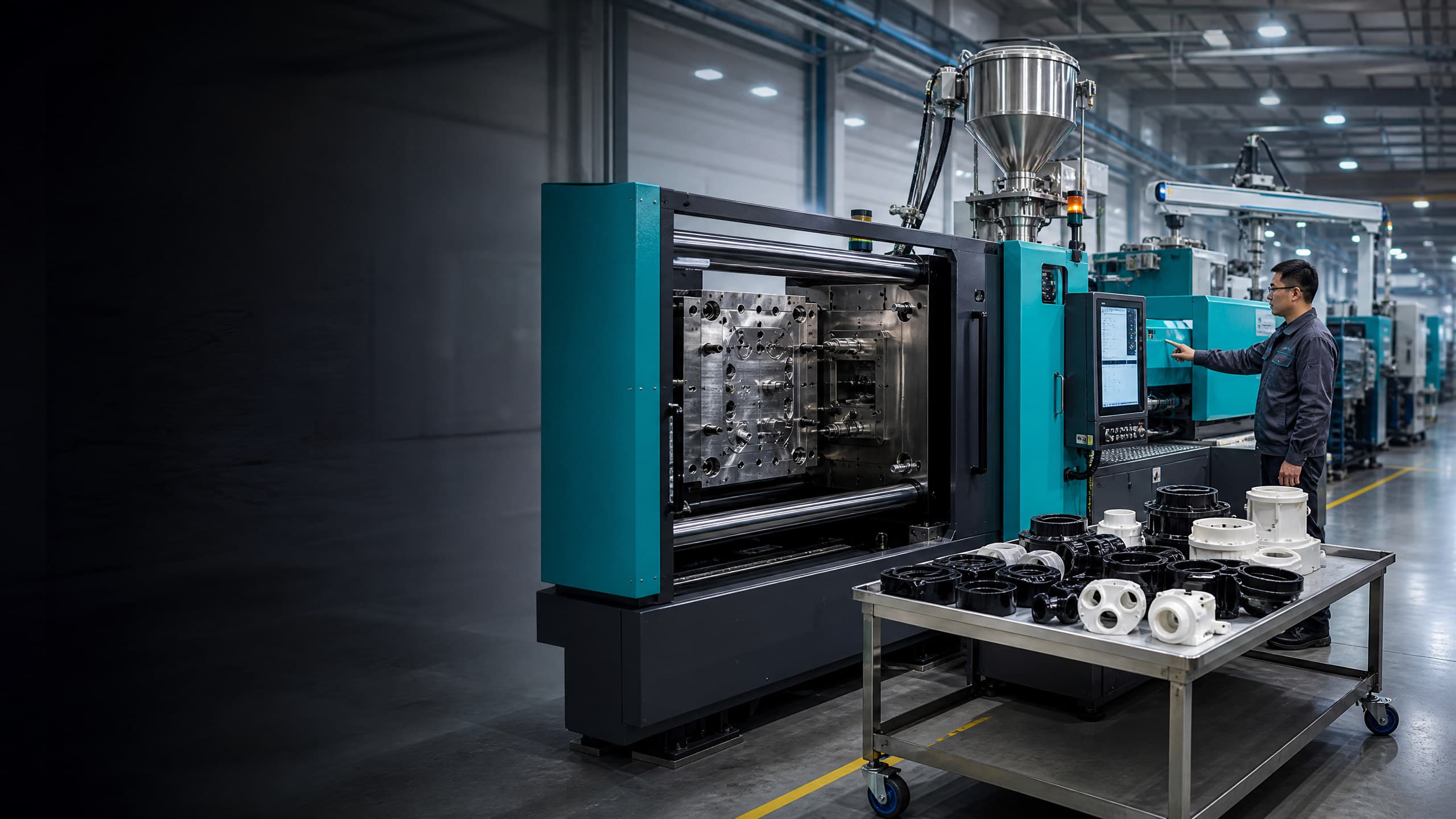
Ask whether the proposed process includes automated part removal, enclosed transfer, in-room trimming, washing, visual inspection, assembly and packaging. Each operation can change contamination exposure. If a supplier proposes a different resin, lubricant, mold coating, color system, machine or subcontracted operation, require an impact assessment and written approval before the released route changes.
03
3. Compare cleanroom suppliers by evidence and route control
A supplier's room classification certificate or photograph is only one input. Request evidence tied to the proposed site, part and production route: cleanroom classification report, environmental monitoring approach, gowning and personnel-flow procedure, material and mold entry controls, cleaning records, pest and foreign-material controls, machine and mold maintenance plan, resin handling records, packaging flow and deviation response. Verify the scope, date, location and applicability of any certificate or audit report.
The supplier should identify where molding occurs, where inspection occurs, where parts are handled after molding, and where final packaging occurs. Ask for the boundary between the supplier's responsibility and the device owner's. FDA's QMSR applies to finished-device manufacturers in its stated scope; it does not make every component molder a finished-device manufacturer or turn a cleanroom claim into product approval. The buyer should define supplier obligations in the quality agreement and purchase documents.
Use the following matrix to compare quotations and audits. It is a planning model, not a universal regulatory checklist; add market, customer and product-specific requirements before award.
| Decision area | Evidence to request | Buyer question | Approval gate |
|---|---|---|---|
| Environment | Current classification report, monitoring plan, room boundary, gowning flow and excursion reaction procedure. | Does the controlled area and monitoring approach address the specified contamination risk? | Before supplier approval |
| Material and tool entry | Resin lot traceability, drying or conditioning records, mold-cleaning method, entry inspection and foreign-material controls. | Can material and tooling enter the controlled route without losing identity or cleanliness evidence? | Before first trial |
| Process and handling | Process flow, machine and mold identification, part-removal method, in-room handling, inspection and packaging sequence. | Where can contamination, mix-up, flash or damage be introduced after molding? | Before trial-plan approval |
| Quality evidence | Inspection plan, sample report, nonconformance records, environmental excursion response and change-notification procedure. | Can the supplier demonstrate conformity for the named revision and route? | Before production release |
04
4. Set practical qualification and release gates
Use named approval gates rather than treating a cleanroom tour or first-off sample as approval. A practical sequence is: controlled requirement brief; supplier and environment review; DFM and tool-design approval; trial-plan approval; sample and contamination-control review; deviation closure; process or production release. Record the drawing revision, resin lot, mold and cavity identity where relevant, machine, room or line, packaging condition, sample quantity, inspection method and decision owner at each gate.
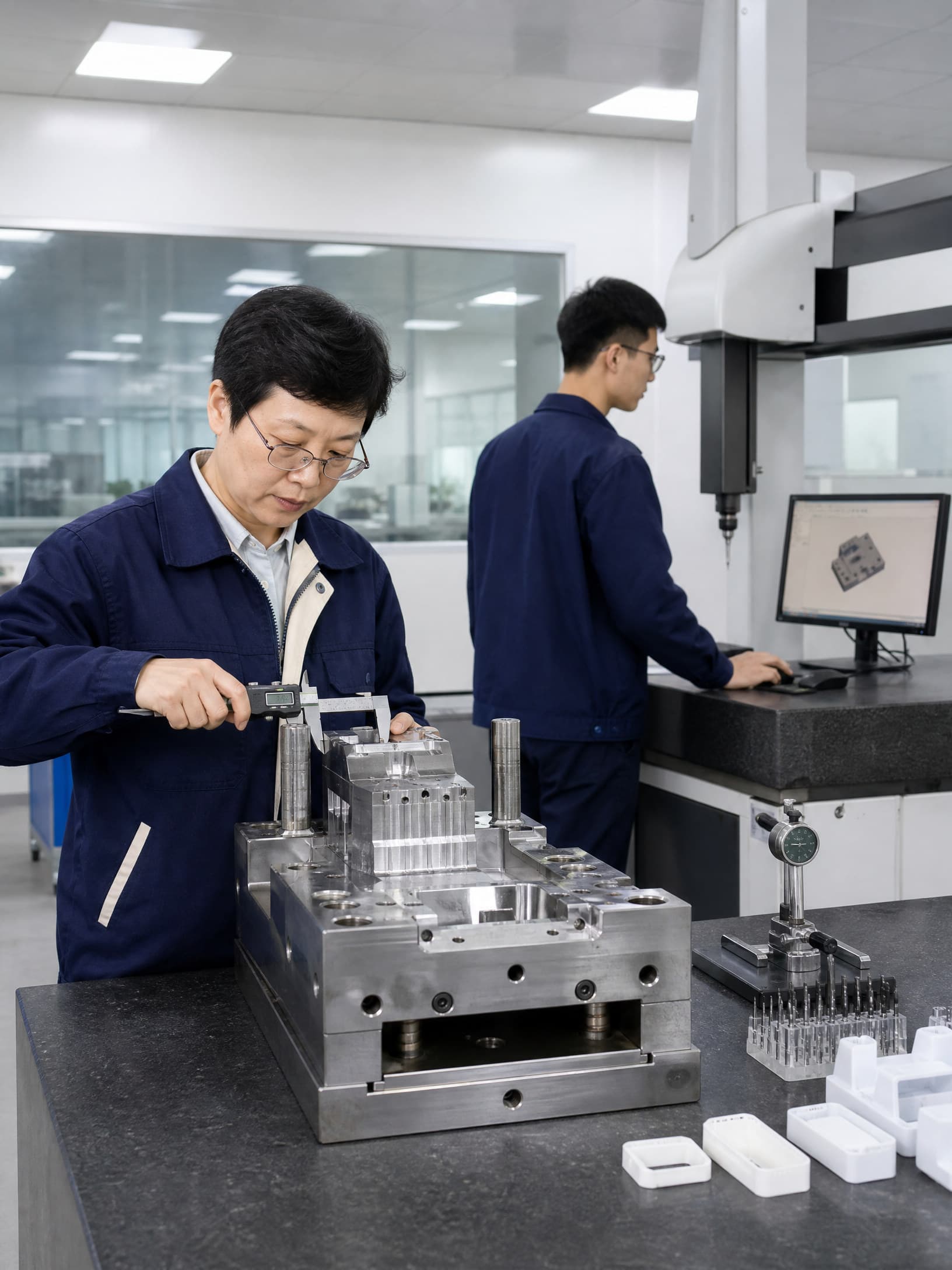
For dimensional and visual review, define datums, measurement equipment, calibration status, sample conditioning, viewing conditions, cosmetic zones and acceptance criteria before samples arrive. For contamination-related requirements, define the test or inspection method, sampling rationale, response to an excursion and disposition authority. Do not ask for a generic cleanroom certificate in place of part-specific evidence.
If the process contains characteristics that cannot be fully verified by later inspection, the device owner may require a documented validation strategy. FDA describes process validation as objective evidence that a process consistently produces output meeting predetermined specifications, but the applicable protocol, scope and acceptance criteria depend on the component and regulatory context. A supplier should not self-declare a component or finished device approved merely because a trial passed.
05
5. Protect continuity after award and production release
Normalize supplier quotations against the same component revision, resin route, annual volume, cavity proposal, cleanroom boundary, inspection scope, packaging configuration, tooling ownership and delivery terms. Separate tooling, fixtures, sampling, validation support and recurring part pricing. Timing depends on design maturity, tool complexity, resin availability, machine capacity, cleanroom scheduling, corrections, approvals, testing and freight; request a milestone plan rather than accepting a universal lead-time promise.
Define change triggers in the quality agreement. Examples include resin or color substitution, additive change, mold repair affecting a critical surface, cavity addition or removal, machine transfer, alternate production site, cleanroom classification change, environmental excursion, packaging change, inspection-method change and new subcontractor. The required response may be document review, new samples, additional testing, revalidation or another action based on the component risk and customer rules.
Maintain a release baseline that links part revision, tool identity, approved material, process route, packaging and evidence. Review lot traceability, environmental excursions, nonconformance trends, complaints, containment actions, delivery performance and overdue changes. Procurement can support continuity, but engineering and quality should retain authority over technical deviations and product release.
Practical takeaway
Before you move
to the next review.
- Define the component's intended use, contact pathway, target markets, contamination risks, cleaning or sterilization exposure, packaging route and release authority before requesting quotations.
- Specify the exact resin, additives, color route, geometry, critical features, visual zones, traceability expectations and permitted substitution rules.
- Request route-specific evidence for cleanroom classification, monitoring, gowning, material and mold entry, process handling, inspection, packaging and excursion response.
- Approve the program through documented gates covering supplier review, DFM, tool design, trial plan, sample evidence, deviation closure and production release.
- Contractually control tooling, alternate sites, material and machine changes, environmental excursions, subcontracting, packaging changes and evidence required after each change.
FAQ
Common questions
Does cleanroom injection molding make a medical component sterile?
No. Cleanroom classification addresses airborne particle concentration within its defined scope; it does not by itself establish sterility, bioburden, endotoxin control or biocompatibility. The device owner must define the required contamination controls, testing, sterilization route and packaging evidence for the finished configuration.
What cleanroom class should a medical injection molding supplier use?
There is no universal class for every medical component. The appropriate environmental control depends on the component's function, contamination risk, handling and packaging route, process, customer specification and applicable market requirements. Ask the supplier to justify its proposed classification and controls against a written product risk assessment rather than selecting a class from a generic chart.
What evidence should an overseas buyer request from a cleanroom molder?
Request evidence tied to the named site and component route: current room classification, monitoring and excursion procedures, gowning and material-entry controls, resin and mold traceability, process flow, inspection plan, packaging sequence, nonconformance response, change control and sample records. Verify the scope and validity of certificates or audit reports; a certificate alone does not approve the component.
Does a medical-grade resin automatically meet the component requirement?
No. The exact grade, additives, colorants, processing history, geometry, surface condition, cleaning or sterilization exposure and contact pathway all matter. FDA's ISO 10993-1 guidance uses a risk-based approach for biological evaluation of devices with direct or indirect body contact. The responsible device team must determine the evidence needed for the finished configuration.
References
Source material
- [1] U.S. Food and Drug Administration — Quality Management System Regulation (QMSR)
- [2] International Organization for Standardization — ISO 14644-1:2015 Cleanrooms and associated controlled environments
- [3] U.S. Food and Drug Administration — Use of ISO 10993-1 for biological evaluation of medical devices
- [4] U.S. Food and Drug Administration — Quality System Inspection Technique: Process Validation
This guide is general information for early procurement and engineering discussion. It does not replace product-specific DFM, qualification, validation, regulatory assessment or legal advice.