
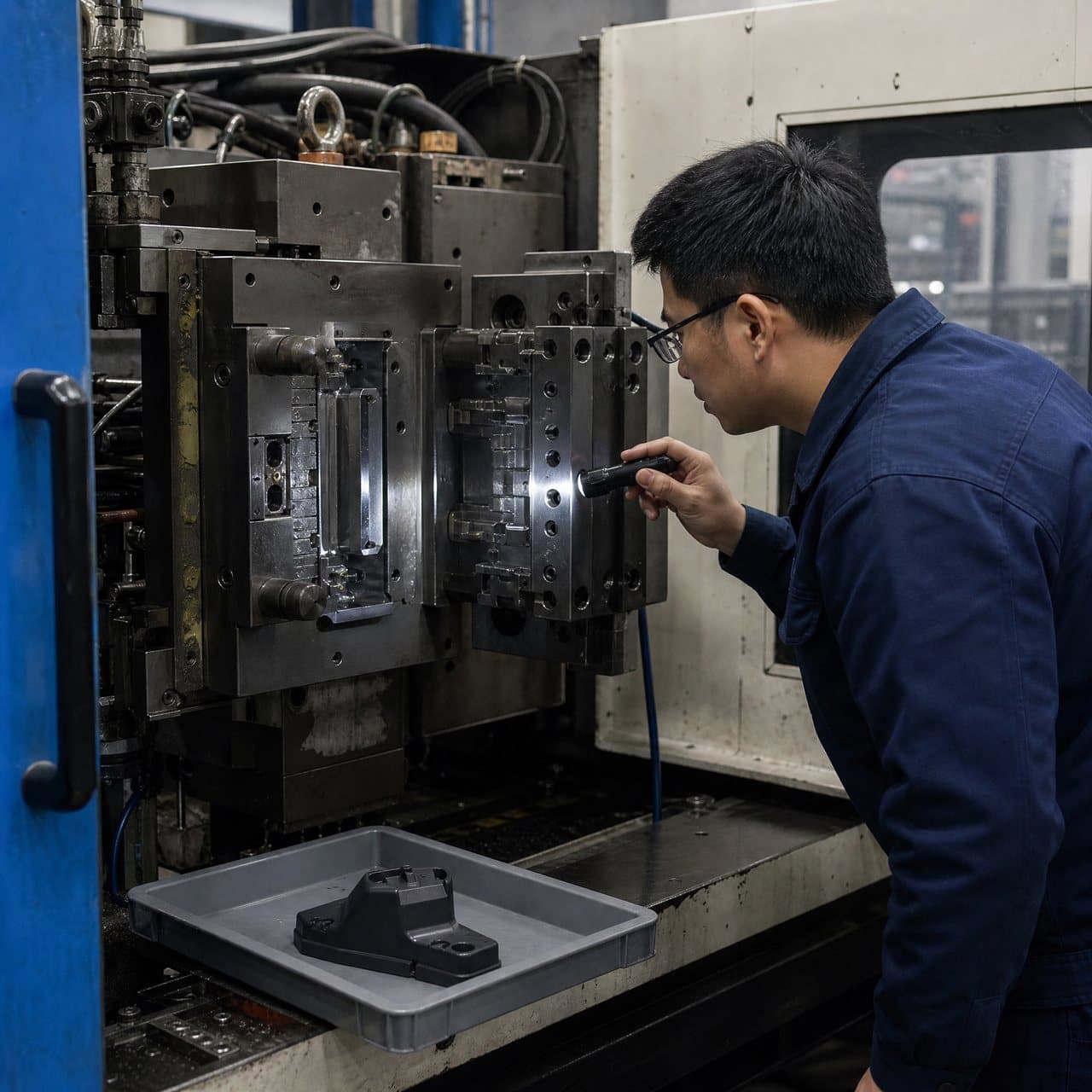
T1 is often described as the first tool trial, but that shorthand is not a universal specification. It may mean the first shots from a new mold or a trial after an adjustment. The label alone does not show that the resin, tool condition, cavities, operations and measurement setup represent routine production. Buyers should manage injection molding T1 samples as a controlled experiment: define the questions, identify what is provisional, and record changes before asking for approval.
A practical approval system identifies the applicable part definition, material direction, sample status, evidence, decision owner and change triggers. This works across European, North American and Middle East supply chains without relying on local shorthand. Buyers should verify customer-specific, contractual, end-market and product requirements. A dimensional or visual review alone does not establish product compliance or regulatory approval.
Do not approve a T1 part merely because it is close to the drawing. First decide whether it is evidence from the intended baseline or an early trial that still needs controlled learning.
01
1. Establish a shared meaning for T1 before the tool trial
Before the trial, issue a one-page brief naming the part number, drawing and CAD revision, material and colour direction, tool identity, expected cavities, planned operations and the questions for the run. These may include fill balance, an assembly interface, a visible surface, a datum strategy or a DFM risk. State what the trial is not intended to prove. An interim gate, temporary fixture or resin substitute can help troubleshooting but may be unsuitable as final approval evidence. This boundary keeps a promising trial part from being treated as a released production article.
Use one controlled vocabulary in the purchase order, quality plan and review meeting. Define T1, subsequent trial, first-off, first article, production-representative run, deviation and approval status for this programme. For cross-border teams, identify the governing drawing language, units and revision format. If values are converted for convenience, name the controlled source. This matters when EU engineering, a North American customer and a Middle East receiving team use different systems.
Injection molding sample approval should begin with a decision question, not a shipment: may the buyer authorize a tool correction, pilot assembly, production-representative run or routine purchasing? Give each submission a status, such as exploratory, assembly evaluation, dimensional evaluation or production representative. Require the parts, data and shipping papers to carry the same identifier.
02
2. Build a sample passport instead of relying on a box of parts
Every set needs a compact identity record, or sample passport. Link the physical part to the decision record: buyer part number and revision, quantity, run date, tool and cavity where relevant, resin family or substitute status, colour or finish condition, operations performed, packing identity and review purpose. List known departures, such as hand trimming, rework, temporary inserts, blocked cavities or non-final automation. Do not require the reviewer to infer these conditions from appearance.
Separate facts from conclusions. ‘Approved material’ may not identify the grade or traceability record the buyer needs; full material evidence may be unnecessary for an early geometry-only trial. Match the request to the trial question and verify the declared condition against the controlled requirement. Where storage, transit or conditioning could affect a moisture-sensitive, flexible or cosmetic part, agree the evaluation condition before dispatch.
First article injection molding is most useful with its real mating context. Provide mating parts, gauges, fasteners, seals, electronics or a functional fixture when they govern the decision. A loose part can measure acceptably yet fail to assemble. Identify the authoritative mating item, record its revision and preserve enough evidence for a later reviewer to understand what was tested.
| Sample status | What it can reasonably support | What it should not automatically support | Buyer record to request |
|---|---|---|---|
| Exploratory T1 | Learning about fill, ejection, cosmetic risk, gross fit or tool changes. | Routine-production release or proof of a final process baseline. | Trial brief, sample passport, marked findings and agreed next actions. |
| Corrected trial | Verification that named changes addressed an earlier issue. | Acceptance of unrelated features that were not reassessed. | Change list linked to sample identity, focused results and disposition. |
| First article | Review of agreed characteristics against the controlled part definition. | A formal customer-standard submission unless that scope was requested. | Ballooned or identified characteristics, results, method context, exceptions and approval decision. |
| Production-representative sample | Evidence for a defined release when material, tool, cavities, process route and operations match the agreed baseline. | Future changes, added cavities or different materials without review. | Baseline declaration, agreed evidence, retained-sample identification and change triggers. |
03
3. Turn first-article review into an evidence-based decision gate
A first article is not simply a long dimensional report. It demonstrates what the agreed decision requires for a defined article and baseline. SAE AS9102C, an aerospace first-article standard, says its FAI requirements complement customer and applicable statutory and regulatory requirements; it is not a default rule for every molded component. If a customer requests an injection molding FAI, confirm the form, characteristic coverage, sample quantity, approval authority, retention and re-accomplishment triggers. Do not assume an aerospace-style report or a generic supplier format will be accepted.
Start from the released definition, not a convenient measurement template. Identify drawing dimensions, GD&T, notes, appearance zones, material-related requirements, inserts and functional checks needed for release. For geometry affected by support, temperature, conditioning or clamp force, agree the condition and datum strategy before comparison. A result without feature identity, units, method and sample identity has little decision value. Acceptance still depends on whether the selected setup suits the feature.
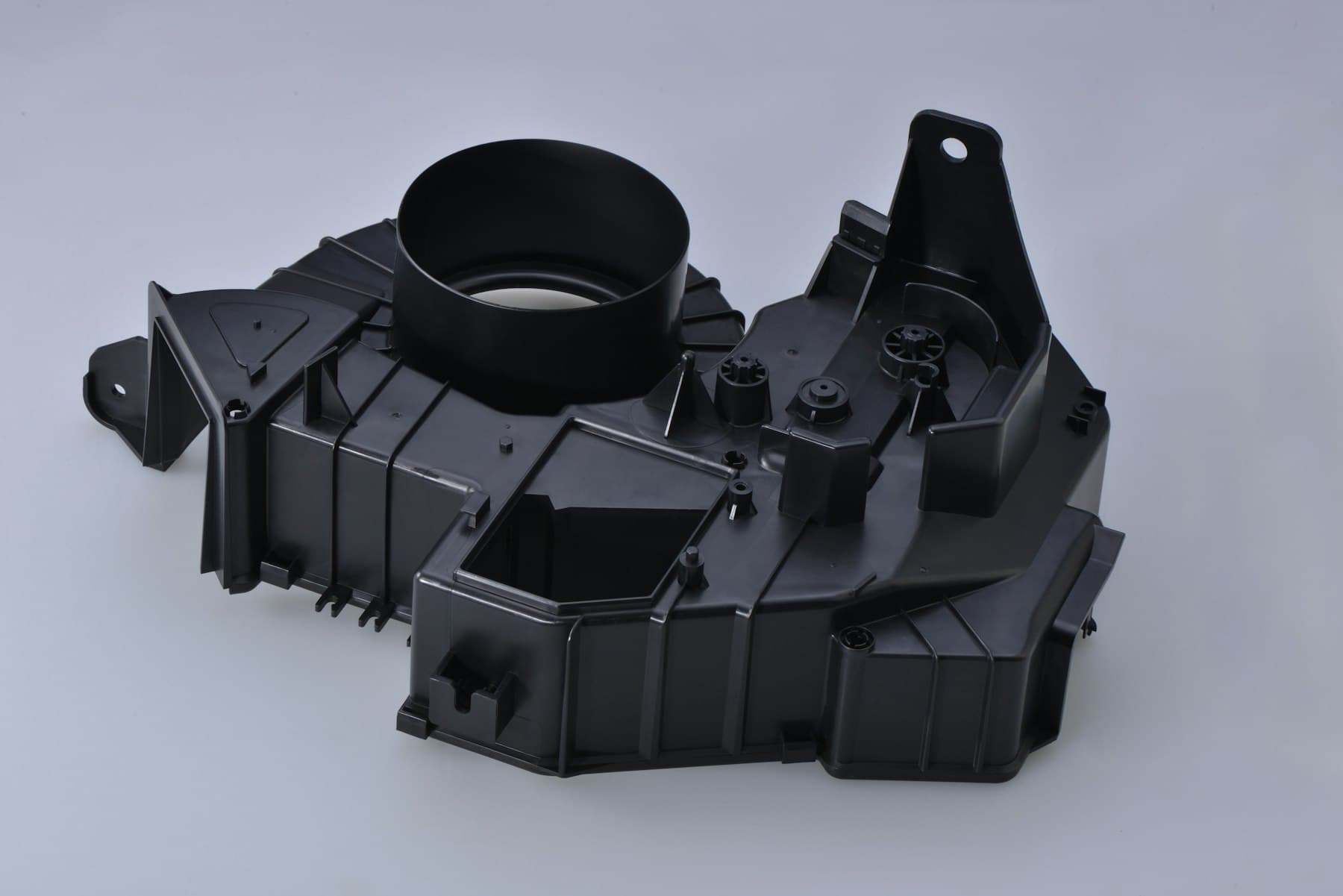
Injection molding inspection should be proportionate. External checks, concealed fit features, cosmetic faces and flexible snaps may need different methods. Ask how the part was located, whether a fixture was used, which cavities were sampled and how ambiguous results are resolved. A CMM report is not automatically suitable, nor is a hand measurement always repeatable. When a result is outside the requirement, record the affected scope, evidence and proposed disposition; a verbal ‘close enough’ is not a durable release decision.
04
4. Hold a structured approval meeting and preserve the decision
Run the review as a cross-functional gate, not disconnected emails. The buyer’s design owner confirms the revision, function and permitted deviations; quality checks that evidence is interpretable; purchasing checks the commercial scope; and the molder explains sample status, corrections and remaining risks. For remote teams, use an annotated drawing and numbered action log, then circulate the controlled disposition.
The decision must be explicit: accepted for the stated purpose, conditionally accepted with bounded actions, rejected or awaiting evidence. A conditional decision should name the affected feature or lot, reason, containment, owner and next decision point. If an accepted sample differs from the drawing, preserve both the requirement and the concession. Where PPAP, customer forms or a regulated-sector submission applies, verify the approval path with the customer or responsible authority. AIAG describes PPAP as demonstrating that engineering design-record and specification requirements are achieved by the supplier’s manufacturing process, a different question from whether an early trial looks acceptable.
Issue one controlled release record identifying the parts and evidence reviewed, baseline claimed, status, deviations, actions and next step. Retain a labelled sample only when it is useful and protect it from mix-up or alteration. A retained T1 part is evidence of a known condition, not a universal master for every future run.
05
5. Control what changes after approval—and what the report must reveal
Approval loses value when the baseline changes without review. Before release, agree notification triggers: design revision; material grade, additive or colour change; cavity activation; a tool repair or modification that may affect the part; gate, texture or ejection change; process or secondary-operation change; critical fixture or measurement-method revision; and relevant packing change. Not every event needs every test. Assess the effect against the approved baseline and decide whether notification, focused resampling or new approval is needed.
The injection molding quality report for the next run should support comparison, not merely archiving. It can identify the part and revision, run or lot, sample and cavity context where agreed, characteristics evaluated, results and units, relevant method or condition, disposition and links to deviations or corrective actions. Make exceptions visible: passing values alone cannot explain a repaired tool, substitute material or changed inspection method. Agree reporting depth in advance; a low-risk internal part and a visible or safety-relevant interface warrant different plans.
Separate commercial receipt from technical acceptance. A shipment can arrive with correct paperwork while technical release remains open, and an approved first article does not waive incoming checks, customer requirements or final-product validation. Verify the contract, destination-market obligations and receiving process before release. Everyone should be able to tell which article was reviewed, under what conditions, what was decided and when it must be revisited.

Practical takeaway
Before you move
to the next review.
- Issue a trial brief that defines T1 for this programme, names the controlled revision and separates questions to be answered from items still provisional.
- Require a sample passport linking every shipped part to the tool or cavity context, material direction, operations performed, known departures and intended review purpose.
- Agree first-article characteristics, datum or fixture conditions, measurement method, mating-part context and approval authority before results are generated.
- Record an explicit accepted, conditionally accepted, rejected or awaiting-evidence decision; bound every concession by feature, scope, owner and next decision point.
- Set change-notification triggers and compare later-run evidence against the approved baseline before extending approval to a changed material, tool, process or cavity.
FAQ
Common questions
Is T1 the same as a first article?
Not necessarily. T1 commonly means an early tool trial, while a first article is a review of an agreed article against a controlled definition. A T1 part can support a first-article review only if the buyer and supplier agree that its tool, material, process, operations and evidence represent the stated baseline. Define the terms and purpose for the programme rather than relying on labels.
Can a buyer approve samples before the final production material or all cavities are available?
A buyer may approve a limited purpose, such as geometry learning or an assembly check, if the sample passport clearly declares the interim condition. That approval should not be extended automatically to the final material, colour, cavity set or production route. Record what remains unverified and set the evidence needed for the next gate.
What should happen if a first-article result does not meet the drawing?
Confirm the revision, feature identification, sample identity and method first. Then document the result, affected scope, proposed containment and requested disposition. The authorized product owner should decide whether to reject, request correction and resampling, or grant a controlled deviation. Do not replace the drawing with an informal email or an unlabelled accepted part.
References
Source material
- [1] SAE International, AS9102C Aerospace Series — First Article Inspection Requirements.
- [2] Automotive Industry Action Group, Production Part Approval Process (PPAP) Overview.
- [3] National Institute of Standards and Technology, Dimensional Metrology.
- [4] International Organization for Standardization, ISO 20457: Plastics moulded parts — Tolerances and acceptance conditions.
This guide is general information for early procurement and engineering discussion. It does not replace product-specific DFM, qualification, validation, regulatory assessment or legal advice.