
Choosing a mold route is not a referendum on whether aluminum or steel is universally better. It is a decision about where the programme is still uncertain, what the part and resin will ask of the tool, and what evidence purchasing needs before making a larger commitment. A low forecast can still create a demanding tool problem when the resin, surface requirement, geometry or service plan is demanding. A higher forecast can still justify a staged route when the design or demand case is not settled.
This guide assumes a conventional thermoplastic injection molding programme and a buyer comparing new-tool proposals. It does not prescribe a material grade, a tool life, a cost, a tolerance or a launch schedule. Those depend on the actual resin grade, part geometry, cavity layout, processing window, maintenance approach and contract scope. Buyers in Europe, North America and the Middle East should ask the proposed toolmaker to verify those assumptions against the released part data, intended destination and commercial terms rather than treating general guidance as a tool specification.
Ask each supplier to describe the tool as a controlled configuration: base, cavity and core inserts, wear-prone details, cooling, ejection, cavities, sampling scope and change path. A material label alone is not comparable scope.
01
Start with the programme decision, not the metal name
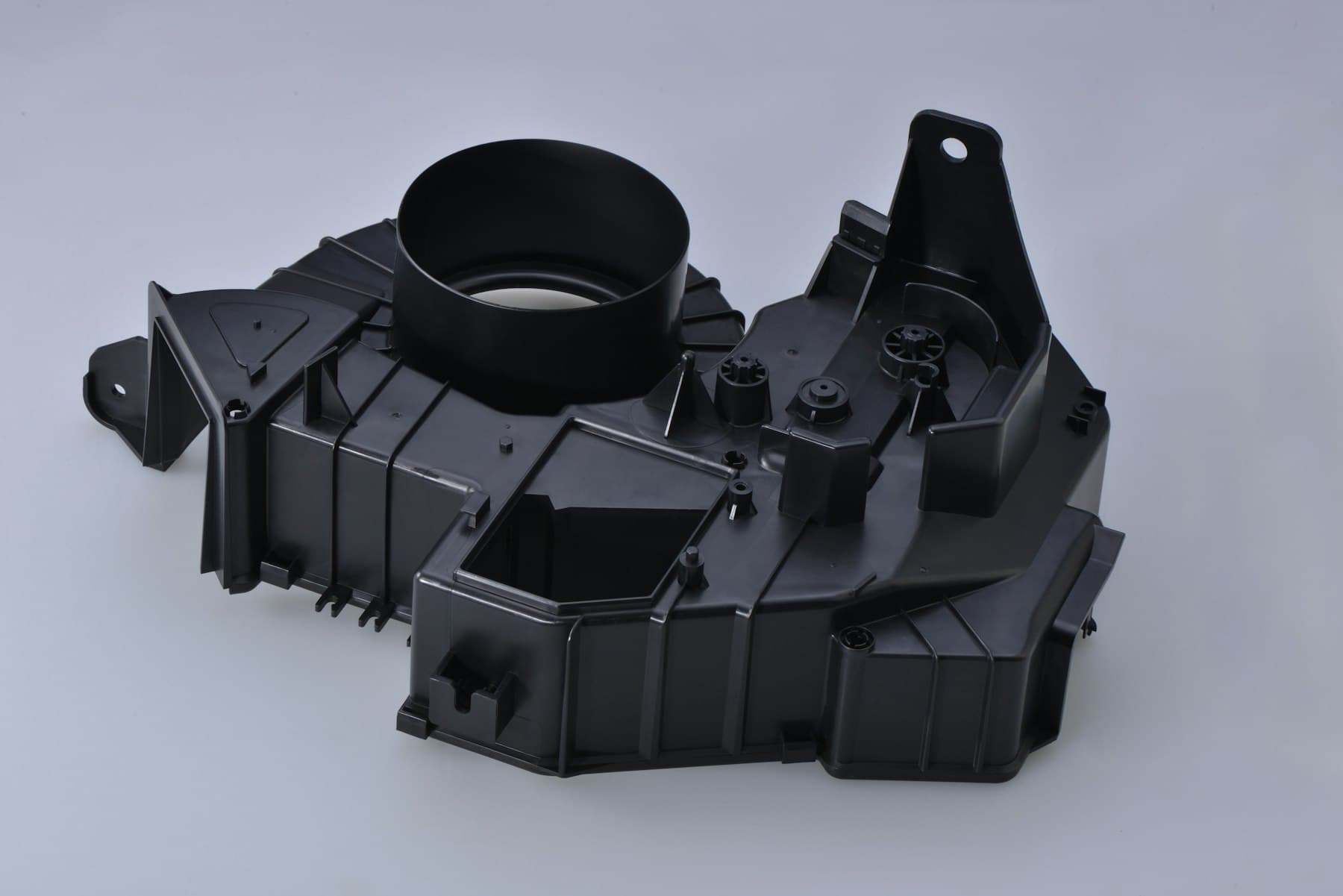
First write the next decision the mould must support. It may be a fit check with mating parts, a functional evaluation in the intended resin, a market-facing bridge build, or an approved supply route with an established demand profile. The clearer that decision is, the easier it is to decide how much change access, service life and production evidence are needed. Prototype tooling is most valuable when its test question, resin condition, revision and acceptance owner are named in advance; it is not automatically a promise that every result transfers to a later tool with different cooling, cavities or construction.
Production tooling should be considered a programme commitment, not simply the opposite of a prototype. Before approving it, record the controlled CAD and drawing revision, resin grade and colour direction, forecast range rather than only a single annual figure, critical interfaces, appearance zones, expected service horizon and change-control route. The decision can then account for the cost of being wrong. For example, a likely logo, connector, snap or mounting revision may be more important than a headline demand forecast if it would require changing gates, ejection, cooling or the parting line. Bridge tooling can provide useful parts while decisions mature, but the buyer should define precisely which later-production questions it is not intended to answer.[3]
02
Map what the resin, geometry and finish ask of the tool
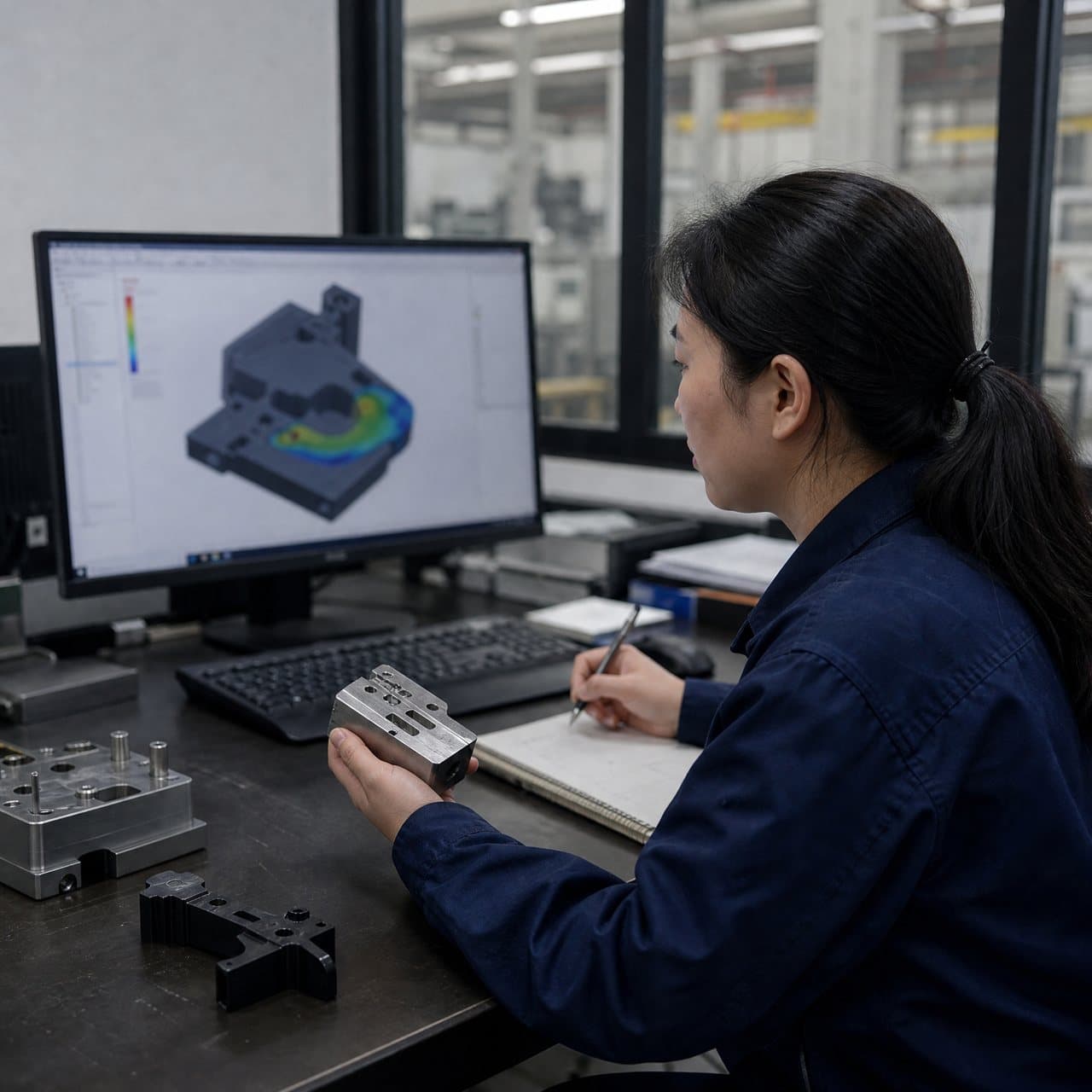
An aluminum injection mold is not a single technical condition. Its suitability depends on the construction around it: whether cores and cavities are integral or inserted, how slender features are supported, which faces see load or wear, how the temperature-control concept is arranged, and how changes would be made. Aluminum is generally more readily machined than steel, which can be useful where learning and change access carry high value. That does not make cooling performance, dimensional behavior, surface finish or service life automatic. Those outcomes still require a part-specific design and trial plan.[1]
Likewise, a steel injection mold is a family of possible constructions, not a guarantee of capability. Tool-steel selection requires trade-offs among strength or hardness, toughness, wear resistance, corrosion resistance, thermal conductivity and polishability, alongside shot count, resin, mold size and surface requirement.[2] Filled compounds, higher processing temperatures, corrosive conditions, deep texture, polished cosmetic areas, long cores, shut-offs, moving details and repeatable interfaces should trigger a focused review. Ask which features are protected by replaceable inserts or other measures, and ask the supplier to identify the condition that could limit the tool before quoting durability in broad terms.
03
Compare routes as risk allocations, not volume rules
There is no universal quantity at which one route changes into another. The table is a practical comparison of decision signals, not a design standard or a quotation template. A programme may combine approaches, such as a lower-commitment first tool with selected insert strategy, then a later tool after the product and demand case are proven. The buyer's job is to make the remaining risk visible and decide who owns it.
For every proposal, request an assumption register. It should state the resin and filler content, anticipated cavities, gate and runner concept, expected press conditions where known, surface requirements, planned trial evidence, maintenance boundary and method for incorporating a revision. A supplier can then price a defined route rather than silently choosing one.
| Route signal | What it may help the programme do | What the buyer should verify before selection |
|---|---|---|
| Learning-focused route | Obtain molded evidence while fit, material behavior, assembly or demand assumptions remain open. | Which exact question is being tested, which resin and revision are represented, and which later conditions remain unproven? |
| Aluminum-led route | Preserve a relatively adaptable, machinable route for a stable-enough but still change-sensitive programme. | Local loading, resin abrasion or corrosion risk, inserts, finish, temperature-control plan and the approved revision path. |
| Steel-led route | Support a more settled technical and commercial baseline where tool stewardship is planned deliberately. | Selected steel or insert strategy, wear and corrosion rationale, spare or repair approach, inspection evidence and change authority. |
04
Make the estimate comparable before negotiating the total
A useful injection mold cost estimate separates the tool build from the recurring molded-part scope and shows what each figure assumes. Asking only for a lump sum makes it difficult to see whether two proposals include the same cavity count, runner system, side actions, inserts, polish or texture, trial quantity, inspection work, packaging, documentation, repairs, storage or engineering changes. Geometry and finish can change tooling effort, while cavity strategy affects both up-front scope and the production discussion; neither should be inferred from price alone.[4]
Use the same scope sheet with suppliers in every region. For a Europe, North America or Middle East programme, make currency, tax treatment, Incoterm, shipping point, export packing, insurance, payment milestones, governing language, intellectual-property and tool-ownership terms explicit. These are commercial controls, not claims about any local legal requirement. The buyer should obtain its own tax, customs, contractual and product-compliance advice where applicable, particularly when tools, samples or production parts cross borders.
| Quote element | Question that makes scope comparable |
|---|---|
| Tool configuration | What base, cavities, cores, inserts, cavities count, runner, moving features and temperature-control scope are included? |
| Trials and evidence | Which resin, color, samples, measurements, visual criteria and report format are included, and who accepts them? |
| Change and maintenance boundary | How are revisions, replaceable details, preventive work, repair approval, storage and spare parts handled? |
| Commercial handover | Who owns the tool and design records, where is it stored, what is transferred, and which shipping or duty assumptions apply? |
05
Use evidence gates to protect the long-term decision
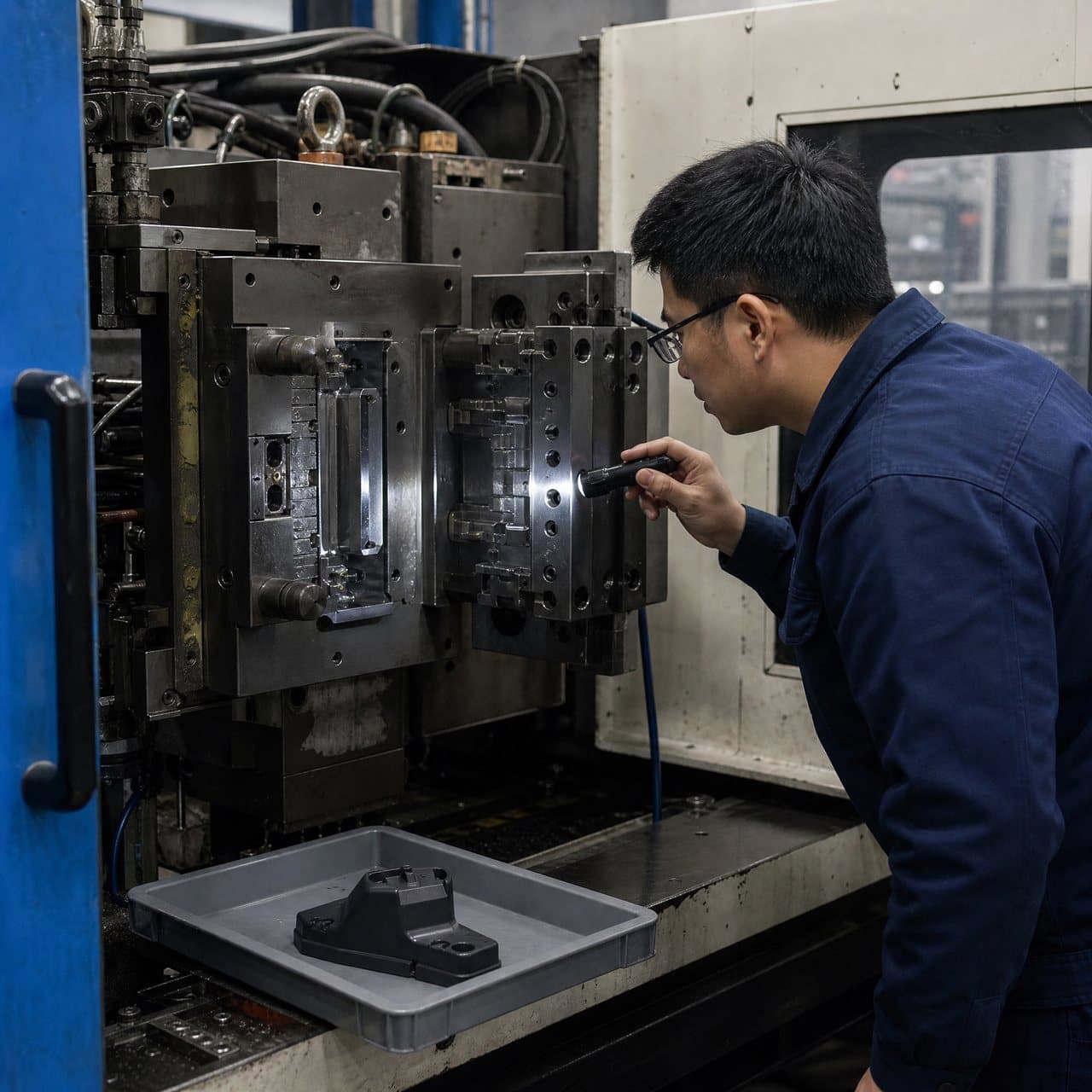
Do not accept a first molded sample as a silent declaration of readiness. Define an evidence gate that connects the sample to the decision: confirm part revision, resin identity, tool configuration and cavity identity where relevant; review the intended functional, assembly, dimensional and cosmetic conditions; list open issues; and record who may authorize the next step. If the purpose is only a fit study, say so. If the purpose is a production release, specify the evidence and authorities needed. This prevents a useful early part from being overstated as proof of all future conditions.
Injection mold durability should be treated as a managed assumption, not a generic promise tied to the word steel or aluminum. Ask for the proposed wear, corrosion and damage controls; what will be inspected during trials and service; the maintenance record to be retained; the trigger for replacement or repair review; and how a repair will be assessed before parts return to routine supply. Keep these controls with the tool record, CAD revision and change history. The appropriate route is the one whose remaining technical and commercial exposure the programme can understand, verify and deliberately accept.
Practical takeaway
Before you move
to the next review.
- State the next decision the tool must support and name the person authorized to accept its evidence.
- Provide released or clearly provisional CAD, critical interfaces, visible surfaces, resin grade, filler content, colour and expected demand range.
- Request a configuration-level tool proposal covering inserts, cavities, gating, temperature control, ejection, moving features and planned trial scope.
- Compare quotes on one scope sheet that separates tool work, part pricing, sampling, inspection, revisions, maintenance, storage and logistics terms.
- Record the sample evidence gate, open risks, change authority, ownership records and post-trial decision before committing to the next route.
FAQ
Common questions
Can a buyer choose tooling material from forecast volume alone?
No. Forecast demand is useful, but it does not capture abrasive or corrosive resin behavior, cosmetic expectations, moving features, change likelihood, tool-service obligations or what the samples must prove. Compare those conditions with the demand range and ask each supplier to identify the assumptions that would change its recommendation.
Should aluminum and steel quotes use the same acceptance criteria?
The product requirements should be controlled by the buyer, but the evidence plan may need to recognize that the tools have different intended roles and constructions. Define which dimensions, interfaces, appearance conditions and functional checks matter for the decision, then identify what is and is not demonstrated by each sampling route.
What should be verified before accepting a claimed tool-life figure?
Ask what resin grade, filler content, processing conditions, geometry, cavities, surface finish, maintenance actions and failure mode are assumed. Also ask whether the figure refers to a complete tool, selected inserts or a service interval. Put the answer in the quotation or technical agreement and treat it as a reviewable assumption, not a substitute for maintenance records and inspection.
References
Source material
- [1] Protolabs, Aluminum Mold Tooling for Injection Molding.
- [2] Uddeholm, Tool Steel for Injection Molding.
- [3] Protolabs, How to Use Injection Molding for Bridge Tooling.
- [4] Protolabs, Understanding Injection Mold Cost for Parts and Tooling.
This guide is general information for early procurement and engineering discussion. It does not replace product-specific DFM, qualification, validation, regulatory assessment or legal advice.